




Automated Mechanical Transmissions Gaining Steadily in Class 8 Trucks
Talk about transmissions in commercial trucks, and you'll talk a lot about Eaton. The Michigan-based manufacturer continues to dominate the business in Class 8 and remains strong in Classes 6 and 7. However, there are other names in the busines


Talk about transmissions in commercial trucks, and you'll talk a lot about Eaton. The Michigan-based manufacturer continues to dominate the business in Class 8 and remains strong in Classes 6 and 7. However, there are other names in the business
, and they all play a role in what's built and bought in a market that's slowly changing.
Eaton makes most of the Class 8 manual transmissions for the U.S. and Canada, while Mack markets its own manual gearboxes but also sells Eaton's products. Eaton is also the principal player in automated mechanical transmissions, or AMTs. Those, along with Eaton manuals, are sold by most truck builders. Volvo and Mack are building some volume in their own AMTs, and Daimler is talking about introducing one.
In heavy trucks and tractors, about 80% of buyers still choose manuals, according to Shane Groner, Eaton's manager of development and product planning. "Look at the price point and durability of the thing," he says. "It's fairly easy to drive, and the entire country is trained to drive them."
One of those buyers is Groner himself, who has a small trucking company he runs outside of his Eaton duties. "I have some 13-speeds, one with more than a million miles, and it's still going strong. The durability is incredible."
Of the manual transmissions sold in heavy trucks, 60% are 10-speeds that go primarily into over-the-road tractors, Groner says. "Performance" 13- and 18-speeds, plus LL types with low-low gearing for vocational trucks, together take about 20%. The other 20% choose automated mechanical transmissions.
Automated manual transmissions are making steady inroads in linehaul tractors, growing by 2% to 3% a year in the past decade (except for during the recent recession, when people who bought trucks had to cut expenses). At that rate, automated mechanical transmissions will grow to 30% of the Class 8 market by 2014.
AMTs can cost almost as much as fully automatic transmissions but claim superior fuel economy. This is partly because they transmit power through metal gears and not hydraulic torque converters. When compared to manuals, AMTs shift better and choose gears more wisely than inexperienced or inept drivers.
Eaton's AMTs have suffered niggling problems, mostly electronic, through their history. Eaton engineers seem to have driven out most bugs, and they've expanded the numbers of programming modes in their UltraShift Plus products to better match transmission controls with various engines and duty applications.
Volvo engineers seem to have gotten the I-Shift right at the very start of its introduction in North America (it made its debut in Europe more than 10 years ago). An increasing number of customers are buying the concept - literally. In 2011, 80% of Volvos were spec'd with Volvo diesels, which a truck or tractor must have to be mated to the I-Shift. Of those 80% with Volvo diesels, 47% were spec'd with I-Shifts, says Volvo spokesman Brandon Borgna.
Mack and Volvo offer Eaton UltraShift automated mechanical transmissions, and Volvo offers the more advanced UltraShift Plus with Cummins ISX15 diesels. However, Mack and Volvo do not offer the UltraShift Plus with their own engines.
In Europe, a high percentage of Volvo trucks are ordered with the I-Shift. They, along with Mack's mDrives, now come from Sweden and are adapted for use in Volvos and Macks at the Volvo Powertrain plant in Maryland, which might soon begin more basic assembly of the product for this market.
A small percentage of Class 8 users buy Allison automatics. Most are operators of trash collection trucks, an excellent place for full automatics, Eaton acknowledges. Allison, meanwhile, recognizes that over-the-road tractors are not the best application for its fully automatic transmissions, and it's responding with a 10-speed automated box that includes a torque converter. The TC10, as it's called, will be available in limited numbers this fall.
Daimler Trucks North America is well aware of the trend toward AMTs. Mercedes-Benz, a sister operation in Europe, has likewise seen its AMTs gain popularity. DTNA is talking about adapting a heavy- duty Mercedes-Benz automated model for use in Freightliners and Western Stars, says Brad Williamson, a marketing manager with Daimler Trucks. It will be branded as a Detroit, the new name for Detroit Diesel, whose product line has already expanded from engines to axles.
Like other builders, Daimler originally offered Eaton's AutoShift and UltraShift products, and it now offers the UltraShift Plus. Last year, it introduced the AMT3, another European innovation, for Freightliner medium-duty trucks, while still offering Eaton's midrange UltraShift.
Fuel efficiency is an AMT's principal virtue, and it's the main reason for their increasing sales to fleets, which are again grappling with a driver shortage and having to hire less-then-sterling drivers. With an AMT, even the worst among them can get decent fuel economy they can't with a manual gearbox.
Another Daimler company, Mitsubishi Fuso Truck & Bus Corp. in Japan, and its subsidiary, Mitsubishi Fuso Commercial Truck of America, now install Duonic automated mechanical transmissions in all their Canter models (called medium-duty here but light-duty in Japan). No manuals are offered.
Although heavier midrange trucks from UD and Hino and Class 6 and 7 domestic trucks still offer manuals, all have automatics or automated transmissions as options. Some of the automatics are Allisons, and some are supplied by Aisin, a major Japanese supplier.
Domestic medium-duty trucks have long been a strong market for fully automatic transmissions. Drivers usually have a primary job other than driving, such as beverage sales, furniture delivery or lawn care, and might not even know how to operate a manual transmission. Operations tend to be more urban and suburban with a lot of stops and starts, for which automatics are very useful.
Allisons go into six out of 10 midrange trucks, but its penetration was once eight of 10, according to Eaton, which claims to be taking some business with its UltraShift HS (for Highway Value) medium-duty automated mechanical products.
In the light end of midrange and in light commercial trucks, nearly all have automatics, a trend that mirrors what's happened in automobiles and light trucks. More efficient six-speed automatics have replaced older five- and four-speed types in most light trucks.
General Motors and Ford dropped manual trannies two to three years ago. GM uses Allisons and its own Hydra-matics, and Ford employs its TorqShift automatics. The vast majority of Ram commercial trucks get Chrysler and Aisin automatics. A handful of Rams go out with Mercedes-Benz six-speed manuals, the latter a holdover from Chrysler's now-ended ownership by Daimler.
Buyers of new light trucks have shunned manual gearboxes, which is why they're no longer the "standard" transmission and are almost gone as an option. Some dealers, though, pointedly advertise stick-shift-equipped used pickups and ask premium prices for them because they appeal to a small but enthusiastic crowd.
From the March 2012 issue of HDT
More Equipment

Kodiak Lines Up Fleets for Driverless Trucking
An agreement for 75 trucks, a new Texas freight lane, and progress on safety validation move Kodiak closer to its planned driverless highway launch.
Read More →
How GP Transco Builds Fuel Savings a Fraction at a Time
Aerodynamic specs, solar panels, and driver incentives help GP Transco turn small efficiency gains into savings it can reinvest in its people.
Read More →
More Trailer Data Through the Same Seven-Way [Video]
Can trucking’s standard seven-way connector handle more cameras and trailer data? Grote’s Adam Slade shows HDT how the company is using new technology with its 4See trailer system, not only to add a new backup camera but also to expand other capabilities — without adding another connection.
Read More →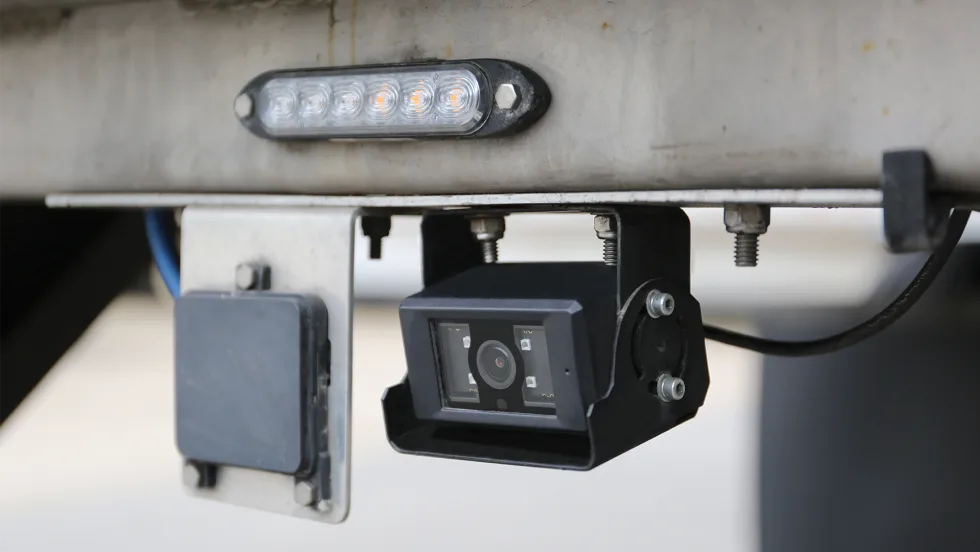
Grote: More Cameras, Same Seven-Way Connector
The next-generation 4See rear-view backup camera from Grote uses the standard seven-way connector and supports additional cameras and other trailer data.
Read More →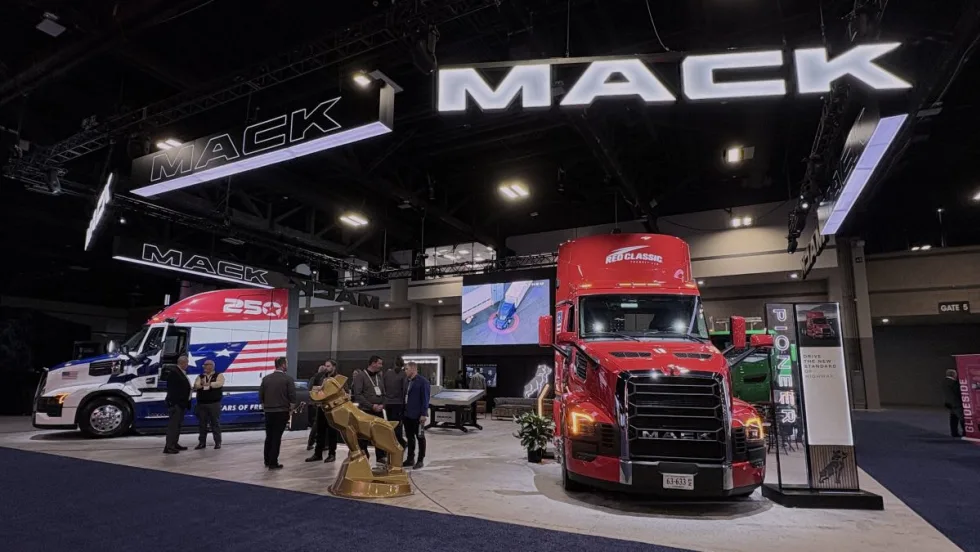
Trucks at ATA's 2026 MC&E in Charlotte, North Carolina [Photos]
From rigs decked out in patriotic America's 250 paint schemes to autonomous trucks and more, check out these photos from ATA's 2026 Management Conference & Exhibition.
Read More →
Help HDT Find Trucking’s Top Products
Have you come across a new product that could make a difference for trucking fleets? Nominate it for HDT’s 2027 Top 20 Products Awards by November 9.
Read More →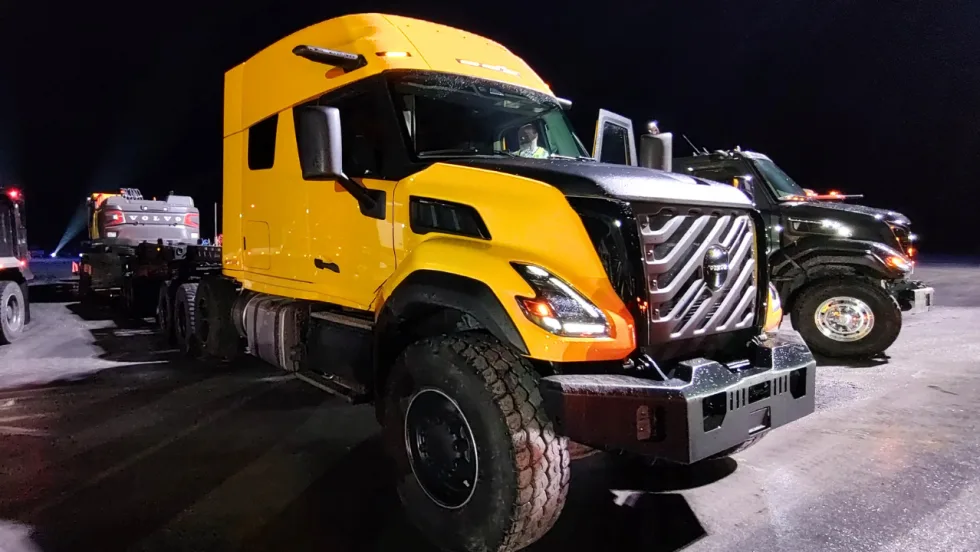
Volvo Unveils New VNX Heavy-Haul and Vocational Truck
Volvo Trucks has launched the VNX, a new vocational truck also available as a tractor in day cab and two sleeper configurations, with one heavy-haul model. The Volvo VNX is powered by Volvo's D13 platform, which delivers up to 540 horsepower and 1,950 pound-feet of torque and is EPA 2027-compliant.
Read More →
How GP Transco Cuts Trucking Fuel Costs, a Tenth of a Gallon at a Time
What’s another tenth of a mile per gallon worth? GP Transco shares how equipment upgrades and driver coaching turn small gains into meaningful fuel savings.
Read More →
Electric Yard Tractors Move Beyond Pilots
Operating-cost savings have overtaken sustainability goals as the leading reason surveyed fleets are adopting battery-electric terminal tractors, according to new NACFE research.
Read More →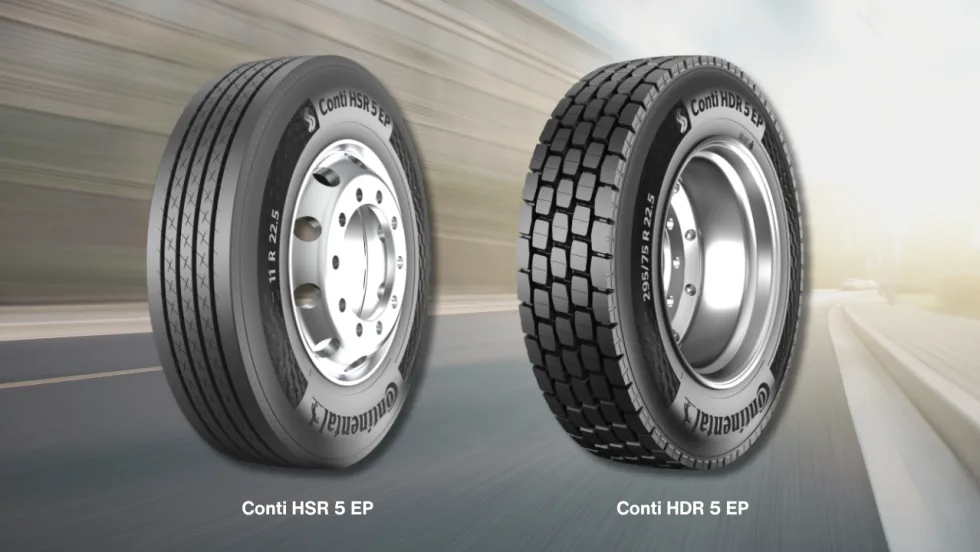
Continental Introduces New Regional Truck Tires
Continental says its new Generation 5 steer and drive tires for regional operations offer longer tread life, with estimated mileage gains of 22% and 19%, respectively.
Read More →