




Attorneys: Don't Restructure Yet Based on Graves Amendment Case
Although a recent court decision appears to strike a blow to fleet corporate structures where a separate company owns the equipment and leases it to the motor carrier or driver/owner-operators, one trucking-specialist attorney's firm says don't start restructuring just yet.
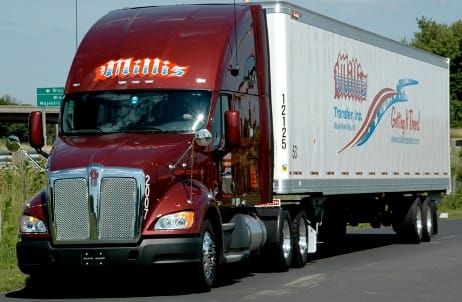
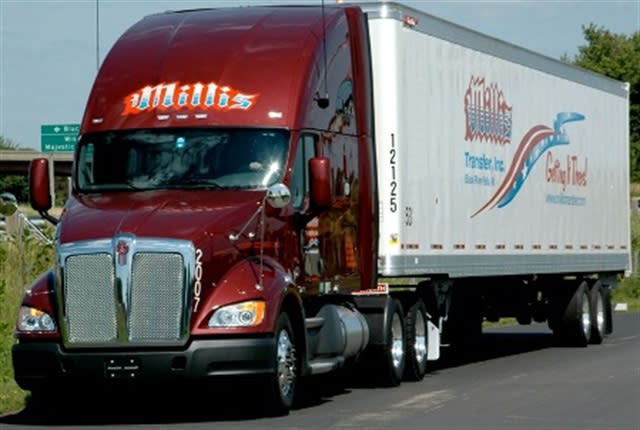
A federal court in the Western District of New York recently held that a tractor-trailer lessor can be held vicariously liable for the negligence of a lessee, even when that lessor is completely free of any wrongdoing.
The case, Stratton vs. Wallace, stems from a 2009 crash that happened when Julie Stratton hit a deer while traveling on Interstate 90 in New York. While presumably waiting for assistance in her disabled vehicle, a tractor-trailer driven by Thomas Wallace allegedly struck Stratton’s car. Stratton died as a result of the collision, and her husband filed a lawsuit against Wallace as well as against Wallace’s employer, Millis Transfer; the owner and lessor of the truck, Great River Leasing; and the parent company of both Millis and Great River, Midwest Holding Group.
Subsequently, the parties filed cross-motions for summary judgment regarding whether Great River is shielded from vicarious liability under the Graves Amendment, a federal statute which provides that a negligence-free lessor or rental company cannot be held responsible for the negligence of a lessee or renter.
The Graves Amendment reads as follows:
(a) In General. - An owner of a motor vehicle that rents or leases the vehicle to a person (or an affiliate of the owner) shall not be liable under the law of any State or political subdivision thereof, by reason of being the owner of the vehicle (or an affiliate of the owner), for harm to persons or property that results or arises out of the use, operation, or possession of the vehicle during the period of the rental or lease, if –
(1) the owner (or an affiliate of the owner) is engaged in the trade or business of renting or leasing motor vehicles; and
(2) there is no negligence or criminal wrongdoing on the part of the owner (or an affiliate of the owner).
The defendants argued that Great River, which owned the tractor and trailer at issue, operated solely as a lessor and is therefore protected under federal law. The plaintiff countered that Millis, the trucking company that employed Wallace, was alleged to be negligent, and that Millis is an “affiliate” of Great River. Therefore, the Graves Amendment does not apply.
The magistrate judge handling the pretrial matters recommended that summary judgment be granted to Great River, reasoning that Congress passed the Graves Amendment in order to abolish vicarious liability imposed by state courts and legislatures on vehicle-lessors and their negligence-free affiliates.
The district court disagreed with the magistrate’s recommendation and attempted to distinguish the situation from “[r]un-of-the-mill Graves Amendment cases—where the vehicle’s owner and operator are related only by an arm’s length contract . . . .”
The court determined that Millis and Great River are “affiliates” under the Graves Amendment, because they are both wholly-owned subsidiaries of Midwest Holding. The court further noted that the decision came down to a question of statutory interpretation: “(1) whether the parenthetical ‘(or an affiliate of the owner)’ . . . is intended to be a substitute for the word ‘owner’; or (2) whether the parenthetical is meant to be read in addition to the word ‘owner.’”
The court held that the phrase should be read “in addition to . . . ‘owner’” — meaning that, in order for the Graves Amendment to apply, both the lessor and any affiliates of the lessor, which in this case was the lessee, must be free of negligence. Accordingly, the court concluded that the Amendment does not shield Great River from vicarious liability, even though Great River’s only act was to lease the vehicle to Millis. Consequently, under the reasoning set forth in Stratton, negligence-free lessors may be held vicariously liable for the acts of lessees when the entities are found to be “affiliates,” a result that seems to clearly contradict the intention of the Graves Amendment.
So where does this leave us?
Many trucking companies have painstakingly designed and built structures like Millis to take advantage of the protections provided by the Graves Amendment and other similar laws. Although this case seems to attack the benefits of this structure, the analysis of this decision seems to be more of a veil-piercing expedition than an analysis of the Graves Amendment, which has been almost uniformly interpreted in this context since its drafting.
Don’t go restructuring based on this case. It should be overturned on appeal as being out of touch with the majority position. The case has garnered the attention of several industry groups, and hopefully, will have a short-lived effect on the industry.
By Rob Moseley and Kristen Nowacki are with the Smith Moore Leatherwood law firm, specializing in transportation issues.
More Fleet Management

How Telematics Improves Visibility, Control, and Performance in Refrigerated Fleets
Explore how telematics help refrigerated fleets improve visibility, uptime, efficiency, compliance, and cargo protection across connected cold chain operations.
Read More →
What the U.S.-Canada Trade War Means for Trucking
Escalating U.S.-Canada tariffs could disrupt cross-border freight, reduce truck volumes, raise costs, and create new uncertainty for carriers on both sides of the border.
Read More →
What Are Trucking’s Top Concerns for 2026?
The American Transportation Research Institute wants to know what's worrying trucking fleet managers, drivers, and other stakeholders in its annual Industry Issues survey.
Read More →

American Trucking Associations Looks for a New Leader
ATA President and CEO Chris Spear abruptly left his job at the association on August 21, at a pivotal time for the trucking industry.
Read More →
Public Wi-Fi Cybersecurity Risks: How Truck Drivers and Fleets Can Protect Their Data
Public Wi-Fi can expose truck drivers and fleets to credential theft, malware, and other cyber threats. Here’s how to reduce the risk on the road.
Read More →
For Nicky Cupp, Fleet Innovation Starts With Frustration
HDT Truck Fleet Innovator Nicky Cupp turns everyday pain points at Fraley & Schilling into opportunities for better technology and smarter processes.
Read More →
Adam Buttgenbach’s Approach to Electric Trucks: Start With Where They Fit
HDT Truck Fleet Innovator Adam Buttgenbach helped PepsiCo build one of North America’s largest EV fleets by focusing on where electric trucks make operational sense.
Read More →
Deen Albert: Let Automation Do the Math, People Make the Decisions
HDT Truck Fleet Innovator Deen Albert makes sure people are still at the heart of operations at Grand Island Express, even while adopting artificial intelligence tools. AI-assisted dispatch helped boost revenue 25% with the same number of trucks.
Read More →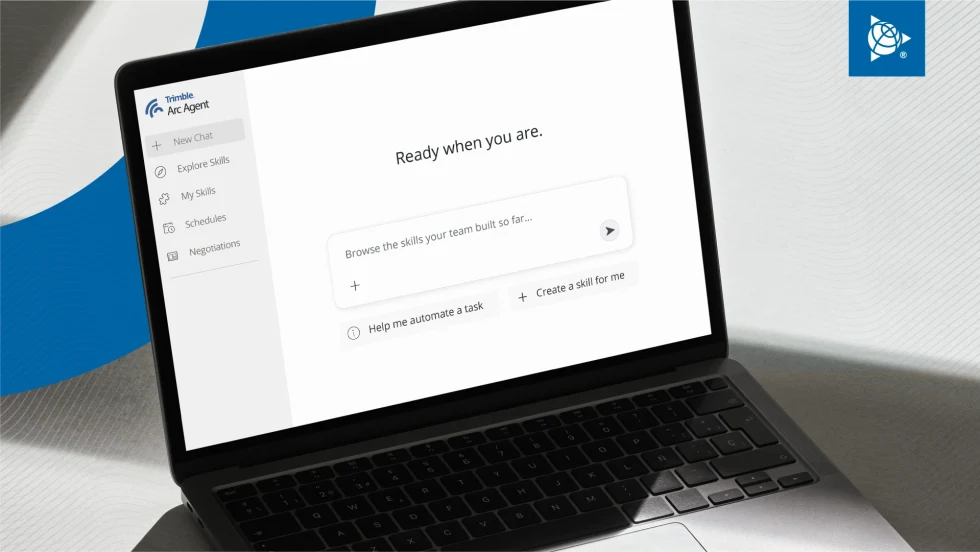
Trimble’s New AI Agent Takes Aim at Fleet Back-Office Busywork
Arc Agent works across Trimble TMS products to automate repetitive tasks such as freight orders, maintenance, invoices, fuel costs and more.
Read More →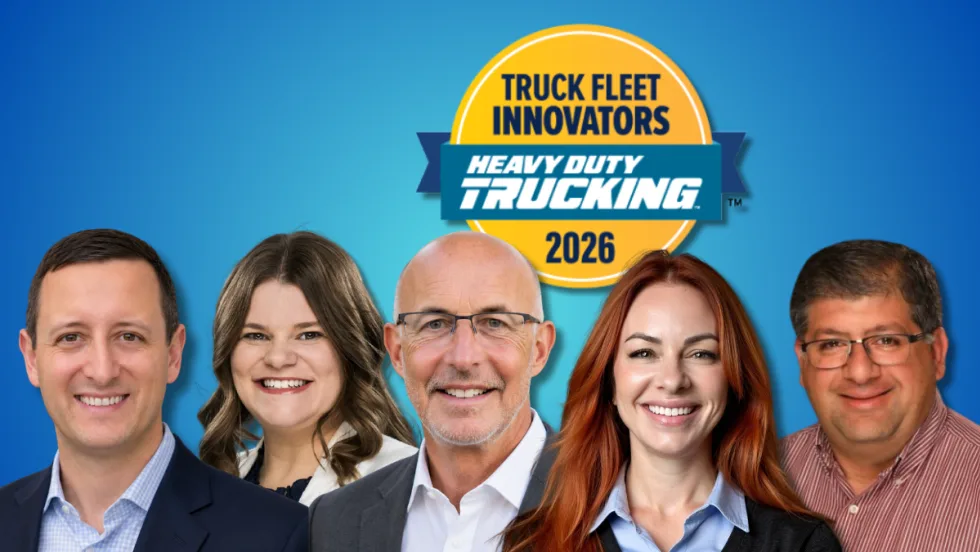
How HDT’s 2026 Truck Fleet Innovators Are Rethinking Fleet Operations
Meet five trucking leaders who are challenging assumptions, solving operational problems, and putting innovative ideas to work.
Read More →