





Related: The Trailer Talk Blog
Are You Ready for the New Food Safety Rules?
Under FDA dictates, shippers must specify in writing the sanitary requirements for vehicles carrying perishable foods.
May 29, 2015
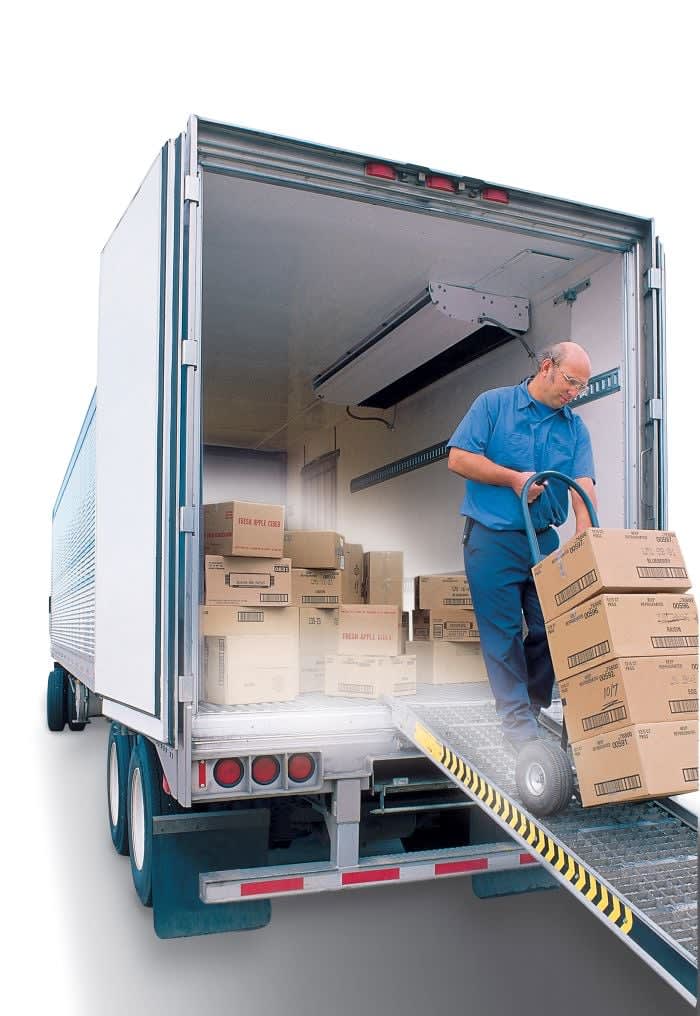
Shippers of perishable foods are supposed to tell carriers what they expect in cleanliness as new FDA rules phase in beginning this summer.
5 min to read
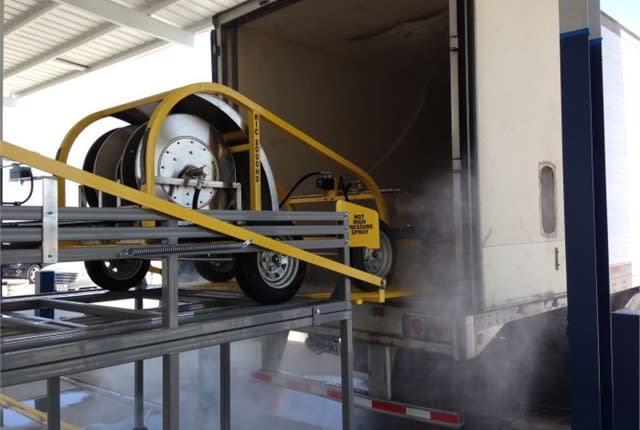
Automated washing equipment improves safety for workers and works fast, but requires dedicated space at a terminal or loading facility.
How clean must refrigerated transport trucks and trailers be under upcoming new federal regulations? Ask shippers, because it’s they who will decide, even if a lot of them aren’t ready to do so.
That’s the gist of a panel discussion at the Technology & Maintenance Council’s recent annual meeting. The Food and Drug Administration is writing rules to comply with the Food Safety Modernization Act that became law in January 2014. Various aspects will be phased in over 11 months, beginning June 30 and running through May of next year.
Congress passed the law following a string of incidents where contaminated food was sold in stores and eaten by consumers, some of whom became seriously ill and even died. Causes were usually traced to lack of hygiene among farm workers and sloppiness at food processing plants. In passing corrective legislation, Congress also brought in the transportation segment to be safe, observers say.
Under the FDA dictates, shippers must specify in writing the sanitary requirements for vehicles carrying perishable food and the temperatures that must be maintained, noted Bud Rodowick, manager, fleet performance for Thermo King. Temperature requirements are nothing new, but cleanliness is. FDA decided that the shippers of foodstuffs are in the best position to decide that, and truck operators should communicate with them to learn what they want and then determine how to accomplish it.
Perishables include fresh produce, poultry, meat and frozen foods carried in reefer trailers, and bulk grains, juices and milk transported in tankers, Rodowick explained. Any types of food that could be adulterated, contaminated, or affected by temperature or exposure to sunlight, air, etc., are subject to the rules. Prepackaged or canned foods will not typically be governed by the rules, with some minor exceptions.
What it means for trucking
Under the law, “transportation equipment” includes not only vehicles such as trailers and railcars, but also pallets, bins, hoses and fittings, and pumps and gaskets that are part of a food handling system, he said. Often the maintenance and cleaning of these are governed by state regulations, but the federal rules will add a layer of recordkeeping for shippers and carriers. Truckers who undertake the cleaning must set up and record standard operating procedures to be followed. Carriers must train drivers and others involved with perishable cargoes, and keep records of when and where the sessions occurred and what was taught.
The increased training and recordkeeping requirements are among concerns of the American Trucking Associations, said Warren Hoeman, a senior vice president at the group. Mandatory pre-cooling of a trailer before loading is among the requirements in the regulations, and ATA wonders who will enforce it and how. Overall there will be additional costs with no quantifiable benefits, ATA feels, and it has asked FDA to reopen the regulatory comment period, which expired earlier this year.
As for putting the regs into operation, Hoeman emphasized that “the FDA does not require temperature thresholds for products. They require the carrier to follow those thresholds put forth by the shipper and require them to be available to the receiver.”
Similarly, he explained, “the FDA does not provide guidelines or require cleaning your trailer a certain way. They require following the shipper’s guidelines on how and when to clean the equipment, visually inspect it and document it.”
“The Food Safety Modernization Act is evolving, and it is important to understand how the compliance requirements will affect your customers and you,” said Thermo King’s Rodowick. “Private fleets should visit with their quality assurance departments and determine how to help with these new FSMA compliance requirements. For-hire fleets should visit with your food facility customers and understand how they intend to be in compliance with these requirements. What do those requirements mean to your fleet?”
Shippers, carriers and receivers must all communicate so all understand what is being required and how it’s being done, Rodowick and Hoeman agreed. Fleet managers might have to approach shippers who seem slow to realize the ramifications of the law and new regs, and offer them advice and guidance.
What it means for equipment
Shippers of perishable foods are supposed to tell carriers what they expect in cleanliness as new FDA rules phase in beginning this summer.
Some managers might want to alter trailer specifications to make them easier to clean, said Charlie Fetz, vice president for design and development at Great Dane Trailers. Floor designs, gutter configurations and layout of the condenser at the front wall all affect the ease of cleaning. All interior parts, especially, should be regularly inspected for damage, because contaminants can hide in cracks and be difficult to deal with.
“Periodically, you will need to be able to get in behind your [front] condenser bulkhead to clean it properly,” Fetz explained, and that’s wise anyway because clean coils transfer heat more efficiently. “You will also need to be able to get inside your reefer unit to clean it periodically. The air chute does not typically get dirty. It usually has mechanical damage due to forklift masts.” In cleaning, don’t use any acids or other compounds that can damage interior materials.
The actual cleaning of a reefer trailer’s interior should start with a sweep-out, then proceed to washing manually, with high-pressure wands and proper detergents, or mechanically, with automated equipment, said Michael Gordon, vice president of American Truck Wash Systems. Detergents should be approved by the U.S. Department of Agriculture, preferably biodegradable products that will make approved disposal of wash water easy.
The manual vs. automated question depends largely on volume and a fleet’s resources, he said. A manual cleaning job requires training and supervising workers so they do a proper job, don’t let wash water pour down the wrong drains, and don’t get hurt. Occupational Safety and Health Administration rules apply. Automated systems limit or eliminate slips and falls, and operate fast and thoroughly. But it costs money and requires dedicated space.
In either case, consult local zoning and health, safety and environmental codes and follow those rules, as well, Gordon said.
Subscribe to Our Newsletter
More Equipment
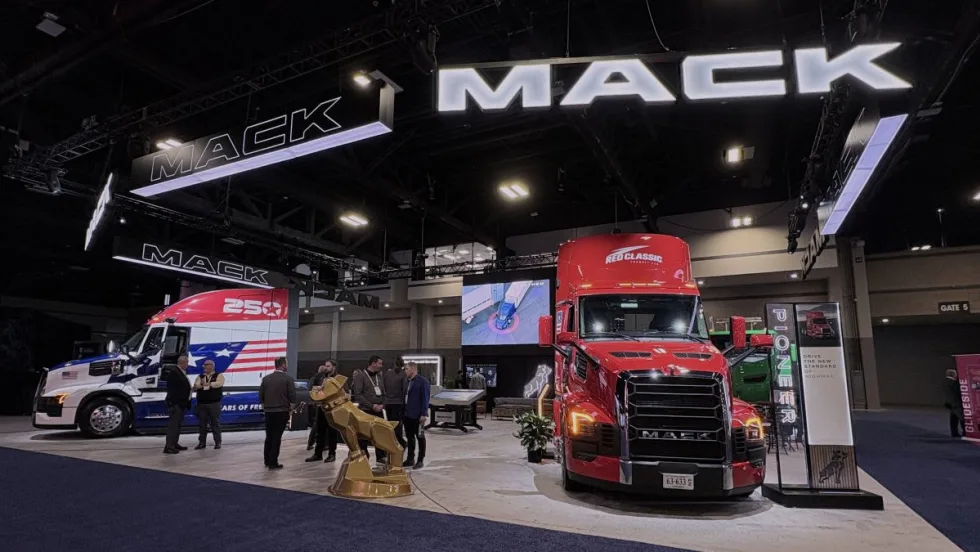
Trucks at ATA's 2026 MC&E in Charlotte, North Carolina [Photos]
From rigs decked out in patriotic America's 250 paint schemes to autonomous trucks and more, check out these photos from ATA's 2026 Management Conference & Exhibition.
Read More →
Help HDT Find Trucking’s Top Products
Have you come across a new product that could make a difference for trucking fleets? Nominate it for HDT’s 2027 Top 20 Products Awards by November 9.
Read More →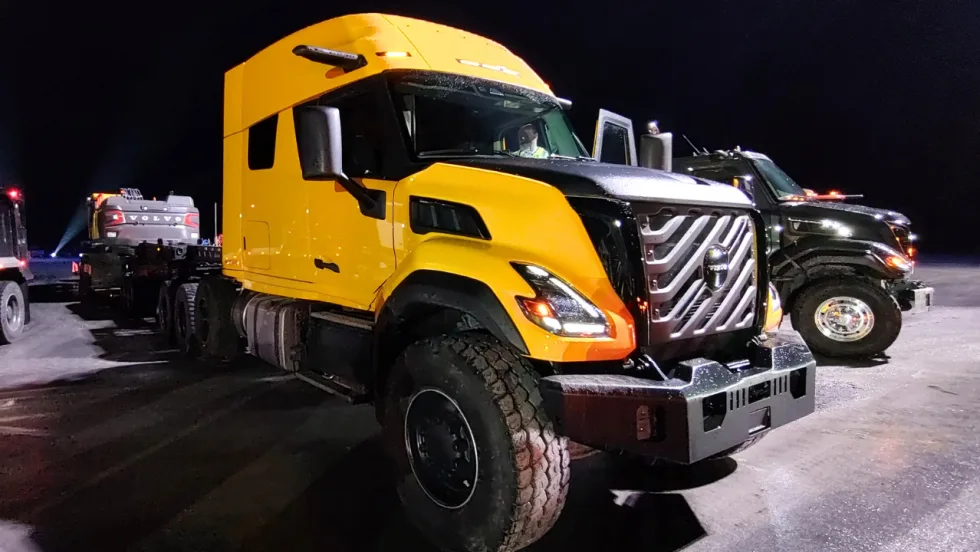
Volvo Unveils New VNX Heavy-Haul and Vocational Truck
Volvo Trucks has launched the VNX, a new vocational truck also available as a tractor in day cab and two sleeper configurations, with one heavy-haul model. The Volvo VNX is powered by Volvo's D13 platform, which delivers up to 540 horsepower and 1,950 pound-feet of torque and is EPA 2027-compliant.
Read More →
How GP Transco Cuts Trucking Fuel Costs, a Tenth of a Gallon at a Time
What’s another tenth of a mile per gallon worth? GP Transco shares how equipment upgrades and driver coaching turn small gains into meaningful fuel savings.
Read More →
Electric Yard Tractors Move Beyond Pilots
Operating-cost savings have overtaken sustainability goals as the leading reason surveyed fleets are adopting battery-electric terminal tractors, according to new NACFE research.
Read More →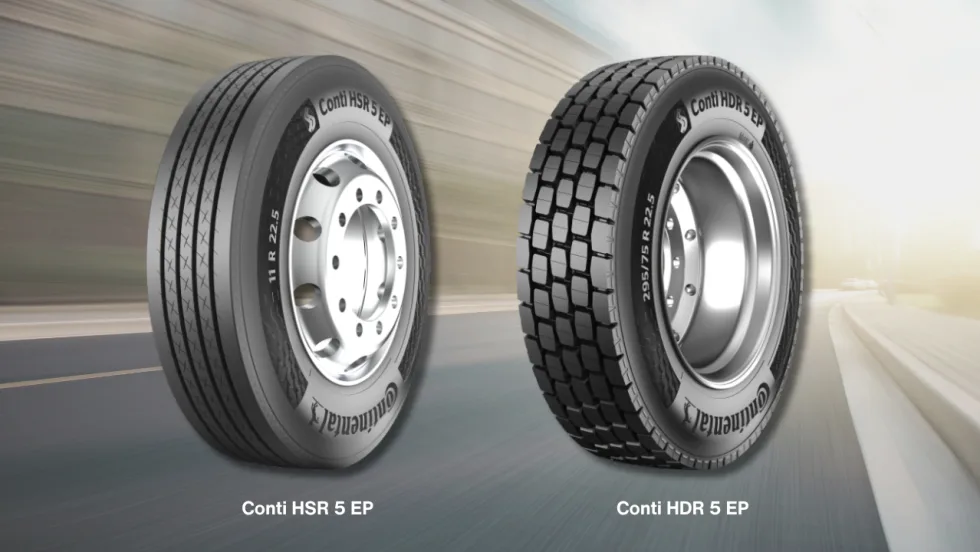
Continental Introduces New Regional Truck Tires
Continental says its new Generation 5 steer and drive tires for regional operations offer longer tread life, with estimated mileage gains of 22% and 19%, respectively.
Read More →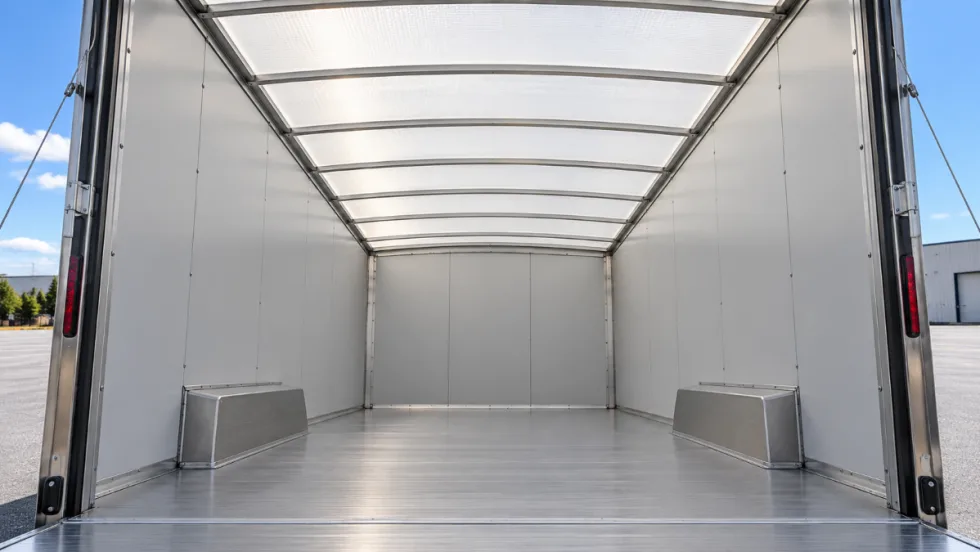
Tekmodo Introduces CargoBright Brand for Translucent Trailer Roofs
CargoBright is designed to diffuse daylight across the cargo area while performing as a working vehicle roof.
Read More →
Fleet Economics Shape Electric Truck Outlook
ACT Research expects costs, charging infrastructure, and technology improvements to drive zero-emission commercial vehicle adoption as federal regulations and incentives retreat.
Read More →
Kodiak Targets Dallas–Houston for Driverless Trucks
The company says its autonomous trucks are completing the I-45 run without a safety observer taking control. It plans to remove the observer by the end of 2026.
Read More →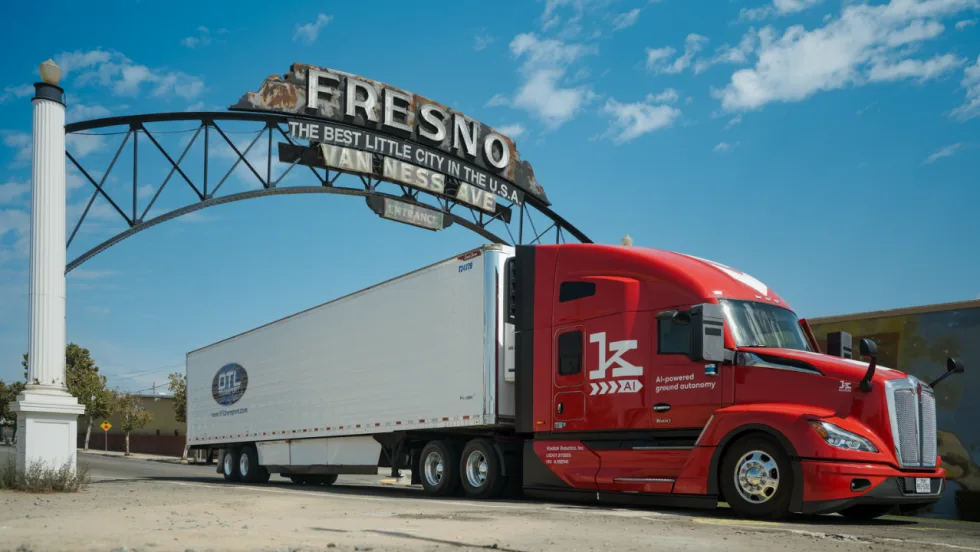
Kodiak Hauls Produce in California Autonomous Truck Pilot
Kodiak AI and DTL Transport have begun hauling produce between Fresno and Los Angeles under California’s new rules for testing heavy-duty autonomous trucks. A safety driver remains behind the wheel.
Read More →