




Are We Sacrificing Traction for Fuel Economy?
As more fleets embrace their fuel savings potential, a large portion of the driver population remains uneasy about low-rolling-resistance, fuel-efficient tires -- especially in winter. Has the quest for fuel efficiency pushed traction and safety into the back seat?

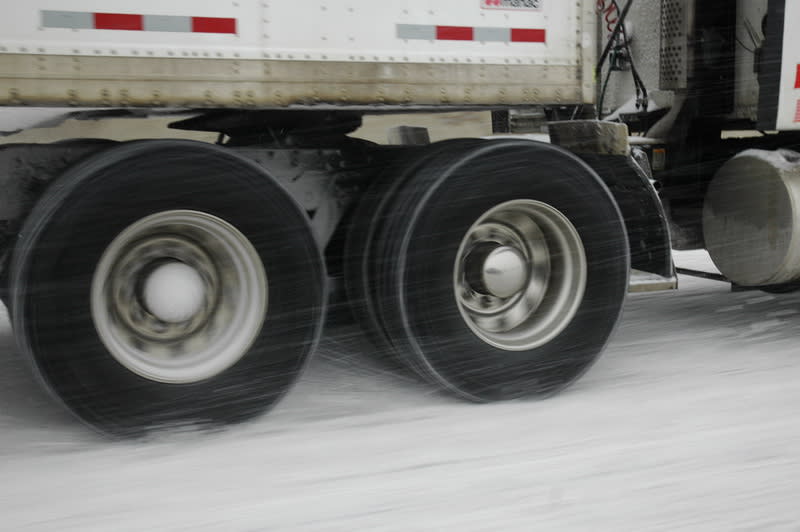
In most cases the traction losses are practically non-existent between traditional and fuel efficient tires.
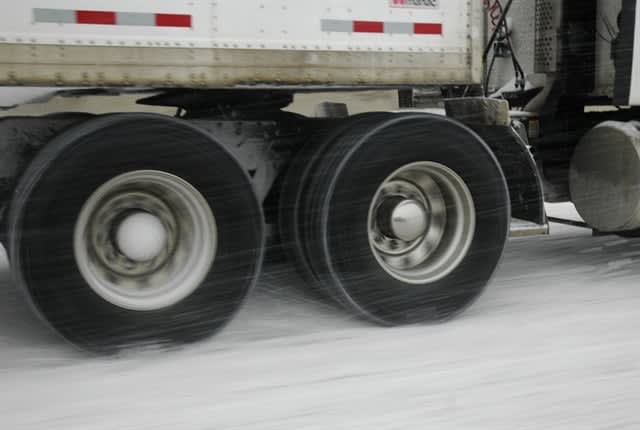
In most cases the traction losses are practically non-existent between traditional and fuel efficient tires.
It's not yet the end of November, but already wintery weather is blasting away at much of the Midwest and northern plains. Nothing unusual about that, except that this year and for the previous couple of years, low-rolling-resistance, fuel efficient tires have grown in popularity.
As more fleets embrace their fuel savings potential, a large portion of the driver population remains uneasy about these fuel-efficient tires -- especially in winter. Has the quest for fuel efficiency pushed traction and safety into the back seat?
The short answer is no, it has not. At least not significantly. Recent (2010) testing of EPA SmartWay certified tires in comparison to a reference tires did show differences, but there were also tires on the SmartWay list that outperformed the reference tire in traction tests.
With advances in design, testing and manufacturing capabilities, we've seen tires optimized for one attribute with only minimal sacrifices on other fronts. For long-haul customers, advanced tire designs have produced significant reductions in rolling resistance with no apparent compromise in safe operation, and perhaps only the perception of a reduction in traction.
"If rolling resistance targets continue to be driven down, there could come a point where traction becomes less than desirable," says Kevin Legge, project manager at Goodyear Tire & Rubber Company. "We're not there yet, and no tire company would let that happen, but there have been trade-offs in traction to improve rolling resistance."
Legge says the two largest truckload fleets in the country both use Goodyear's G305 18/32 drive tires across the entire fleet in 48 states, 365 day of the year.
"They have been doing so for years, over the mountains, through the woods, up in Canada, everywhere. I'm not aware of what their accident rates are, but obviously it's nothing that stands out," he says. "We're not at any point in time where we have a safety issue. We're not sacrificing safety to get a fuel tire. It's just perception that's holding a lot of fleets back."
Testing a Subjective Value
With traction concerns ranging from plain old wet pavement to slushy snow and even ice, it's difficult to isolate a condition that's suitable for a test scenario, and even tougher to get consistent results across the multitude of conditions a driver could run into. Pulling through deep snow requires a different "type" of traction than driving on slushy pavement or hard-pack snow.
When Smithers Scientific Services Inc. of Ravenna, Ohio, did their traction tests for Natural Resources Canada (NRCan) in 2010, it produced a video of the process that is not available publicly, but it was show to a select group when the results were presented. Briefly, Smithers measured the amount of torque that was applied to the wheel on a stationary vehicle before slippage occurred. There was a particular type of snow involved; soft-packed and slightly slippery, and the truck involved was a bobtail single-axle tractor fitted with the test tires.
The range of results enable Smithers to quantify which tires slipped first, last or somewhere in between. You could argue that the test conditions weren't similar enough to real life, but then, what's real life, given the varying conditions drivers face in winter anywhere in the country?
What the Smithers test did was identify which tires had better tractive properties under a precise set of conditions.
Tire manufacturers do testing of their own as well, as seen here in this Michelin wet traction test video, or this wet braking video. In each case, the environmental conditions are pretty carefully controlled -- a certain type of pavement, the amount of water on a track with a known coefficient of friction, etc. That's much harder to accomplish in winter testing because the track conditions can vary from one test to another throughout the day.
All that to say, even if you could measure winter traction accurately, the results would apply only to certain conditions and they would still be subjective.
Where the Rubber Meets the Road
The earliest efforts to improve fuel efficiency in tires included using shallower treads and harder rubber compounds. With today's design and manufacturing capabilities, tire makers are refining the shape of the sidewalls, making micro-improvements to tread patterns, and paying a lot of attention to what goes on between the tire and the pavement.
"If you used only one element when trying to reduce rolling resistance, that one would be hugely compromised," says Rick Phillips, director of commercial sales at Yokohama Tire Corp. "With the technology available now, engineers are able to spread the impact over several elements. You get a much smaller trade-off over a lot of areas rather than one big substantial hit."
In testing its 709ZL drive tire prior to release, Yokohama tested the tire in northern Michigan and found it had unexpectedly good snow traction. Phillips says it looks more like a rib tire than a lug tire, but a series of tightly spaced Z-shaped lugs arranged in a three-rib formation provide what he calls "astonishing" traction.
"One of the reasons we tested the tire was perception," he says. "We knew some would see it as a rib-type design. 'Sure it's fuel efficient, but it won't have very good traction.' It's a good example of how you can be fooled by what appears to be a pretty non-aggressive tread design."
Traction is a funny thing: We know when we don't have enough of it, but can we quantify how much we need or how much is enough?
"More might be better and less might be worse, but we don't know what's ideal," says Guy Walenga, Bridgestone's director of engineering, commercial products and technologies. "There is no 'normal' for traction, but anecdotal evidence says traction is not currently a problem."
CHARTS
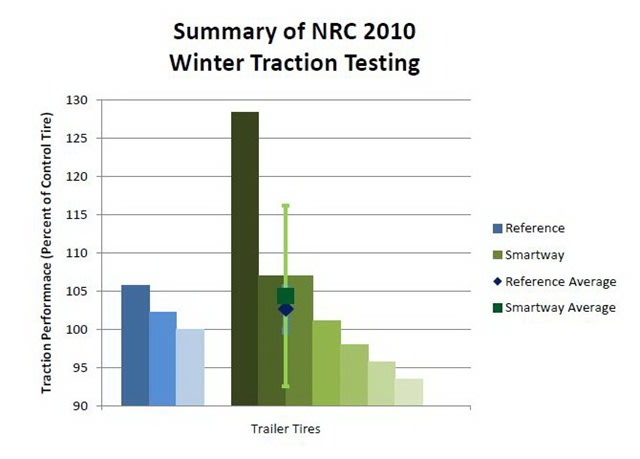
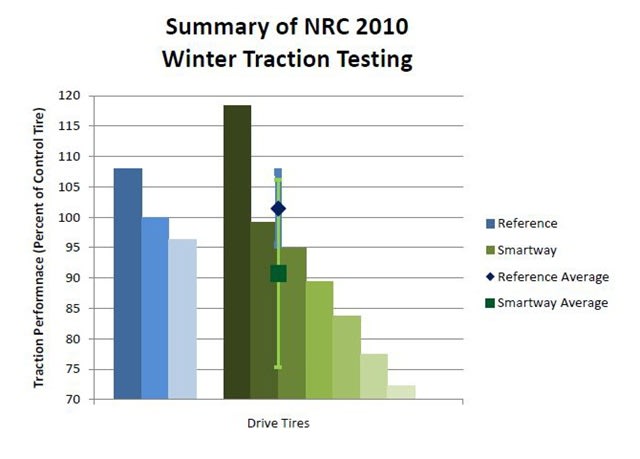
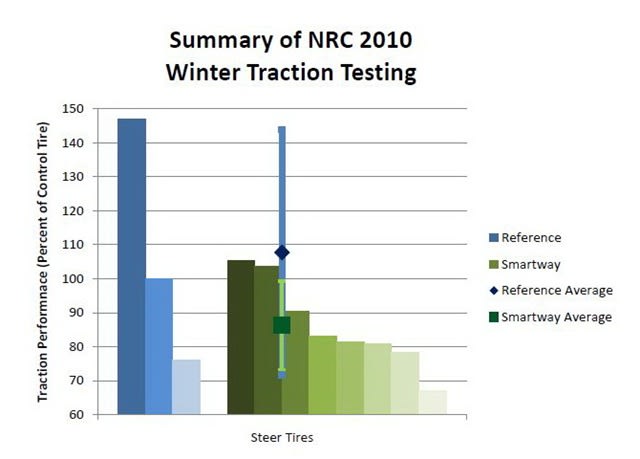
Smithers Scientific Services Inc. of Ravenna, Ohio, did side-to-side comparisons of 31 SmartWay and non-SmartWay certified drive, steer and trailer tires (along with three reference tires) in sizes 11R22.5 and 275/80R22.5. The testing revealed differences across the tires tested, but expressed as a percentage of the performance of the reference tire, the variations were not dramatic -- except in the cases of one un-named SmartWay drive tire and one of the reference steer tires. Excluding those two tires, the variations in tractive properties were within 20-25 percent.
Reference tires are shown in blue and SmartWay tires in green. The blue diamonds show the average of the three reference tires in each group and the green squares are the average of the SmartWay tires. The error bars are plus and minus one standard deviation from the average.
Note: The 100% values on these three charts are not the same. The values are based on the performance of one of the reference tires in that group. Thus, the charts show relative performance of the tires in that group, not an overall level of performance. (Source: Smithers Scientific Services for NRCan)
More Safety & Compliance
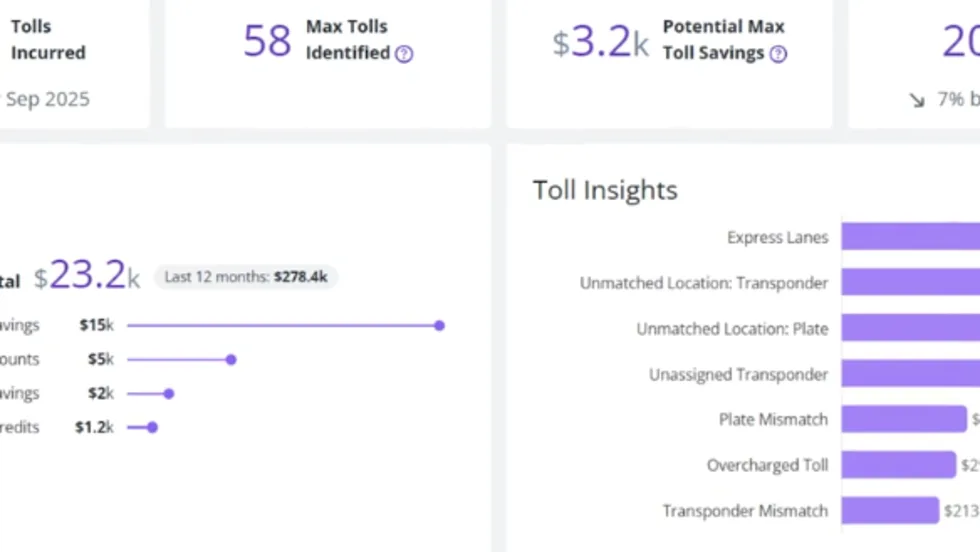
PrePass Intelligence Mines Fleet Bypass, Toll and Safety Data
PrePass Intelligence helps fleets measure bypass savings, flag potential toll overcharges, and spot suspicious transactions by combining data from separate systems.
Read More →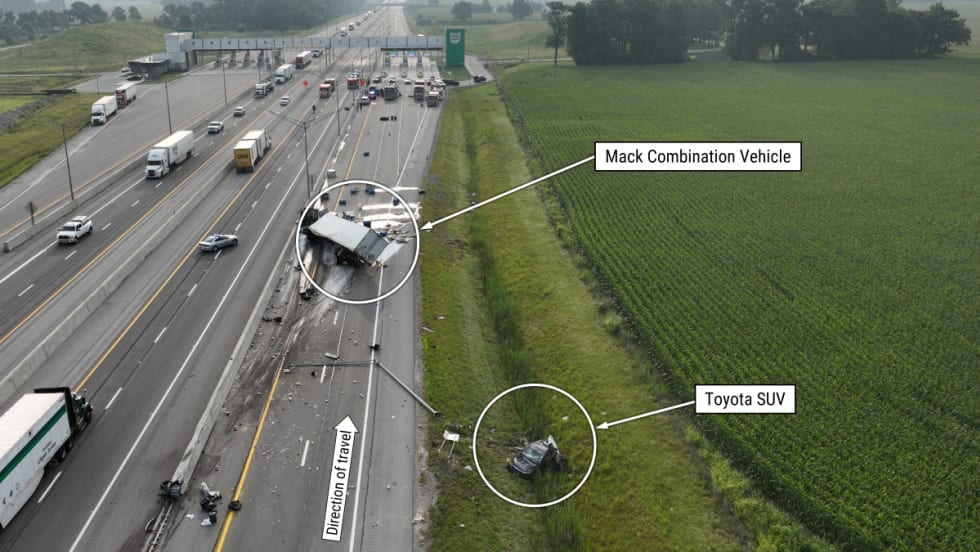
Fatal Crash Exposes Toll Plaza Risks
An NTSB investigation found that last-minute lane changes and large speed differences at an Ohio toll plaza created a hazard the truck driver couldn't avoid in time.
Read More →
When Language Stops the Truck: The Return of ELP Out-of-Service Orders
English language proficiency rules for commercial drivers aren’t new, but renewed out-of-service enforcement has raised the stakes. Here’s what carriers need to know before a driver reaches a roadside inspection.
Read More →
A Camera Isn't a Safety Program. Here's What Brokers Are Screening for Now
Footage alone may not be enough to pass broker vetting processes. Here's what counts as a defensible safety program now.
Read More →
Marijuana and Trucking’s Drug-Testing Dilemma
Marijuana is getting stronger, laws are changing, and drug tests still can’t reliably establish impairment. What does that mean for truck drivers and the fleets that employ them?
Read More →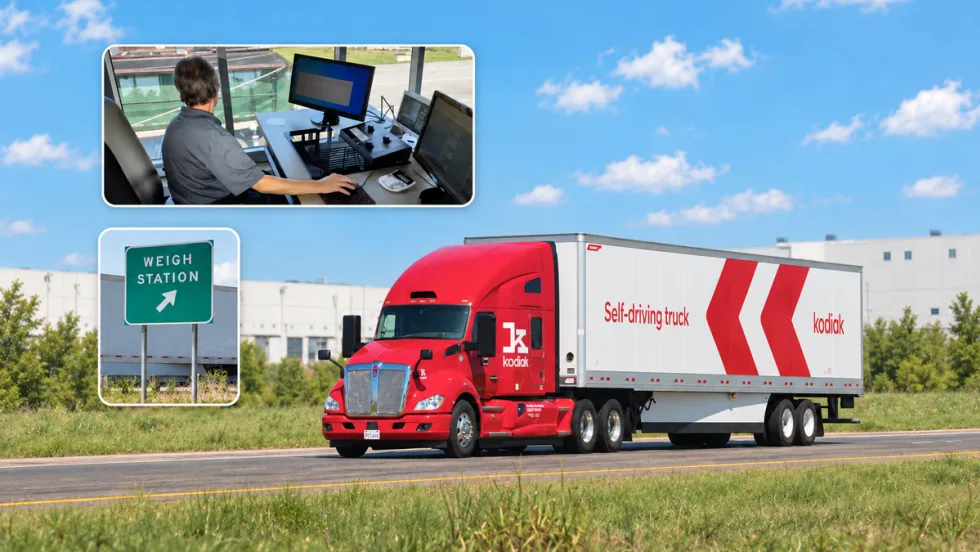
PrePass, Kodiak Connect Driverless Trucks to Roadside Enforcement
The system will allow enforcement agencies to verify Enhanced Inspection information and decide whether Kodiak’s autonomous trucks can bypass roadside screening sites.
Read More →
From One Generation to the Next: How Mentorship Builds Safer Truck Drivers
After three decades in trucking, Harold Perry shares what he's learned about driver safety, mentorship, and helping the next generation build confidence behind the wheel.
Read More →
FMCSA Pauses Biennial-Update Enforcement Amid Motus Transition
Carriers whose updates were due on or after June 1 have more time, while FMCSA works to stabilize its new registration system and warns of phishing sites impersonating its new carrier registration system, Motus.
Read More →
ZF Expands Commercial Vehicle Push in North America
ZF is expanding its North American commercial-vehicle presence with new transmission applications, electrification, trailer technology and autonomous-driving systems.
Read More →
Truck Drivers Need More Than Another Alert
Fleets have more visibility into truck health, safety events, and driver activity than ever. The next challenge is turning all that information into useful guidance for the person who has to decide what to do next.
Read More →