





Related: How to Shop the Perfect Upfit
6 Steps to Better Work Truck Body Upfits
Upfitting a truck chassis to perform a specific task requires planning and coordination among suppliers, fleet managers and end users.
March 8, 2016
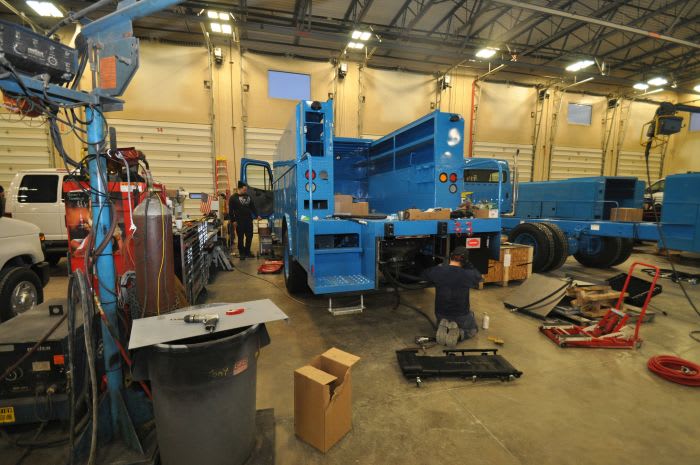
Upfitters will assemble exactly what’s spec’d, but need an advance warning of any special materials required. And, do the specs account for how the truck will be used and include input from the workers who’ll use it? Are the chassis’ wheelbase and cab-to-axle dimensions, among other things, correct for the body? Photos: Auto Truck Group
4 min to read
Upfitters will assemble exactly what’s spec’d, but need an advance warning of any special materials required. And, do the specs account for how the truck will be used and include input from the workers who’ll use it? Are the chassis’ wheelbase and cab-to-axle dimensions, among other things, correct for the body? Photos: Auto Truck Group
Upfitting a truck chassis to perform a specific task requires planning and coordination among suppliers, fleet managers and end users. So says a panel of experts assembled by Work Truck, an HDT sister magazine, who speak from experience in offering ways to optimize the spec’ing and upfitting process.
Involve the people who will be using the truck
The first mistake most fleet managers make is not involving the actual end-user in discussions. We constantly make every effort to involve the actual end-user, branch manager, or field technician in all upfit discussions. After all, those are the people who know how the equipment will allow them to perform their jobs safely, effectively and efficiently.
— Bill Byron, senior medium/heavy duty truck specialist, Donlen Fleet Management
Ask drivers and technicians for input on what they require to do their jobs on a daily basis. This will assist a fleet manager and upfitter designing a package to provide the necessary tools and equipment, while also ensuring the proper chassis selection.
— Steve Swedberg, truck engineering and ordering specialist, Emkay
Missing important operational factors (dock height, overhead height, forklift floor, load needs, etc.) can lead to a bad design that won’t meet field personnel needs. This may cause considerable wasted work effort and may cut into employee productivity. Work with your truck engineer to complete a site visit, see what the operating conditions are.
— Joe Brightwell, truck operations manager, Wheels Inc.
Understand operational requirements
Consider such factors as usage, terrain, weather, annual mileage, payload, maintenance, cargo, and cargo loading requirements. Don’t miss key performance requirements, such as the gradability and startability, which can greatly affect maintenance and longevity. For example, it is not uncommon for a landscaper’s truck with a 10-foot dump bed to climb steep grades of 10-11% while pulling a trailer. Specifying the wrong powertrain components can cause serious performance and maintenance issues on a vehicle such as this.
— Bill Gooden, vehicle upfit consultant, LeasePlan
Have realistic delivery expectations
Establish expectations and match them with supply chain capabilities. Consider the full scope of order-to-delivery — from the creation of specs through the keys landing in a driver’s hand. Stay current with OEM build schedule information to avoid a last-minute order placement and set realistic timing estimates with your company’s field operations and management team.
— Ken Gillies, truck ordering and engineering manager, GE Capital Fleet Services
A realistic timeline must consider such factors as weather delays, rail car shortages, and delivery time for upfit equipment. Typically, a vehicle with upfit requirements can take as much as six to nine months from order to delivery.
— Howard Goldman, vehicle purchasing manager, Merchants Fleet Management
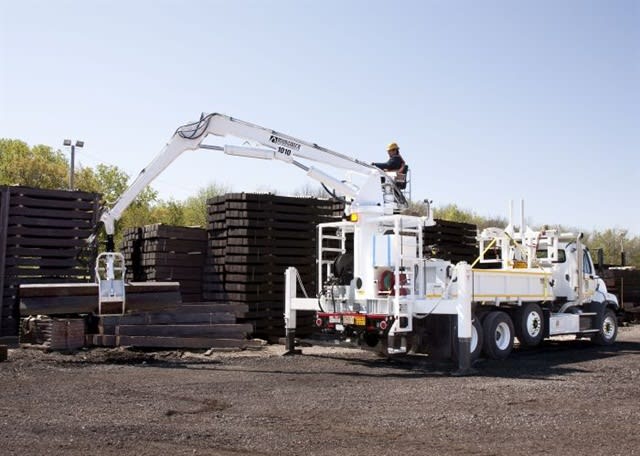
Consider all options
If a vendor is unaware of the upfitting requirements or that a vehicle is on the way, he will not be prepared and material will not be on the ground. This could add weeks or even months to the overall lead time. Be sure to consider all options at the time an order is placed and clearly identify the exact upfit you want.
— Mike Sturges, regional truck manager, ARI
Standardize where possible
Standardize your upfit package, if at all possible. Many fleets allow the use of too many specs or options. The ability to cascade, or move vehicles from location to location, becomes more difficult without a certain level of standardization. Furthermore, the ability to benchmark locations against each other also becomes more difficult when trucks are less similar.
— Chris Foster, manager, truck and equipment, ARI
Fleet managers can get a lot of pressure from their field personnel for very specific upfits. A close examination of equipment used across the fleet will usually yield a solid set of specifications that will perform admirably in all but a few circumstances.
— Joe Brightwell, truck operations manager, Wheels Inc.
Associated benefits to standardization include cost reduction — not just to the vehicle, but in volume discounts for every upfit component — as well as reduced lead times and improved quality, and more consistent build. Standardization also supports the quality assurance process and minimizes the need for individual inspections and quality control.
— Ron Wiggins, Truck Spec Analyst for ARI
Start planning early
Recognize that the process can be long: identifying which vehicles will need to be replaced in the next order cycle, deciding on what chassis to replace those vehicles with, nailing down upfit specifications, locking down hard quotes, ordering the replacements, actual production, and transportation. It all takes time, so start your planning cycle early enough.
— Joe Brightwell, truck operations manager, Wheels Inc.
Get vehicle orders in early enough to secure allocation with the manufacturer. Sometimes we receive orders one hour prior to final order cut-off. What can happen is the orders will be accepted, but days, or even weeks, later the manufacturer may respond that allocation is full and either the orders are canceled or the manufacturer rolls the orders over into the next model-year. If upfit equipment was ordered at the time the vehicle order was placed, it either cannot be returned or returned only after paying restocking fees.
— Joe Birren, truck design consultant, Donlen
Subscribe to Our Newsletter
More Equipment

How Volvo Updated Its D13 for EPA 2027 [Watch]
Volvo’s updated D13 promises lower emissions without sacrificing performance or fuel economy. Take a closer look at what changed inside the engine in this HDT Spotlight video.
Read More →
Michelin Tire Improves Efficiency and Durability for Regional Fleets
The Michelin X Multi Energy D2 is a regional haul drive tire engineered to help fleets improve fuel efficiency, durability and traction in demanding stop-and-go operations.
Read More →
ZF Expands Commercial Vehicle Push in North America
ZF is expanding its North American commercial-vehicle presence with new transmission applications, electrification, trailer technology and autonomous-driving systems.
Read More →
Tesla Wants a Self-Driving Semi. Are Cameras Enough?
Could Tesla’s camera-only autonomous driving technology work on an 80,000-pound Semi? In this commentary, HDT's Deborah Lockridge takes a look at Tesla, Cybercab, and how autonomous trucks see the road.
Read More →
Kodiak: Driverless Long-Haul Truck Launch on Track for 2026
Kodiak AI says its driverless long-haul safety case is 93% complete and it remains on track to begin commercial operations by year-end 2026.
Read More →
What DOT’s Automated Vehicle Strategy Means for Trucking
The U.S. Department of Transportation issued a new automated-vehicle strategy that outlines plans for driverless-truck regulations, cross-state freight corridors, and federal safety standards.
Read More →
East Coast Port Launches $45M Electric Truck Push
The Port Authority of New York and New Jersey announced millions in incentives for zero-emission drayage trucks, yard tractors, and new charging hubs near the port.
Read More →
PlusAI Going Public to Fund Autonomous Truck Launch
A SPAC deal could provide PlusAI with up to $300 million as it works toward a 2027 commercial launch of factory-built autonomous trucks.
Read More →
NHTSA Moves to Rewrite Truck Fuel-Economy Rules
The National Highway Traffic Safety Administration says it lacks authority to regulate medium- and heavy-duty truck engines separately from complete vehicles, but the existing standards have not yet been eliminated.
Read More →
Detroit Opens Orders for EPA 2027 Engines
Detroit isn’t starting from scratch to meet EPA 2027 diesel emissions standards. Its Gen 6 DD13 and DD15 engines keep much of today’s platform while updating the fuel and aftertreatment systems.
Read More →