




5 Tips for Servicing Cummins ISX15 Engines
Keeping abreast of the latest part updates and installation techniques can prevent costly errors and even catastrophic failures. Here are five tips for avoiding serious issues when servicing Cummins ISX15 engines.
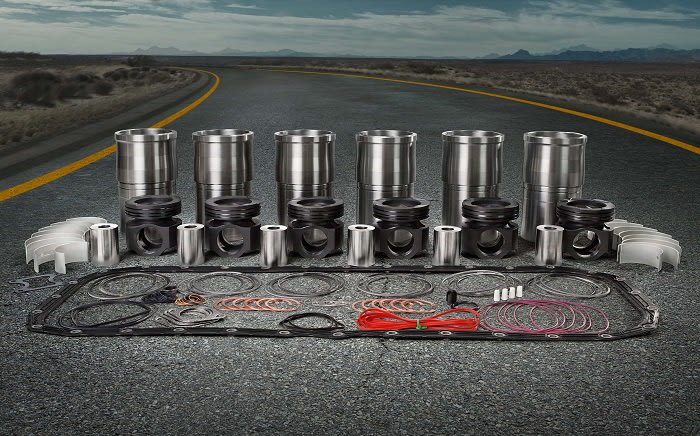
Photos courtesy of Industrial Parts Depot
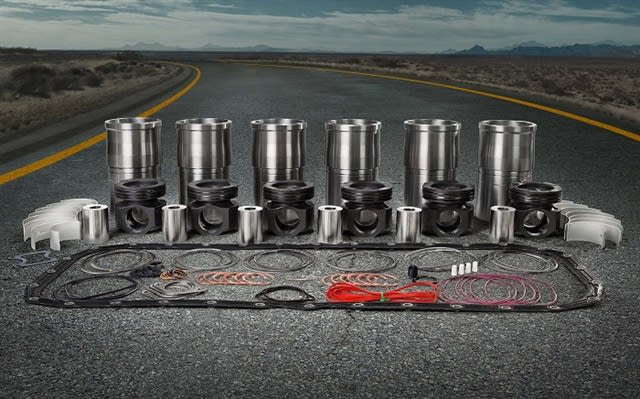
Photos courtesy of Industrial Parts Depot
There have been a number of important updates and changes that could significantly impact parts selection and service procedures when servicing Cummins ISX15 engines.
This engine series has become a very popular power source for over-the-road and vocational trucking applications. With a power range of 430-650 hp, these changes warrant attention, whether repairing an engine or performing a complete overhaul.
“There have been five different changes to the cylinder liner design,” says Steve Scott, director of technical support for Industrial Parts Depot in Torrance, Calif. IPD manufactures and distributes a broad range of replacement parts for Caterpillar, Cummins, Detroit Diesel, Volvo and Waukesha series engines. “It’s very important that purchasing and service personnel are aware of the differences in engine designs and installation procedures when they are servicing ISX engines – or severe problems can occur.”
Potential problems include excessive engine parts wear, premature failures, avoidable downtime, and even catastrophic engine damage.
Here are five tips that can help fleet specialists and engine rebuilders service Cummins ISX15 engines more accurately and efficiently, and in some cases with added savings of time and costs.
1. Choose updated critical parts
Cylinder kits are the heart of the Cummins ISX series engine overhauls. Many over-the-road users and engine rebuilders realize the importance of using cylinder kits that reflect the latest design updates. For example, the current update of OE pistons for ISX15 (15-liter, single cam) engines features a special bushingless design with a closed skirt that is specifically made to work with APR (anti-polishing ring) cylinder liners.
These are very significant design updates. Unfortunately, not all parts suppliers are in a position to keep up with the latest OE design changes and remain competitive. It’s important to choose a parts supplier that makes it a high priority to replicate OE updates for product lines when possible to ensure durability, endurance and interchangeability.
2. Use the special piston installation tool
Cummins ISX15 cylinder liners feature a removable APR that overhangs the liner bore.
The purpose of this ring is to remove carbon deposits from the upper portion of the piston. This helps prevent bore polishing of the liner walls, a situation that can result in significantly increased oil consumption. Bore polishing is surface wear that damages the liner surface.
To use the piston installation tool, remove the APR ring from the liner, insert the special tool, and then proceed to complete the piston installation. The piston installation tool prevents the piston rings from expanding into the APR ring groove, thus providing a smooth transition of the piston into the cylinder liner. There is a special installation tool currently included with each engine kit order. The updated style APR cylinder liner is induction heat-treated, includes a precision-honed ID, and has an OE-style APR carbon scraper ring. This liner also comes with a premium brass shim for ease of installation.
3. Protect oil ports and passages from particulates
Replacement of gaskets is an integral part of every in-frame or out-of-frame engine overhaul. When it comes to servicing ISX series engines, complete gasket sets should also contain a number of small plugs that are used to protect the oil ports of the cylinder head, as well as the cylinder block from dirt or other debris. This is an important procedure to follow. In fact, most bearing manufacturers report that the presence of dirt or foreign objects in oil passages is a leading cause of bearing failure. There is also the danger of debris entering the cylinder head ports and interfering with the camshaft and upper bushings.

4. Choose the correct style of connecting rod bearings
Cummins ISX series engines use three different styles of connecting rods, making it vital to use the proper type of bearings when replacing these parts. The early engines use non-drilled rods, which do not have an oil passage running through the connecting rod. Later engines use two types of drilled rods, a saw-cut type and a fractured type. These terms refer to the surfaces between the connecting rod and rod cap.
Matching the connecting rod with the correct bearings is critical.
The saw-cut connecting rod bearings (big end) are composed of an upper and lower bearing shell. The shells are marked according to their proper locations, and feature tabs that are slightly offset.
This bearing shell design does leave room for installation errors. In fact, it is possible to install them incorrectly and still be able to bolt the rod onto the crankshaft. If this happens, the rod will not get the needed oil supply and the engine will fail.
The fractured type of rods also requires upper and lower bearing shells, but due to the design cannot be installed incorrectly.
5. Press-in type camshaft bushings
On earlier ISX dual cam engines, the injector camshafts are massive compared to the valve camshaft, with a journal diameter of 85 mm (3.346 in.), and weighs almost 65 pounds. While it may be a common practice to drive the camshaft bushings in for other engines, installation instructions specify that the cam bushings (injector and valve) need to be pressed in (rather than driven), and also pre-lubricated. According to several cylinder head rebuilders, due to the size and amount of retention (crush) holding the injector camshaft bearings in place, the bushings cannot be driven in without distorting or otherwise damaging them, which can lead to bushing failure when the engine is put into service.
Considering the load that’s placed on the injector camshaft bushings, the timing for pressurized lube oil to reach the bushings (via the large oil port inside the camshaft) is critical.
It's important to review and understand manufacturer updates and changes in order to select the correct parts for your specific application, and also to follow current procedures when servicing Cummins ISX15 engines.
Egan Hernandez is in charge of marketing and communications at Industrial Parts Depot (IPD), located in Torrance, California. Since 1955, IPD has been designing and manufacturing a variety of diesel & gas engine replacement parts for a wide range of applications. Hernandez started at the company in 2011 and has over 25 years of parts marketing experience with manufacturing companies.
This article was authored under the guidance and editorial standards of HDT’s editors to provide useful information to our readers.
More Maintenance

Color Match Smarter: Tools That Restore & Perform
For fleet managers and collision repair professionals keeping heavy-duty trucks on the road, getting the color right the first time isn't just about appearance — it's about efficiency, turnaround time, and bottom-line results. Discover how today's digital color tools are transforming the repair process from guesswork to precision.
Read More →
Wrong Repair Prompts Recall of Freightliner, Western Star 4x2 Trucks
DTNA is recalling more than 2,400 trucks that received an incompatible software fix instead of the hardware repair required to address brake valve corrosion.
Read More →
Truck Drivers Need More Than Another Alert
Fleets have more visibility into truck health, safety events, and driver activity than ever. The next challenge is turning all that information into useful guidance for the person who has to decide what to do next.
Read More →
The Maintenance Checks Trucking Fleets Should Prioritize Before Fall Freight Picks Up
Making it through August isn’t the same as being ready for the next several months of operation. Find out what systems may have suffered from summer heat and need to be checked out before fall.
Read More →
What Three Fleets Are Doing Differently When Buying Truck Parts in 2026
With freight improving but costs still climbing, fleet maintenance executives explain how they're balancing price, quality, and supplier relationships.
Read More →
Paccar Recalls 2027 Trucks Built This Summer for Possible Electrical Problem
The nearly 6,000 Kenworth and Peterbilt trucks in the recall could potentially lose engine power, among other things.
Read More →
Will API PC-12 Oil Change Trucking Fleet Maintenance?
The new API PC-12 heavy-duty engine oil category reflects the changing demands of modern diesel engines. But fleets like Foodliner are looking to getting their own data before making decisions on adopting the new oils and questions such as extending oil drain intervals.
Read More →
Brake Safety Week to Focus on Drums and Rotors
Commercial vehicle inspectors are focusing on truck brakes during CVSA's Brake Safety Week, August 23-29.
Read More →Possible Battery-Cable Fires Prompt Recall of 15,000+ International MV and HV Trucks
On the recalled vehicles, manufacturing variations can cause the battery interconnect cable to contact the auxiliary stud and hold down the bracket.
Read More →
Rush, MCT Team Up to Grow Refrigeration Service Network
The joint venture will operate MCT's network of Carrier Transicold dealerships and mobile service locations, with the companies promising greater service capacity and uptime for refrigerated fleets.
Read More →