




5 Steps to Create a Safer Trucking Fleet
Follow these recommendations for making fleets safer as nuclear verdicts run rampant.
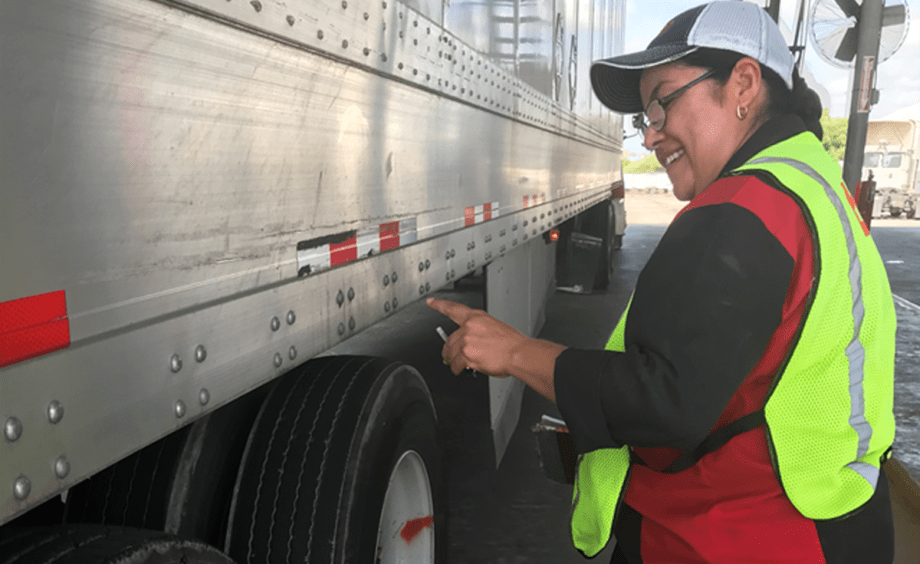
Fleet managers must follow up on identified safety concerns.
Photo: CFI
Nuclear verdicts arise when fleets have major process inconsistencies. For example, when a fleet has a safety policy but applies it inconsistently.
“That kind of inconsistency makes it easier to paint fleets as negligent,” explains Mark Murrell, president and co-founder of CarriersEdge.
Murrell lists five steps to a safer fleet.
1. Apply Fleet Safety Programs Consistently.
Murrell recommends using technology such as dashcams, telematics devices, and online safety training to monitor and develop safe driving practices.
“Too often fleets cherry pick which drivers get this technology to save money,” he says. “They pick drivers they think need it. But they may be unaware of other drivers exhibiting unsafe behaviors. Later, they end up with a nasty surprise in court. They must apply safety technology consistently across their fleets.”
2. Follow Up On Safety Concerns.
It’s not enough to gather data. Fleets must do something with it. It’s easy to say every driver will complete online training every month. But fleet managers must follow up on identified problems.
“Too many fleets do nothing with the information they gather and never follow up with drivers who need help,” he says. “But the first thing a plaintiff attorney will ask is: ‘What did you do with this data? Did you coach the driver? Did you fill in their knowledge gaps?’”
3. Tailor Programs to the Fleet.
Most fleets can access data on how drivers operate their trucks, the lanes they travel, and other concerns. They can use predictive analytics to pinpoint problems and driver behavior issues. But companies also can use this data to tailor safety programs to their needs, he adds.
4. Keep Training Records.
It’s one thing to say, “We train every month.” But it means little without records.
“Lawyers will tell you, if you cannot prove that it happened, it didn’t happen,” he says.
5. Develop a Safety Culture.
A safety culture grows when the entire company from top-to-bottom gets involved.
“Safety programs become more effective when all employees become active participants,” he says. “The safety program becomes the foundation for a better workplace culture.”
This article appeared as a sidebar in the October 2022 issue of Heavy Duty Trucking.
More Fleet Management

How MFA Helps Protect Trucking Fleets
Multi-factor authentication adds protection when passwords are stolen. Here’s how it works and where fleets should start.
Read More →
How Better Freight Data Helps Trucking Teams Get Ahead of Disruption
Trucking and logistics teams have plenty of data. The problem is getting the right information in front of the right people soon enough to act. Better-connected data can help teams spot trouble earlier and make smarter decisions before small problems become big ones.
Read More →
Trimble: Taking Artificial Intelligence in Trucking Beyond Faster Tasks
At Insight 2026, Trimble executives argued that fleets may need to redesign workflows to get more from AI as it introduced new products and enhancements. AI’s value will depend on how fleets combine automation with their people's knowledge.
Read More →

Nominations Open for HDT Emerging Leaders
Heavy Duty Trucking is looking for accomplished trucking fleet professionals under 40 who are making an impact and helping lead the industry forward.
Read More →
Why Private Fleets Are Taking More Freight
Private fleets are putting their own trucks on demanding customers and high-cost lanes as companies seek greater control over service, costs, and capacity.
Read More →
Color Match Smarter: Tools That Restore & Perform
For fleet managers and collision repair professionals keeping heavy-duty trucks on the road, getting the color right the first time isn't just about appearance — it's about efficiency, turnaround time, and bottom-line results. Discover how today's digital color tools are transforming the repair process from guesswork to precision.
Read More →
FMCSA Pauses Biennial-Update Enforcement Amid Motus Transition
Carriers whose updates were due on or after June 1 have more time, while FMCSA works to stabilize its new registration system and warns of phishing sites impersonating its new carrier registration system, Motus.
Read More →
2026 Blueprint for Countering Smarter Supply Chain Theft
Cargo theft is no longer just the cost of doing business. It's a multi-billion-dollar criminal enterprise exploiting vulnerabilities across your fleet, drivers, and supply chain.
Read More →
What the U.S.-Canada Trade War Means for Trucking
Escalating U.S.-Canada tariffs could disrupt cross-border freight, reduce truck volumes, raise costs, and create new uncertainty for carriers on both sides of the border.
Read More →
What Are Trucking’s Top Concerns for 2026?
The American Transportation Research Institute wants to know what's worrying trucking fleet managers, drivers, and other stakeholders in its annual Industry Issues survey.
Read More →