




4 Ways to Customize Trailers for Your Operations
“Anything that takes the burden off the driver, that makes the equipment safer to operate, that meets the application, and provides a cost and maintenance savings to give a better return on investment over the life of a trailer” are options trailer buyers should consider.


East Manufacturing built this custom Genesis Unloader trailer for C&J Bark Haulers of Hemlock, Michigan. Geographical considerations (such as Michigan’s unusual weight laws) are important in choosing options.
Photo: East Mfg.
As the Persian Gulf War was winding down, Saddam Hussein sent a team of engineers into the Kuwaiti oil fields to blow up hundreds of oil wells.
“They figured out a machine that would pinch the pipe shut to put the fire out,” recalls Tony Geisler, vice president of sales for Talbert Trailer Manufacturing. But how to get it to the burning wells? Talbert built two highly custom trailers to transport the machinery through the desert sand.
Your trailer needs are likely not so specialized. Nevertheless, options and customization can help tailor trailers to your needs.
“Anything that takes the burden off the driver, that makes the equipment safer to operate, that meets the application, and provides a cost and maintenance savings to give a better return on investment over the life of a trailer” are options trailer buyers should consider, says Chris Cooler, vice president of sales and marketing for East Manufacturing.
1. Improving Safety For Drivers and the Motoring Public
With a driver shortage and a litigious environment, options that improve safety for both the driver and the public are becoming more popular.
“Some of these options are safety features that benefit the customer immediately with insurance premiums, plus reduced downtime for injuries and reduced OSHA claims,” Cooler says.
Common driver-focused options include side doors, steps and handrails, says Susan Marvel, vice president of sales and marketing at Strick Trailers. Recessed swivel gladhands make for easier hookup. Skylights, translucent roofs, or interior lighting make loading and unloading easier and safer. She says rear-view cameras are also becoming more popular.
For vocational trailers, driver-friendly options include in-cab controls for dumps, lift axles, and tailgates, Cooler says. An oval front access door (mandoor) in trailers such as those used for refuse keeps a driver from having to climb up over the side for access. Tarps can be operated electrically instead of manually. On flatbeds, an integrated stairway can be built into the back.
On the road, air disc brakes are starting to catch on for better stopping distance and reduced collision risk, says Aaron Smith, Wabash National dry vans product manager.
Another option is an upgraded rear impact/underride guard such as Wabash’s Rig-16. “It weighs a little more and costs a little more, but for the customer trying to make sure they have the lowest-risk equipment on the road,” it’s worth it, Smith says.
Lighting is another safety area where trailer makers are seeing increasing interest. “Some fleets have come up with very specific lighting scenarios where they have multiple mid-term signals on their trailer for visibility,” says East’s Cooler.
At Wabash, “one of our most recent developments that we’re really excited about is the upper rear auxiliary brake light,” says Smith. Typically, a base trailer spec has brake lights at the bottom above the bumper. Wabash recently made standard an upper rear brake light (previously an option), and redesigned it to be brighter.
Heavy haulers may operate at dawn or dusk or even into the night, so Geisler notes that fleets may spec strobe lights, or “lights on the gooseneck when it’s detached from the deck and sitting by the side of the road.”

Corrosion-prevention options, such as galvanized landing gear, are a smart option for trailers operating in harsh winter conditions.
Photo: Strick Trailers
2. Make Your Trailers More Efficient
Many options help carry more payload, such as lightweighting or capacity-increasing options.
In addition to lighter-weight versions of components such as wheels, wide-base single tires, and suspensions and wheel-end components, some options cut weight out of the trailer body itself. For instance, Wabash National’s new DuraPlate Cell Core Technology cuts 300 pounds from a 53-foot trailer.
Lightweighting also can help with fuel efficiency, and aerodynamic devices, such as skirts and tails, can be installed at the factory. A few trailer makers, such as Wabash, make their own.
Technology options can also improve operational efficiency. Automatic tire inflation systems, which can be integrated with telematics, are increasingly popular.
“One thing that’s getting more attention now is telematics,” says East’s Cooler. Trailer tracking/GPS, door sensors, light-out detection, wheel-end vibration and temperature sensors, and cargo-detection sensors/cameras give fleets information needed to keep trucks loaded and moving. “That’s an example of a technology that would help fleets a good bit but is also expensive; [you have to evaluate] the cost vs. the ROI.”
3. Get the Right Trailer for Your Cargo
One of the most important considerations is the cargo to be hauled, which affects everything from floor choices to length to cargo securement.
In the oversize/heavy haul market, “every inch matters,” says Talbert’s Geisler. “Some customers, they’re hauling a general type of product and could go to one of our dealers and pick up a trailer off the lot.” But “yellow iron,” such as bulldozers and excavators, have gotten larger and heavier, he says.
And “there is a time when there are massive loads – not only heavy, but also high and wide – so we have to design a trailer that can safely accommodate the load to its final destination.”

Trailers can be tailored to best fit the loads you haul. A trend toward larger “yellow iron” means length and width options are crucial for machinery haulers.
Photo: Talbert
There are also load-securement options. For box trailers, instead of standard vertical logistics track, you can opt for tracks spaced closer together, or horizontal or flush-mount logistics track. There are interior decking systems, both manual and motorized.
For loads that cube out before they weigh out, says Strick’s Marvel, one possibility fleets may not think about is “building a drop trailer instead of the straight 53. People forget they can actually get a lot more” cargo in the trailer that way.
Some types of cargo need even more customization than others. For instance, Strick is seeing more demand for open-top trailers. These allow trailers to be loaded and unloaded from the top of the trailer with a crane.
Similarly, East has added sides, bulkheads and tailgates to flatbed trailers. “They’ll haul coils in one direction and haul scrap aluminum or steel in the other direction,” Cooler says. “So in one direction it acts like a tipper trailer and the other direction it behaves like a flatbed.”
Rendering trailers are a very specific dump application that calls for a number of custom options, says Cooler, to make sure the trailers are liquid-tight.
“They’re kind of a dump trailer being treated like a tank trailer,” he says. “We typically include floor drains to help them dump off the liquid before the solids, and splash shields and/or lids to help keep the material from splashing out of the trailer during transit. They could also include internal baffles, or intermediate gates, so you can haul two different materials in one load.”
For diminishing loads or vocational applications, lift axle kits can raise axles off the ground when not needed for more operational flexibility, trailer maneuverability, and longer tire life.
4. Help Your Trailers Live Longer
When looking at cost over the life of the trailer, options that reduce maintenance and extend life may pay for themselves. Corner-protection options can help prevent damage from low-hanging obstacles such as tree limbs. Some fleets want heavy-duty scuff liners or even ceiling liners to protect against damage from forklifts.

Trailer makers offer many options to help protect trailers against damage from forklifts.
Photo: Wabash
Strick’s Marvel says an increasingly popular choice is an exterior-bow roof. “A lot of times forklifts will snag a roof bow, so we have an option to put them on the exterior of the roof.”
Corrosion resistance is another factor, with options for aluminum materials and components or special anti-corrosion coatings. Parts such as the kingpin, the crossmembers, suspension hangers, and landing gear can be galvanized.
In short, there are many ways to customize your trailers for your application.
“There is not an easy solution to determining what you need,” says Talbert’s Geisler. “You’ve got to decide, is this investment worth the return? Do your homework, do your research, and partner with good reputable companies.”
This article originally appeared in the March 2021 print edition of Heavy Duty Trucking.
More Equipment

Help HDT Find Trucking’s Top Products
Have you come across a new product that could make a difference for trucking fleets? Nominate it for HDT’s 2027 Top 20 Products Awards by November 9.
Read More →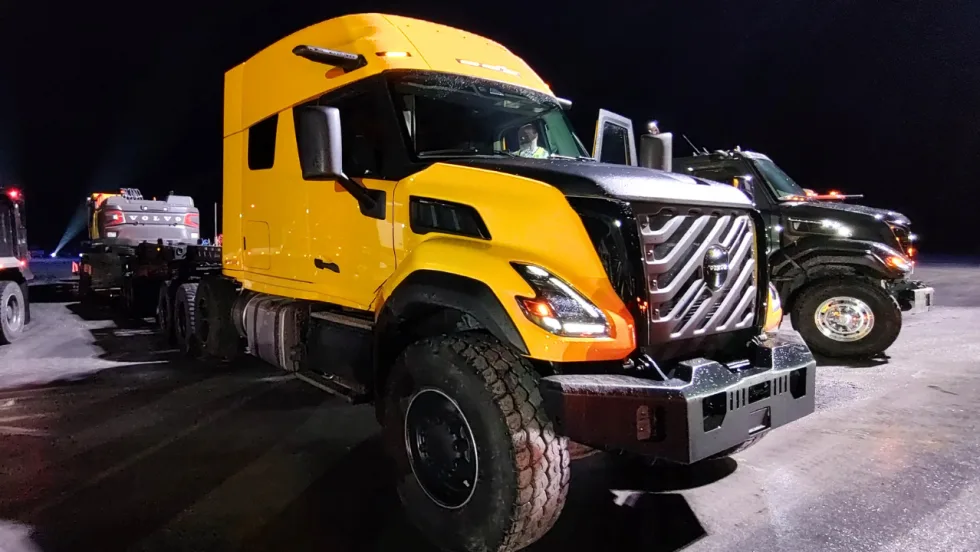
Volvo Unveils New VNX Heavy-Haul and Vocational Truck
Volvo Trucks has launched the VNX, a new vocational truck also available as a tractor in day cab and two sleeper configurations, with one heavy-haul model. The Volvo VNX is powered by Volvo's D13 platform, which delivers up to 540 horsepower and 1,950 pound-feet of torque and is EPA 2027-compliant.
Read More →
How GP Transco Cuts Trucking Fuel Costs, a Tenth of a Gallon at a Time
What’s another tenth of a mile per gallon worth? GP Transco shares how equipment upgrades and driver coaching turn small gains into meaningful fuel savings.
Read More →
Electric Yard Tractors Move Beyond Pilots
Operating-cost savings have overtaken sustainability goals as the leading reason surveyed fleets are adopting battery-electric terminal tractors, according to new NACFE research.
Read More →
Continental Introduces New Regional Truck Tires
Continental says its new Generation 5 steer and drive tires for regional operations offer longer tread life, with estimated mileage gains of 22% and 19%, respectively.
Read More →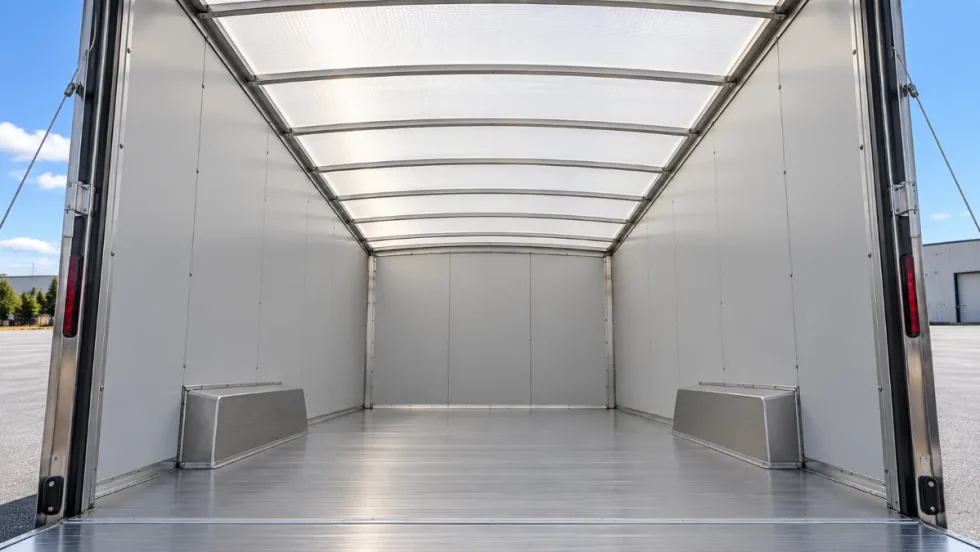
Tekmodo Introduces CargoBright Brand for Translucent Trailer Roofs
CargoBright is designed to diffuse daylight across the cargo area while performing as a working vehicle roof.
Read More →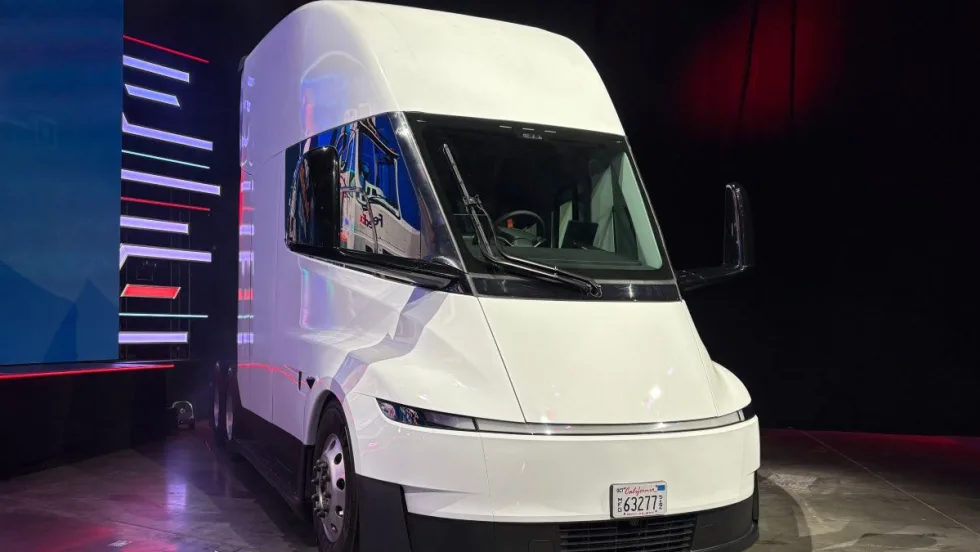
Fleet Economics Shape Electric Truck Outlook
ACT Research expects costs, charging infrastructure, and technology improvements to drive zero-emission commercial vehicle adoption as federal regulations and incentives retreat.
Read More →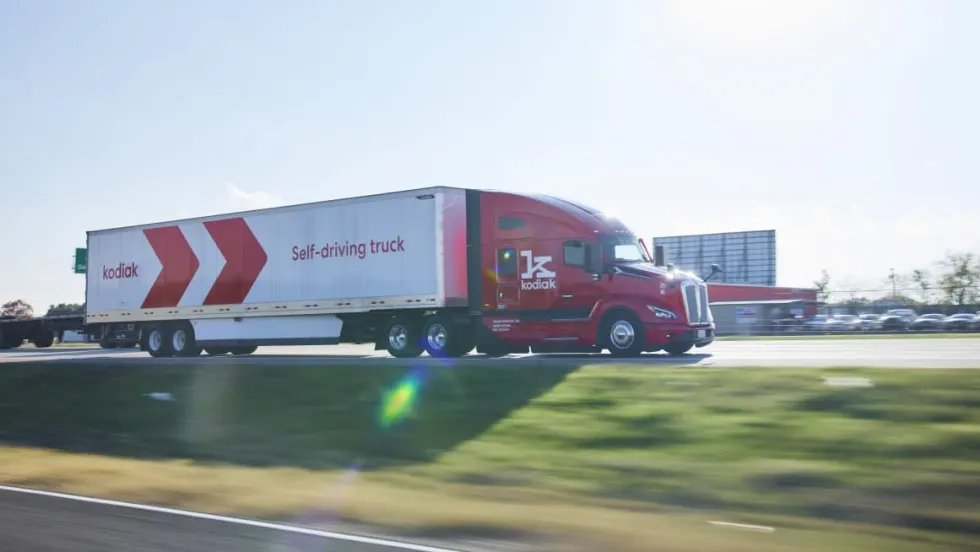
Kodiak Targets Dallas–Houston for Driverless Trucks
The company says its autonomous trucks are completing the I-45 run without a safety observer taking control. It plans to remove the observer by the end of 2026.
Read More →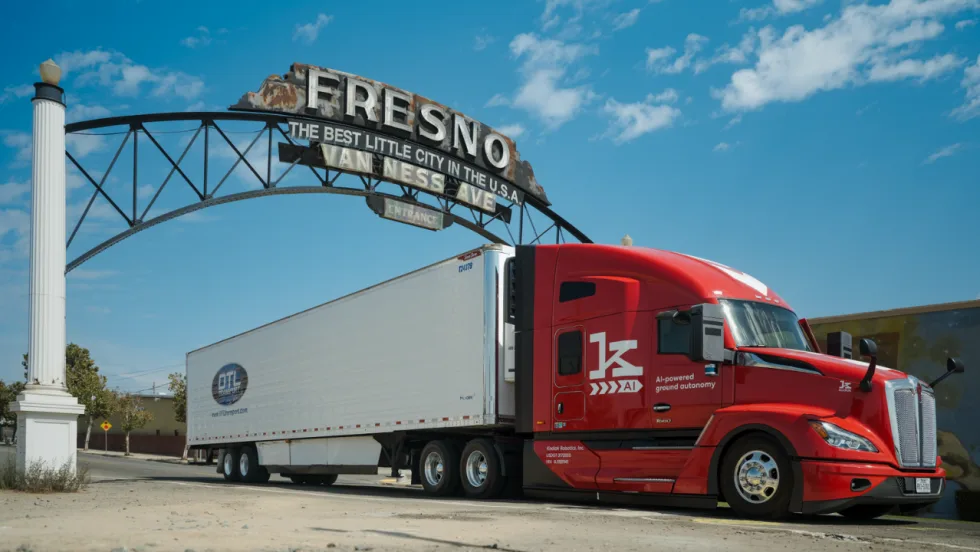
Kodiak Hauls Produce in California Autonomous Truck Pilot
Kodiak AI and DTL Transport have begun hauling produce between Fresno and Los Angeles under California’s new rules for testing heavy-duty autonomous trucks. A safety driver remains behind the wheel.
Read More →
Used-Truck Remarketing Math Is Changing
Used-truck value is no longer just a concern at trade-in. Decisions made throughout a truck’s first life can influence what it’s worth years later.
Read More →