




4 Trends in Liquid Tank Trailers
From federal regulations to spec’ing a new liquid tank trailer, there are many specific concerns for the liquid bulk tank truck industry.

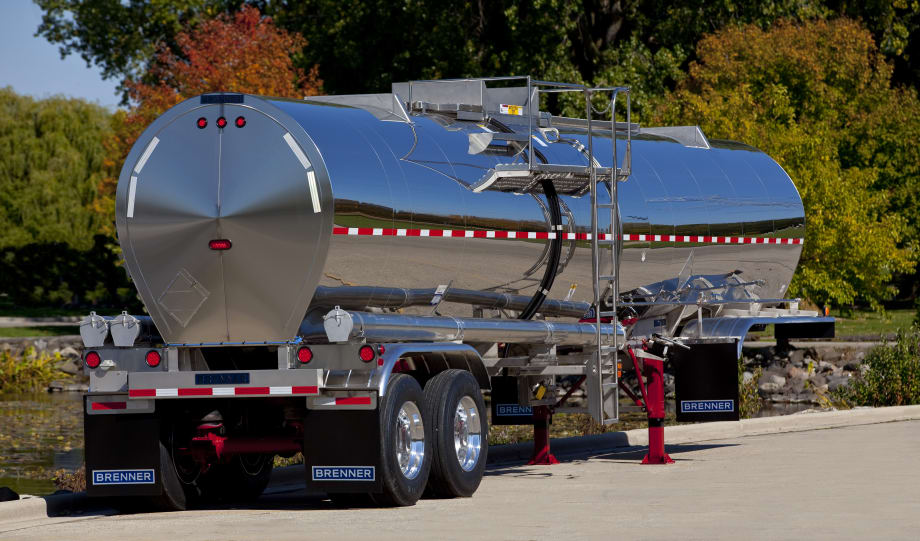
Wabash National’s The Walker Group says that there is a move to make liquid tank trailers lighter and more fuel-efficient.
The world of liquid bulk tank trucking is highly specialized and highly fragmented. According to National Tank Truck Carriers President Dan Furth, tanks make up approximately 5% to 10% of the trucking industry. About half of those are involved in hauling fuel. With petroleum production increasing domestically and the overall economy on the mend, the liquid tank segment is doing well.
Wabash National’s The Walker Group says that there is a move to make liquid tank trailers lighter and more fuel-efficient.
“Everyone is operating right now at a pretty good pace. The liquid tank truck segment is currently outperforming all other trucking segments largely due to the boom in oil and gas exploration. Trucking is a major economic indicator of the overall economy, and the bottom line is that fuel and chemicals tend to hedge the cyclicality of the economy at large,” Furth says.
Many issues face the liquid tank industry, from government legislation, hazmat and cross-border concerns to ways to make tank trailers lighter and more fuel-efficient.
1. Move to dedicated carriers
Trucking is a very low margin business, and it is a very expensive business – for the tank trailer industry, even more so.
“Getting into the liquid tank industry requires a serious investment. The industry is highly specialized no matter which commodity market you’re serving,” Furth says. The equipment is highly specialized and is much more expensive than your average dry van.
“A strong operator would have a loaded mile ratio at about 60%, which is much lower than the average truckload carrier and that’s due to the specialized nature of each individual trailer. Since you can’t put certain products into certain trailers, it’s common for tank trucks to generate revenue even when they are empty.”
Due to the highly specialized nature of the segment and the shortage of qualified drivers, Furth says there is a movement toward more dedicated contract carriers.
“For some [shippers], it comes down to either contracting a dedicated situation or they may not have their product hauled.”
2. Spec’ing for fuel efficiency and corrosion prevention
Fleets spec’ing liquid tank trailers are looking to lose weight and be more fuel-efficient, like other trailer types.
For instance, the Walker Group, a division of Wabash National, offers three options to make liquid tank trailers more fuel efficient, according to John Cannon, vice president of engineering.
The company recently introduced the DuraPlate AeroSkirt for tank trailers, which it says may yield up to a 7% improvement in fuel economy at highway speeds.
Two more fuel-saving/lightweight options are in the structural makeup of the tank trailer itself.
“The Lean Duplex 2 DOT specification tank trailers weigh about 700 pounds less than typical variants, and our new composite jacketing reduces tare weight of an insulated tank trailer by up to 300 pounds,” Cannon says.
Another example is the Macsimizer recently introduced by Mac Trailer, which has smooth-side walls for less drag resistance and air fairings to maximize aerodynamics and increased fuel mileage.
While corrosion from road salts is a problem for all trailers, with tankers you also have to worry about corrosion from what you’re hauling. That’s why NTTC and trailer makers are working to develop the first Liquid Products Database.
“This preventive measure will allow several decision-makers at all subscribing carriers to have better information up front to assess the compatibility of a chemical solution with a particular tank,” Cannon says.
“According to a 2002 study by the Federal Highway Administration and NACE International, the annual cost of corrosion for over-land hazardous material transportation is about $900 million.”
3. Driver shortage
The entire trucking industry is feeling the pinch of an increasing lack of qualified drivers, and tanker fleets are no exception. “With the highly specialized nature of this business, the shortage is even more severe than in other segments,” Furth says.
There is also a shortage of qualified liquid tank trailer technicians and mechanics, he says.
It’s made worse by the addition of federal, state and local regulations for hazmat that other types of fleets don’t have to deal with. Furth cites Boston’s ban on hauling hazardous materials as an example.
In addition, due to the often-dangerous nature of their cargo, liquid tank trailers are highly scrutinized as a potential tool for terrorists.
“We have never had a tank truck in North America involved in any terroristic activity, but it has happened in other places in the world,” Furth says. “This concern has resulted in yet another branch of the government that seeks to regulate our industry.”
This leads into the concern over the controversial Transportation Worker Identification Credential or TWIC card. This card was initiated as a security measure in an attempt to limit access to maritime port facilities.
For tank truck drivers, the TWIC card is causing some headaches. To get a TWIC card, the driver must have a current tank truck endorsement as well as a hazmat endorsement, which have separate fees.
Drivers are not able to apply for all of these things on the same day. They must make multiple trips sometimes to different locations for each endorsement and the TWIC card. This leads to a huge credentialing issue, which is also impacting the driver shortage, according to Furth.
4. Border crossing
Recently, the U.S. Custom and Border Protection agency decided there is a serious problem of liquid tank trailers not being fully emptied before they are brought back over the border.
“They discovered this accidentally,” Furth says. “Current procedure is that CBP X-rays every rail car that crosses the border, and they realized that there was material left in some tank cars as they returned to the U.S.”
CBP officials have decided they need to regulate all liquid tank transportation, including tank trucks, much more closely. The CBP did accept a Safe Harbor for truckers that would allow them to cross if residue is less than 3% of the trailer’s capacity and if there is no commercial value to the product. But determining that residual capacity is the problem.
“Almost every product features some adherence to the inside of the tank trailers. The driver could never know the volume of residue,” explains Furth. Due to safety concerns, the driver and officials are trained to avoid opening the tank trailer itself to check the levels.
“The only way to ensure that there is no product left means the trailer must be washed and cleaned prior to crossing the border. Otherwise, you’re looking at considerable brokerage expense per load. The trailers are unloaded the best that they can be. No one is intentionally smuggling one-tenth of a tank load into the country.”
More Fleet Management

Platform Science Adds Dispatch and Safety Tools
Four additions to PS Fleet help fleets monitor loads, manage driver coaching, share truck locations and adjust video system settings.
Read More →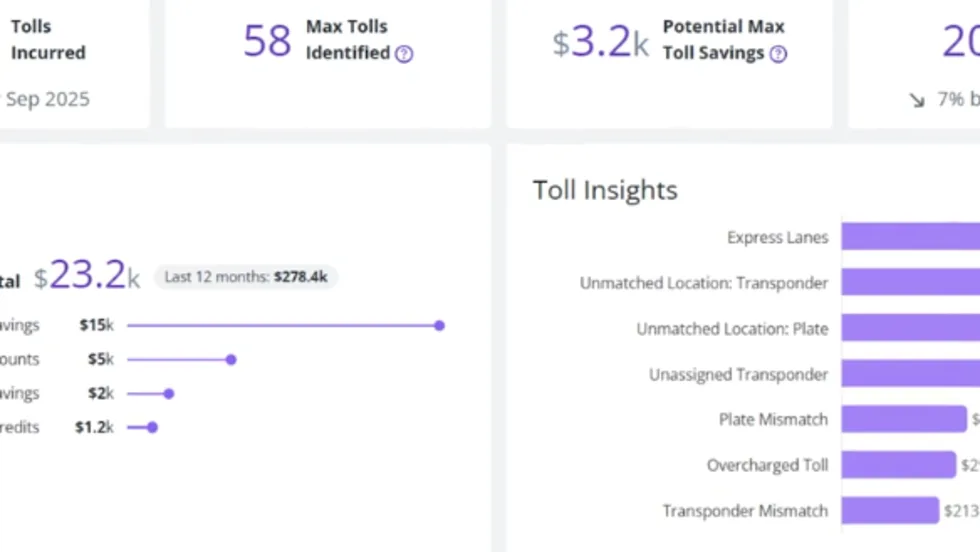
PrePass Intelligence Mines Fleet Bypass, Toll and Safety Data
PrePass Intelligence helps fleets measure bypass savings, flag potential toll overcharges, and spot suspicious transactions by combining data from separate systems.
Read More →
Motive Adds AI Agents for Fleet Operations
New tools automate follow-up on fleet data, from maintenance work orders to driver alerts, with two-way voice conversations planned for later this year.
Read More →
Can You Beat Our Trucking Trivia Challenge?
Test your truck knowledge with 19 trivia questions from Heavy Duty Trucking Exchange. Can you keep up with the fleet pros?
Read More →
BeyondTrucks Adds Rules Checks to Dispatch
New Compatibility Engine checks driver qualifications, equipment requirements and fleet policies before loads are dispatched.
Read More →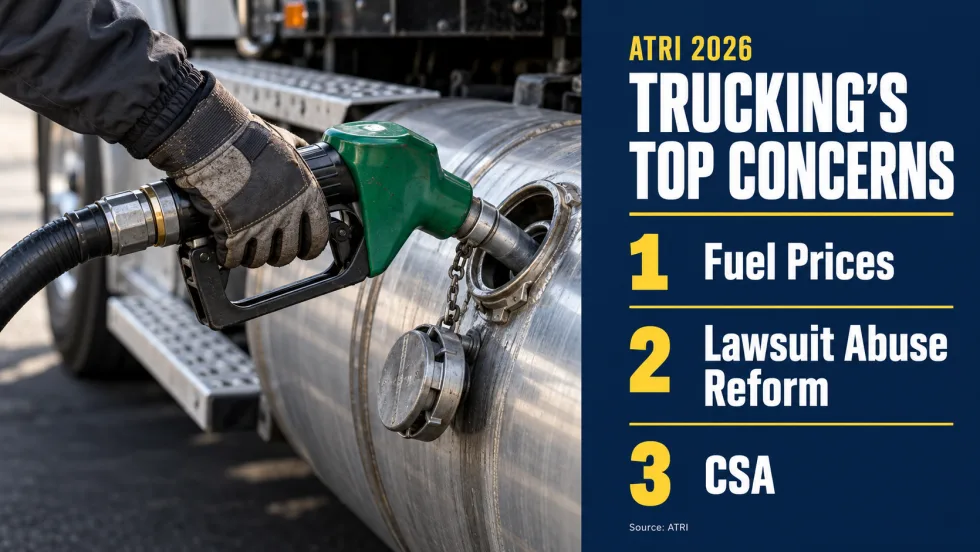
Diesel Prices Hijack Trucking’s Worry List
ATRI’s annual survey finds cautious optimism about freight, but diesel costs, litigation, and insurance continue to squeeze fleets. Drivers have different priorities on several issues.
Read More →
Nomination Deadline Extended for HDT Emerging Leaders
Just a few more days to nominate accomplished trucking fleet professionals under 40 who are making an impact and helping lead the industry forward for the HDT Emerging Leaders award. Deadline extended to October 20!
Read More →
What Will ATA’s New Leader Bring to Trucking's Table?
Incoming President and CEO Mark Colson’s record in Alabama offers clues about his priorities and approach following Chris Spear’s abrupt departure as the head of the American Trucking Associations.
Read More →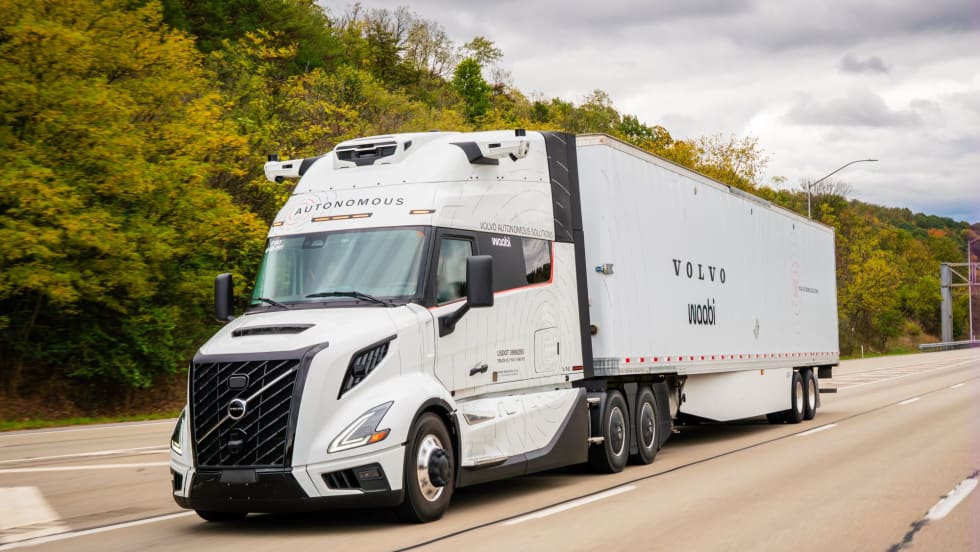
Volvo, Waabi Start Commercial Autonomous Operations in Texas
Volvo VNL Autonomous trucks, powered by the Waabi Driver, are hauling freight directly to third-party facilities for a customer in Texas.
Read More →
Samsara Launches Custom AI Agent Builder
Agent Studio lets fleets create AI tools for hours-of-service monitoring, reporting and driver support, including agents that communicate by phone.
Read More →