2021 HDT Fact Book: Winners in Logistics Adapt to Fast-Changing Demands
Supply chains have had to adapt to rapidly changing conditions and challenges. Has the logistics world achieved the ability to expand or shrink capacity depending on ever-changing variables? Check out this logistics data from HDT’s 2021 Fact Book.
Heavy Duty Trucking’s annual Fact Book issue is designed to provide a snapshot of the current state of the industry, where it’s been, and where it’s going. These numbers can help you in planning and benchmarking your fleet, and in telling trucking’s story to others.
Graphic: HDT
2 min to read
“Resilience” has been a buzzword in the logistics world as supply chains and logisticians have had to adapt to rapidly changing conditions and challenges, including supply-chain challenges triggered by the COVID-19 pandemic and tight capacity in trucking and other freight transportation modes. A related term we’re seeing is “elastic logistics” — the ability of supply chains to expand or shrink capacity depending on ever-changing industry variables.
Ad Loading...
E-commerce and omnichannel supply chain strategies were already trending upward but accelerated with the COVID-19 pandemic. Adobe Digital Insights estimates e-commerce has been pushed forward four to six years as a result of the COVID-19 pandemic. On top of growing e-commerce, expanding urbanization also means more last-mile delivery demand.
The demand for warehousing also continues to grow, especially in urban areas, with some fleets expanding more into that business. Warehouse automation is increasing.
Ad Loading...
Cold chain logistics is increasingly in the spotlight. Even before the pandemic, cold-chain technology was advancing, and temperature-sensitive biopharmaceuticals were becoming more common. COVID-19 brought with it empty meat and milk counters at supermarkets and vaccines that had to be kept at precise temperatures. All these factors have led to increased demand in areas such as temperature-controlled transportation and refrigerated warehousing.
Intermodal freight transportation has been booming, but port congestion and problems getting enough containers and chassis to the right place at the right time are snarling logistics for many companies.
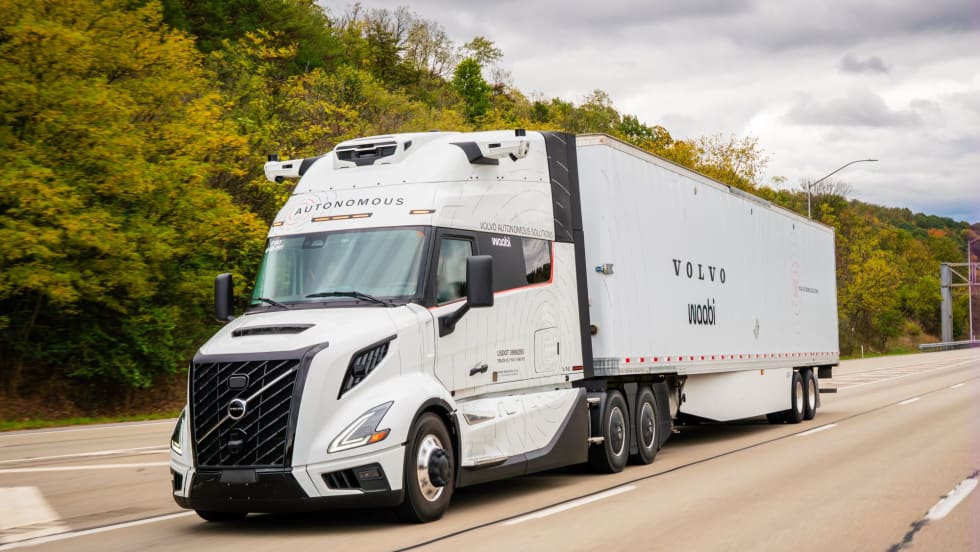
And there’s the question of how emerging technologies such as drone delivery and autonomous-truck technology will affect the world of logistics.
To help meet these challenges, we’ve seen the digitization of logistics continue to grow. Brokerages and third-party logistics providers are being transformed through technology and digital freight marketplaces. The growth of technology companies focused on the logistics and supply chain networks is not slowing down. We’re seeing some of these companies undergo mergers and acquisitions, and that will likely continue in the coming years.
Part of that digitization results from a demand for end-to-end visibility of shipments. We’re hearing more about a “control tower” approach to connect systems across every aspect of the supply chain. This may be too much for the average shipper or carrier, leading to growing importance of technology-based third-party logistics companies. As the world moves toward data-driven decisions, this will become a key strategy for 3PLs.
Many leading third-party logistics providers saw higher revenues toward the end of 2020, according to the Council of Supply Chain Management Professionals' State of Logistics report. However, some 3PLs struggled to maintain profitability, as the efficiencies they’d built and lanes they were counting on got disrupted. In turbulent times, the deep knowledge and wide network of a 3PL become more valuable. Yet turbulent times place increasing pressure on 3PLs to have developed the right strategies in the past and to implement the right insights in the present. 3PLs that prioritized resilience will become the dominant leaders in the segment.
Source: CSCMP State of Logistics
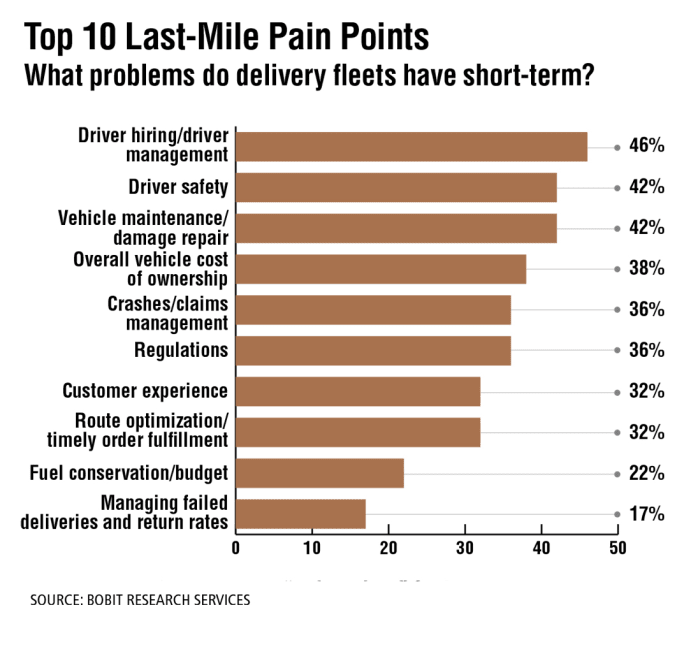
When asked about the top “pain points” for last-mile delivery operations, driver issues topped the list in a late 2020 survey conducted by Bobit Research Services among readers of HDT and other Bobit fleet brands.
Source: Bobit Research Services
In a 2020 Bobit last-mile delivery fleet survey, more than a quarter of respondents had a contract with a major parcel carrier. The most common were FedEx (35%) and Amazon (26%).
Source: Bobit Research Services
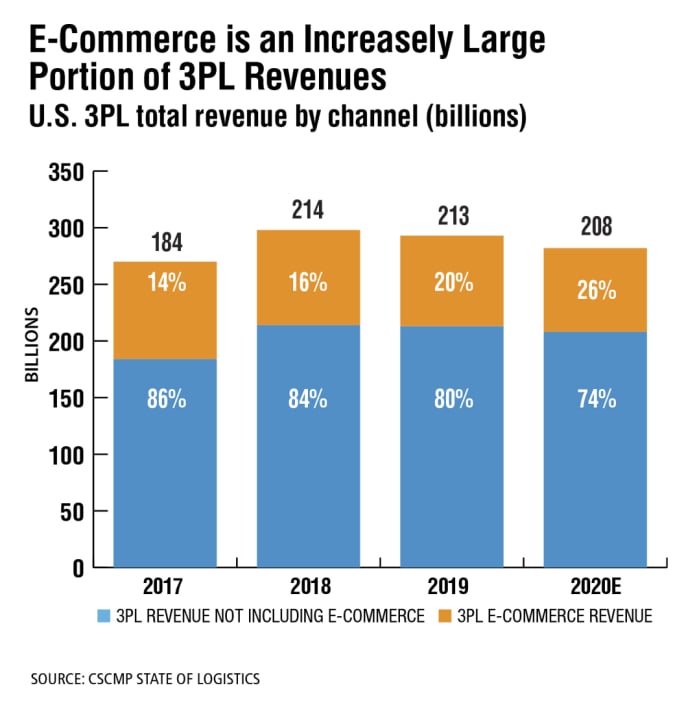
The rise of e-commerce has complicated downstream planning—and makes up an increasingly large portion of 3PL revenues. Because e-commerce has razor-thin margins and sky-high expectations, reducing operational costs at high service levels requires more shipper-3PL collaboration than any other type of distribution.
Source: CSCMP State of Logistics
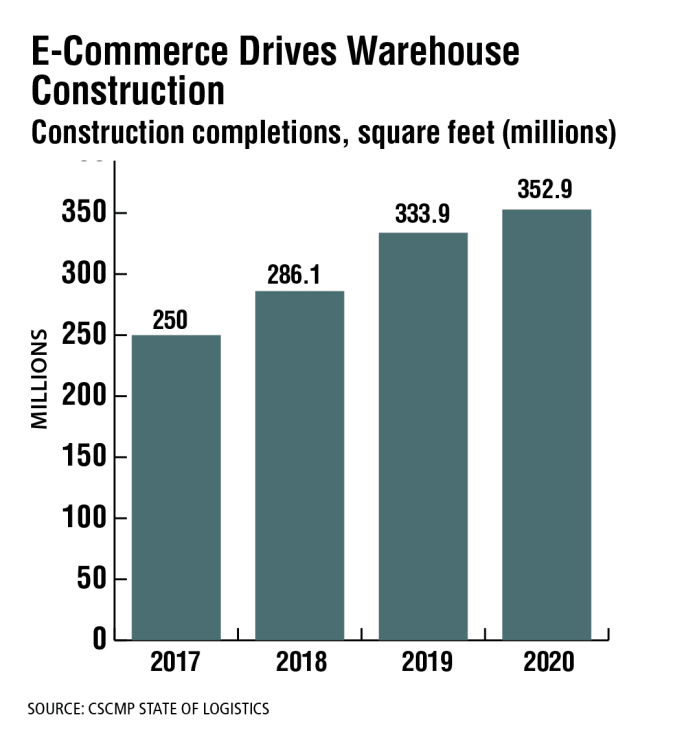
E-commerce is spurring demand for warehousing space, especially urban last-mile facilities. Capacity continues to grow, but not as fast as demand. Warehouse space increased in 2020 despite construction delays and stay-at-home orders, with the amount of square feet of construction completions up 5.7% over 2019.
Source: CSCMP State of Logistics
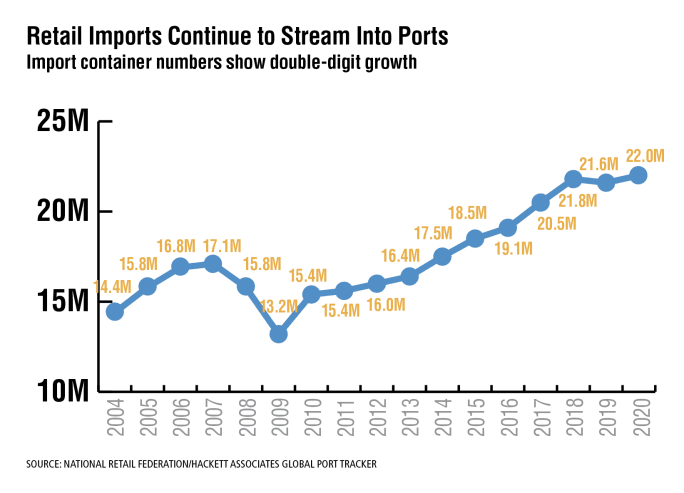
Imports at the nation’s largest retail container ports are continuing to show double-digit growth over last year. 2021 is on track to grow 16.7% over 2020’s full-year total of 22 million TEU. U.S. ports covered by Global Port Tracker handled 2.33 million Twenty-Foot Equivalent Units in May, the latest month for which final numbers are available, setting a new record for the most containers imported during a single month since NRF began tracking imports in 2002. And cargo imports during 2020 were up 1.9% over 2019, despite the pandemic. The challenge for retailers and supply chains is keeping shelves stocked in the face of port congestion and other supply chain disruptions.
Source: National Retail Federation/Hackett Associates Global Port Tracker
Trucking is an increasingly data-driven industry. Numbers matter. There’s no end to the available software and analytics available to fleets today to help them analyze and improve their operations.
But sometimes you want to look at statistics and data to help give you the big picture, and this is what Heavy Duty Trucking’s annual Fact Book issue is all about. It’s designed to provide a snapshot of the current state of the industry, where it’s been, and where it’s going. These numbers can help you in planning and benchmarking your fleet, and in telling trucking’s story to others. And it can serve as a reference guide throughout the year.
This is the seventh year for the HDT Fact Book. Check out the other published sections of the Fact Book:
Freight demand remains sluggish, but rising costs and tougher enforcement have taken enough capacity out of the market to change the outlook for motor carriers.
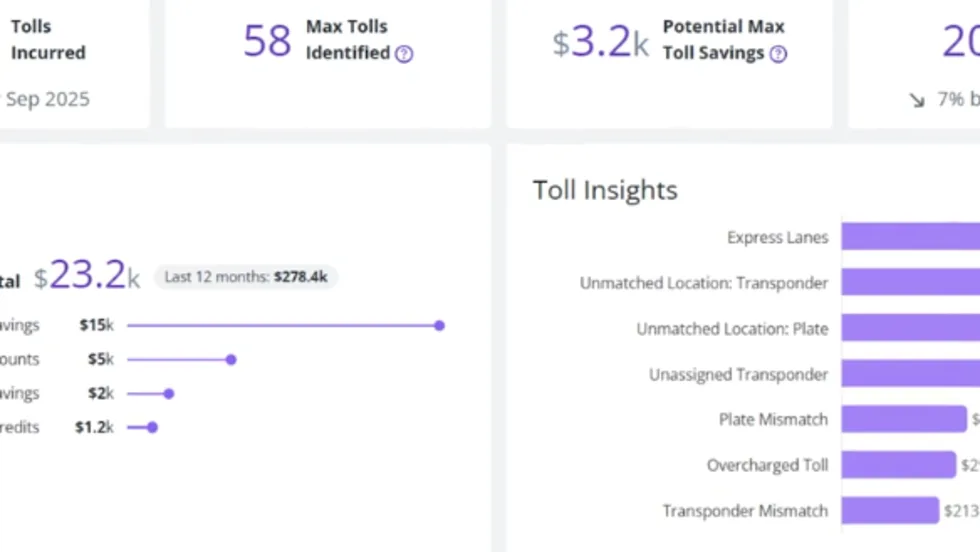
PrePass Intelligence helps fleets measure bypass savings, flag potential toll overcharges, and spot suspicious transactions by combining data from separate systems.
New tools automate follow-up on fleet data, from maintenance work orders to driver alerts, with two-way voice conversations planned for later this year.
ATRI’s annual survey finds cautious optimism about freight, but diesel costs, litigation, and insurance continue to squeeze fleets. Drivers have different priorities on several issues.
Just a few more days to nominate accomplished trucking fleet professionals under 40 who are making an impact and helping lead the industry forward for the HDT Emerging Leaders award. Deadline extended to October 20!
Incoming President and CEO Mark Colson’s record in Alabama offers clues about his priorities and approach following Chris Spear’s abrupt departure as the head of the American Trucking Associations.