





Related: Trucks, Technology, & the Covid-19 Pandemic: What Fleets Need To Know [Webinar]
Fleets Share COVID-19 Driver Safety Insights
From hand sanitizer to sick time, from PPE to training, three fleets shared how they're supporting their truck drivers during the pandemic in a webinar put on by American Trucking Associations and its Safety Management Council.
April 17, 2020

Photo: Markus Spiske via Pexels
5 min to read
From hand sanitizer to sick time, from PPE to training, three fleets shared how they're supporting their truck drivers during the pandemic in a webinar put on by American Trucking Associations and its Safety Management Council.
“No stranger to shifts in freight demand and crisis support, such as with natural disasters, the motor carrier industry has stepped up in this incredible and unexpected era of reacting to the worldwide pandemic known as COVID-19,” said Laura McMillan, vice president of training development at Instructional Technologies and the moderator.
She was joined by Greer Woodruff, senior vice president over safety, security, and driver personnel at J.B. Hunt and chairperson of the Technology Advisory Committee for the Alliance for Driver Safety and Security; Bill Woolsey, director of safety at Freymiller; and Paul Mullen, safety and training supervisor at J. Kings Food Service.
Drivers at J. Kings have been getting hygiene sanitation kits. “We have gloves, masks, foam soap, and sanitizing spray for the trucks, as well as paper towels,” said Mullen. “It's just an opportunity for the drivers to really take it upon themselves to be constantly cleaning their trucks, hand trucks, and pump jacks throughout the course of the day.”
Sanitizers, Masks, and Education
For Woodruff at J.B. Hunt, with 19,000 drivers, the outbreak has created a challenge in terms of addressing the needs of each driver in a short period of time. Education was made easier by the number of different means he has to communicate with his team, including the onboard computers. But securing personal protective equipment and hand sanitizer proved to be more difficult, especially factoring in having to deliver them to 400 different locations.
“We tried to procure what we could locally with our local management, and then fortunately we were able to provide a large quantity of those items that we were able to secure early on,” said Woodruff. “We've distributed over 1.4 million gloves to drivers, over 57,000 18-ounce bottles of hand sanitizers, and a lot of wipes.”
When the CDC recently updated its stance on masks, J.B. Hunt secured a large number of masks that have been, and are being, deployed to the drivers as well.
Securing the safety of the office workers is also an important task for fleets, according to Woolsey.
“We're fogging all of our office environments, after hours, with a disinfectant that kills the virus and bacteria germs,” said Woolsey, adding that Freymiller will begin doing this daily, instead of weekly, to combat any chance of the coronavirus affecting the office staff, as well as checking temperatures before anyone enters the facility.
Social Distancing
McMillan soon turned the discussion to social distancing and how it has changed how newly hired drivers are trained. For Mullen, the advantage of having a safety and training center at J. Kings’ Long Island, New York, facility allows his to train drivers in small groups, even putting them in different areas of a particular room.
“When we went through COVID training, it was a great opportunity for us to elicit conversation with all the drivers as well and get their feedback to see how it's affecting them throughout the course of the day and any suggestions they might have how we can make things better,” added Mullen.
Mullen’s team has also had a much easier time finding places to park when making deliveries in the New York City area, but he stressed the need to be consciously aware to socially distance when making the deliveries, especially when drivers have to use an elevator.
Covering Sick Time
With an industry of workers that go several steps beyond the “rain, sleet or snow” mentality, Woodruff was quick to point out that fleets need to stress that drivers should take time off if they are showing symptoms of coronavirus. Since time off leads to financial hardship for many drivers, J.B. Hunt has implemented an emergency paid time off policy that provides employees up to 80 additional hours of paid time off.
With that extra bit of financial security, Woodruff explained, “people are willing to say, ‘Hey I think I might have been exposed to somebody,’ or ‘I feel like I might have the symptoms of COVID-19,’ and so we were able to set up a system where that's being reported to our HR department."
This then assists his team in determining the likelihood of exposure and the symptoms that they may be displaying, and then helping the carrier document the situation, authorize the emergency PTO, and track the employee’s condition and the period that they need to quarantine before returning to work.
“It has created a proper incentive for people to say, ‘if I am potentially infected, I need to take myself out of the workforce and out of circulation by quarantining and I can do that without being hurt, financially,’” he added.
Keeping Up with Demand
For Woolsey and Freymiller’s fleet of refrigerated trailers, there was a surge at the beginning of the pandemic, especially with grocery store clients and others that service restaurants and food chains.
“Over the course of the last two or three weeks, I think everybody just ran to the grocery stores and stocked up quite a bit, so we were very busy trying to keep up with that pace,” said Woolsey.
Since the initial dash and grab of panic buying, Freymiller has experienced a drop in orders from the restaurant side of its customer base, and even with grocery stores.
“I think everybody is starting to utilize the food that they stored up and the demand has just softened, but I expect that to come back gradually,” he added.
NOTE: ATA and SMC Webinars are usually closed to the media. Due to the COVID-19 pandemic, and the ATA’s and SMC’s interest in driver health and safety, the contents shared in the webinar were permitted to be used in the production, editing and creation of news articles.
More Safety & Compliance
Fatal Crash Exposes Toll Plaza Risks
An NTSB investigation found that last-minute lane changes and large speed differences at an Ohio toll plaza created a hazard the truck driver couldn't avoid in time.
Read More →
When Language Stops the Truck: The Return of ELP Out-of-Service Orders
English language proficiency rules for commercial drivers aren’t new, but renewed out-of-service enforcement has raised the stakes. Here’s what carriers need to know before a driver reaches a roadside inspection.
Read More →
Sponsored•October 6, 2026
A Camera Isn't a Safety Program. Here's What Brokers Are Screening for Now
Footage alone may not be enough to pass broker vetting processes. Here's what counts as a defensible safety program now.
Read More →
Marijuana and Trucking’s Drug-Testing Dilemma
Marijuana is getting stronger, laws are changing, and drug tests still can’t reliably establish impairment. What does that mean for truck drivers and the fleets that employ them?
Read More →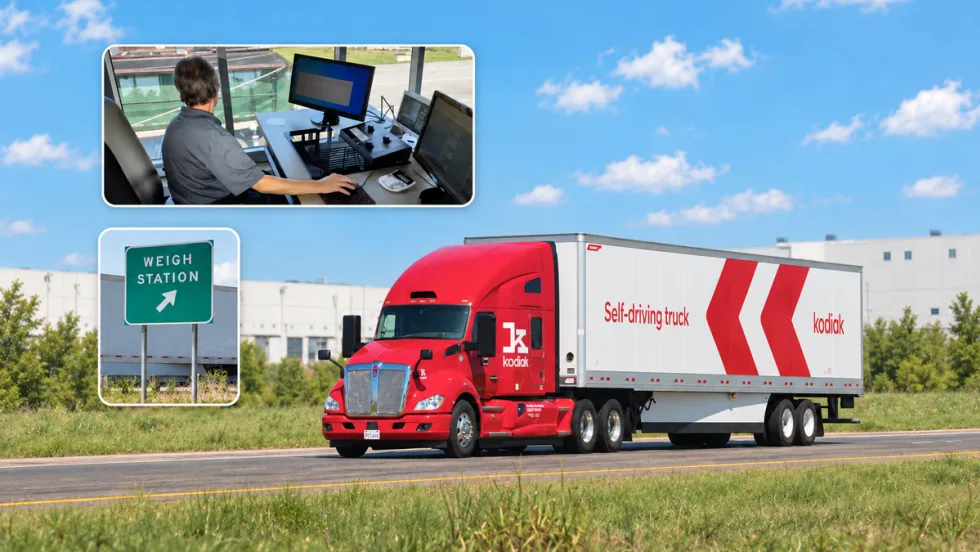
PrePass, Kodiak Connect Driverless Trucks to Roadside Enforcement
The system will allow enforcement agencies to verify Enhanced Inspection information and decide whether Kodiak’s autonomous trucks can bypass roadside screening sites.
Read More →
From One Generation to the Next: How Mentorship Builds Safer Truck Drivers
After three decades in trucking, Harold Perry shares what he's learned about driver safety, mentorship, and helping the next generation build confidence behind the wheel.
Read More →
FMCSA Pauses Biennial-Update Enforcement Amid Motus Transition
Carriers whose updates were due on or after June 1 have more time, while FMCSA works to stabilize its new registration system and warns of phishing sites impersonating its new carrier registration system, Motus.
Read More →
ZF Expands Commercial Vehicle Push in North America
ZF is expanding its North American commercial-vehicle presence with new transmission applications, electrification, trailer technology and autonomous-driving systems.
Read More →
Truck Drivers Need More Than Another Alert
Fleets have more visibility into truck health, safety events, and driver activity than ever. The next challenge is turning all that information into useful guidance for the person who has to decide what to do next.
Read More →
Tesla Wants a Self-Driving Semi. Are Cameras Enough?
Could Tesla’s camera-only autonomous driving technology work on an 80,000-pound Semi? In this commentary, HDT's Deborah Lockridge takes a look at Tesla, Cybercab, and how autonomous trucks see the road.
Read More →