




Einride Showcases Single-Operator Control of Multiple Autonomous Vehicles
Einride, which says its autonomous, electric Pods have the potential to transform shipping networks, for the first time publicly demonstrated how remote operators can monitor and control multiple Pods from a single remote drive station.
April 7, 2020

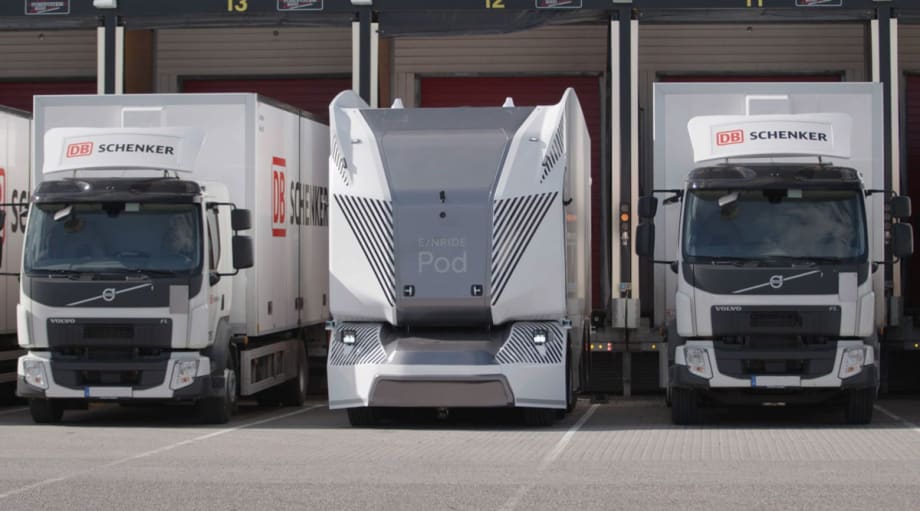
Using remote operators like this has the potential to increase the average workday for a single vehicle to 24 hours, Einride says.
Photo: Einride video still
3 min to read
Einride, which says its autonomous, electric Pods have the potential to transform shipping networks, for the first time publicly demonstrated how remote operators can monitor and control multiple autonomous, electric Pods from a single remote drive station.
The Sweden-based company foresees a future where up to 10 Pods in a transport network can be monitored simultaneously while in autonomous drive mode, and controlled remotely for more complicated or unforeseen maneuvers, such as parking at a loading dock or avoiding an obstacle.
"The remote operation and oversight of autonomous vehicles require robust real-time video and data transmission, managed through a secure channel over often insecure infrastructure,” explained Pär Degerman, CTO of Einride, in a news release. “With this milestone, we are laying the technical foundation for swift and easy switching between vehicles as well as the ongoing scaling of this functionality. Not only can we switch between monitored vehicles, but also between operators in different geographical locations, increasing the flexibility of our system exponentially.”
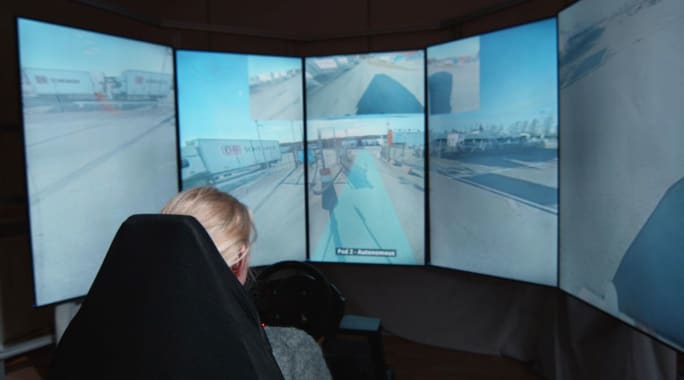
Einride foresees a future where up to 10 Pods in a transport network can be monitored simultaneously in autonomous mode.
Photo: Einride video still
As autonomous electric transport vehicles such as the Einride Pod are introduced into a freight network, Einride said, transport managers will be able to employ operators who will monitor and control these driverless vehicles from a remote drive station, starting with two vehicles and eventually expanding up to as many as 10. This has the potential to increase the average workday for a single vehicle from 8 to 24 hours, an increase in productivity of up to 300%.
“Additionally, many tedious or time-consuming tasks will be a thing of the past for operators, as he or she will not have to wait for loading and unloading, refueling or recharging to oversee and operate other vehicles,” notes the release.
Expanding the driver-to-vehicle ratio from one-to-one to one-to-many also has the potential to exponentially improve fleet efficiency in terms of cost, time, and sustainability. Currently, with Einride’s Freight Mobility Platform, shippers are able to track their entire fleets in real-time and optimize routes and schedules for cost and emissions reduction. The platform also provides recommendations on where to introduce low- or zero-emissions transport options into the network.
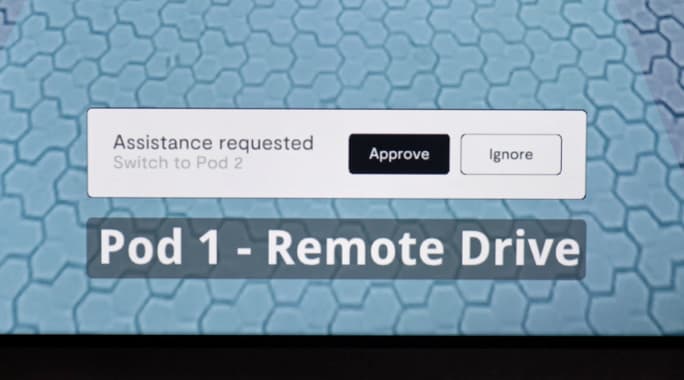
The Einride system prompts the operator when the autonomous Pod runs into a situation that needs remote operation.
Photo: Einride video still
The company also says the innovation can help transform what it means to be a trucker. “In place of long, tiresome, and potentially dangerous hours on the road, remote operators will have a more stable, safe, and regular work environment. This fundamental shift will be crucial in addressing the systematic problems in the trucking industry, such a shortage of over 51,000 truckers and a gender split that is only 6 percent female in the U.S.”
The hiring process for Einride’s first remote operator is already underway in Sweden, and the first customer applications of this technology will also be implemented this year.
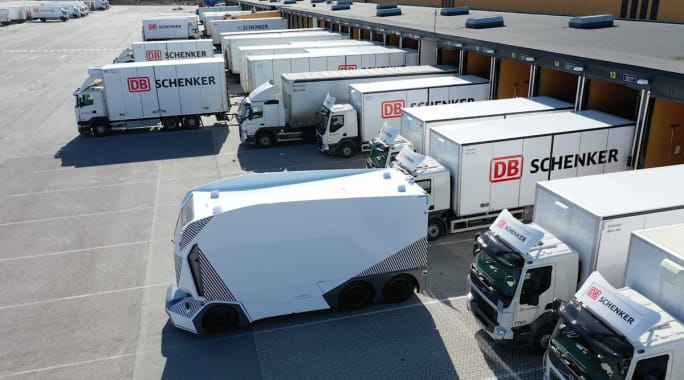
Einride foresees a future where up to 10 Pods in a transport network can be monitored simultaneously while in autonomous drive mode, and controlled remotely for more complicated or unforeseen maneuvers, such as parking at a loading dock.
Photo: Einride video still
Einride was founded in 2016 by Robert Falck, Linnéa Kornehed and Filip Lilja, and said it was the world’s first company to operate an autonomous, all-electric freight vehicle on a commercial route on a public road. Recently, the company launched the Einride Mobility Platform, a cloud-native transport execution system for autonomous, electric and traditional road transportation. With the platform, customers can use real-time information and actionable insights to implement sustainable, cost-efficient and high performing transport logistics.
More Equipment

How Volvo Updated Its D13 for EPA 2027 [Watch]
Volvo’s updated D13 promises lower emissions without sacrificing performance or fuel economy. Take a closer look at what changed inside the engine in this HDT Spotlight video.
Read More →
Michelin Tire Improves Efficiency and Durability for Regional Fleets
The Michelin X Multi Energy D2 is a regional haul drive tire engineered to help fleets improve fuel efficiency, durability and traction in demanding stop-and-go operations.
Read More →
ZF Expands Commercial Vehicle Push in North America
ZF is expanding its North American commercial-vehicle presence with new transmission applications, electrification, trailer technology and autonomous-driving systems.
Read More →
Tesla Wants a Self-Driving Semi. Are Cameras Enough?
Could Tesla’s camera-only autonomous driving technology work on an 80,000-pound Semi? In this commentary, HDT's Deborah Lockridge takes a look at Tesla, Cybercab, and how autonomous trucks see the road.
Read More →
Kodiak: Driverless Long-Haul Truck Launch on Track for 2026
Kodiak AI says its driverless long-haul safety case is 93% complete and it remains on track to begin commercial operations by year-end 2026.
Read More →
What DOT’s Automated Vehicle Strategy Means for Trucking
The U.S. Department of Transportation issued a new automated-vehicle strategy that outlines plans for driverless-truck regulations, cross-state freight corridors, and federal safety standards.
Read More →
East Coast Port Launches $45M Electric Truck Push
The Port Authority of New York and New Jersey announced millions in incentives for zero-emission drayage trucks, yard tractors, and new charging hubs near the port.
Read More →
PlusAI Going Public to Fund Autonomous Truck Launch
A SPAC deal could provide PlusAI with up to $300 million as it works toward a 2027 commercial launch of factory-built autonomous trucks.
Read More →
NHTSA Moves to Rewrite Truck Fuel-Economy Rules
The National Highway Traffic Safety Administration says it lacks authority to regulate medium- and heavy-duty truck engines separately from complete vehicles, but the existing standards have not yet been eliminated.
Read More →
Detroit Opens Orders for EPA 2027 Engines
Detroit isn’t starting from scratch to meet EPA 2027 diesel emissions standards. Its Gen 6 DD13 and DD15 engines keep much of today’s platform while updating the fuel and aftertreatment systems.
Read More →