




Related: Proposed HOS Rules Designed to Add Flexibility for Drivers
Final HOS Rule Goes to White House for Review
The final hours-of-service rule has gone to the White House Office of Management and Budget for review, according to Jim Mullen, acting administrator of the Federal Motor Carrier Safety Administration.
by James Menzies and HDT Staff
March 3, 2020
A final rule that would give drivers more flexibility under hours-of-service rules is under review at the White House.
Photo: PeopleNet
4 min to read
A final rule adding flexibility to the hours-of-service rules was submitted March 2 to the White House Office of Management and Budget for review.
Jim Mullen, acting administrator of the Federal Motor Carrier Safety Administration, made the announcement March 3 at the Truckload Carriers Association’s annual convention in Orlando, Florida.
“After carefully reviewing these comments, I am pleased to announce today that FMCSA is moving forward with a final rule on hours-of-service and that the Agency has sent a final rule to the Office of Management and Budget for review," Mullen said. "While I can’t go into the specifics of this final rule, please know that the goal of this process from the beginning has been to improve safety for all motorists and to increase flexibility for commercial drivers."
Mullen said it was his priority to get those modifications finished, although he couldn’t offer a timeline for OMB approval. He also said listening sessions were held across the country to garner input on the proposed rule changes, and more than 8,000 comments were submitted to the docket.

Jim Mullen, acting administrator, FMCSA.
Photo: FMCSA
As recently as Feb. 17 at the Omnitracs Outlook 2020 meeting in Las Vegas, FMCSA's Joe DeLorenzo said he felt the process was moving rather quickly.
In a recap of its 2019 accomplishments, FMCSA said its proposal for fixing HOS is “historic” and that it will “improve safety and increase flexibility for commercial vehicle drivers” through “key updates to hours of service rules that are directly based on the feedback FMCSA has received from drivers across the country.”
The guts of the proposal published last August were contained in these changes:
Expanding the current 100 air-mile “short-haul” exemption from 12 hours on-duty to 14 hours on-duty, in order to be consistent with the rules for long-haul truck drivers
Extending the current 14-hour on-duty limitation by up to 2 hours when a truck driver encounters adverse driving conditions
Revising the current mandatory 30-minute break for truck drivers after 8 hours of continuous driving
Reinstating the option for splitting up the required 10-hour off-duty rest break for drivers operating trucks equipped with a sleeper-berth compartment
Drug and Alcohol Clearinghouse, ELD Transition
Mullen also commented on the drug and alcohol clearinghouse, acknowledging there were some technical issues in the early days, but assured attendees they’ve been resolved. There have been more than 680,000 registrants since it rolled out in early January, and nearly 9,000 drivers who either failed or refused a drug test have been identified.
“If they don’t go through the return to duty status program, they’re not going to be hired and they’re not going to be driving commercial vehicles,” Mullen said.
The transition from automatic on-board recording devices to electronic logging devices (ELDs) has gone smoothly, Mullen reported, and is having an impact. Mullen said there’s been a 52% reduction in hours-of-service violations since the ELD mandate was implemented, and in roadside inspections, fewer than 1% of drivers are not complying with the ELD mandate. Asked what the FMCSA is doing about non-compliant ELDs, Mullen acknowledged the U.S. differs from Canada by not requiring third-party certification, but he doesn’t think abuse is widespread.
Mullen said money and resources were a consideration when opting for self-certification of devices. “We have a process in which we can decertify ELD vendors,” said Mullen. “We look at that process very closely.”
He called on the trucking industry and manufacturers of compliant devices to help the FMCSA identify ELDs that can be manipulated.
“Help us detect how you can circumvent the rules to allow fraud and abuse and what the industry can do on a voluntary basis to assist FCMSA identify these issues,” he urged.
Mullen also said the FMCSA continues to look at the safety of allowing 18- to 20-year-olds with military experience to drive in interstate commerce, and is also considering rolling out a pilot program that will expand that opportunity to young drivers without military backgrounds. Their safety performance will be compared to drivers aged 21-24 to determine if restrictions from operating in interstate commerce should be lifted.
Finally, Mullen thanked the trucking industry for its role in combating human trafficking. He noted human trafficking is the fastest-growing business sector in the world.
“That’s astonishing and it’s horrible,” he said. “We know truck drivers are in the unique position to help combat human trafficking and we know they are doing so on a daily basis, and we thank them for it.”
More Safety & Compliance

More Trailer Data Through the Same Seven-Way [Video]
Can trucking’s standard seven-way connector handle more cameras and trailer data? Grote’s Adam Slade shows HDT how the company is using new technology with its 4See trailer system, not only to add a new backup camera but also to expand other capabilities — without adding another connection.
Read More →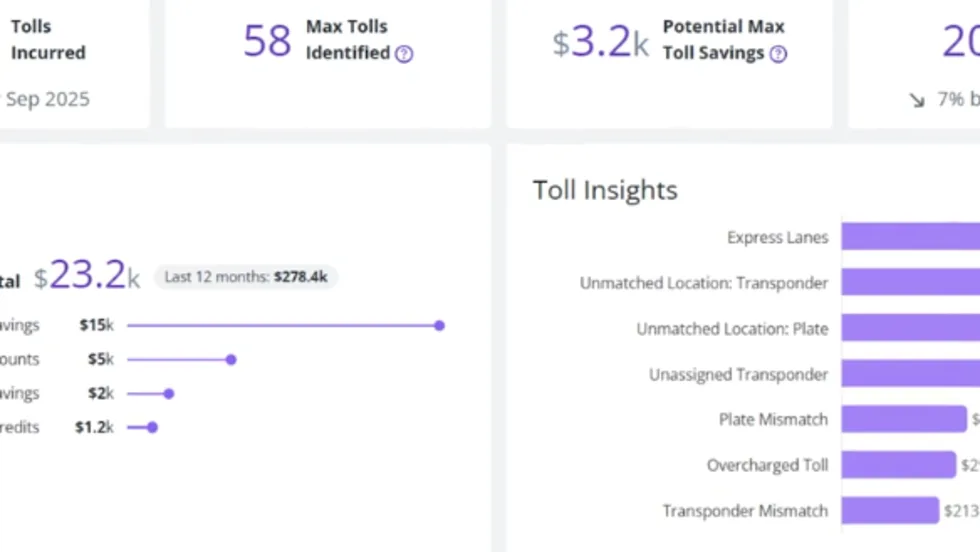
PrePass Intelligence Mines Fleet Bypass, Toll and Safety Data
PrePass Intelligence helps fleets measure bypass savings, flag potential toll overcharges, and spot suspicious transactions by combining data from separate systems.
Read More →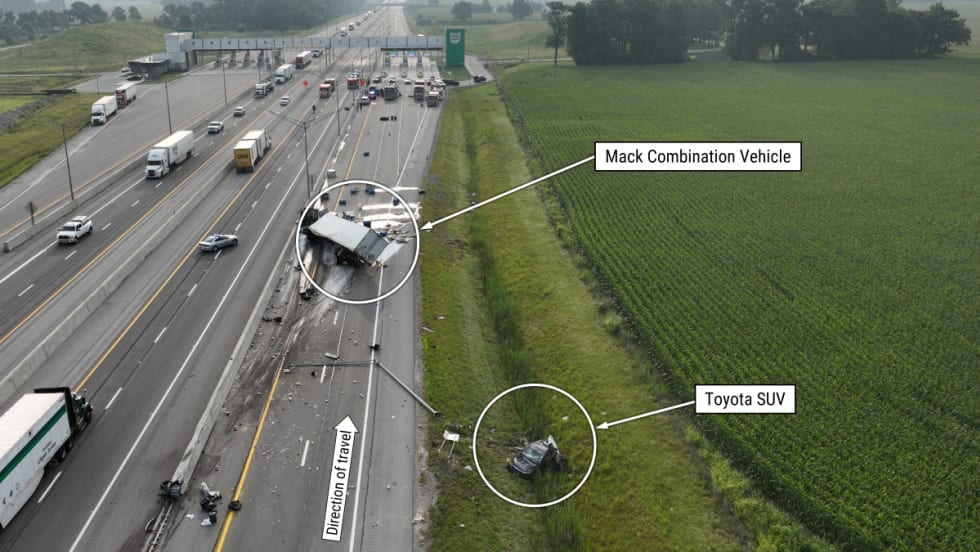
Fatal Crash Exposes Toll Plaza Risks
An NTSB investigation found that last-minute lane changes and large speed differences at an Ohio toll plaza created a hazard the truck driver couldn't avoid in time.
Read More →
When Language Stops the Truck: The Return of ELP Out-of-Service Orders
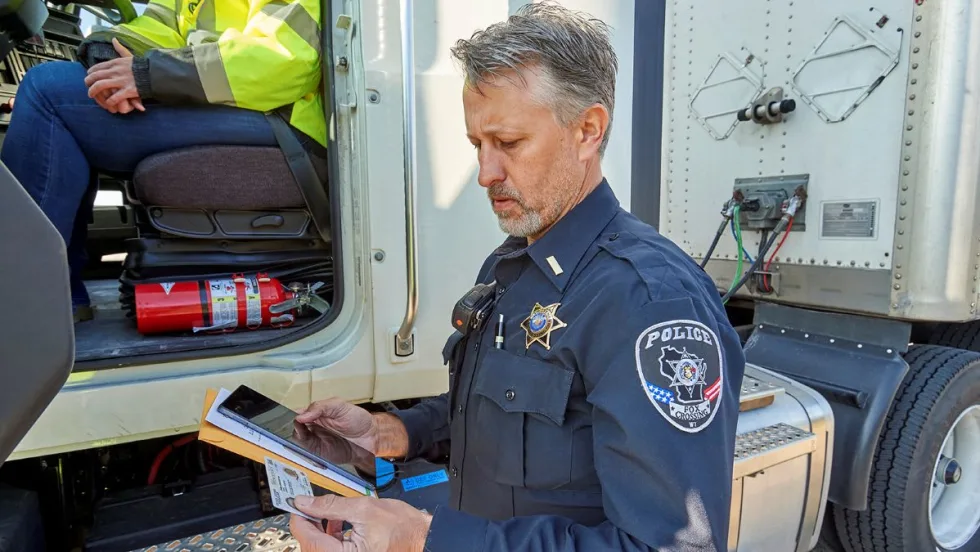
English language proficiency rules for commercial drivers aren’t new, but renewed out-of-service enforcement has raised the stakes. Here’s what carriers need to know before a driver reaches a roadside inspection.
Read More →
Sponsored•October 6, 2026
A Camera Isn't a Safety Program. Here's What Brokers Are Screening for Now
Footage alone may not be enough to pass broker vetting processes. Here's what counts as a defensible safety program now.
Read More →
Marijuana and Trucking’s Drug-Testing Dilemma
Marijuana is getting stronger, laws are changing, and drug tests still can’t reliably establish impairment. What does that mean for truck drivers and the fleets that employ them?
Read More →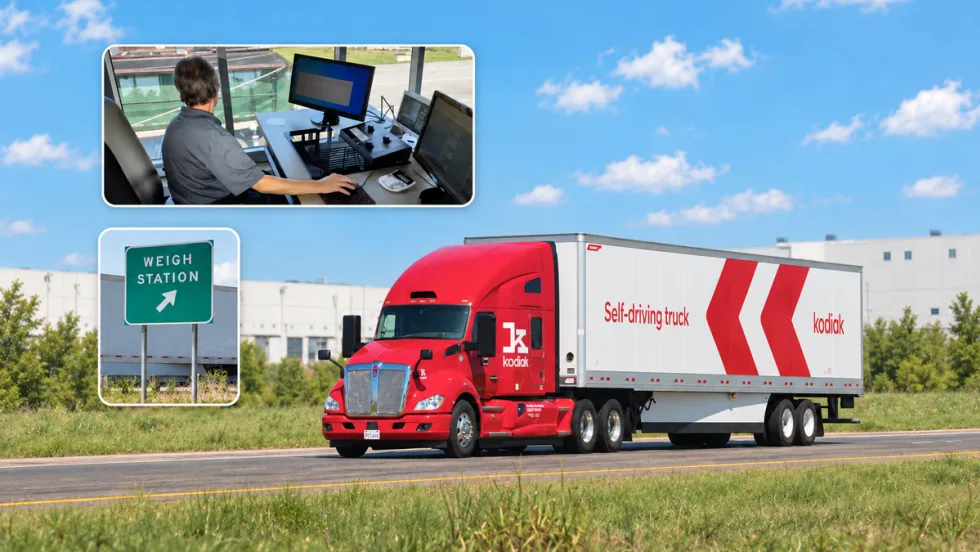
PrePass, Kodiak Connect Driverless Trucks to Roadside Enforcement
The system will allow enforcement agencies to verify Enhanced Inspection information and decide whether Kodiak’s autonomous trucks can bypass roadside screening sites.
Read More →
From One Generation to the Next: How Mentorship Builds Safer Truck Drivers
After three decades in trucking, Harold Perry shares what he's learned about driver safety, mentorship, and helping the next generation build confidence behind the wheel.
Read More →
FMCSA Pauses Biennial-Update Enforcement Amid Motus Transition
Carriers whose updates were due on or after June 1 have more time, while FMCSA works to stabilize its new registration system and warns of phishing sites impersonating its new carrier registration system, Motus.
Read More →
ZF Expands Commercial Vehicle Push in North America
ZF is expanding its North American commercial-vehicle presence with new transmission applications, electrification, trailer technology and autonomous-driving systems.
Read More →