




FMCSA to Study Crimes against Minority Male and Female Truckers
The Federal Motor Carrier Safety Administration wants to study the “prevalence, seriousness, and nature of the problem of harassment and assaults” against female and minority male truck drivers


FMCSA says it has accumulated evidence that points to “a serious pattern of harassment- and assault-related crimes against female and minority male truckers."
Photo: Halvor Motor Lines
Based on evidence it has accumulated that points to “a serious pattern of harassment- and assault-related crimes against female and minority male truckers,” the Federal Motor Carrier Safety Administration announced on Feb. 28 its intention to study the “prevalence, seriousness, and nature of the problem of harassment and assaults” against these drivers.
FMCSA noted that its evidence includes a 2005 article in Security Journal that reported that 42% of female long-haul drives reported experiencing one or more types of workplace violence. And a 2017 USA Today article that gave accounts of repeated harassment of minority male truckers.
To get the ball rolling on studying the issue, the agency has filed an Information Collection Request with the Office of Management and Budget, which requires that all public comments on the matter be received no later than March 30.
In its notice in the Federal Register for Feb. 28, the agency stated that it needs to validate the problem of harassment- and assault-related crimes, especially against female and minority male drivers, for two reasons. “First, there seems to be a perception among these subpopulations of truckers that they are more vulnerable than others. Second, there is a critical shortage of truckers, and helping these subpopulations of truckers protect themselves from crimes could draw more truckers from these subpopulations, while stemming turnover, to alleviate the shortage.”
As a first step toward validating the scope of the problem, FMCSA has contracted with Battelle to create and execute an exploratory survey of truck drivers limited to female and minority male drivers. Analysis of the survey results will help the agency “begin to formulate an approach to reducing it.” FMCSA also stated that the results of this survey “will not be used for rulemaking.”
The survey will ask whether the drivers have experienced race- or gender-related harassment or crimes on the job. If the driver has had such an experience, the survey will ask follow-up questions on where and when the incidents occurred, any information the respondent knows about the perpetrator, and whether the respondent reported the incident.
The survey will be anonymous and none of the questions will ask for information that could personally identify the respondent or any perpetrators involved.
“If study findings indicate a significant problem that merits action, FMCSA may consider developing training or outreach materials to help truckers protect themselves from crime or harassment,” the agency said. It added that such training or outreach materials could help foster driver-retention efforts and help make truck driving “more attractive to a greater range of people.”
FMCSA is specifically asking the public to comment on any aspect of its proposal, including: (1) Whether the proposed collection is necessary for the FMCSA to perform its functions; (2) the accuracy of the estimated burden; (3) ways for the FMCSA to enhance the quality, usefulness, and clarity of the collected information; and (4) ways that the burden could be minimized without reducing the quality of the collected information.
All comments should reference Federal Docket Management System Docket Number FMCSA-2018-0278.
Comments should be addressed to the attention of the Desk Officer, Department of Transportation/Federal Motor Carrier Safety Administration, and sent via electronic mail to oira_submission@omb.eop.gov, or faxed to (202) 395-6974, or mailed to the Office of Information and Regulatory Affairs, Office of Management and Budget, Docket Library, Room 10102, 725 17th Street NW, Washington, DC 20503.
More Drivers
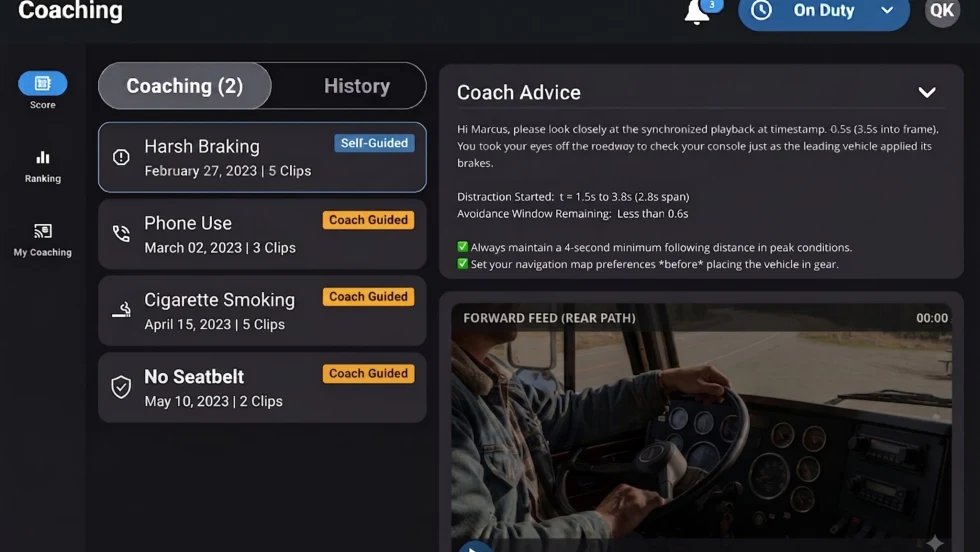
Platform Science Adds Dispatch and Safety Tools
Four additions to PS Fleet help fleets monitor loads, manage driver coaching, share truck locations and adjust video system settings.
Read More →
When Language Stops the Truck: The Return of ELP Out-of-Service Orders
English language proficiency rules for commercial drivers aren’t new, but renewed out-of-service enforcement has raised the stakes. Here’s what carriers need to know before a driver reaches a roadside inspection.
Read More →
Samsara Launches Custom AI Agent Builder
Agent Studio lets fleets create AI tools for hours-of-service monitoring, reporting and driver support, including agents that communicate by phone.
Read More →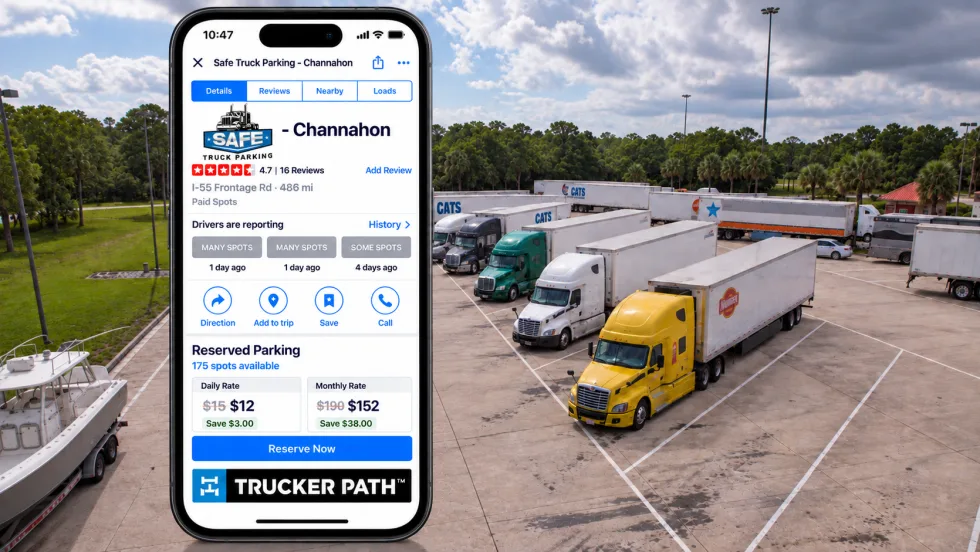
Trucker Path Expands Reserved Parking Network
Trucker Path has added close to 6,000 more truck parking spaces to its Trucker Path Reserved Parking Network with the addition of Safe Truck Parking.
Read More →
EEOC Sues Texas Trucking Company Over Driver Age Limits
The agency says Trancasa USA rejected applicants over 65 and applied tougher driving-record standards to those over 60.
Read More →
Nussbaum, Roehl Announce Second Driver Pay Increase This Year
This year has seen a swath of major truck driver pay increases as freight capacity has tightened.
Read More →
From One Generation to the Next: How Mentorship Builds Safer Truck Drivers
After three decades in trucking, Harold Perry shares what he's learned about driver safety, mentorship, and helping the next generation build confidence behind the wheel.
Read More →
Truck Drivers Need More Than Another Alert
Fleets have more visibility into truck health, safety events, and driver activity than ever. The next challenge is turning all that information into useful guidance for the person who has to decide what to do next.
Read More →
FMCSA Removes 110 Truck Driver Training Schools from Certified ELDT List
Federal regulators also are targeting more than 160 additional training providers and launching a nationwide audit of third-party CDL skills testers as part of a broader crackdown on trucking fraud.
Read More →
Hours of Service Pilot Programs: FMCSA Readies for 2027 Rollout
Two pilot programs could eventually reshape hours-of-service rules, giving truck drivers options to pause their 14-hour clock or use longer split sleeper rest periods.
Read More →