





Related: Rhode Island Fights to Keep Truck-Toll Lawsuit in State Courts
Connecticut Democrats Unveil Truck-Only Toll Plan
Connecticut governor Ned Lamont said he believes the truck-only toll plan could bring as much as $180 million into the state's coffers annually.
January 29, 2020

Connecticut governor Ned Lamont has said truck-only tolls could bring as much as $180 million annually to the state.
Photo: Jim Park
3 min to read
Democratic state senators in Connecticut have released the draft of a heavy truck-only toll bill, which its authors say would mandate that all toll funds collected go to a Special Transportation Fund in the state.
Connecticut governor Ned Lamont said he believes the truck-only toll plan could bring as much as $180 million into the state's coffers annually.
Critics of the bill say it heavily mimics a similar proposal in Rhode Island. That bill became law in 2018 but is being challenged in court by the American Trucking Associations, which maintain the law violates the Interstate Commerce Clause in the U.S. Constitution.
In the plan proposed for Connecticut, the base initial rate would be between $6 and $13 per toll with discounts for trucks with Connecticut EZ-Passes. Trucks that go back and forth between a toll gantry would only be charged once per day for each direction of travel.
According to reporting by NBC Connecticut and other news outlets, a truck driver could pay between $30 and $65 one-way if it were to travel across all of I-95 in Connecticut under the current plan assuming it had an out-of-state transponder.
Tolls would apply to large commercial trucks between Class 8 and Class 13. Class 8 trucks have 3 or 4 axles and Class 13 trucks have 7 or more axles.
“The long and short of it is they’re for out-of-state trucks to pay for their infrastructure and the politicians know the drivers of those trucks don’t vote in their state,” said John Lynch, senior vice president of federation relations for the American Trucking Associations. “Of course they’re making the argument to Connecticut voters that these trucks are getting a free ride, and this tolling will mean they won’t have to pay for anything. But they sort of skip over the fact that sooner or later, those costs will come back down to them as consumers. But the politicians don’t care – as long as they say, ‘Well, I didn’t raise your taxes!’ They’re happy.”
Lynch notes that according to ATA, trucks nationally pay about 45% of all taxes used to maintain roads, highways, bridges and other infrastructure, yet account for only 10% to 12% of the road miles driven annually.
“What Connecticut is doing is essentially following the playbook established in Rhode Island,” Lynch adds. “In fact, the governor of Connecticut has said intends to copy Rhode Island completely when it comes to truck-only tolls.”
Lynch notes that tolling has become a popular means of raising revenue in a host of Eastern Seaboard states, including Massachusetts, New York and New Jersey.
Rhode Island recently sought to have ATA’s case against truck-only tolls tried in the state courts. ATA appealed that decision and won. Now, Lynch said, Rhode Island is appealing that decision. “They’re just trying to drag this out as long as they can,” he said. “And if they lose, our feeling is they’re just go, ‘Oh well – since the gantries are already up, we’re just going to charge tolls for everyone and blame it on the courts. That seems to be Connecticut’s long-term strategy as well. They’re making no bones about it.”
Gov. Lamont said he is hoping to call a Special Session to vote on the plan before the regular state session begins in February.
More Fleet Management

What the U.S.-Canada Trade War Means for Trucking
Escalating U.S.-Canada tariffs could disrupt cross-border freight, reduce truck volumes, raise costs, and create new uncertainty for carriers on both sides of the border.
Read More →
What Are Trucking’s Top Concerns for 2026?
The American Transportation Research Institute wants to know what's worrying trucking fleet managers, drivers, and other stakeholders in its annual Industry Issues survey.
Read More →
American Trucking Associations Looks for a New Leader
ATA President and CEO Chris Spear abruptly left his job at the association on August 21, at a pivotal time for the trucking industry.
Read More →
Public Wi-Fi Cybersecurity Risks: How Truck Drivers and Fleets Can Protect Their Data
Public Wi-Fi can expose truck drivers and fleets to credential theft, malware, and other cyber threats. Here’s how to reduce the risk on the road.
Read More →
For Nicky Cupp, Fleet Innovation Starts With Frustration
HDT Truck Fleet Innovator Nicky Cupp turns everyday pain points at Fraley & Schilling into opportunities for better technology and smarter processes.
Read More →
Adam Buttgenbach’s Approach to Electric Trucks: Start With Where They Fit
HDT Truck Fleet Innovator Adam Buttgenbach helped PepsiCo build one of North America’s largest EV fleets by focusing on where electric trucks make operational sense.
Read More →
Deen Albert: Let Automation Do the Math, People Make the Decisions
HDT Truck Fleet Innovator Deen Albert makes sure people are still at the heart of operations at Grand Island Express, even while adopting artificial intelligence tools. AI-assisted dispatch helped boost revenue 25% with the same number of trucks.
Read More →
Trimble’s New AI Agent Takes Aim at Fleet Back-Office Busywork
Arc Agent works across Trimble TMS products to automate repetitive tasks such as freight orders, maintenance, invoices, fuel costs and more.
Read More →
How HDT’s 2026 Truck Fleet Innovators Are Rethinking Fleet Operations
Meet five trucking leaders who are challenging assumptions, solving operational problems, and putting innovative ideas to work.
Read More →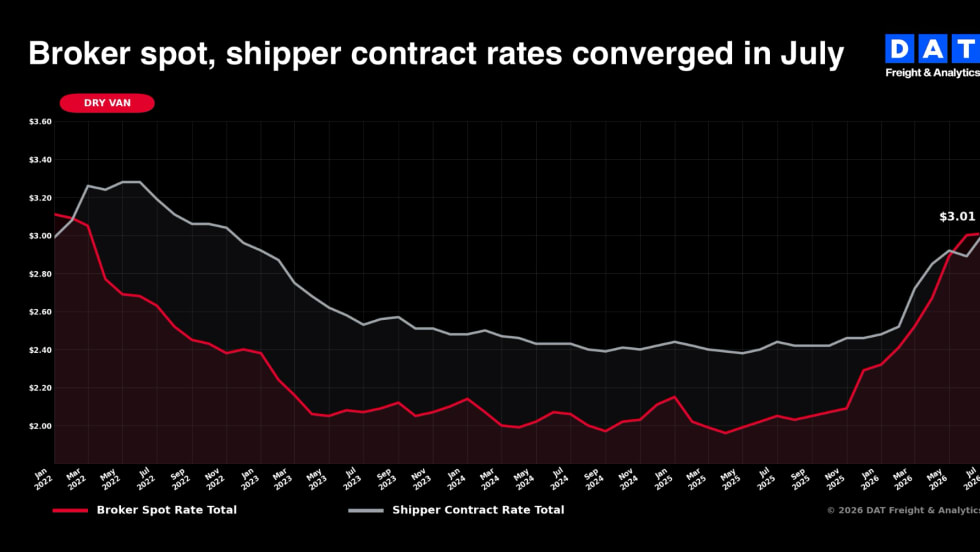
Tight Trucking Capacity Pushes Rates Higher Even as Freight Volumes Fall
“Spot rates moving ahead of contract rates have historically signaled a tightening market, but we haven’t seen a capacity-driven market quite like this one,” said DAT's Dean Croke.
Read More →