





Related: Federal Judge Dismisses Challenge of Rhode Island Truck Tolls
Rhode Island Fights to Keep Truck-Toll Case in State Courts
The petition is a flinty New England move, propelled by the state’s contention that the truck tolls are a tax, not a user fee. That argument hinges on interpretation of the Tax Injunction Act, which bars federal courts from blocking state taxes.
January 3, 2020
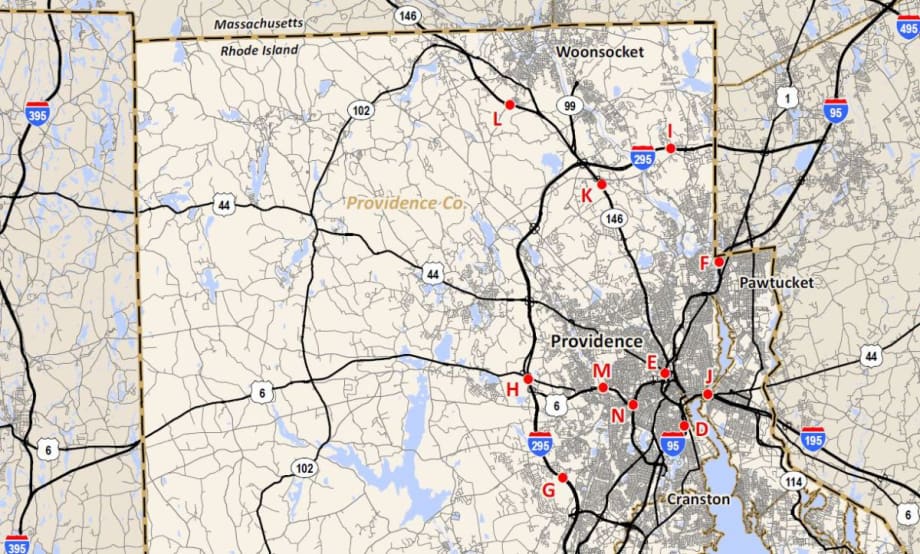
Map of all proposed locations for truck-toll gantries in the Ocean State.
Image: Rhode Island DOT
3 min to read
The State of Rhode Island has petitioned to have a federal appellate court decision reversed on the grounds that the attendant lawsuit filed to halt the RhodeWorks truck-only tolling program should be decided in state courts, according to news reports posted by local media in the Ocean State.
It’s a flinty New England move, propelled by the state’s contention that the truck tolls are a tax and not a user fee. That argument hinges on interpretation of the Tax Injunction Act, which bars federal courts from blocking state taxes.
Boiled down, the central legal question remains as to whether the truck-only tolls should be defined as a “tax,” which would remove the issue from the purview of federal courts, points out a report by WPRI.com.
The action in the courts is twisting and turning like the state’s inlet-studded coastline. The American Trucking Associations and three other plaintiffs filed suit in federal court in July 2018, arguing that the RhodeWorks toll scheme violates the commerce clause of the U.S. Constitution.
Judge William E. Smith, who presides over the U.S. District Court for the District of Rhode Island, ruled last March that the truck tolls are a tax and dismissed the lawsuit, according to a Providence Journal news report.
Then, in early December, the United States Court of Appeals for the First Circuit unanimously reversed that ruling, remanding the case back to the lower court.
On Jan. 2, the state fought back by petitioning to have the federal appeal re-argued, claiming that the appellate judges did not apply “the proper test” as to whether the case should be left to state courts.
The state and trucking interests have been fighting over whether the legal challenge should go forth in state court, as Rhode Island wants, or stay in federal court, where the trucking suit was filed.
“As we state in our petition, we believe the panel’s decision in this case departed from First Circuit precedent interpreting the Tax Injunction Act,” said Kristy dosReis, a spokesperson for the state attorney general’s office. “We are asking that the entire First Circuit consider hearing the case on this issue because we felt it was important to seek clarification on the jurisdictional issue.”
In a news release, Rhode Island Trucking Association President Chris Maxwell characterized the petition to review the appellate decision as stalling, with the state “clearly running out the clock and using every conceivable delay tactic within their means to keep this case away from the federal courts.
“For over four years,” he added, “they have assured taxpayers and voters that their plan is rock solid and will pass muster in terms of its legality and constitutionality, yet they continue to turtle when it comes to their case being heard in the federal court.”
Rhode Island plans to install 13 truck toll gantries and have 12 of those operating by June. The state budgeted $25 million from truck tolls in the year that ends June 30, according to the Providence Journal post, which reports last year, Rhode Island truck tolls added up to $7.3 million.
The Rhode Island Department of Transportation calls the RhodeWorks program “a unique approach to repairing bridges by tolling only specific types of tractor trailers. The tolls collected at each location in Rhode Island will go to repair the bridge or bridge group associated with that toll location.”
The goal of the truck-only tolls is to provide “for the planning, execution, management and funding to bring the state's roads and bridges into a state of good repair by 2025.”
More Fleet Management
Freight Broker Bonds Just Got Harder to Get. Here's What That Means for Your Fleet.
When it gets harder for a freight broker to prove they are financially sound, the ones who cannot clear that bar get pushed out of the market. And those are exactly the brokers who used to leave motor carriers holding the bag.
Read More →
Long-Awaited Canadian Border Bridge to Open in Detroit
For trucking, the bridge opening should offer immediate improvements in efficiency and reliability, with new customs facilities, expanded inspection capacity, and direct freeway-to-freeway connections.
Read More →
Aurora Rolls Out Next Generation of Driverless Trucks for Commercial Freight
Aurora's latest autonomous trucks it's rolling out with International feature lower-cost hardware designed for a million miles as the company expands commercial driverless freight operations across the U.S. Sun Belt.
Read More →
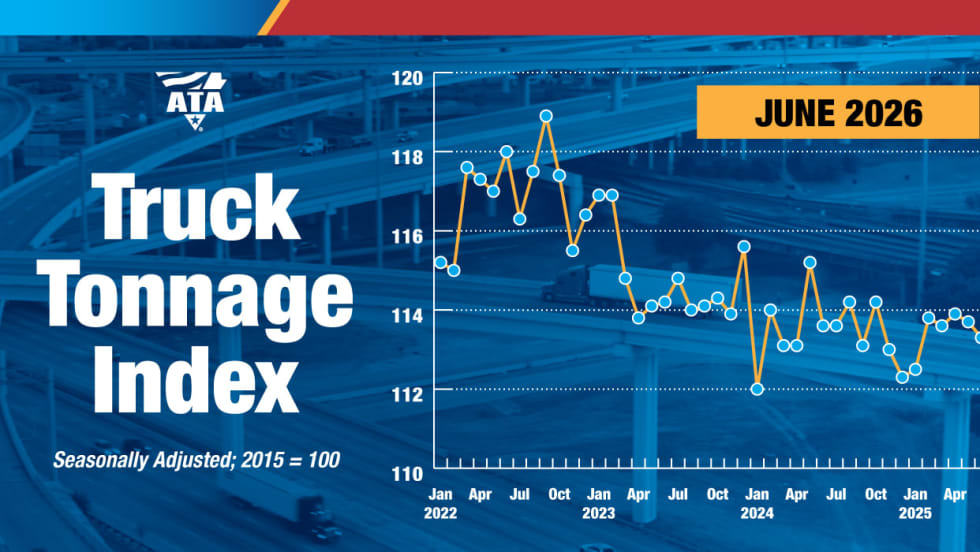
Freight Tonnage Down, Rates up, as Lower Capacity Powers Trucking Recovery
The recovery from the freight recession continues to be driven by reduction in capacity rather than by increased demand.
Read More →
Think Your Trucking Fleet Isn't Using Much AI? Think Again
Shadow AI — the use of unauthorized artificial intelligence tools at work — is becoming increasingly common, putting sensitive company data at risk. Learn how trucking fleets can protect sensitive data while embracing AI.
Read More →
ArcBest Consolidates Brands, Cuts Workforce
The company will bring three business units under the ArcBest brand, eliminate about 2% of positions, and expects the changes to generate $40 million in annual savings.
Read More →
Trucking Fleets Faced Record Operating Costs During Third Year of Freight Recession
ATRI's annual operational cost report shows carriers trimmed fleets, delayed equipment purchases, and ran older trucks as expenses continued to outpace freight rates.
Read More →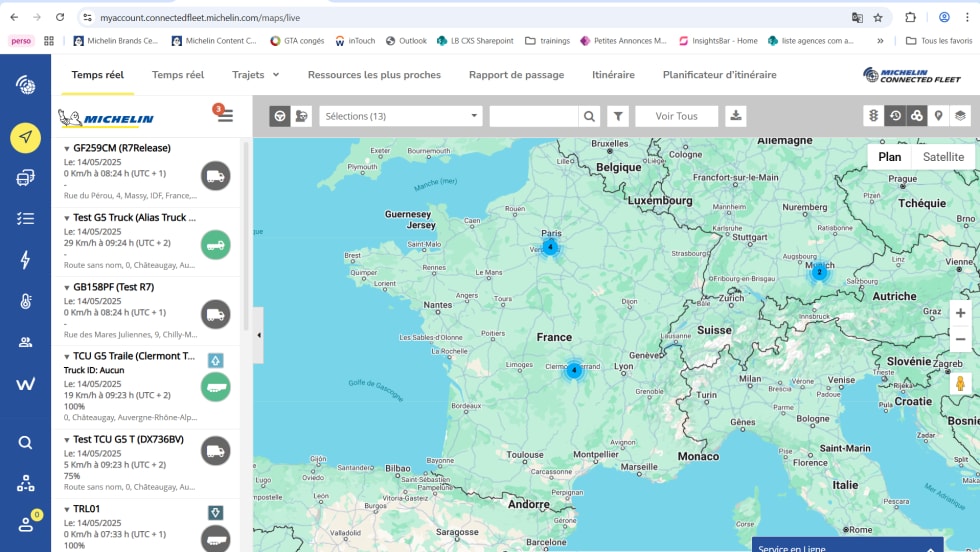
Michelin Adds AI Assistant to MyConnectedFleet Platform
Michelin’s new generative AI tool delivers instant fleet insights, helping managers analyze fuel use, tire maintenance, vehicle status, and operational performance without manually creating reports.
Read More →
LytxOne Platform Now Features AI, Compliance, and Asset Tracking Tools
New enhancements add AI-powered insights, asset tracking, compliance automation, and configurable privacy controls to Lytx's all-in-one fleet management platform.
Read More →
July Imports Poised to Set Container Record
The National Retail Federation projects July container imports will surpass the pandemic-era record as shippers frontload freight ahead of expected August tariff increases.
Read More →