




ConMet eHub Harnesses Kinetic Energy for Electric Vehicles
ConMet says its new eHub can power electric or hybrid vehicles - starting out with an alternative, fuel-saving way to power trailer refrigeration systems.

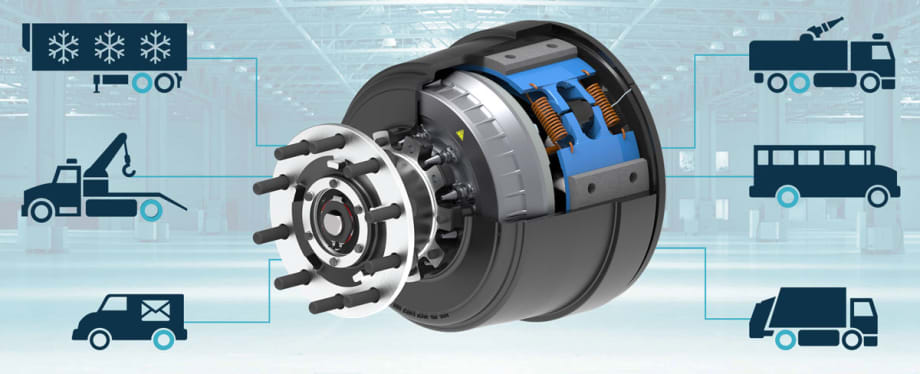
ConMet’s PreSet Plus Electric Hub is a flexible design intended as a building block for application in a variety of commercial vehicle applications.
Photo courtesy ConMet
Truck makers and technology proponents have been dancing around the fringes of harnessing kinetic energy for some time. Regenerative braking is the best example, but its most effective applications are local and regional trucks with higher exposures to stop-and-go driving.
At the North American Commercial Vehicle Show in late October in Atlanta, ConMet showed off its new PreSet Plus Electric Hub (eHub), a motor/generator packaged to mount at the wheel-end within the existing space between the axle spindle and the brake shoes.
ConMet says the eHub can be developed to be placed within hybrid or fully electric commercial vehicle applications. It uses off-the-shelf brake components, so no custom brake components are required. As a modular design, it can be packaged with existing axle configurations.
“We were able to leverage our hub technology expertise and essentially package the motor within a slightly modified version of a hub that we already make,” Caleb Lander, ConMet's product manager for electrification, told HDT in an interview. “We use a drum brake as our braking system because it allows the eHub to fit nicely behind the wheel and encapsulate the motor.” (While drum brakes continue to lead in the trailer market, ConMet plans to offer an air-disc-brake solution in the future.)
A Building Block for Electrification
The in-wheel motor/generator concept opens all sorts of doors for electrification. ConMet’s eHub is a flexible electrification system, intended to be a building block that can be dropped into many different applications in the commercial vehicle market.
When used as drive motor, the greatest advantage is weight savings. Because the motor drives the wheel directly, it does away with gear boxes and driveshafts and any of the other content found in a centralized drive system. This drives down the total weight of the drivetrain package considerably.
“The complete system, which includes the motors, the brakes, the hubs, all the controls, the cooling units, it's going to be at least 1,000 pounds less than an e-axle,” Lander said.

ConMet’s PreSet Plus Electric Hub, or eHub.
Photo courtesy ConMet
ConMet is pursuing applications across the Class 5 to Class 8 range, including as a "helper axle" on tractors and buses, and in some medium-duty applications in either a hybrid or full-electric configuration.
A New Way to Power Trailer Reefer Systems
ConMet will initially launch a trailer system, where it can supply power for auxiliary electrical systems on the trailer, as well as replace the diesel engine for trailer reefer systems.
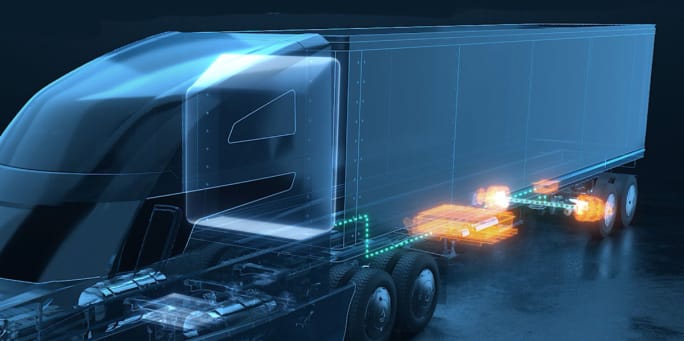
ConMet’s PreSet Plus Electric Hub (eHub) system application for reefer trailers. Instead of idling the reefer generator, the regenerative braking power captured by the eHub can be used to reduce fuel consumption and greenhouse gas and noise emissions.
Photo courtesy ConMet
“It could be used for practically anything that requires additional power over and above what you would typically have on a trailer,” Lander said. “It’s a plug-and-play system geared toward overall savings to fuel economy and reductions in emissions.”
ConMet sees the best fit presently as power for a reefer application on regional or urban delivery routes. Depending on the driving cycles, the eHub, batteries, and controllers will supply enough power to run the refrigeration unit throughout the day, cycling on and off, and generating its own power directly from the rotation of the wheels.
The eHub integrated controls also allow for regenerative braking mode or propulsion assist mode, enabling the utilization of all the power captured throughout the day to optimize fuel savings – knowing that at the end of the day it can be plugged in again for overnight charging using shore power.
“We will keep the battery as topped off as is reasonable based on the route that fleet is running,” Lander said. “If for some reason you have a long stop, for instance, we want to make sure that you have enough power to continue running the reefer while at that stop.”
In scenarios where the battery is kept fully charged, eHub energy can be used to power auxiliary electrical systems on the trailer, too, allowing for basically silent operation while at a delivery site. That opens up opportunities for delivery times that might be frowned upon due to noise restrictions.
“We can eliminate the use of the diesel generator, reducing noise and emissions, which brings other benefits to whoever is running these systems, such as idle reduction and improved fuel efficiency,” Lander said. “These are all really important to fleets nowadays.”
The first trailers using ConMet’s eHub are scheduled to hit the road this month, followed by a controlled rollout of early release units beginning in the first quarter of 2020. The production release is slated for the end of 2020.
More Equipment
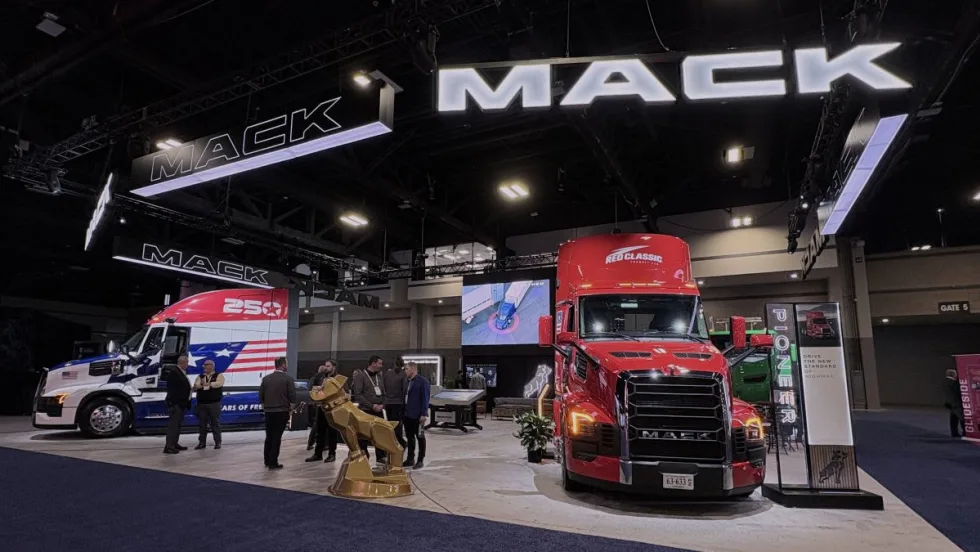
Trucks at ATA's 2026 MC&E in Charlotte, North Carolina [Photos]
From rigs decked out in patriotic America's 250 paint schemes to autonomous trucks and more, check out these photos from ATA's 2026 Management Conference & Exhibition.
Read More →
Help HDT Find Trucking’s Top Products
Have you come across a new product that could make a difference for trucking fleets? Nominate it for HDT’s 2027 Top 20 Products Awards by November 9.
Read More →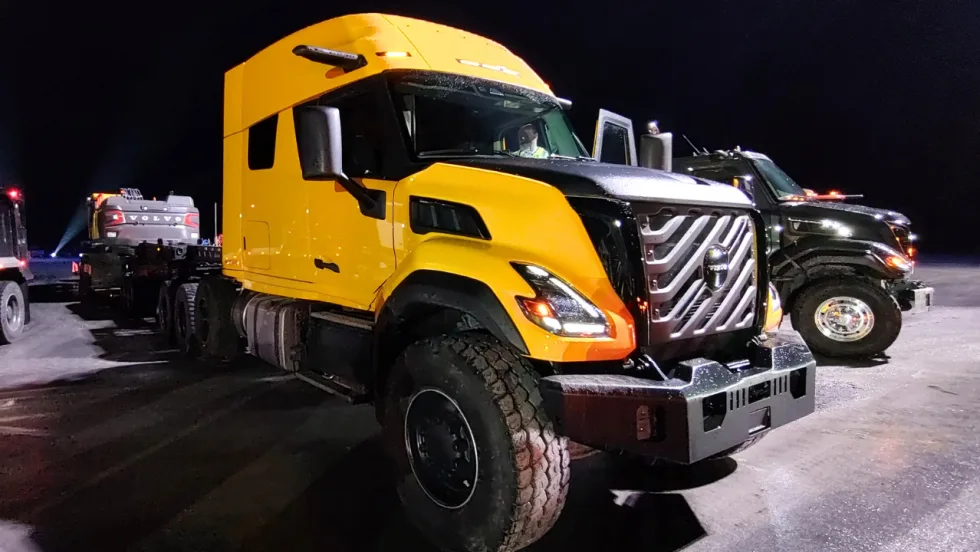
Volvo Unveils New VNX Heavy-Haul and Vocational Truck
Volvo Trucks has launched the VNX, a new vocational truck also available as a tractor in day cab and two sleeper configurations, with one heavy-haul model. The Volvo VNX is powered by Volvo's D13 platform, which delivers up to 540 horsepower and 1,950 pound-feet of torque and is EPA 2027-compliant.
Read More →
How GP Transco Cuts Trucking Fuel Costs, a Tenth of a Gallon at a Time
What’s another tenth of a mile per gallon worth? GP Transco shares how equipment upgrades and driver coaching turn small gains into meaningful fuel savings.
Read More →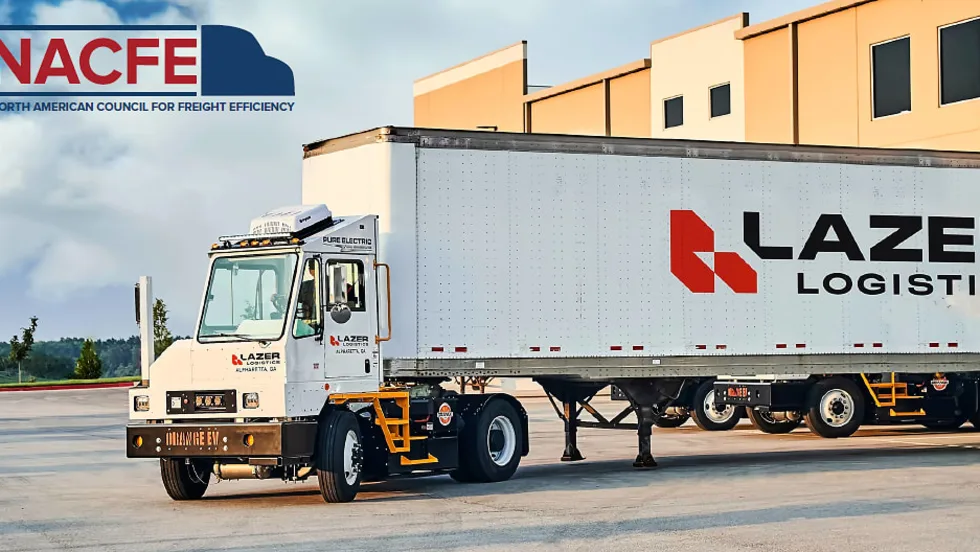
Electric Yard Tractors Move Beyond Pilots
Operating-cost savings have overtaken sustainability goals as the leading reason surveyed fleets are adopting battery-electric terminal tractors, according to new NACFE research.
Read More →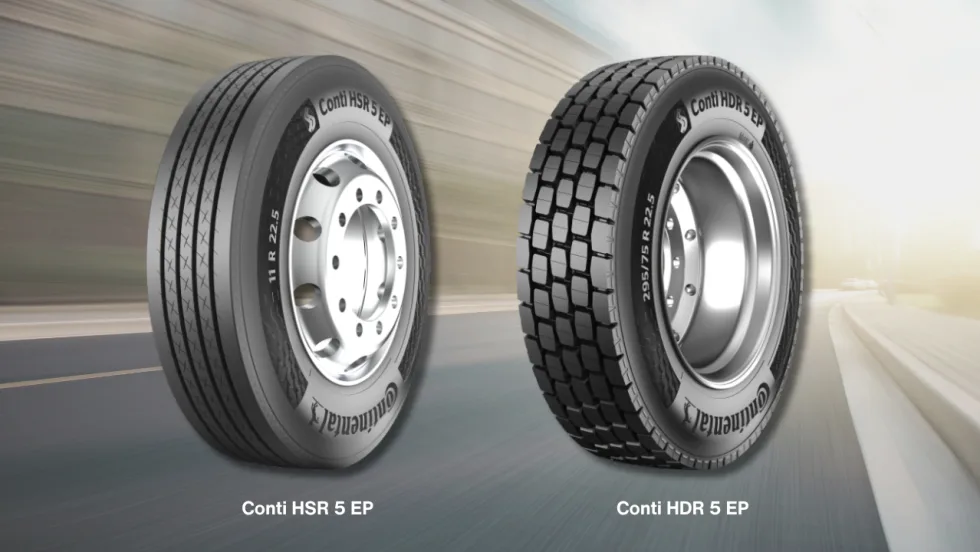
Continental Introduces New Regional Truck Tires
Continental says its new Generation 5 steer and drive tires for regional operations offer longer tread life, with estimated mileage gains of 22% and 19%, respectively.
Read More →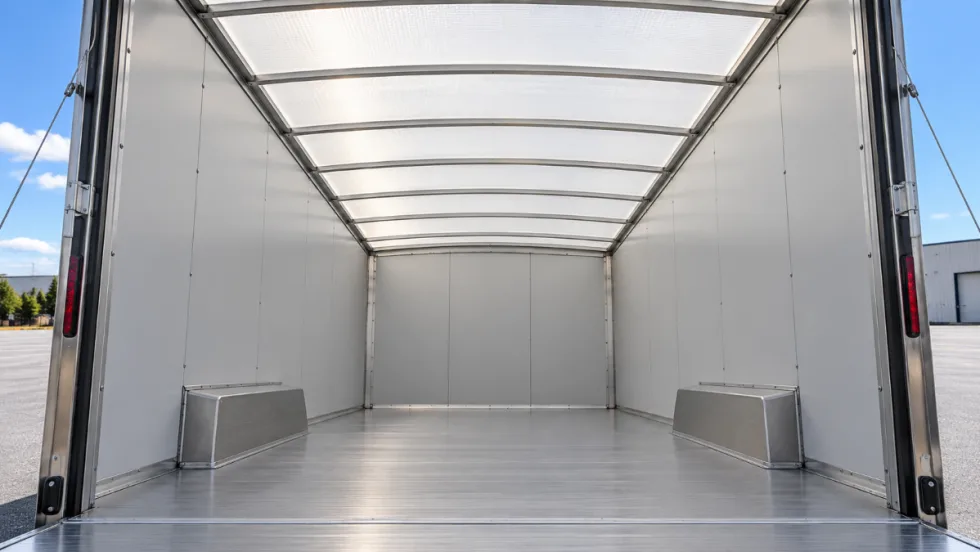
Tekmodo Introduces CargoBright Brand for Translucent Trailer Roofs
CargoBright is designed to diffuse daylight across the cargo area while performing as a working vehicle roof.
Read More →
Fleet Economics Shape Electric Truck Outlook
ACT Research expects costs, charging infrastructure, and technology improvements to drive zero-emission commercial vehicle adoption as federal regulations and incentives retreat.
Read More →
Kodiak Targets Dallas–Houston for Driverless Trucks
The company says its autonomous trucks are completing the I-45 run without a safety observer taking control. It plans to remove the observer by the end of 2026.
Read More →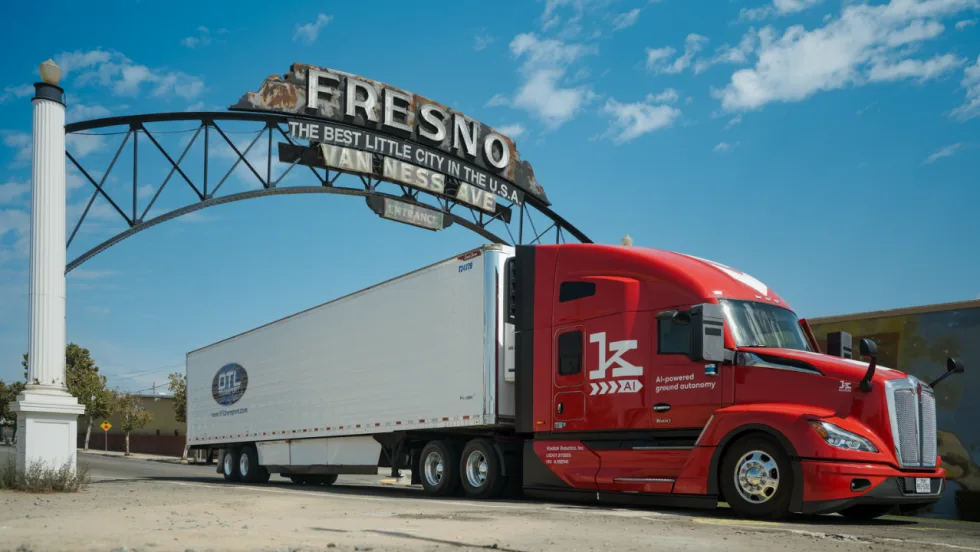
Kodiak Hauls Produce in California Autonomous Truck Pilot
Kodiak AI and DTL Transport have begun hauling produce between Fresno and Los Angeles under California’s new rules for testing heavy-duty autonomous trucks. A safety driver remains behind the wheel.
Read More →