




Amazon Targets Parcel Fees with New Delivery Network
Amazon’s new robot delivery service pilot program may be generating buzz, but the e-commerce giant doing something else that could have more far-reaching implications for last-mile delivery: Introducing a new seven-day-a-week delivery network that promises its shippers fewer extra fees.


Amazon appears to be working to gain more control over how its packages are delivered.
Photo courtesy Amazon
Amazon’s new robot delivery service pilot program may be generating buzz, but the e-commerce giant doing something else that could have more far-reaching implications for last-mile delivery: Introducing a new seven-day-a-week delivery network that promises its shippers fewer extra fees.
According to the Wall Street Journal, Amazon intends to get rid of fees that traditional parcel carriers use as revenue producers, including residential surcharges, fuel surcharges, and “extra charges to deliver packages to homes during the peak holiday season or on weekends.”
The WSJ points out that Amazon recently expanded its home-delivery service, Amazon Shipping, beyond test markets in London and Los Angeles. The online retailer is offering to pick up shipments from merchants’ warehouses and deliver them directly to shoppers.
“To woo shippers, the retailer is promising to forgo many fees that the traditional carriers use to pad their revenue, such as extra charges to deliver packages to homes, during the peak holiday season or on weekends, according to an email sent last week to shippers in the New York area and reviewed by The Wall Street Journal.”
The WSJ points out that while large parcel carriers use the fees to help meet the extra costs involved with e-commerce packages and residential deliveries, Amazon’s service is designed from the get-go for this type of operation, so there’s no need for such surcharges.
It appears to be part of Amazon’s larger strategy to gain more control. Amazon also is building a fleet of delivery vans using contract drivers. It’s building a fleet of Boing 767 cargo planes and ramping up airport hub operations, including building a $1.5 billion hub at the Cincinnati/Northern Kentucky International airport.
“Who could blame Amazon for seeking more control of what they don’t have control over?” writes Shep Hyken, a customer-service expert, at Forbes.com. “Many years ago Jeff Bezos, the founder and CEO of Amazon, argued they didn’t need a phone number for customers to call if there were problems. His famous quote was, ‘The best customer service is if the customer doesn't need to call you, doesn't need to talk to you. It just works.’ That’s fine until it doesn’t work. Once that package leaves the Amazon warehouse, they lose total control. … Amazon’s move into airplanes, hubs and delivery vans is a way to provide a better customer experience.”
However, Gordon Glazer, senior consultant for San Diego-based parcel consultancy Shipware, called the move “another Amazon publicity stunt like the idea of drones replacing uniformed drivers,” according to Logistics Management. “This will keep the rest of industry scrambling to deal with the Amazon effect.
“More likely, it will be a selected program for hand picked vendors to further enhance their Shipper Fulfilled Prime offerings,” Glazer predicted. “Even limiting services to residential deliveries, it will take years and billions of dollars to build out a national distribution network for non-Amazon packages.”
More Fleet Management

How Telematics Improves Visibility, Control, and Performance in Refrigerated Fleets
Explore how telematics help refrigerated fleets improve visibility, uptime, efficiency, compliance, and cargo protection across connected cold chain operations.
Read More →
What the U.S.-Canada Trade War Means for Trucking
Escalating U.S.-Canada tariffs could disrupt cross-border freight, reduce truck volumes, raise costs, and create new uncertainty for carriers on both sides of the border.
Read More →
What Are Trucking’s Top Concerns for 2026?
The American Transportation Research Institute wants to know what's worrying trucking fleet managers, drivers, and other stakeholders in its annual Industry Issues survey.
Read More →

American Trucking Associations Looks for a New Leader
ATA President and CEO Chris Spear abruptly left his job at the association on August 21, at a pivotal time for the trucking industry.
Read More →
Public Wi-Fi Cybersecurity Risks: How Truck Drivers and Fleets Can Protect Their Data
Public Wi-Fi can expose truck drivers and fleets to credential theft, malware, and other cyber threats. Here’s how to reduce the risk on the road.
Read More →
For Nicky Cupp, Fleet Innovation Starts With Frustration
HDT Truck Fleet Innovator Nicky Cupp turns everyday pain points at Fraley & Schilling into opportunities for better technology and smarter processes.
Read More →
Adam Buttgenbach’s Approach to Electric Trucks: Start With Where They Fit
HDT Truck Fleet Innovator Adam Buttgenbach helped PepsiCo build one of North America’s largest EV fleets by focusing on where electric trucks make operational sense.
Read More →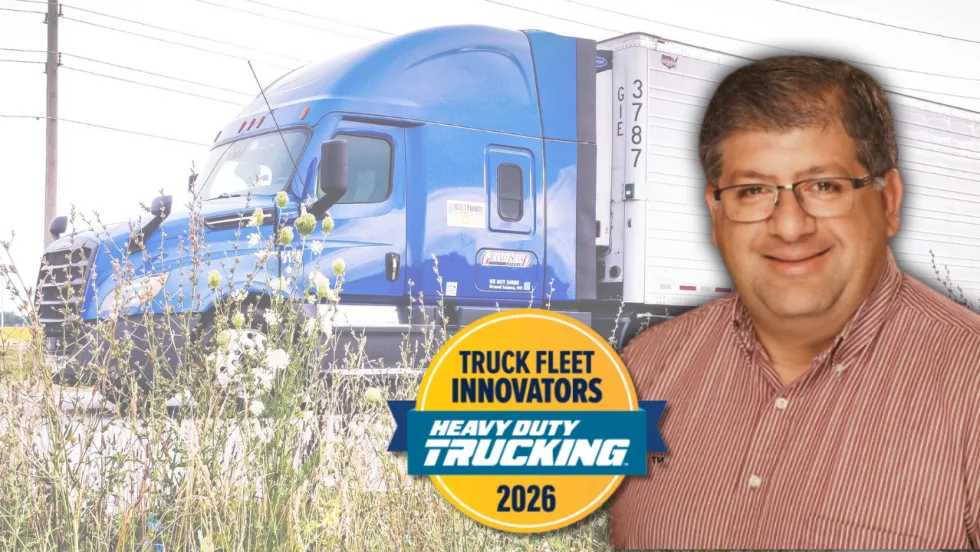
Deen Albert: Let Automation Do the Math, People Make the Decisions
HDT Truck Fleet Innovator Deen Albert makes sure people are still at the heart of operations at Grand Island Express, even while adopting artificial intelligence tools. AI-assisted dispatch helped boost revenue 25% with the same number of trucks.
Read More →
Trimble’s New AI Agent Takes Aim at Fleet Back-Office Busywork
Arc Agent works across Trimble TMS products to automate repetitive tasks such as freight orders, maintenance, invoices, fuel costs and more.
Read More →
How HDT’s 2026 Truck Fleet Innovators Are Rethinking Fleet Operations
Meet five trucking leaders who are challenging assumptions, solving operational problems, and putting innovative ideas to work.
Read More →