




UPS Testing Cargo eBikes in Seattle
When it comes to last-mile delivery, UPS isn’t limiting its Rolling Laboratory fleet to trucks. To address growing traffic congestion and air quality concerns in Seattle, UPS is deploying a downtown delivery pilot project using pedal-assist cargo eBikes and customized, modular trailers.

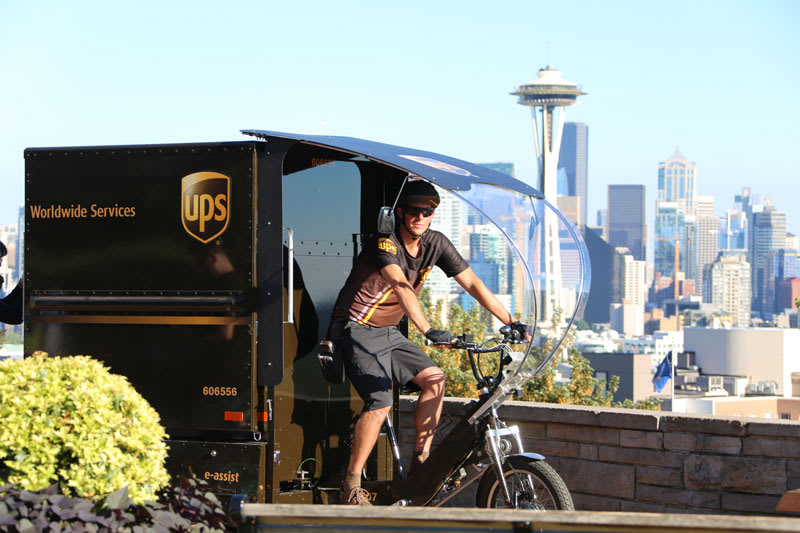
UPS says the cargo bike, which can run on battery or human power, will be able to make deliveries to areas conventional delivery trucks can’t access directly.
Photo: UPS
When it comes to last-mile delivery, UPS isn’t limiting its Rolling Laboratory fleet to trucks. To address growing traffic congestion and air quality concerns in Seattle, UPS is deploying a downtown delivery pilot project using pedal-assist cargo eBikes and customized, modular trailers.
The cargo eBikes will operate in the historic Pike Place Market and downtown Seattle area on sidewalks and in designated bike lanes.
“While we have launched cycle logistic projects in other cities, this is the first one designed to meet a variety of urban challenges,” said Scott Phillippi, UPS senior director of maintenance and engineering, international operations. “The modular boxes and trailer allow us to expand our delivery capabilities and meet the unique needs of our Seattle customers. It’s exciting to return to our roots – UPS started in Seattle in 1907 as a bicycle messenger company. We’re looking forward to being able to offer these customizable urban delivery solutions to other cities nationwide.”
Developed in collaboration with Silver Eagle Manufacturingusing Truck Trikes, the cargo eBike system will have removable cargo containers that are deployed via a specially designed trailer. This “plug and play” design will provide greater flexibility to meet varying delivery needs. It will also be able to make deliveries to areas conventional delivery trucks can’t access directly and currently require that trucks be parked on the periphery for long periods of time. This will reduce congestion in these areas by reducing truck dwell time, instances of double parking and other unintended consequences associated with downtown deliveries.
UPS partnered with the Seattle Department of Transportation to develop plans for the new pilot program. If successful, UPS will expand the route and consider additional cargo eBike deliveries in other areas of the city.
The UPS cargo eBike is equipped with a battery-powered electric motor that can travel longer distances than traditional bikes, carry substantial loads and navigate hills and other terrain. The modular, detachable boxes on the trailer can hold up to 400 pounds and have a 95 cubic foot capacity. The bikes can be operated with human pedal power or battery power, giving drivers with flexibility to navigate changing terrain and energy efficiency.
UPS and the University of Washington Urban Freight Lab will evaluate the cargo eBike’s reliability, design and integration into Seattle’s infrastructure over the next year. The Urban Freight Lab is an initiative that brings together transportation engineers and urban planners who manage public spaces with retailers, freight carriers and technology companies supporting transportation solutions. UPS will share data and analyses from the pilot for assessment against two of the lab’s key objectives: improving first delivery attempts and reducing “dwell time,” both of which should reduce traffic congestion and pollution.
The success of the UPS eBike was first demonstrated in 2012 in Hamburg, Germany, and serves as a prototype for the company’s newest cargo eBike in Seattle. The company also operates inner-city delivery projects with delivery on foot and by bike in more than 30 major cities worldwide, plus one other eBike previously operating in the United States in Pittsburgh.
Using its “Rolling Laboratory” approach, UPS deploys approximately 9,300 low-emission vehicles worldwide to determine what alternative fuel and advanced technology vehicles work best in various routes and duty cycles. This includes all-electric, hybrid electric, hydraulic hybrid, ethanol, compressed natural gas (CNG), liquefied natural gas (LNG) and propane. In Washington, UPS uses 10 electric and hybrid electric vehicles. The cargo eBike is part of a broader UPS strategy to continue to electrify its delivery fleet.
More Equipment

Kodiak Targets Dallas–Houston for Driverless Trucks
The company says its autonomous trucks are completing the I-45 run without a safety observer taking control. It plans to remove the observer by the end of 2026.
Read More →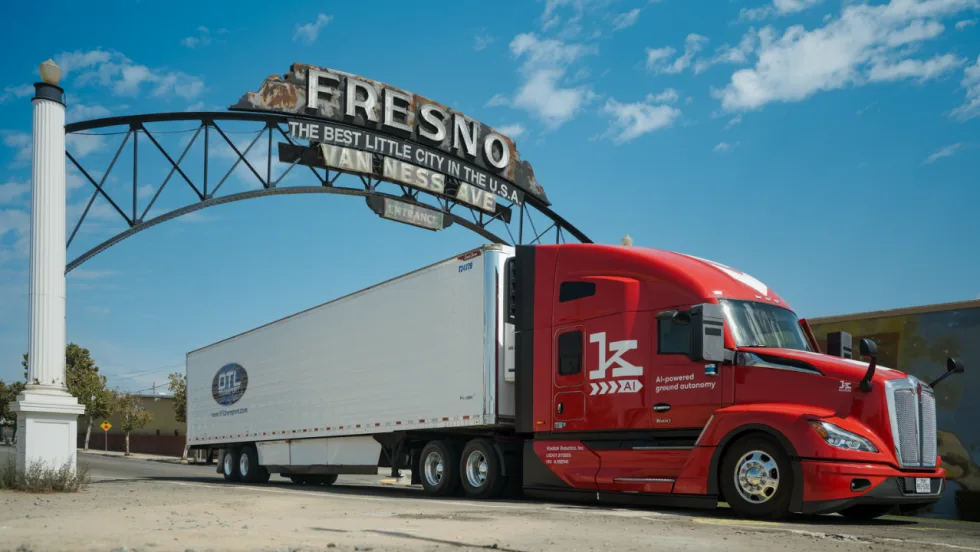
Kodiak Hauls Produce in California Autonomous Truck Pilot
Kodiak AI and DTL Transport have begun hauling produce between Fresno and Los Angeles under California’s new rules for testing heavy-duty autonomous trucks. A safety driver remains behind the wheel.
Read More →
Used-Truck Remarketing Math Is Changing
Used-truck value is no longer just a concern at trade-in. Decisions made throughout a truck’s first life can influence what it’s worth years later.
Read More →
How Volvo Updated Its D13 for EPA 2027 [Watch]
Volvo’s updated D13 promises lower emissions without sacrificing performance or fuel economy. Take a closer look at what changed inside the engine in this HDT Spotlight video.
Read More →
Michelin Tire Improves Efficiency and Durability for Regional Fleets
The Michelin X Multi Energy D2 is a regional haul drive tire engineered to help fleets improve fuel efficiency, durability and traction in demanding stop-and-go operations.
Read More →
ZF Expands Commercial Vehicle Push in North America
ZF is expanding its North American commercial-vehicle presence with new transmission applications, electrification, trailer technology and autonomous-driving systems.
Read More →
Tesla Wants a Self-Driving Semi. Are Cameras Enough?
Could Tesla’s camera-only autonomous driving technology work on an 80,000-pound Semi? In this commentary, HDT's Deborah Lockridge takes a look at Tesla, Cybercab, and how autonomous trucks see the road.
Read More →Kodiak: Driverless Long-Haul Truck Launch on Track for 2026
Kodiak AI says its driverless long-haul safety case is 93% complete and it remains on track to begin commercial operations by year-end 2026.
Read More →
What DOT’s Automated Vehicle Strategy Means for Trucking
The U.S. Department of Transportation issued a new automated-vehicle strategy that outlines plans for driverless-truck regulations, cross-state freight corridors, and federal safety standards.
Read More →
East Coast Port Launches $45M Electric Truck Push
The Port Authority of New York and New Jersey announced millions in incentives for zero-emission drayage trucks, yard tractors, and new charging hubs near the port.
Read More →