





Related: 70 Answers to Top ELD Questions
FMCSA Widens Stance on AOBRD Grandfather Clause
The Federal Motor Carrier Safety Administration has slightly liberalized its stance on the use automatic on-board recording devices by some fleets that are using those devices under the terms of the AOBRD grandfather clause within the electronic logging device rule.
March 21, 2018
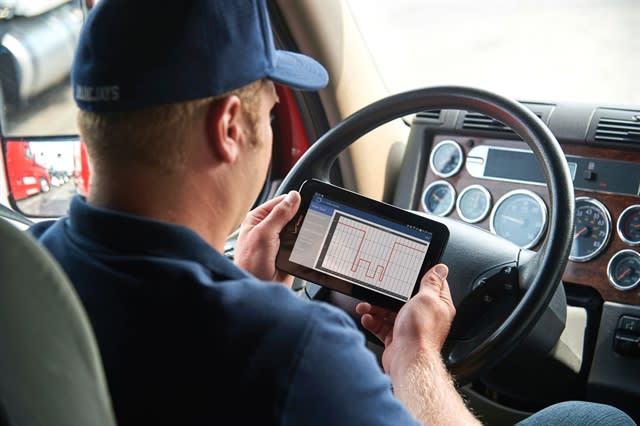
Photo: J.J. Keller & Associates
2 min to read
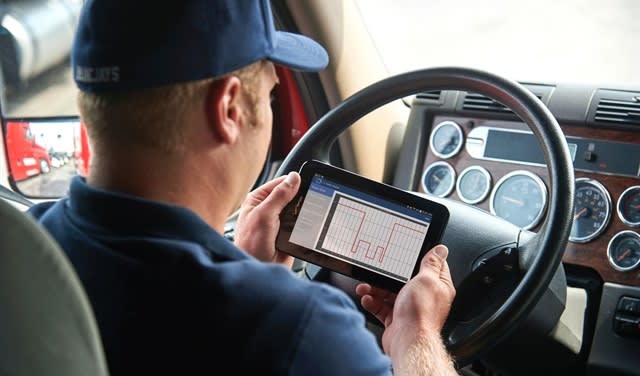
Photo: J.J. Keller & Associates
The Federal Motor Carrier Safety Administration has slightly liberalized its stance on the use automatic on-board recording devices by some fleets that are using those devices under the terms of the AOBRD grandfather clause within the electronic logging device rule.
Per new guidance issued earlier this month by the agency, a motor carrier that had installed and required its drivers to use an AOBRD before Dec. 18, 2017 may now install and use a new “ELD-capable device that runs compliant AOBRD software” until Dec. 15, 2019. That latter date is the one on which the AOBRD grandfather clause expires.
FMCSA’s new, more flexible position on fleets allowed to use AOBRDs during the grandfather period does not negate the requirement that any new AOBRD installed must be able to be updated for mandate compliance by Dec. 16, 2019, noted ELD supplier J.J. Keller & Associates in a news release.
“To be fully informed consumers, motor carriers with AOBRDs need to ask their current device supplier if their equipment can in fact be updated over-the-air to be ELD mandate compliant,” said Tom Reader, director of marketing for ELDs at J. J. Keller. “A motor carrier may have older AOBRDs that are compliant now, but that older equipment may not be able to be updated as required in December 2019.
“Our devices, currently operating as AOBRDs today, can be updated to mandate-compliant ELDs as needed,” added Reader. “Every one of our AOBRD customers will be able to perform the update.”
More Safety & Compliance
Fatal Crash Exposes Toll Plaza Risks
An NTSB investigation found that last-minute lane changes and large speed differences at an Ohio toll plaza created a hazard the truck driver couldn't avoid in time.
Read More →
When Language Stops the Truck: The Return of ELP Out-of-Service Orders
English language proficiency rules for commercial drivers aren’t new, but renewed out-of-service enforcement has raised the stakes. Here’s what carriers need to know before a driver reaches a roadside inspection.
Read More →
Sponsored•October 6, 2026
A Camera Isn't a Safety Program. Here's What Brokers Are Screening for Now
Footage alone may not be enough to pass broker vetting processes. Here's what counts as a defensible safety program now.
Read More →

Marijuana and Trucking’s Drug-Testing Dilemma
Marijuana is getting stronger, laws are changing, and drug tests still can’t reliably establish impairment. What does that mean for truck drivers and the fleets that employ them?
Read More →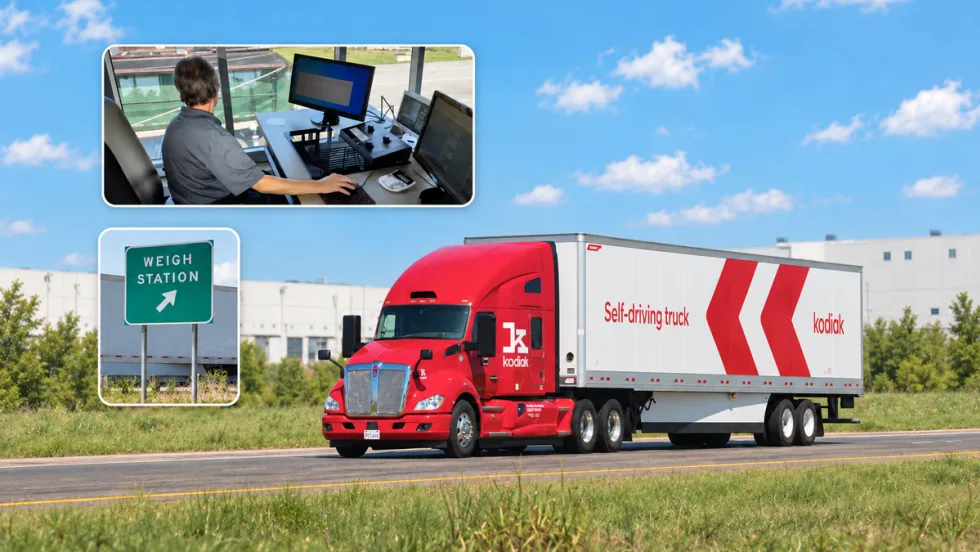
PrePass, Kodiak Connect Driverless Trucks to Roadside Enforcement
The system will allow enforcement agencies to verify Enhanced Inspection information and decide whether Kodiak’s autonomous trucks can bypass roadside screening sites.
Read More →
From One Generation to the Next: How Mentorship Builds Safer Truck Drivers
After three decades in trucking, Harold Perry shares what he's learned about driver safety, mentorship, and helping the next generation build confidence behind the wheel.
Read More →
FMCSA Pauses Biennial-Update Enforcement Amid Motus Transition
Carriers whose updates were due on or after June 1 have more time, while FMCSA works to stabilize its new registration system and warns of phishing sites impersonating its new carrier registration system, Motus.
Read More →
ZF Expands Commercial Vehicle Push in North America
ZF is expanding its North American commercial-vehicle presence with new transmission applications, electrification, trailer technology and autonomous-driving systems.
Read More →
Truck Drivers Need More Than Another Alert
Fleets have more visibility into truck health, safety events, and driver activity than ever. The next challenge is turning all that information into useful guidance for the person who has to decide what to do next.
Read More →
Tesla Wants a Self-Driving Semi. Are Cameras Enough?
Could Tesla’s camera-only autonomous driving technology work on an 80,000-pound Semi? In this commentary, HDT's Deborah Lockridge takes a look at Tesla, Cybercab, and how autonomous trucks see the road.
Read More →