




Making Tank Trailers Safer
Statistically, cargo tanks, both liquid and dry bulk, are statistically among the safest vehicles on the road today. But the tank sector does face certain challenges that are inherent with the job.

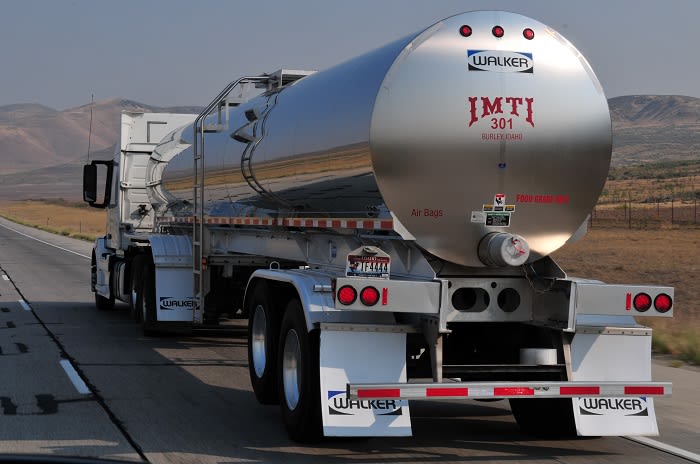
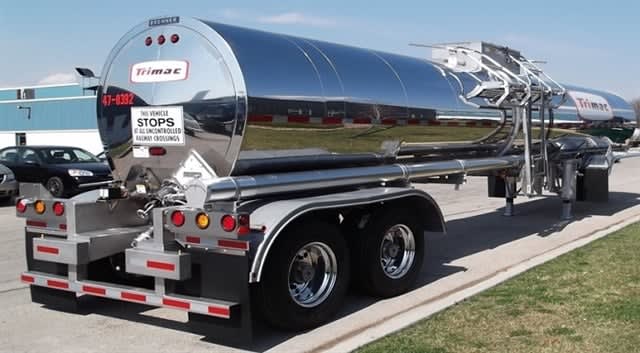
There are plenty of ways drivers can get hurt with tank trailers. Industry is taking steps to make them safer to work on and around. Photo: Jim Park
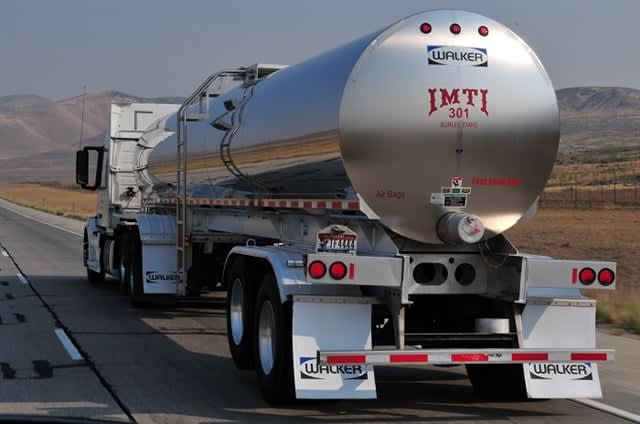
There are plenty of ways drivers can get hurt with tank trailers. Industry is taking steps to make them safer to work on and around. Photo: Jim Park
Cargo tanks, both liquid and dry bulk, are statistically among the safest vehicles on the road today. According to the Federal Motor Carrier Safety Administration’s Large Truck and Bus Crash Facts 2012, cargo tanks were involved in far fewer fatal, injury and tow-away crashes than dry van or flat deck equipment.
But the tank sector of the industry faces certain challenges that are inherent with the job, such as dynamic stability of the vehicles, and worker safety related to handling of cargo and operation of the equipment.
Preventing Tanker Rollovers
Most chemical and food-grade liquid tanks are cylindrical in shape and have a fairly high center of gravity. In turns, the liquid inside the tank can ride up on the side of the tank, shifting the center of gravity upward and outward. Because of the cleaning requirements for those trailers, changing the shape isn’t always practical, so roll-stability or full electronic stability control technology is spec’d on almost every new liquid tank manufactured today.
FMVSS 136, Electronic Stability Control for Heavy Vehicles, requires the system only on Class 7-8 tractors as of August 1, 2017, but tank makers say customer uptake for optional roll-stability technology is strong.
“Safety, application, weight, and reliability continue to drive market acceptance for various new technologies,” says Duane Plumski, director of product development at Polar Tank. “We are standard on roll stability and see tire inflation systems as an option that continues to grow in popularity.”
Another way to improve stability is altering the shape and lowering the cargo body. For years, petroleum tanks such as those that deliver gasoline to retail outlets have had an elliptical profile rather than cylindrical. This keeps the lower portion of the tank body wider than the top, which helps lower the center of gravity.
More recently, manufacturers such as Beall (a division of Wabash National) have managed to lower the body of the tank by 4 to 6 inches, which increases the margin of safety considerably.
“We already use a low-profile-ellipse tank shape, but we also use an integral chassis frame and an inserted fifth-wheel plate rather than a raised bolt-on plate” to bring the tank body closer to the ground, explsins John Cannon, vice president of regulatory and industry affairs at Wabash National.
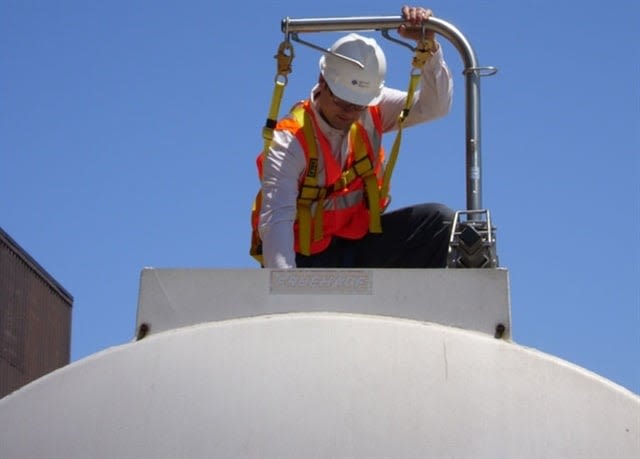
The Tram from Standfast USA offers fall protection that doesn’t get in the driver’s way or interfere with loading racks.Photo: Standfast USA
Protecting Tanker Drivers from Falls
There are all sorts of legitimate reasons for tanker drivers to be climbing onto the tops of their trailers. Keeping drivers safe up there and preventing falls has become one of the biggest challenges facing tank manufacturers. Various schemes have been tried, from liftable guardrails along the catwalk to drivers tethering themselves to a gantry-type arrangement permanently mounted at a loading facility.
Each has shortcomings; drivers trip on the cables, the guardrails get bent when tangled up in loading racks, they often aren’t strong enough to support a large driver in a fall, etc.
“There’s much interest in fall protection today ranging from hand railings to lanyard attachments,” says Randy Arlt, president, Polar Tank Trailer. He notes that the company gets direction from the Truck Trailer Manufacturers Association and the Cargo Tank Risk Management Committee, a cross-functional group of tank manufacturers, major shippers and some of the largest bulk carriers in North America. And it offers safety equipment, such as retractable handrails or Standfast Tram systems, to make trailer top access safer.
The Tram system from Standfast USA is a waist-height support with a belt that allows the driver a degree of mobility without getting tangled in the harness. It’s mounted on a rail that runs the length of the trailer so the driver can access all of the dome covers on the tank top. It folds down when not in use so it doesn’t interfere with loading racks, and its low profile has no impact on trailer aerodynamics.
A better idea still is to keep drivers on the ground. Most modern petroleum tanks are equipped with bottom loading and vapor recovery systems that eliminate the need to climb on top of the trailer. They also have pneumatic actuated vents that the driver can open from the ground during unloading.
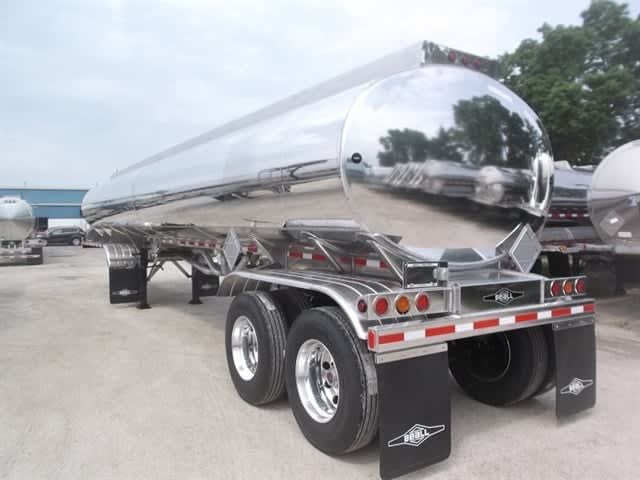
Beall's low-profile petroleum tank has a center of gravity 4 to 6 inches lower than traditional fuel-hauling trailers.Photo: Wabash National
Chemical, food-grade and dry-bulk tanks cannot always be equipped with such systems, but there are advancements being made on that front too.
RMC Engineering has developed a remotely controlled loading port cover (often called the manhole cover) for dry-bulk tanks that drivers operate from the ground.
For equipment that cannot be operated remotely, efforts are under way to work with shippers, tank wash facilities and others to develop safer loading platforms. A few years ago, the CTRMC jointly with the TTMA developed a safer tank-top access ladder. This Vision 2020 ladder has been found to be safer and more ergonomically effective for drivers working on top of tank trailers.
“Until such time that we can completely eliminate any reason for a driver to climb onto the top of the trailer, manufacturers can use this ladder design,” says Cannon. “The industry developed this ladder together and it’s used by many tank manufacturers.”
The Vision 2020 ladder was jointly developed by industry and trailer makers.Photo: Cargo Tank Risk Management Committee
How Lighting Can Improve Safety for Tank Trailer Drivers
Lighting is another area where tank manufacturers are offering options to improve driver safety.
Mac Liquid Tank Trailers has developed an auxiliary lighting system for gasoline trailers intended to improve safety during night-time filling station deliveries. The Total Area Lighting Kit, or Talk, provides bright white LED light strips above the discharge tube area and on the steps of the ladder to help drivers better see what they are doing in darkness.
The Talk system also includes two 8-foot-long light bars that swing out from stowed mounting positions along the body of the trailer. These have red LEDs on the front and back to provide a very obvious work-zone barrier to help keep cars away while the driver is unloading. White LED strips along the bottom of the bars light up the work area. There are strobe lights on the tips of the bars to provide additional awareness of the driver’s work area.
Mac LTT President Jim Marion says the idea came from customers.
“We had heard stories of drivers getting mugged and backed into while they were unloading at night,” he explains. “We wanted to provide a way to make that work environment safer and better lit so drivers can better see what they are doing.”
Much of what has traditionally been risk for tank drivers is now under improvement, which makes the job considerably safer. With some of the cargoes these folks haul, tumbling off a tank may not seem like the worst thing that could happen to a driver — but when it comes to driver safety, it’s worth sweating the small stuff.
More Equipment

How Volvo Updated Its D13 for EPA 2027 [Watch]
Volvo’s updated D13 promises lower emissions without sacrificing performance or fuel economy. Take a closer look at what changed inside the engine in this HDT Spotlight video.
Read More →
Michelin Tire Improves Efficiency and Durability for Regional Fleets
The Michelin X Multi Energy D2 is a regional haul drive tire engineered to help fleets improve fuel efficiency, durability and traction in demanding stop-and-go operations.
Read More →
ZF Expands Commercial Vehicle Push in North America
ZF is expanding its North American commercial-vehicle presence with new transmission applications, electrification, trailer technology and autonomous-driving systems.
Read More →
Tesla Wants a Self-Driving Semi. Are Cameras Enough?
Could Tesla’s camera-only autonomous driving technology work on an 80,000-pound Semi? In this commentary, HDT's Deborah Lockridge takes a look at Tesla, Cybercab, and how autonomous trucks see the road.
Read More →
Kodiak: Driverless Long-Haul Truck Launch on Track for 2026
Kodiak AI says its driverless long-haul safety case is 93% complete and it remains on track to begin commercial operations by year-end 2026.
Read More →
What DOT’s Automated Vehicle Strategy Means for Trucking
The U.S. Department of Transportation issued a new automated-vehicle strategy that outlines plans for driverless-truck regulations, cross-state freight corridors, and federal safety standards.
Read More →
East Coast Port Launches $45M Electric Truck Push
The Port Authority of New York and New Jersey announced millions in incentives for zero-emission drayage trucks, yard tractors, and new charging hubs near the port.
Read More →
PlusAI Going Public to Fund Autonomous Truck Launch
A SPAC deal could provide PlusAI with up to $300 million as it works toward a 2027 commercial launch of factory-built autonomous trucks.
Read More →
NHTSA Moves to Rewrite Truck Fuel-Economy Rules
The National Highway Traffic Safety Administration says it lacks authority to regulate medium- and heavy-duty truck engines separately from complete vehicles, but the existing standards have not yet been eliminated.
Read More →
Detroit Opens Orders for EPA 2027 Engines
Detroit isn’t starting from scratch to meet EPA 2027 diesel emissions standards. Its Gen 6 DD13 and DD15 engines keep much of today’s platform while updating the fuel and aftertreatment systems.
Read More →