




Related: Daimler Invests $18M to Upgrade Oregon Test Facility
Daimler Unveils New Oregon Proving Grounds
Daimler Trucks North America has officially opened its High Desert Proving Grounds, representing a $18.7-million investment that will put the company’s trucks through their paces – including connected, platooning and autonomous vehicles of the future.
by John G. Smith
May 19, 2017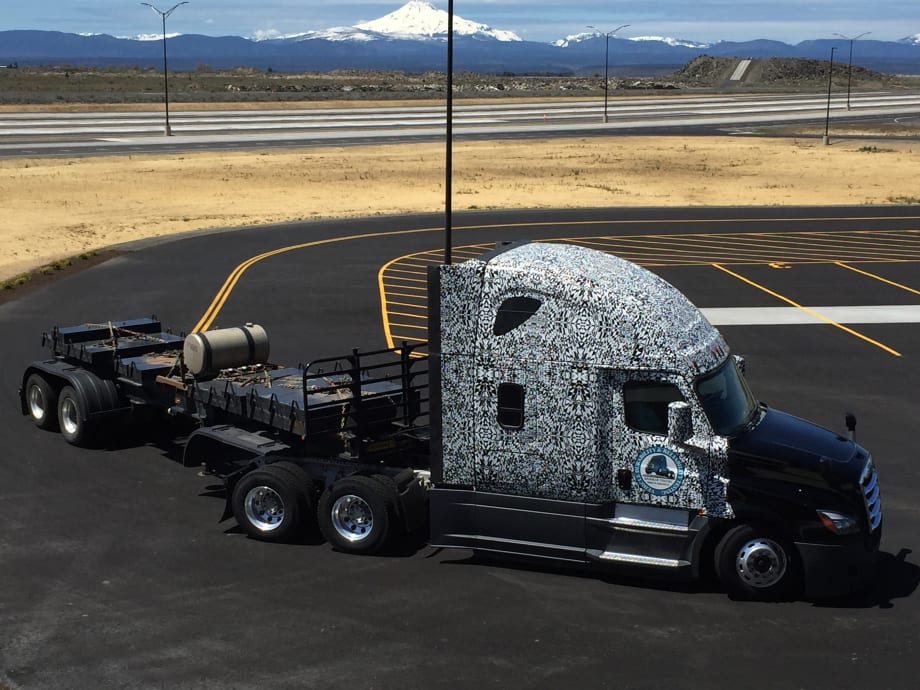
Trucks under development, like this camouflaged rig, will be put through their paces at the new facility. Photos: John G. Smith
3 min to read

MADRAS, Ore. – Daimler Trucks North America this week officially opened its High Desert Proving Grounds, representing a $18.7 million investment that will put the company’s trucks through their paces – including connected, platooning, and autonomous vehicles of the future.
“Every mile on the track is the equivalent of 200 miles on some normal road,” explained Wilfried Achenbach, senior vice president – engineering and technology, to reporters. Freightliner designs its trucks to last 1.2 million miles, so this track can replicate that level of wear in just 6,000 miles.
“The entire track has 3.5 miles and covers multiple maneuvers,” he said. “It replicates most of any road surface you can find around the world.”
Work to clear the 87 acres of land began in June 2015, while construction launched in May 2016. Now there are nine test lanes overall, as well as a 32,000-square-foot facility with 14 service bays, and several video monitors that connect teams to Portland and beyond.
“The opening of this facility will ensure the future reliability of our products, as well as expedite future technologies that enhance our customers’ bottom line,” said Roger Nielsen, president and chief executive officer.
It represents a new way for Daimler engineering teams to share information, too. The site is far closer to the company’s Portland headquarters than an Indiana track that Daimler had been leasing from Navistar. These proving grounds won’t be open to any other original equipment manufacturers, but future tests could include selected suppliers, Nielsen said.
The 120-mile trip between Portland and Madras itself will itself be part of ongoing validation tests, including portions of interstate, rural roads, and mountainous terrain through the Mount Hood pass, the company noted. For example, the route was used to validate the potential gains through truck platooning.
And many members of the Portland team will now be making regular trips over the mountains for a first-hand look at ongoing track tests, which will focus on durability, reliability and functional issues. No computer can do it better. “You can feel it, you can touch it,” Achenbach said. “It will bring our engineers closer to the project.”
A similar track is already in Germany, and another is planned for Brazil, supporting a global approach to testing. “Bumps are bumps wherever you go,” Achenbach said.

But the bumps used for durability tests are special, created from a series of 379 panels, and 99% of the surface sits within 5 millimeters of design specs. It looks like a gently waving corduroy, but looks are deceiving.
This is worse. Picture the roughest road you’ve ever driven. Drivers who are hired for the tests need to pull over every 15 minutes, and they have to take a half hour break every two hours. It’s all by design, based on measurements of real-world operating conditions across Canada and the U.S.
Handling and J-turn tests take place on the Vehicle Dynamics Area with a 700-foot diameter. Start and stop tests occur on a man-made incline that has been nicknamed Mount Madras. The local climate in this hot desert also offers hot summers and “reasonably” cold winters, Achenbach said.
“The focus here is on rough-road input,” said Sean McKenna, manager of durability, testing and instrumentation. “The testing we don’t want to do on the public roads, we can do here.”
The proving grounds will soon be staffed by 40 employees who will “bring trucks to life,” Nielsen added.
Daimler is no stranger to Madras, of course. A three-lane loop road used for noise, vibration and harshness tests has been in place here since the 1980s. But the latest investment is certainly a boost for the local economy. Daimler has 2,800 employees in Portland alone, and is now one of the top 10 employers of graduates from Oregon State University.
“We’re Oregonians,” Nielsen said.
John G. Smith is the editor of the award-winning Canadian publication Today's Trucking. This article was used under a cooperative editorial sharing agreement between HDT and its Canadian counterpart.
Subscribe to Our Newsletter
More Equipment
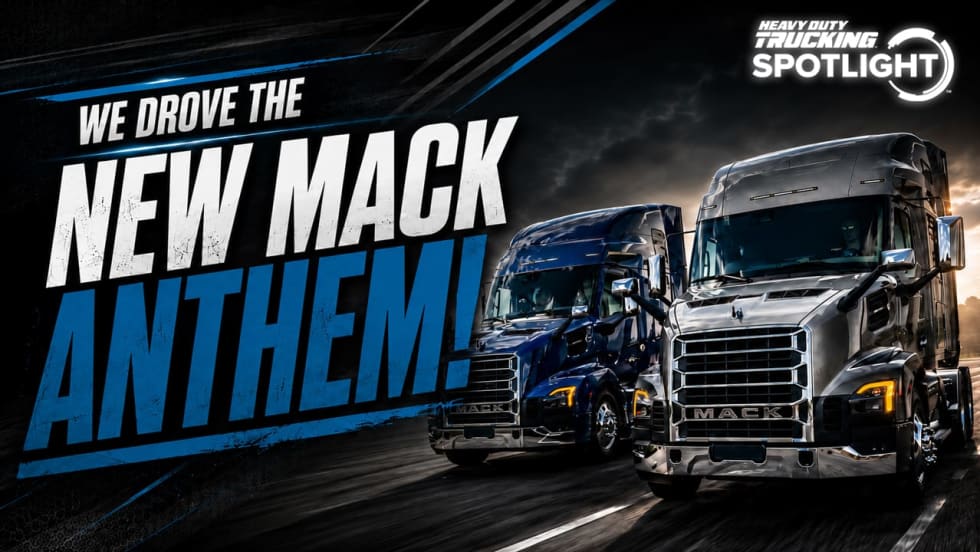
Behind the Wheel of the New Mack Anthem [Video]
HDT takes the new Mack Anthem around Mack’s Pennsylvania test track to see how its driver-focused design, technology, visibility and handling perform from behind the wheel.
Read More →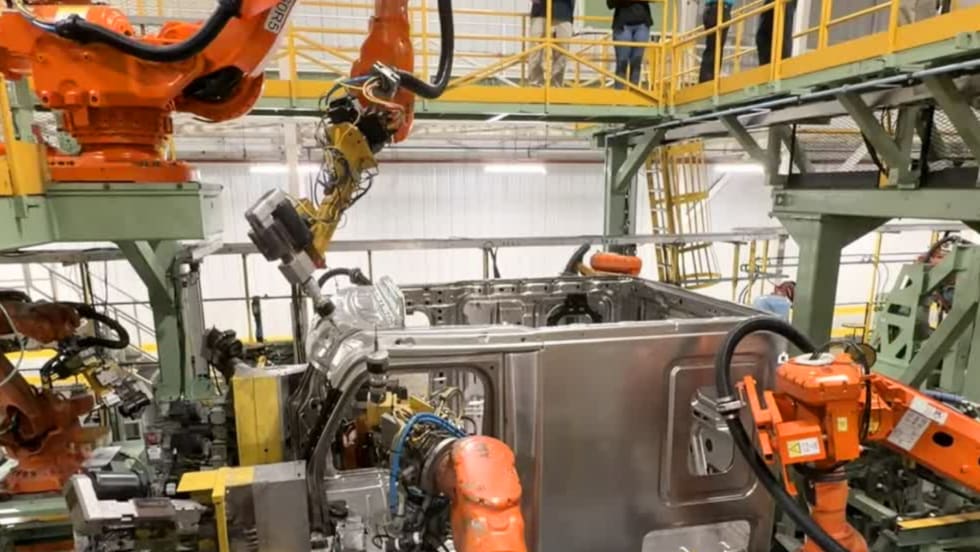
DTNA Plans New U.S. Truck Plant as Manufacturing Footprint Shifts
Daimler Truck North America is evaluating sites for a new assembly plant expected to open in 2029 while winding down operations at its longtime Portland manufacturing facility.
Read More →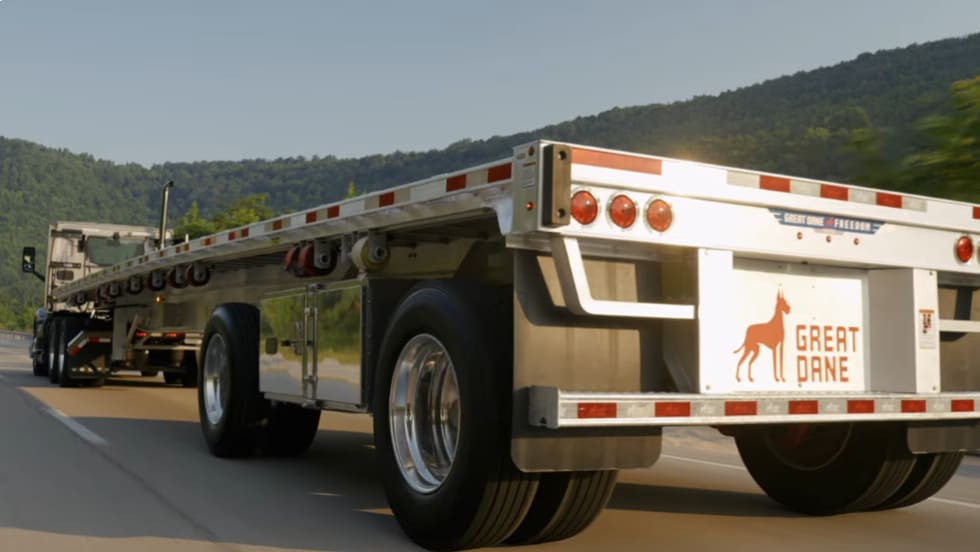
Great Dane Flatbed Trailer Offers Light Weight and Strength
Freedom Ultra is designed for a wide range of open-deck applications, including building materials, lumber, machinery, steel products, industrial freight, and coil hauling.
Read More →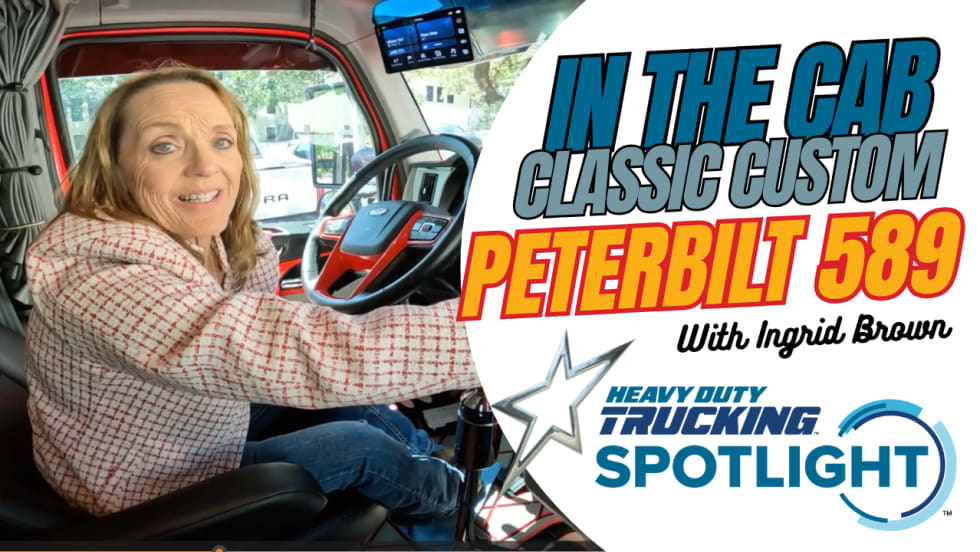
What It's Like Inside this Custom 2025 Peterbilt 589?
Take a driver's-eye tour of this customized 2025 Peterbilt 589 in this video, as longtime driver Ingrid Brown explains its features, compares it to previous models, and shares plenty of personality along the way.
Read More →
Drivers Put Western Star Trucks to the Test at Star Nation Experience
Watch to get an inside look at the Western Star trucks, technology, and community behind the Star Nation Experience 2026!
Read More →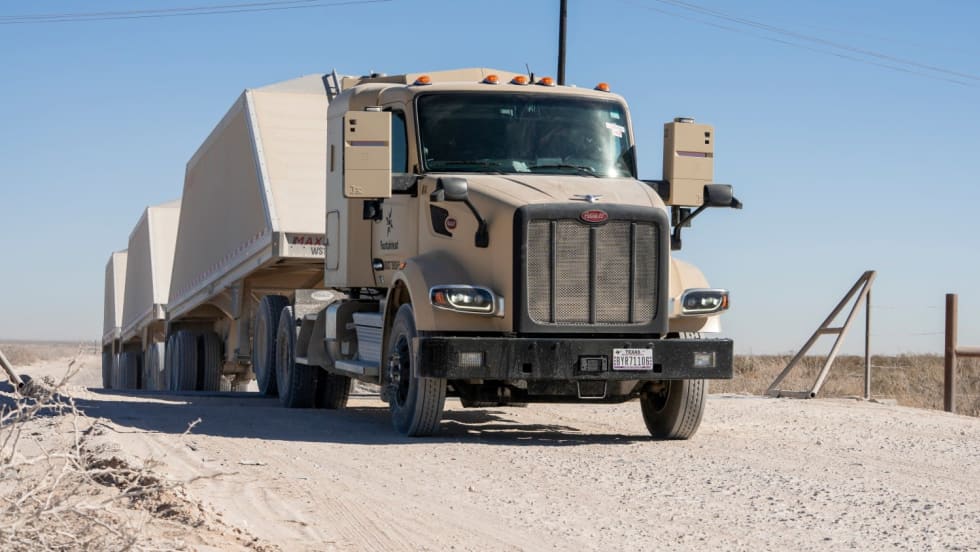
Atlas Expands Kodiak Driverless Truck Fleet in Permian Basin
Atlas Energy Solutions is expanding autonomous frac sand hauling in the Permian Basin with a second load-out location and plans for 100 driverless trucks by mid-2027.
Read More →
Putting Mack’s Command Steer to the Test
A test drive of Mack’s Command Steer active steering system evaluates how it can make truck driving easier and less tiring.
Read More →
Mack, Volvo Expand DEF Derate Software Updates
The updated software gives Mack and Volvo truck owners more time to address DEF-related issues before the engine derates or the vehicle goes into reduced-speed inducement, following new EPA guidance.
Read More →
Rush, MCT Team Up to Grow Refrigeration Service Network
The joint venture will operate MCT's network of Carrier Transicold dealerships and mobile service locations, with the companies promising greater service capacity and uptime for refrigerated fleets.
Read More →
Cummins Adjusts 2027 Engine Rollout After EPA Proposal
The engine maker will gradually introduce its new Model Year 2027 diesel engines while continuing to offer current models during the transition, citing the EPA's proposed emissions rule changes.
Read More →