




Why Should You Retread Your Tires?
Retreading tires provides the absolute lowest cost per mile of any tire management strategy. When coupled with other enhanced preventive maintenance measures, a retreaded tire can easily go half a million miles or more, all things being equal.

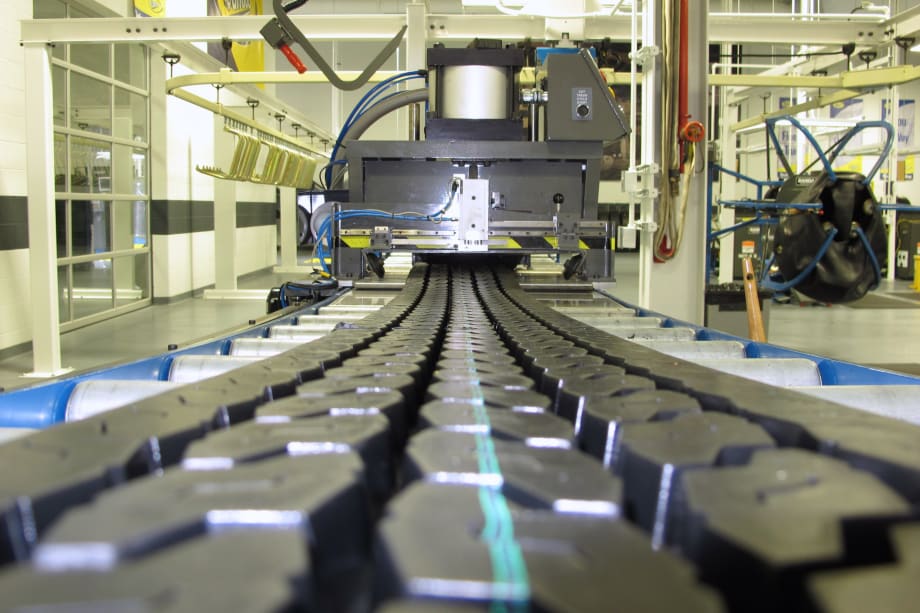
You can choose from a wide range of OE and aftermarket tread patters and compounds to optimize tire life or fuel efficiency. EPA now recognizes retreads as fuel efficient tires, so fleets can reuse the same casing for different applications at different wheel positions.

Retreading tires provides the absolute lowest cost per mile of any tire management strategy. When coupled with other enhanced preventive maintenance measures, a retreaded tire can easily go half a million miles or more, all things being equal.
Matt King, president of King's Tire Service in Bluefield, W.V., a ContiLifeCycle retread dealer, says some of his over-the-road customers are averaging three to four caps in a casing life, depending on the application.
"We suggest the first cap on a name brand casing should be a drive recap, and then go to the trailer tread if the casing comes back again," he says. "Generally speaking, the casing is best used for the application it was in when it was new."
Getting several retreads out of a single casing can reduce overall tire cost by something like 40%, and that should appeal to just about anyone.
If you still need convincing, consider the vastly reduced environmental consequences of using retreaded tires. According to the Tire Retread Information Bureau, it takes approximately 22 gallons of oil to manufacture one new truck tire, but only about seven gallons to produce a tread for a retreading application. I
If you can extend the life of the casing out to two, three or even four retread cycles, you're saving about 50 gallons of oil per wheel position over the life of the truck.
And if that's not enough to convince you, consider that each time a tire is retreaded, there's more warranty applied to the tire. All the major retreaders and many retread shops offer some form of warranty, sometimes prorated, on the tread and the casing down to varying tread depths. That lowers the cost of potential failures, provided the tire is properly maintained.
Ah, you're saying; properly maintained ... That's the rub. Who has the time and resources to chase after retreaded tires?
"Retreaded tires require no additional maintenance compared to a virgin tire," says Tom Bowman, vice president of the commercial tire division of Belle Tire in Allen Park, Michigan, near Detroit. "Any irregularities that would harm a new tire will do the same damage to a retreaded tire. Inflation pressure maintenance is critical, but so it is with new tires, too. If you don't keep the pressure up, the tire – any tire, retread or new – will die a premature and possibly ugly death."
Next page: Trade it Now, or Trade it Later[PAGEBREAK]
Trade it Now, or Trade it Later

Time for a bit of simple math. If you were to take a $400 tire out of service and sell the casing to a retreader for $100, the net cost of the tire is $300, using round numbers. If the casing is retread twice, or perhaps three time, the net cost of the original tire can be reduced to as little as $100.
Now compare the cost of two retreads versus two new tires, even at a trailer position, and you'll see how you're saving money twice each time a tire is retreaded.
We assume here that you're treating your tires well, repairing them properly, and not abusing the casing. Depending on your location and a few other factor, like the market for retreadable casings, you might get $100 for a casing in tip-top shape -- an A-grade casing. If you beat the thing up, it could be only a B- or a C-grade casing. Here again, if you're maintenance program isn't up to par, you're throwing money away in casing value.
"Currently, in most of the U.S., 22.5 low-profile casings (295/75R22.5 and 275/80R22.5) are in very short supply," says Bowman. "They'll fetch the highest casing value, but you may get $95 per casing in one part of the country and only $65 in another, depending on the local market."
Casing Killers
The number 1 killer of tire casings is heat, and that's directly attributable to underinflation.
Each revolution of the tire causes the steel wire in the casing to flex. A tire will go around about 500 times per mile, times 100,000-plus miles a year for a couple of years. Try flexing a paperclip like that and see how long it lasts.
"It's critical that proper pressure and loading be maintained so the casing will function as designed through the millions of flexing cycles a tire undergoes in its service life," says Bridgestone's director of engineering for commercial products and technologies, Guy Walenga. "That keeps the casing strong and makes it a good candidate for retreading."
Improper repairs and rusted belts are the next most likely killers of casing value. Each is manageable. Eliminating them will preserve casing value. Tire repairs aren't a problem for retreaders, even section repairs, provided they are done to accepted industry standards, but improper repairs will render the casing non-retreadable.
"There could be any number of nail hole repairs, so long as the repair units do not overlap, which would be considered an improper repair,” says Kevin Rohlwing, senior vice president of training for the Tire Industry Association. "Rust in the tires' steel cords is bad news for retreading. Punctures should be repaired as soon as possible after detecting the wound to prevent moisture from wicking its way into the belts and ruining the casing."
Retreads Keep You Honest
While that may sound like a silly statement, consider the tire maintenance program as whole. If you treat tires as disposable commodities, then retreading probably isn't for you – though it should be. If you invest heavily in tire management and maintenance, a retread program could very beneficial.
Several of the major tire makers offer cost-effective, cradle-to-grave tire management programs that can provide the labor and the oversight needed to make such programs successful. Depending on the need and the volume, they can provide regular yard surveys, pressure checks, reports and recommendations, mounting and dismounting service as well as on-road repairs, casing management through dealer networks, and monthly billing.
Each time you turn a casing into a retreaded tire, you extend its life and lower its life cycle cost. You also get a good-as-new tire for half to two-thirds the cost of a new one, and that's harder to ignore than your tire pressure.
More Maintenance

Wabash Trailers Recalled for Improperly Installed Underride Guards
More than 900 Wabash dry van trailers may not comply with the Federal Motor Vehicle Safety Standard for rear impact guards.
Read More →
DTNA Software Update Gives Truckers More Time Before DEF Derates Take Effect
The changes reflect EPA guidance aimed at reducing downtime caused by emissions-system faults while maintaining compliance requirements.
Read More →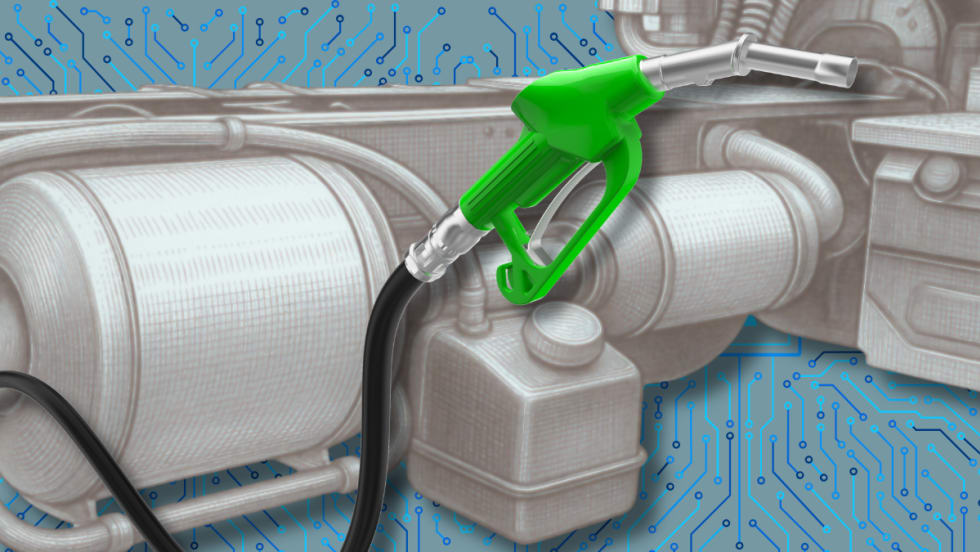
New Agentic Predictive Maintenance Report Demonstrates How Degraded Aftertreatment Systems Waste Fuel
Questar analyzed a large mixed-class fleet and discovered it was wasting as much as $30 in fuel per vehicle, per day, because of mechanically degraded aftertreatment systems.
Read More →
Mack, Volvo Issue ‘Do Not Drive’ Recall on Possible Wheel-Offs
Owners will be sent advance notice not to operate their affected vehicles until the remedy is performed.
Read More →
Why Fleet Data Matters More Than Ever at Waste Connections [Watch]
Waste Connections' Chuck Palmer explains how telematics, predictive maintenance, safety analytics, and AI help keep vehicles on the road and drivers safe in this episode of HDT Talks Trucking.
Read More →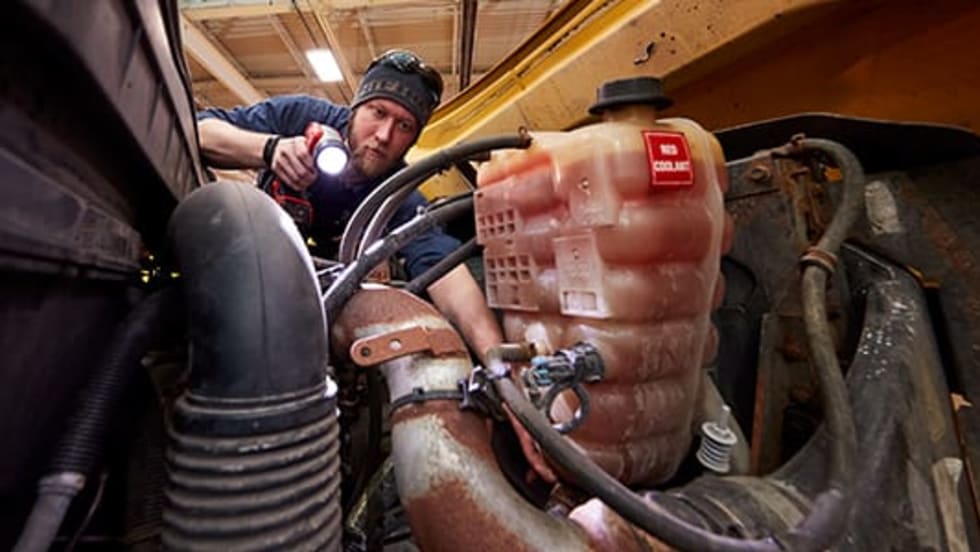
How to Prevent Summer Truck Cooling System Failures
Summer heat puts heavy-duty truck cooling systems under intense strain. Learn how preventive maintenance and accurate repair information can help reduce downtime.
Read More →
Deadline Extended for HDT Truck Fleet Innovators Nominations
Heavy Duty Trucking has extended the deadline for nominations for its Truck Fleet Innovators awards. The deadline has been extended to May 22.
Read More →
Why VMRS Is the Natural Link Between AI, Predictive Analytics, and Vehicle Repairs [Commentary]
Jon White was a leading figure in the development of VMRS. Now, after five decades of service, White says VMRS is becoming essential to the AI-driven future of truck maintenance.
Read More →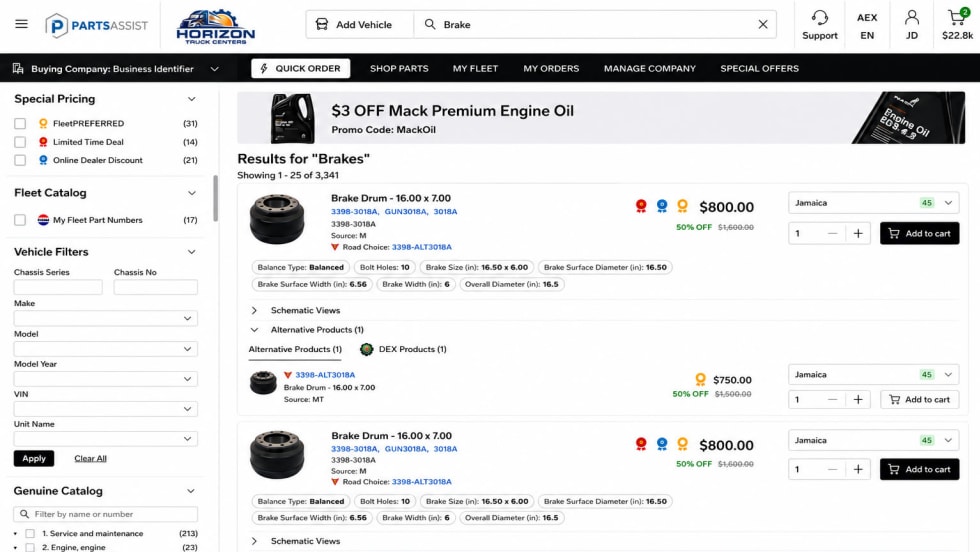
Mack Trucks Revamps PartsASIST Platform with Faster Performance, Improved Navigation
Mack Trucks has launched a redesigned version of its PartsASIST online ordering platform, adding faster search, real-time inventory visibility and enhanced order tracking.
Read More →
International Debuts ‘My International’ Connected Platform to Centralize Fleet Data, Service, and Dealer Communication
International’s New digital ecosystem unifies telematics, maintenance, and dealer interaction into a single interface, aiming to reduce downtime and deliver predictive fleet insights.
Read More →