




Communications From The Vendor Side
There is also much going on in wireless communications for trucking that does not have to do with the Internet.
There is also much going on in wireless communications for trucking that does not have to do with the Internet. This year was a big one for Qualcomm, which got the okay from the FCC to expand its license from 150,600 to 250,600 users in July. The company recently announced the sale of its 50,000th SensorTracs unit, a driver performance monitoring system consisting of an optional software module that activates firmware resident in every OmniTracs terminal.
HighwayMaster is the next largest nationwide supplier in the trucking communications market, with 28,500 units sold at latest count. New products this year include Rolling ETA, which reports a truck's estimated arrival time en route, and a fax interface that works with a Mitsubishi onboard fax machine. The latest product is an automated fuel-tax reporting system called MileMaster, a software enhancement for the model 5000 mobile terminal. MileMaster was developed in partnership with TTSI Corp., a provider of regulatory compliance services. It is claimed to be far more accurate than traditional methods requiring driver involvement.
Rockwell, HighwayMaster and Qualcomm also have plans for automated mileage and route data collection systems, based on positive results of a feasibility test conducted last year by the Federal Highway Administration, called AMASCOT (Automated Mileage and Stateline Crossing Operational Test).
Rockwell includes the patented feature in its DataTrax/GPS on-board computer, introduced last year, which performs automatic location reporting for DOT logs. The first licensee for Rockwell's state-line crossing system is Xata Corp., which will use it in its Mobile Application Server on-board computer, aided by a Rockwell GPS receiver. Rockwell uses the AMSC satellite infrastructure.
Rockwell recently introduced new data collection and analysis software for its onboard computer, called InfoTrax. It's for Microsoft Windows, and it meets open database compliant (ODBC) standards. Users can use standard log, trip, and summary reports or build their own custom ones.
American Mobile Satellite Corp. began full revenue operation in January with its Skycell service, and introduced a digital cellular phone to go with it — the Westinghouse Series 1000. Orbcomm started commercial service in February with part of its constellation of low earth orbit satellites. It too began approving mobile hardware, including one unit that looks promising for trucking, the Panasonic KX-G7001 Subscriber Communicator, with a built-in GPS antenna and receiver and RS-232 computer port.
LTL AND P&D
Unlike the truckload carrier market, the market for LTL and other metropolitan-based fleets is not dominated by a few big names. A variety of smaller companies provide customized solutions. Here are some of them:
• Teletrac Inc., whose Fleet Director wireless fleet management system is available in Chicago, Dallas/Fort Worth, Detroit, Houston, Los Angeles and Miami, recently upgraded its software to ease messaging, improve reporting, and incorporate the latest ETAK digital maps. The company currently has 50,000 units operating and will expand service availability to 17 cities by the end of next year.
• The Tracker P&D system has been introduced by TranSettlements Network Services. True to its name, the digital (CDPD) cellular-based service is aimed at providing data messaging for regional pickup and delivery operations. It also works on Wireless Internet Protocol, which along with circuit switched CDPD will provide national coverage for both data and (optionally) voice. It's being tested by two carriers now, and deployment is scheduled to begin the first quarter of 1997.
• Pinpoint Communications began its vehicle tracking and data service early this year in a commercial test, with an array of base stations placed on buildings in Dallas. Target market is urban fleets desiring low-cost, non-voice communication with automatic location tracking. The plan is to expand to 162 metro areas by the year 2001.
• Ram Mobile Data's Mobile Data's Mobitex-based packet data network is accessible so far to 93% of urban populations through credit-card sized radio modems in laptop computers, as well as with other devices. Not satisfied with that, Ram announced early this year its Strategic Network Initiative, so it could cover 100% of its customers using links to circuit-switched cellular, satellite, paging, and dial-up.
• Geotek Communications aims its metropolitan-area, Windows-based service at small and mid-sized businesses. Vehicle tracking, data and voice communication are available over the Internet Protocol-based service, which should encourage third-party software developers to build on the service. Geotek services are available in New York, Boston, Philadelphia, Washington DC, Baltimore, Miami and Dallas/Fort Worth. The company plans to expand to over 35 cities.
Trailer Tracking Tags
• A new way to track untethered trailers comes from CTA Inc., called Gemtrak. It can track trailers and cargo down to the piece level, initially using terrestrial links. The company claims it can connect to any communications infrastructure, including satellite. Sensors read door status, temperature, and trailer volume. Status and location and reports are collected and sent to the carrier.
The advantage over yard tag systems is elimination of costly yard-based tag readers.
• The biggest maker of vehicle RFID (radio frequency identification) tags, Amtech, isn't sitting still. Its new AT5770 Odometer/ Identification Tag sends time, date, vehicle ID and odometer reading to a host computer whenever a tagged truck passes a yard-based reader.
• Savi Technologies makes SaviTag, which contains a programmable computer and a five-year battery. A desktop computer can use an "interrogator" to query large numbers of tags at once. The PC can maintain and update a complete database of thousands of tagged items, and show the location of any single tag to within 20 feet. Control and sensing are options.
• MicroStamp is a single-chip unit that maker Micron Communications Inc. would like classed as Remote Intelligent Communications (RIC) rather than RFID. It contains an integrated circuit combining a spread spectrum microwave frequency radio, a microcontroller, and a low power static random access memory. The engine, when coupled with an antenna and a battery, forms the MicroStamp RIC unit. For trucking, it gets combined with a GPS receiver and is called the Ambit mobile asset control system. It can be read at 150 feet, or be connected to wireless modems or satellite modems for global use.
More Fleet Management

FTR Says Freight Rates Surged in May
FTR's Trucking Conditions Index surged to a record high in May, the analytics firm reports.
Read More →
Meet HDT's Truck Fleet Innovators at Heavy Duty Trucking Exchange
Heavy Duty Trucking Exchange brings fleet managers and suppliers together for the deeper conversations that lead to ideas, partnerships, and solutions. Time is running out to apply for HDTX, September 23-25.
Read More →
Enhance Fleet Performance with High-Efficiency Auxiliary Power Units
Drive sustainable cost savings while increasing driver comfort during short- and long-haul logistics operations.
Read More →
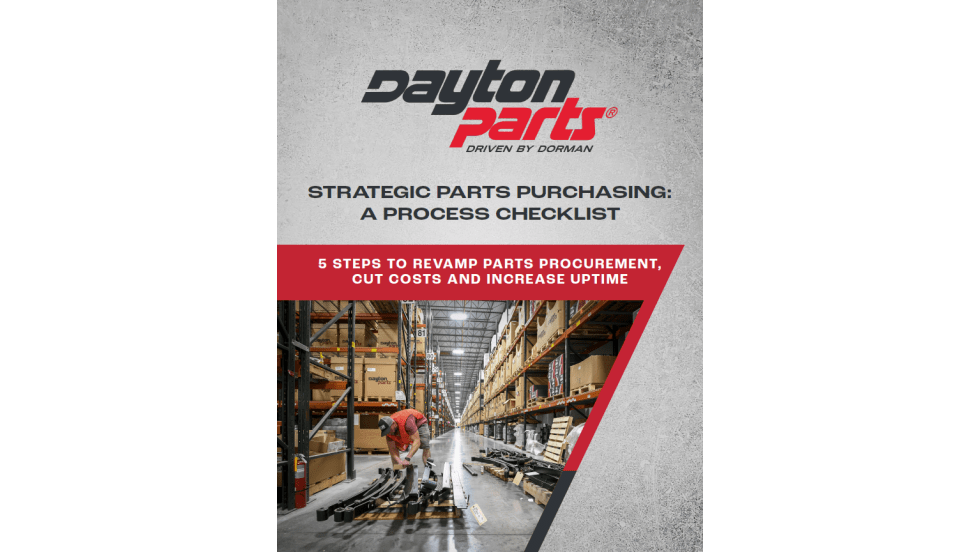
Is Your Parts Procurement Process Reactive or Proactive?
Ready to revamp your parts procurement process? Learn how now with “Strategic Parts Purchasing: A Process Checklist”
Read More →
What Trucking Events are Happening in 2026?
Looking for trucking-related conventions, expos, and other events? Heavy Duty Trucking has developed this list of national and larger regional trucking shows and events.
Read More →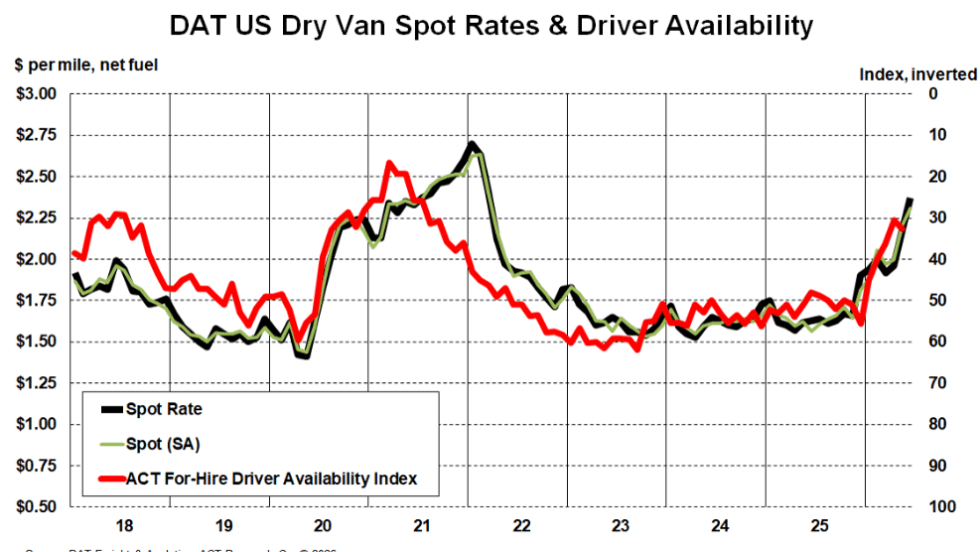
Truckload Rates Keep Rising as Tight Capacity Fuels Freight Market Recovery
Spot and contract rates continued climbing in May and June, not because freight demand is surging, but because fewer trucks and drivers are available.
Read More →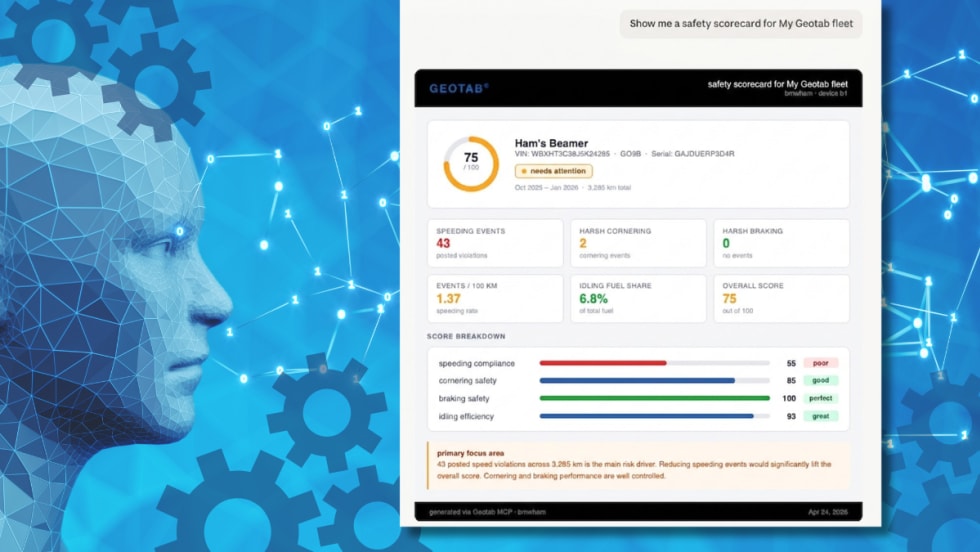
What Geotab's New AI Connector Means for Fleets
Fleets can now ask their usual AI assistants questions about maintenance, safety, fuel use, and vehicle performance, using their live Geotab data, and take action on the answers without leaving their preferred AI tool.
Read More →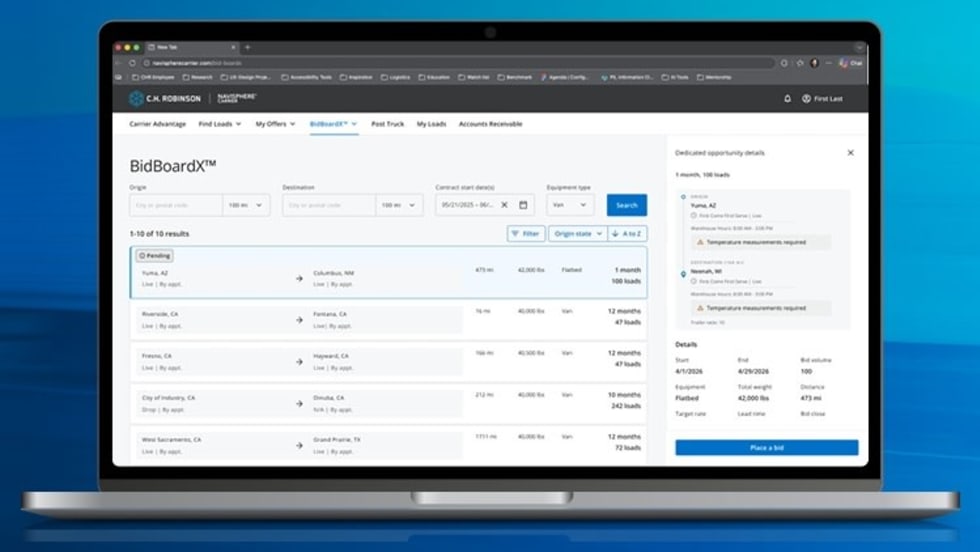
New C.H. Robinson Tool Opens Door to More Predictable Freight
BidBoardX lets carriers search, bid on, and secure committed freight opportunities through a single digital marketplace.
Read More →
New York City's Microhub Project is Delivering Results
Trucking, last-mile delivery companies, and environmental advocates like what they are seeing so far with New York's microhub program.
Read More →
Why Truck Detention Keeps Costing Fleets Time and Money
A 2024 ATRI study found detention affects nearly 40% of truckload stops and costs the industry more than $15 billion annually. Despite the toll on drivers, fleets, and supply chains, the problem remains stubbornly persistent.
Read More →