




Rising and volatile fuel prices are applying significant pressure to commercial fleet operational plans and budgets.
In the first two months of the New Year, fuel prices were 50 cents higher than at the same time last year. This was before the unrest in North Africa and the Middle East that continues today, which has driven a barrel of oil above $100 and diesel prices over $4 per gallon.
Many analysts predict that prices will continue to climb and remain highly volatile - reminiscent of 2008. In fact, 2008 provides some key lessons for fleet managers wanting to reign in runaway fuel costs. Companies that weathered 2008, and are consequently prepared for a tough 2011, streamlined their fuel management approach. Streamlining steps they undertook include:
* Benchmark current operations against industry standards
* Strategize optimal supply options
* Contract preferential supply relationships and terms
* Automate, automate, automate
Henry Ford once said, "Before everything else, getting ready is the secret to success." This is especially true for fleet managers in 2011. Taking these steps provides benefits beyond simply reducing fuel costs and gaining better planning predictability, managers free working capital for other uses within the company and gain a competitive edge in the market with more efficient, cost-effective operations.
Getting Ready for More Volatile Fuel Prices with Fuel Purchasing Strategies
Rising and volatile fuel prices are applying significant pressure to commercial fleet operational plans and budgets
Even the best operations can benefit from comparing themselves to established industry best practices and metrics. Most find there are areas in which they can improve, and they gain access to target performance goals that guide operational decisions. In the world of fuel management, it starts with analyses on areas such as:
* Purchase volumes
* Geographic distribution of demand
* Fuel systems infrastructure
* Fuel taxation exemption status by location and use
* Actual invoice line item charges
Based on this analysis, a benchmark study examines the following:
* Best practices
* Published fuel price indices (such as OPIS)
* Time series analysis against published indices
* Ongoing, performance improvement targets
It is difficult to know where to make operational improvements unless you take the time to benchmark against industry best practices. The good news is that there are third-party companies, such as FuelQuest, that provide the people, process, and tools to perform such a benchmark in relatively short order. All a fleet manager has to do is plug into that process.
Before implementing any process improvement steps, it is also important you take a step back and examine the options available in terms of fuel supply including:
* Vendor-managed inventory (VMI)
* Spot or contract delivered sourcing
* Spot or contract FOB sourcing
* Fixed price contracts
* Hedging
Each has advantages and disadvantages depending on the structure of your operations. Also, you can employ some in combination again depending on your operational structure.
When establishing preferential supply contracts, there are important considerations. First, what is your ability and desire to move closer to the rack? In the spectrum of contracting options, the simplest is to cede inventory management to your supplier. Often though, fleet managers lose transparency and pay a premium for this service. Moving up the spectrum, you find delivered spot and delivered contract - each providing more flexibility than the first option, but full transparency and cost savings are not achieved.
The more sophisticated contracting arrangements, and the ones that offer the greatest opportunity to reduce fuel costs, are buying wholesale at the rack or bulk above the rack. These options are clearly for those with sufficient volumes, but, by eliminating the middleman, the opportunity for savings is significant. Of course, as with anything, as the complexity in contracting increases, so does the need for buying expertise and technology - both of which are available through third-party fuel management providers.
When contracting supply for your fleet, it is also important to centralize fuel management operations. It is difficult to implement operational controls when processes and decision-making are distributed. It is also difficult to set up advantaged supply contracts when demand is not aggregated.
Heuristics, manual processes, and spreadsheet-driven fuel management are the anathema of optimized fuel operations. Through automation, fleet managers can gain process control; adopt more sophisticated, advantaged supply arrangements; and drive down fuel costs - typically the highest expense item after headcount. Automation occurs across a number of dimensions:
* Processes
* Inventory, Order, and Financial Management
* Technology
* Price Feeds
Such automation enables Just-In-Time (JIT) delivery of fuel, which lowers working capital requirements. Fuel costs are reduced through best practices such as load shifting. Ultimately, fleet managers gain fuel expertise that leads the market.
Will 2011 be a repeat of 2008? The verdict is still out, but what is clear is that fuel prices will continue to be volatile. If "getting ready is the secret to success" as Henry Ford once said, then fleet managers must take the steps necessary to control their operational plans and budgets. This is best accomplished through benchmarking, strategizing, contracting, and automating fuel operations.
Ryan Mossman is vice president and general manager of FuelQuest's Fuel Services. He leads both of FuelQuest's outsourced fuel services divisions: Fuel Center and Alarm Management Systems. His FuelQuest experience includes leading large-scale supply chain optimization, technology and business process implementations at large fleet and energy companies including UPS, U.S. Freightway, and Chevron. He can be reached at rmossman@fuelquest.com.
More Fleet Management

Deadline Extended for HDT Truck Fleet Innovators Nominations
Heavy Duty Trucking has extended the deadline for nominations for its Truck Fleet Innovators awards. The deadline has been extended to May 22.
Read More →
Supreme Court Ruling Puts Freight Broker Vetting Practices in Spotlight
The unanimous SCOTUS ruling in the closely watched Montgomery v. Caribe case allows state negligence claims against freight brokers that hire unsafe motor carriers, raising new liability and vetting concerns among brokers.
Read More →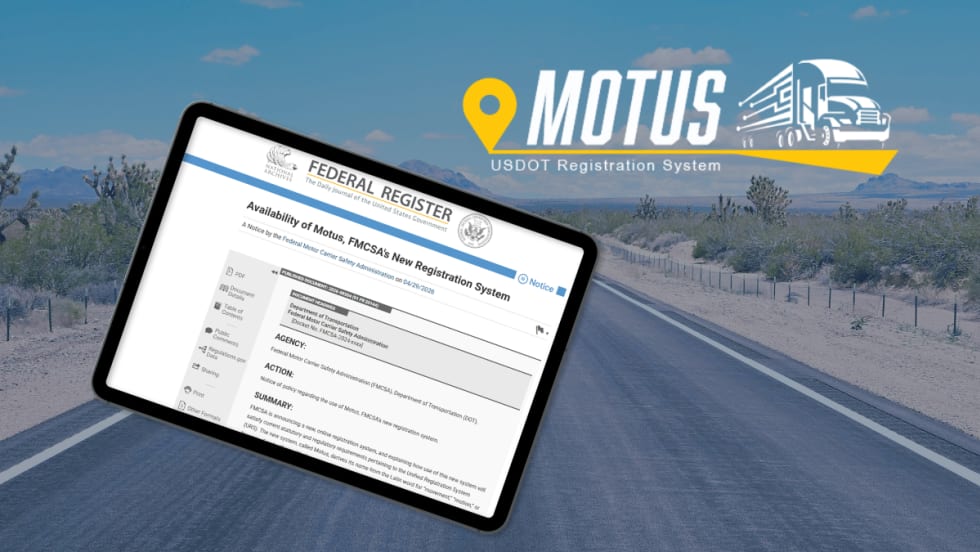
FMCSA’s Motus System Is Coming. What Fleets Need to Know Now
FMCSA's long-awaited registration system promises a single portal — and tighter fraud controls. And there are steps you need to take by May 14.
Read More →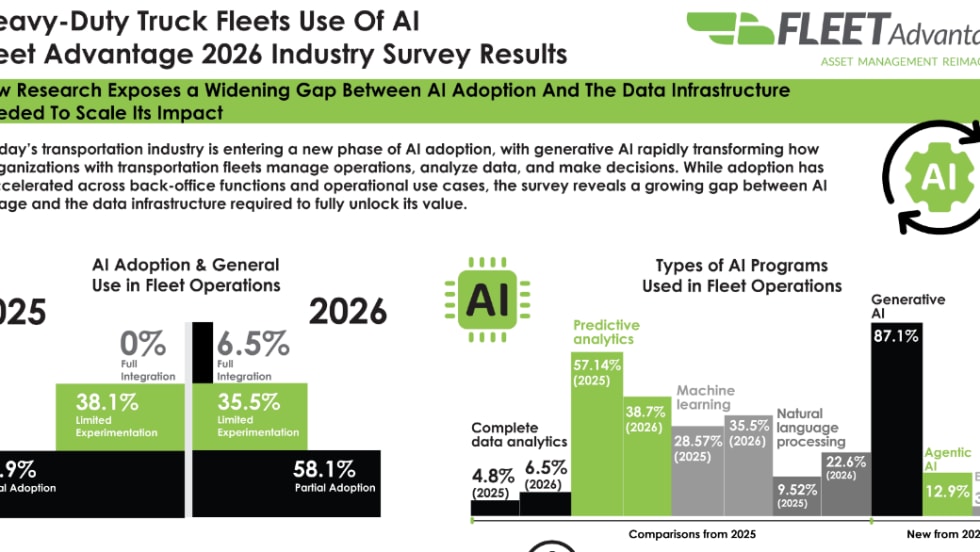
Fleet Advantage: Fleets Embrace Generative AI, but Data Problems Limit Operational Gains
New Fleet Advantage research shows generative AI adoption has exploded among private fleets. But poor data integration and weak ROI tracking are preventing fleets from unlocking AI’s full operational and financial value.
Read More →
How Phillips Connect Helped Nussbaum Transportation Double its Trailer Life
Seven years into deploying Phillips Connect’s smart trailer platform, Nussbaum Transportation has extended trailer life from 10 to 15 years.
Read More →
Inside Modern Fleet Safety: AI, Cameras & Speed Control at K&B Transportation
How a former commercial vehicle enforcement officer turned director of safety at K&B Transportation is embracing real-world safety technology.
Read More →
How Fleets Can Avoid Equipment Blind Spots in Disaster Response
When the unexpected happens, how you react to, and deal with operational blind spots is critical. Here’s how to keep you recovery on track, when nothing is normal.
Read More →
AI Security Risks for Trucking Fleets: What to Know About Deepfakes and Agentic AI
As fleets adopt artificial intelligence for routing, maintenance, and load matching, new security risks are emerging. Learn where the vulnerabilities are and how to put the right controls in place.
Read More →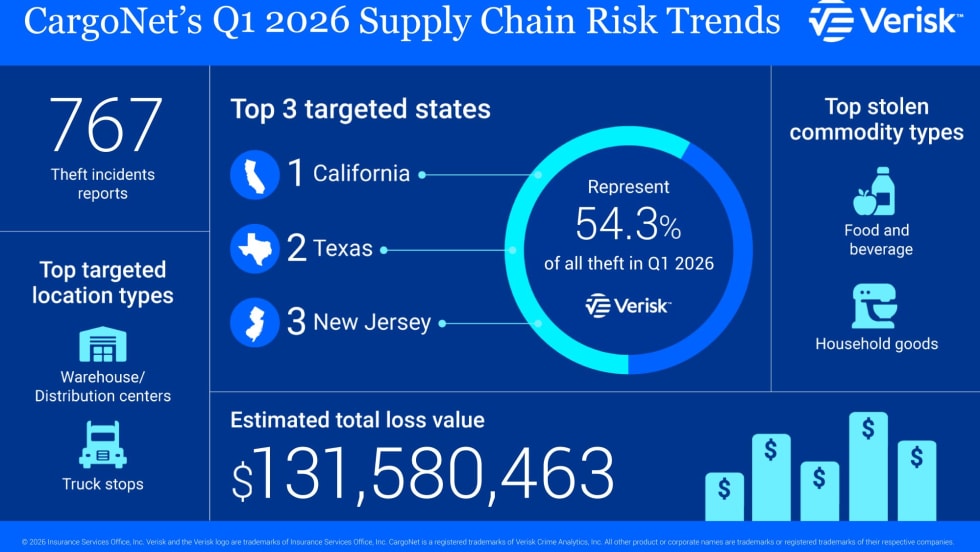
Cargo Theft Incidents Fall in Q1, but Organized Crime and Impersonation Drive New Risks
CargoNet reports fewer supply chain crime events to start 2026. But losses hold steady as organized crime shifts tactics toward impersonation schemes and high-value goods.
Read More →
New Trojan Driver Cargo Theft Scam Bypasses Carrier Vetting Systems
Cargo theft rings plant operatives as drivers inside legitimate, fully vetted carriers, then execute coordinated thefts that look like a traditional straight theft from the outside.
Read More →