




Bad Fleet Fuel Auditing
Your company has worked hard to get the right fleet fuel program in place. You have picked the right fleet fuel card provider, and you may have negotiated and set up some fueling discounts with your fuel card provider

Your company has worked hard to get the right fleet fuel program in place. You have picked the right fleet fuel card provider, and you may have negotiated and set up some fueling discounts with your fuel card provider,
mobile fueling company or truck stop provider. However, the fuel management task has only just begun to be able to maximize on lower diesel fuel prices.
Companies often neglect to monitor their fleet management programs following the original set-up. Some companies do review fleet fuel transactions or exception reports. However, do they review all reports, check for duplicate transactions, or confirm discounts are applied properly? Many companies cannot perform this level of scrutiny because they lack the time or tools to check. How should companies audit fleet fuel invoices?
Chances are if you're in charge of fleet fuel management, you can tell us that:
* Your company won't pay for fueling data because it appears expensive.
* You have other jobs so nobody is 100 percent dedicated to your fuel management system
* You're in a job with fueling that you don't have a strong background or no background
* The field operations people have less time or experience then you do about diesel fuel prices
* No time, no communication, poor data and you have a bad situation in fueling department.
Audits Require Time & Data
Staff time and access to relevant fueling data are the first elements in a successful fuel purchase and auditing fuel management system for your company. A few tips to facilitate this process include:
* Subscribe to a fuel price service.
* Have a "sense" of the fueling market.
* Hire an outside service to review your fuel management program.
Fuel price data is available through Oil Price Information Service (OPIS), Data Transmission Service (DTN), or other diesel fuel prices published daily at a local level. Broader-range indices, such as the New York Mercantile Exchange (NYMEX), Department of Energy (DOE), and the Automobile Club (AAA), provide national fuel pricing.
While these national services offer a big picture view of fuel prices, they can also obscure the various price differentials distinguishing one area from another. Local indices provide more accurate fueling price data.
These services are not cheap to purchase, but they are essential to a successful fuel management program.
Calculating Vendor Margins
The basic data required for a fuel program review is price per gallon for each fueling whether it is mobile fueling, fleet cards, bulk fuel, truck stop fueling or fuel card fuel transactions. Next, the federal, state, county, and local taxes are subtracted from the price per gallon numbers. A fuel tax guide can provide a resource for such data.
The price per gallon less taxes calculation provides fueling cost only. Comprising that fuel cost are the fuel itself and vendor-charged margins. To determine the vendor margin, fleet fuel transaction costs are compared with same-day OPIS or DTN pricing for the relevant geographic area. Fleet managers can monitor fuel margin numbers to determine if they match or closely approach vendor-negotiated fleet fuel price deals. If the numbers do not agree, it's time to investigate. There lies most of the issue for companies who want fuel savings but lack time and resources to accomplish fleet management goals.
Detecting Duplicates
Duplicate transactions are another fuel management program invoicing issue to track. These errors occur more frequently than commonly realized. When hundreds of thousands of fueling transactions are produced each day, mistakes happen. If invoices are not monitored carefully, a fleet manager can miss duplicate transactions, and there's a good chance the fleet fuel card provider won't catch the mistakes as well or the fuel card company made the mistake. With fueling transactions being processed in 'real time", batched, file delays and other ways that would only make you scared, you bet there are mistakes all of the time.
Guidelines in monitoring fuel reports include:
* Develop a good "feel" for the monthly volume and transaction count.
* If purchased volume or transactions are higher than normal, dig deeper into reports.
* Randomly sample 5 percent of monthly fleet invoices and closely review the selected transactions.
Implement Checks & Balances
Fuel is among fleet's top five expenses, and hundreds to tens of thousands of transactions happen each month as part of a fuel program. Successful programs require a good checks-and-balances system. One of the best checks is performing monthly fleet fuel audits of the fleet management operation.
A fleet might have trucks fueling off-road equipment or reefer units, putting all that volume on the same transaction. One fleet fuel card for each truck, equipment, reefer, small tank, etc, is recommended to accurately capture every drop of fuel and where it went. A few fuel card providers will allow for another transaction to be attached to the on road diesel fuel.
Accurate records of where the fuel is used are critical. If on-road fuel is used in an off-road application, as much as 50 cents per gallon or more in extra, unnecessary taxes could be spent. In other words, fuel tax should be paid when fuel is purchased, but accurate recordkeeping allows fleets to file for a tax refund with the federal and state government. Those 50 cents per gallon can add up quickly. You don't want to give up that kind of money anymore than you don't want to buy diesel fuel additives.
Another critical benefit of accurate recordkeeping is the ability to spot incidents of fuel theft. Most companies would downplay the possibility employees would steal from them. However, the national rate for fuel theft is 1.5 percent of a company's fuel budget on overall fuel purchases. That rate rises to more than 3 percent when dealing with a fleet of gasoline-powered vehicles. The more controls in place, the greater the control over one of fleet's top expenses.
Giving Money Away
An old expression holds that what isn't inspected is not respected. By neglecting to perform daily fuel management audits on fleet fuel purchases, companies could be literally giving money away. It would not be surprising for someone like myself to see thousands of dollars a day go away from a company in fuel savings because it has been stolen. Companies think they have good diesel fuel prices or there fuel cards are protecting them. Don't be so naïve, it could be costing your fuel management department or I should say company a lot of money.
Most often, fuel invoice errors are not the result of unethical business practices or nefarious individual actions.
Generally, errors are the result of an incorrect account set-up or account change. If invoice numbers are not audited, they look like what they are - simple numbers. However, when fleet managers "peel back" the first "layer" and take a deeper look, comparing the numbers to a benchmark, the figures become numbers with a purpose.
Glen Sokolis is president of Sokolis Group, a nationwide fuel management and fuel consulting company, www.FuelManagementSokolisGroup.com. You can reach him at gsokolis@sokolisgroup.com or (267) 482-6160.
Recent installments of "Friday Fuel:"
* "Fleet Management and Fuel Savings," 10/1/2010.
* Are Fuel Storage Tanks The Right Choice for Your Fleet?" 9/17/2010.
* "Are You Comparing Apples to Apples on Fuel Prices?" 9/10/2010.
More Fleet Management

How to Modernize Your TMS Without Replacing It [Podcast]
Before investing in a new transportation management system, take a closer look at what you've already got. AI, cloud technology and better integrations may offer ways to improve your trucking operations without starting over.
Read More →
Could Your Truck's Connected Devices Be a Cybersecurity Risk?
ELDs, telematics systems and driver tablets help fleets operate more efficiently. But every connected device needs protection against cyberattacks.
Read More →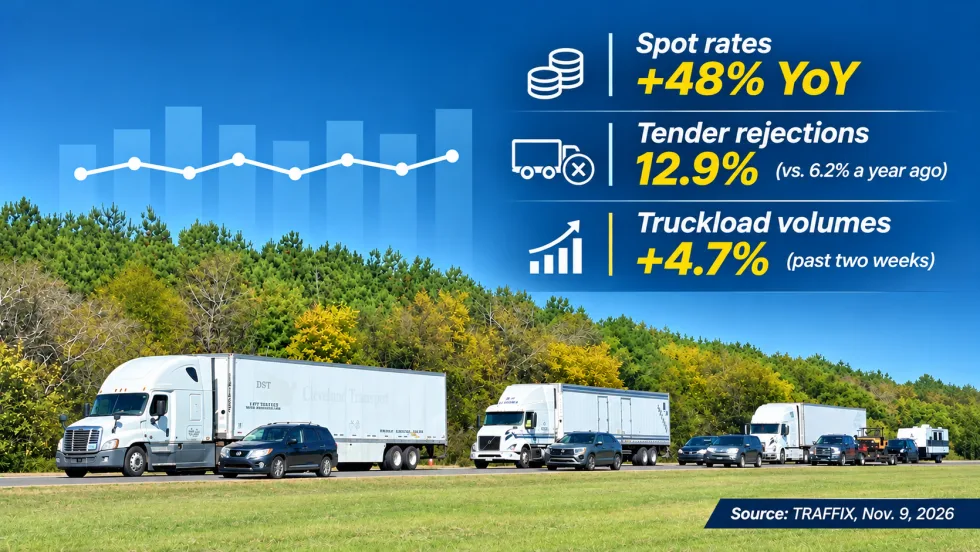
Holiday Freight Meets a Tight Trucking Market
There's no freight boom, but truckload carriers are finding themselves in a stronger position to negotiate rates. And holiday shipping demand could tighten the market further.
Read More →
What Trucking Events are Happening in 2027?
Looking for trucking-related conventions, expos, and other events? Heavy Duty Trucking has developed this list of national and larger regional trucking shows and events.
Read More →
Does Your Trucking Fleet Need a New TMS?
Artificial intelligence and better integrations promise less busywork and more useful data. Can your TMS help your company solve problems? Do you need additional vendors or an upgrade? Or is it time to look for a new platform?
Read More →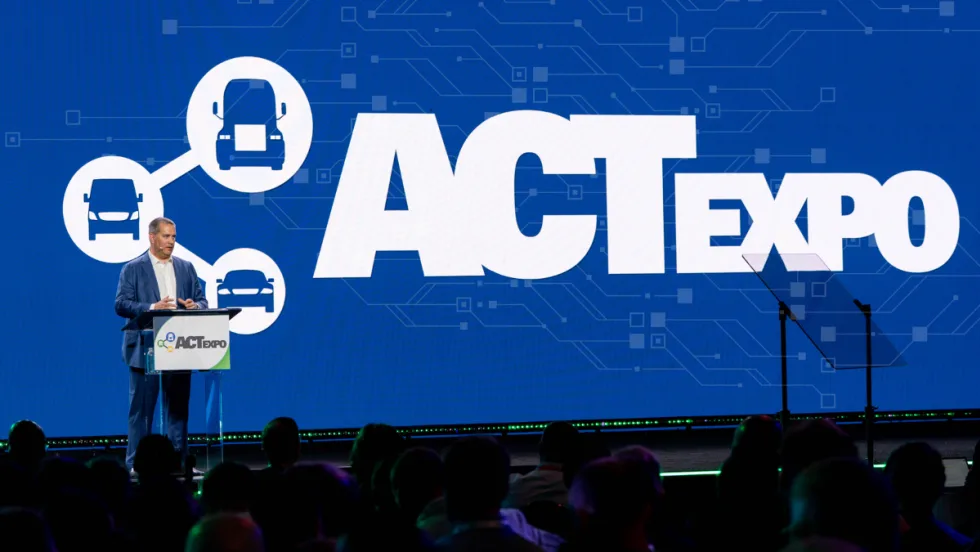
Fleet Costs Shape ACT Expo 2027 Agenda
With diesel prices high and operating expenses under pressure, ACT Expo's 2027 agenda emphasizes fuel efficiency, AI, safety and the return on fleet technology investments.
Read More →
Does Your Trucking Fleet Need a New TMS? [Video]
Cloud technology, AI and new integrations are changing what transportation management systems can do. But does taking advantage of those advances mean replacing your existing TMS?
Read More →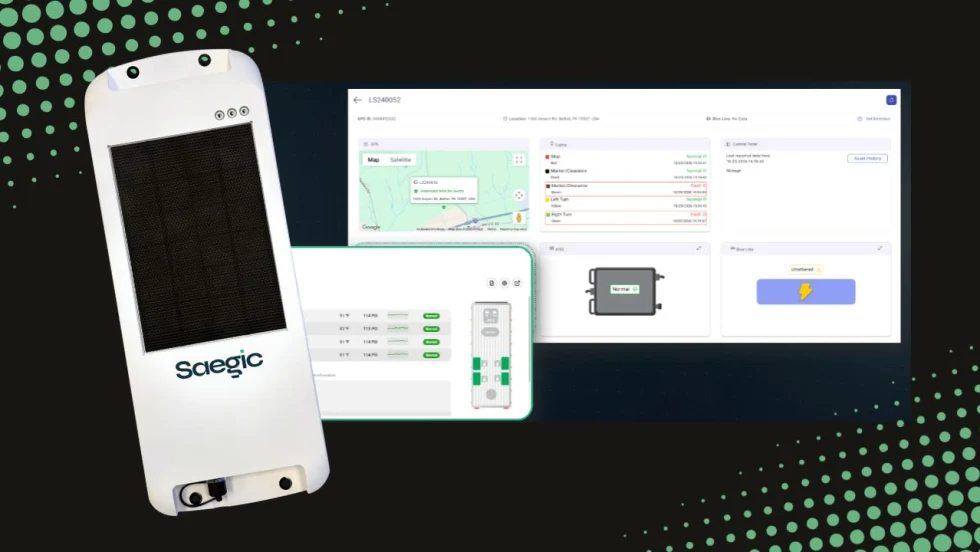
Road Ready Becomes Saegic, Launches New Trailer Telematics Gateway
Clarience Technologies is rolling out new hardware and expanding its plans for connecting trailer telematics, maintenance data, and video.
Read More →
Give Your Trucking Fleet a Cybersecurity Walkaround
Your fleet's cybersecurity policies may look good on paper. These seven checks can help you find out whether they’re working.
Read More →
Kodiak Lines Up Fleets for Driverless Trucking
An agreement for 75 trucks, a new Texas freight lane, and progress on safety validation move Kodiak closer to its planned driverless highway launch.
Read More →