




Mobile Communication: Making it All Work
Trucking operations use a number of technologies to improve both operational efficiencies and customer service: transportation management software in the home office, computers or tracking and monitoring devices on the vehicles

Trucking operations use a number of technologies to improve both operational efficiencies and customer service: transportation management software in the home office, computers or tracking and monitoring devices on the vehicles,
fuel optimization programs and routing solutions. Perhaps the one common component is a mobile communications system that ties them all together.
Mobile communications systems have evolved in recent years from proprietary tracking and messaging devices to what are essentially full-fledged computing systems, capable of running a number of applications and interfacing with other data collection devices on the truck.
Truck fleets now have a number of choices in mobile communications, many more than five or 10 years ago. Spec'ing the correct system for a particular fleet will depend on that fleet's operational characteristics, such as where its trucks travel, how far from home they run, the kind of cargo the trucks typically haul, and a number of other factors.
For many of us, mobile communications means a cell phone: something we can use to make calls while mobile. But in most trucking applications, voice transmission plays a minor, if any, part. In many truck operations, the communication at the heart of the systems occurs between machines, not between people. Although people may be monitoring this communication, the "talking" is done between a device on the truck and another device located either in the fleet's main office or at a mobile communications supplier's location.
Machine-to-machine communication was at the heart of the earliest mobile communications systems, such as those from Qualcomm or PeopleNet. A satellite receiver/transponder on the truck fed GPS location data to another receiver at the home office. This location data enabled a fleet manager to know where that truck was at any time of the day and how far it might be from its next delivery or pickup. The people-to-people communication part came in when a dispatcher would send a short, text-based message to the driver with new pickup or delivery instructions, or the driver would send a "canned" message indicating he had made a delivery and was ready for further instructions. Because these early systems were satellite-based, the messages were necessarily short due to expense and bandwidth constraints.
But there is no doubt these systems had an enormous impact on trucking efficiency. Former Federal Reserve Board chairman Alan Greenspan referred to the role mobile communications had in improving trucking efficiencies in a speech he made to the Economic Club in New York in 2000. In that speech, addressing the impact of technology and the economy, Greenspan said that the "satellite location of trucks has fostered marked reductions in delivery lead times and the related work hours required for the production and delivery of all sorts of goods, from books to capital equipment." Most major long-haul trucking fleets now use these systems or their descendants. As the options have expanded, more mid- to small-sized fleets are also spec'ing these systems.
A number of new vendors have entered the field over the years, with some opting for cellular systems rather than satellite-based systems to communicate between vehicle and home base. In the early years, such systems were hampered by limited cell coverage. They were great for urban areas but not so good for cross-country runs.
But all that has changed in the last five to 10 years. Cellular systems have been built up to the point that there is coverage in most areas. Many systems now offer multi-mode operations, meaning they can send messages via satellite or cellular network, depending upon which has the best coverage for a given location.
Frank Moreno, vice president of marketing and product development for Cadec, Manchester, N.H., says there is a "huge advantage" to using cellular capabilities where applicable. "Satellite means a lot of things. You can have satellite communication that only gives you location, or you have satellite communications that is always on, always available and always expensive. The introduction of cellular really allowed us to provide real-time communications on things such as route updates or damaged cargo reports. You can really get real-time communication on what's going on with the delivery. And you can also have instant two-way communication when the truck is pulled over."
Moving to cellular systems ushered in many other changes, including the kinds of information sent back and forth. Add in the emergence of Internet-based applications, and mobile communications has taken on added dimensions.
Mobile communications was originally seen as a system that tracked assets, according to Tom Flies, senior vice president, product management, at Xata Corp., Eden Prairie, Minn. In recent years, however, fleets have been "looking for more than messaging and location." They also want to know information about how their vehicles are being operated: vehicle speed, shifting patterns and other operational data that vehicle ECUs or an onboard computer system gathers. Sending this data over a satellite link could be too costly, but sending it over a cellular network was not.
Now mobile communications can include much more than location and status, and according to Flies, "the driver has been the growth of cost-effective cellular networks. Also, the Internet really opened up the market to fleets of all sizes. The technology has advanced to the point where it has become cost-effective for fleets to implement."
The amount of information that can possibly be retrieved from a truck on the road has certainly increased.
"Automation and data capture is happening all across the vehicle," says Brian McLaughlin, vice president of PeopleNet Communications, Chaska, Minn. "One truck-trailer combination may have the need for GPS tracking, an electronic onboard recorder, tire sensors, brake sensors, cargo monitoring, an RFID network, safety devices such as an Eaton Vorad or Iteris safety system on board, a scale sensor and electronic inspection capability." Fleets want to be able to send data from any of these functions from the vehicle to the fleet's back office, which is where the mobile communication system comes in.
And the kinds of data and information that can be sent via a wireless mobile communications system continue to grow. On-board document scanning, for instance, has become more prevalent in trucking. PeopleNet offers such a product, and Qualcomm recently introduced an in-cab scanning service as part of its OmniVisionSM system.
These services let drivers scan and transmit paper documents such as trip reports, bills of lading, timesheets, receipts and other documents. Data from these scanned documents is received by the carrier's back office within minutes, speeding up the billing process. Drivers don't have to make an extra stop to fax or mail documents, making their job easier and saving them time as well.
While many of the most well-known systems are hard-wired into the truck, others use mobile, handheld PCs and even cell phones to do the same kinds of work. Which option works best depends upon a fleet's specific needs.
Using a handheld-based system allows a fleet to "take the data collection right to the point of work," says Jeff Sibio, director of industry marketing, transportation logistics for Intermec, Everett, Wash. Package delivery and field service applications are areas where handhelds are making the greatest inroads, he says, but that there has been an uptick in the use of handhelds in all transport sectors in recent years.
Sibio cautions that a typical cell phone is not the same as a handheld device designed for the rigors of trucking or warehouse operations. "We are talking about key-based, rugged mobile computers," he says. Typically, these are Windows-based devices that can handle a number of applications, including signature
More Fleet Management

New York City's Microhub Project is Delivering Results
Trucking, last-mile delivery companies, and environmental advocates like what they are seeing so far with New York's microhub program.
Read More →
Why Truck Detention Keeps Costing Fleets Time and Money
A 2024 ATRI study found detention affects nearly 40% of truckload stops and costs the industry more than $15 billion annually. Despite the toll on drivers, fleets, and supply chains, the problem remains stubbornly persistent.
Read More →
Time is Running Out to Apply for Exclusive HDT Event
Heavy Duty Trucking Exchange brings fleet managers and suppliers together for the deeper conversations that lead to ideas, partnerships, and solutions. Time is running out to apply for the September event.
Read More →
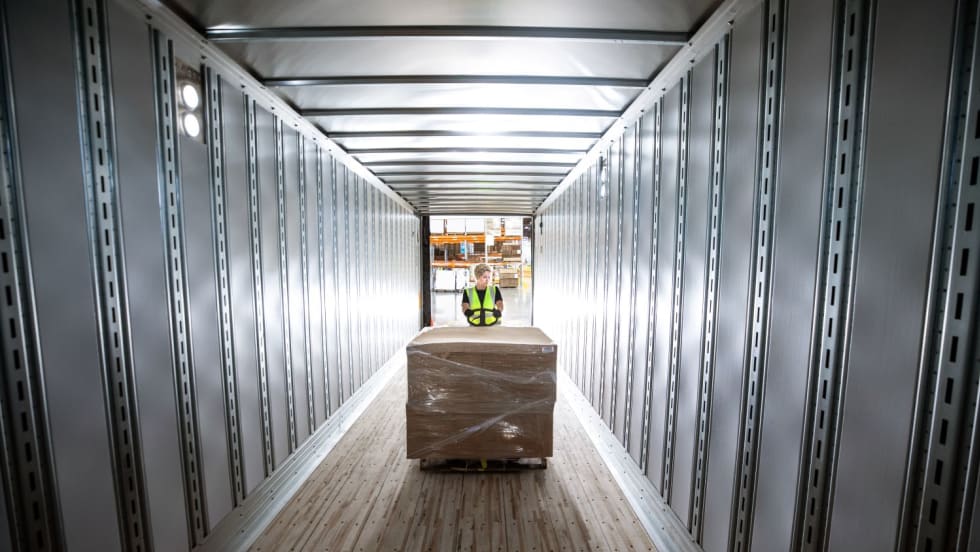
Amazon Launches Less-Than-Truckload Freight Offering for All Businesses
This launch is the latest addition to Amazon Supply Chain Services, a portfolio of supply chain capabilities from Amazon, including freight, distribution, fulfillment, and parcel shipping.
Read More →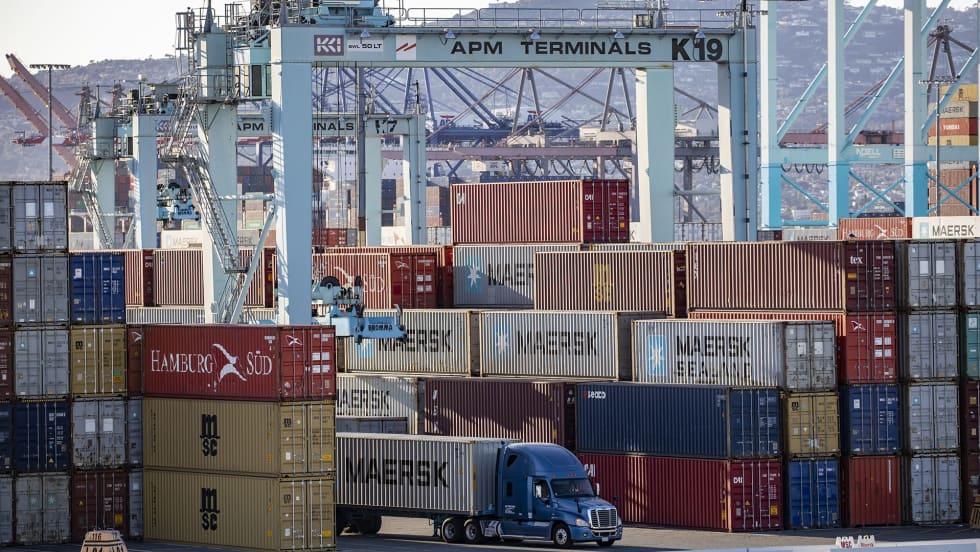
Import Cargo Volume to See Year-Over-Year Gain Again in June, Then Remain Below 2025 Levels Into Fall
After July, the report predicts a weakening in import volume as consumer uncertainty remains high and the impact of increasing inflation takes its toll.
Read More →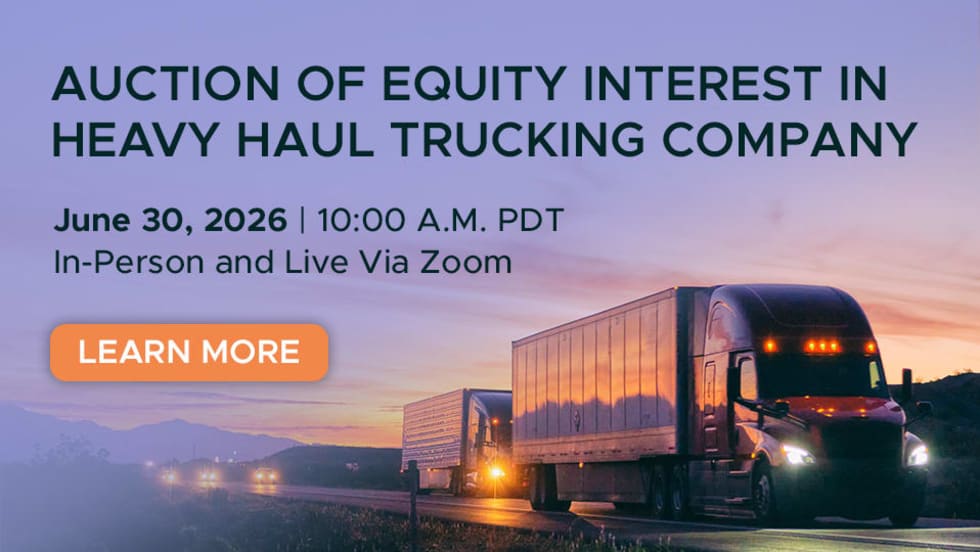
AUCTION OF EQUITY INTEREST IN HEAVY HAUL TRUCKING COMPANY!!
Mark your calendar: June 30, 2026 (10:00 a.m. PDT). A 37.5% ownership interest in MagnaTrans, LLC, a California limited liability company doing business as Magna Transportation Group, will be sold in an in-person and online auction to the highest bidder or bidders under Article 9 of the Uniform Commercial Code. The Rancho Cucamonga-based heavy haul and over-dimensional trucking company operates across California, Oregon, and Arizona.
Read More →
Volvo Trucks Adds Unattended Over-the-Air Software Update Capabilities
The latest evolution of Volvo’s over-the-air update technology allows software updates to run while trucks are parked, helping fleets keep vehicles current without disrupting operations.
Read More →
How Waste Connections is Using Data, Telematics, and AI
How do you manage and maintain more than 18,000 connected trucks? Data. Lots of it.
Read More →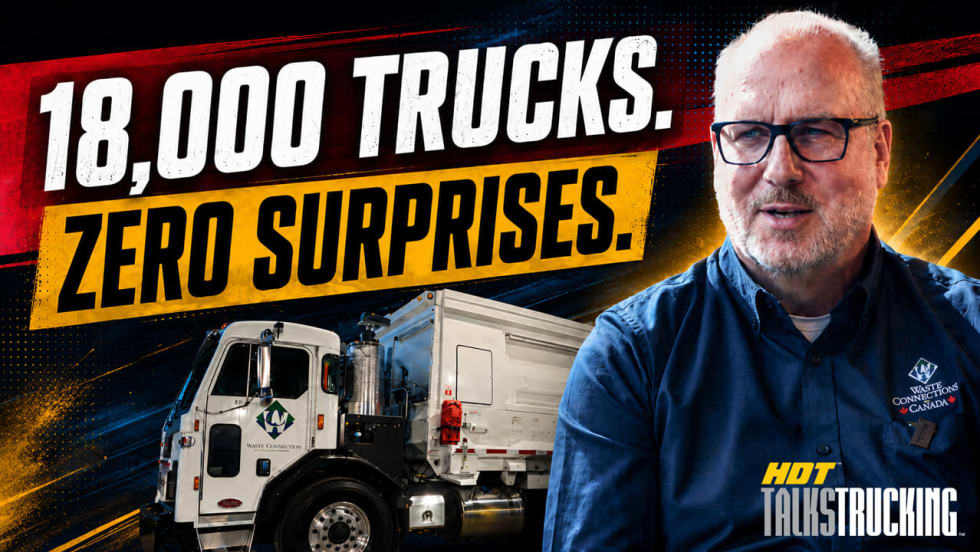
Why Fleet Data Matters More Than Ever at Waste Connections [Watch]
Waste Connections' Chuck Palmer explains how telematics, predictive maintenance, safety analytics, and AI help keep vehicles on the road and drivers safe in this episode of HDT Talks Trucking.
Read More →
NMFTA Launches Free, Anonymous Cybersecurity Threat Report Portal
Organizations are encouraged to anonymously report freight fraud, cargo crime, and cyber threats while gaining visibility into incidents reported across the transportation sector.
Read More →