




TSA Recalls Improperly Encoded TWIC Cards
The integrated circuit chips on approximately 26,000 previously issued Transportation Worker Identification Credentials (TWICs) issued prior to April 5, 2011 were improperly encoded and may not work with TWIC card readers
The integrated circuit chips on approximately 26,000 previously issued Transportation Worker Identification Credentials (TWICs) issued prior to April 5, 2011 were improperly encoded and may not work with TWIC card readers.
The Transportation Security Administration says it will replace these cards at the cardholder's request at no cost.
Every TWIC contains a Federal Agency Smart Credential Number (FASC-N) on its ICC. The FASC-N uniquely identifies each card. When TWIC cards are read by a card reader, the FASC-N is one of the pieces of information the reader obtains from the card.
Due to a card production system error, the number of characters in the FASC-N on some TWICs was shortened (truncated), causing readers to not recognize the card as a valid TWIC. The system error causing the FASC-N to be truncated was corrected on April 5, 2011.
TWICs issued after that date do not have truncated FASC-Ns. TWICs issued before April 5, 2011 could potentially have this issue and as a result, TWIC readers could have problems reading these cards.
If your card has this issue, it is still valid and provides evidence of your eligibility for unescorted access to secure areas. This issue only affects your card when using it with some readers.
If you currently do not use your TWIC with a card reader, then you do not need to get a replacement right away -- you will be able to get one later.
If you currently need to use your TWIC with a card reader and you are experiencing problems, you should get a replacement TWIC as soon as possible.
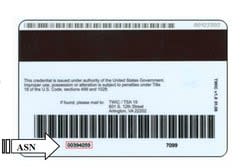
The TWICs that have this problem can be identified by the 8-digit Agency Serial Number (ASN) printed on the back of the TWIC. The ASN is on the bottom left side of the back of the card, as shown in the red box in the illustration above.
If the ASN on your TWIC matches a number on the TSA list, then your card has a truncated FASC-N and you may need to obtain a replacement depending on how you use your card.
If your TWIC is identified on the TSA list of cards with truncated FASC-Ns you can receive a no-cost replacement by calling the TWIC Help Desk at 1-866-347-8942, Monday through Friday, 8AM to10PM Eastern.
Please identify that your card has a truncated FASC-N, and the Customer Service Representative will assist you with ordering a replacement. You must designate the enrollment center where you will pick up your replacement TWIC.
You must turn in your TWIC with the truncated FASC-N when you return to pick up your replacement TWIC.
View the TSA Truncated card list here.
More Safety & Compliance

Hours of Service Pilot Programs: FMCSA Readies for 2027 Rollout
Two pilot programs could eventually reshape hours-of-service rules, giving truck drivers options to pause their 14-hour clock or use longer split sleeper rest periods.
Read More →
New Guide Offers Pet Safety Tips for Truck Drivers
Hundreds of thousands of pets travel in truck cabs. A new safety guide from Volvo Trucks and the Center for Pet Safety offers practical advice for truck drivers who bring dogs and cats along for the ride.
Read More →
Medical Cards, English Proficiency Reshape Roadcheck Violations
Medical-card violations jumped to the top of the driver out-of-service list during CVSA’s 2026 International Roadcheck, while English-language proficiency violations appeared among the leading violations for the first time.
Read More →
How Lance Evans Turns Enforcement Experience Into Better Fleet Safety
HDT Truck Fleet Innovator Lance Evans brings lessons from law enforcement to K&B Transportation’s approach to safety technology, data, driver coaching, and compliance.
Read More →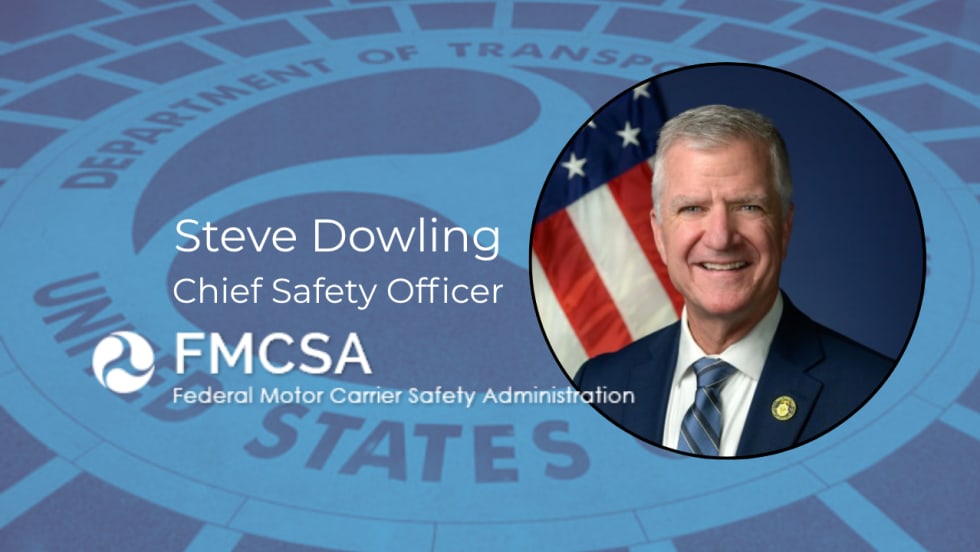
New FMCSA Chief Safety Officer Has Trucking Industry and Law Enforcement Experience
Steve Dowling joins FMCSA after serving as senior director of safety at Covenant Logistics and in leadership roles in commercial motor vehicle industry organizations.
Read More →
Driver Trust Can Make or Break the Success of Fleet Safety Technology
New Teletrac Navman research suggests that onboarding, transparency about driver data, and positive feedback can play a significant role in how commercial drivers respond to safety and coaching technology.
Read More →
FMCSA: Stop Using These 15 Electronic Logging Devices
Fleets and drivers must replace the revoked ELDs with ones on the FMCSA's registered device list of electronic logging devices.
Read More →
How HDT’s 2026 Truck Fleet Innovators Are Rethinking Fleet Operations
Meet five trucking leaders who are challenging assumptions, solving operational problems, and putting innovative ideas to work.
Read More →
Geotab Launches Tool to Speed Fleet Incident Investigations
Geotab Investigations brings telematics data, video, photos, reports and other evidence into one case file to help fleets determine what happened and resolve incidents faster.
Read More →
FMCSA Moves to Codify English Language Requirements for Commercial Drivers
By changing regulations on English-language proficiency requirements for commercial drivers, rather than relying on a guidance memo, the FMCSA said future administrations won't be able to walk back the Trump administration's stricter enforcement with just a memo.
Read More →