Heavy Duty Trucking Logo
MenuMENU
SearchSEARCH

Stability Control Technology Can Lead to More Conservative Drivers

While the use of stability control systems could mean the difference between a collision and the avoidance of a crash, it also could help you create safer, more conservative drivers. Alan Korn, director of vehicle dynamics and controls at Meritor Wabco Vehicle Control Systems, says with a stability control system installed on the vehicle, a driver can recognize he's driving too aggressively

by Staff
November 20, 2009
Stability Control Technology Can Lead to More Conservative Drivers


3 min to read


While the use of stability control systems could mean the difference between a collision and the avoidance of a crash, it also could help you create safer, more conservative drivers. Alan Korn, director of vehicle dynamics and controls at Meritor Wabco Vehicle Control Systems, says with a stability control system installed on the vehicle, a driver can recognize he's driving too aggressively,

because the vehicle is slowed down when the system is activated. This, in turn, may encourage the driver to adopt a more conservative style of driving, he says.

RSC Vs. ESC

Korn says more and more fleets are adopting stability control systems, including electronic stability control (ESC) and roll stability control (RSC) systems. ESC provides full stability control, working to prevent both rollovers and loss of control incidents. RSC is built to primarily address rollovers, but not loss of control.

Using the anti-lock brake system, the technology that powers RSC uses a lateral accelerometer, a sensor that measures the lateral acceleration, the main cause of a rollover, Korn says. Valves are automatically applied to dethrottle the engine, while the drive and trailer axle brakes are also automatically engaged.

ESC has the same technology to control rollovers as RSC, but it uses two additional sensors, Korn explains. The first, a steering wheel sensor, tells the system where the driver is pointing the vehicle. The second, a gyro sensor, measures how much the vehicle is actually turning. When there's a disconnect between the two, the system automatically intervenes. The individual foundation brakes kick in as a counteractive force.

Stability Control Study

Korn says a mandate for these systems could be in the cards, especially following the results of a recent study conducted by The University of Michigan Transportation Research Institute under a cooperative agreement between the National Highway Traffic Safety Administration and Meritor Wabco Vehicle Control Systems. That study found that because ESC systems are more comprehensive, they offer more safety benefits than RSC.

With ESC installed on the vehicle, the number of annual heavy truck crashes would decrease by 4,659 crashes, preventing 126 fatalities and 5,909 injuries, according to the study. If all trucks were outfitted with ESC, it would result in savings of $1.74 billion annually because of the rollovers prevented. With RSC installed on the vehicle, there would be 3,489 less crashes, preventing 106 fatalities and 4,384 injuries. Having all trucks outfitted with RSC would save $1.46 billion annually, according to the data.

Methodology

According to Korn, the study's researchers set out to measure the effectiveness of stability control systems. Using information from several databases including the GES database, the Trucks Involved in Fatal Accidents database and the Large Truck Crash Causation Study, UMTRI determined how many of the accidents involved rollovers versus loss of control. They were categorized according to what conditions they occurred in, including type of road (curvy or straight) and condition of road (wet or dry). Using data collected from TIFA and GES on a five-year annual average, the researchers found that there were 6,874 crashes involving rollovers per year and 4,350 crashes involving loss of control.

Using a hardware-in-the-loop simulation, or HiL, the researchers put the vehicles through a computer software maneuver simulation, in order to accurately measure how the stability control system was reacting. They used HiL for the rollover incidents, and tested the systems for loss of control in the field. With these methods, they were able to put a value of effectiveness on the different stability control systems in mitigating rollovers and loss of control, according to different conditions.

In the end, they found that ESC and RSC were most effective on curvy, dry roads, with prevention rates of 75 percent and 71 percent, respectively.

Apex Logistics, which uses Meritor Wabco's Roll Stability Control system, has seen the benefits. "We averaged three rollovers a year until Jan. 1, 2005, when we started equipping our tractors with RSC," said Mike Siebert, director of maintenance. "We haven't had a rollover since."

More Safety & Compliance

 Truck with door open and enforcement officer talking to driver about ELD
DriversFebruary 26, 2026

FMCSA Reinstates Field Warrior ELD to Registered Device List

One electronic logging device has been reinstated to the FMCSA's list of registered ELDs.

Read More →
Daimler Truck camera system.
Safety & Complianceby News/Media ReleaseFebruary 25, 2026

Daimler Truck North America Adds 360-Degree Exterior Camera System to Vocational, Medium-Duty Trucks

Daimler’s new factory-installed system integrates side and forward-facing cameras with in-cab touchscreen to improve jobsite visibility and reduce upfit complexity.

Read More →
Kodiak Autonomous Truck
Safety & Complianceby News/Media ReleaseFebruary 20, 2026

Kodiak Integrates HAAS Alert’s Safety Cloud into Autonomous Trucking Platform

Kodiak has integrated HAAS Alert’s Safety Cloud platform into its autonomous vehicle control system to send real-time digital hazard alerts to nearby motorists.

Read More →
Ad Loading...
YouTube thumbnail with Scott Cornell, HDT Talks Trucking Logo, and the words, "Is Your Load Next?"
Safety & Complianceby Deborah LockridgeFebruary 20, 2026

The New Cargo Theft Playbook — And How Fleets Can Fight Back

Cargo theft has shifted from parking-lot break-ins to organized international schemes using double brokering, phishing, and even spoofing tracking signals. In this HDT Talks Trucking video podcast episode, cargo-theft investigator Scott Cornell explains what’s changed and what fleets need to do now.

Read More →
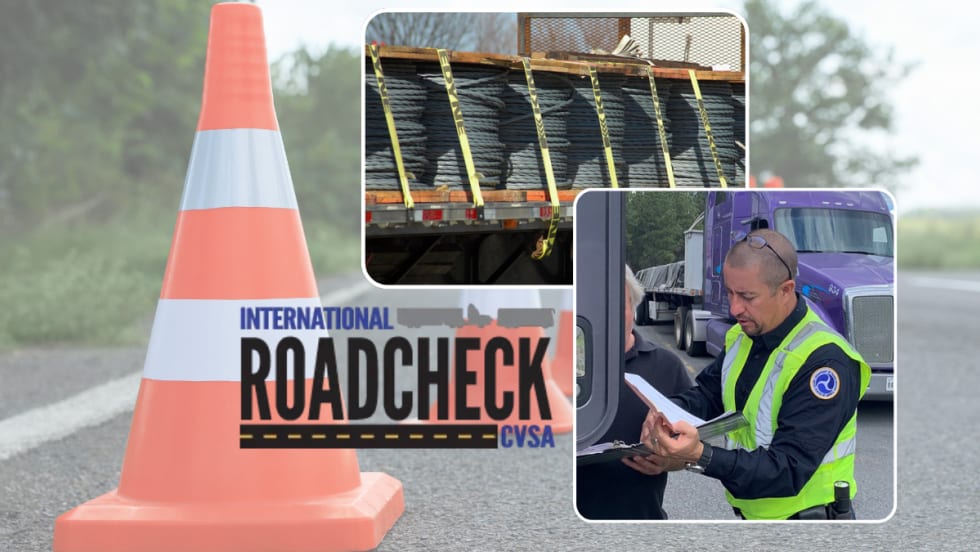
Illustration with safety cones in background, Roadcheck logo, cargo tiedowns, and officer checking driver logs
Safety & Complianceby Deborah LockridgeFebruary 18, 2026

International Roadcheck 2026 to Target ELD Tampering and Cargo Securement

What fleets need to know about CVSA’s 72-hour inspection blitz and this year’s enforcement priorities.

Read More →
Illustration with truck, driver hours of service logs, and the word disaster
Safety & Complianceby Deborah LockridgeFebruary 18, 2026

FMCSA Proposes Extending State Emergency Exemptions to 30 Days

After pushback from states and industry groups, FMCSA is proposing to reverse a 2023 rule change and lengthen the duration of state-issued emergency exemptions for disaster relief.

Read More →
Ad Loading...
Maintenanceby StaffFebruary 17, 2026

Western Star Expands Recall After Previous Battery Fix Fails to Prevent Fire Risk

After reports of corrosion and thermal events on trucks already repaired under a prior campaign, DTNA is recalling nearly 27,000 Western Star 47X and 49X models to address a battery junction stud defect.

Read More →
Safety & Complianceby News/Media ReleaseFebruary 12, 2026

FMCSA Revokes Another Nine Electronic Logging Devices

Motor carriers using the affected ELDs must switch to paper logs immediately and install compliant devices by April 14 to avoid out-of-service violations.

Read More →
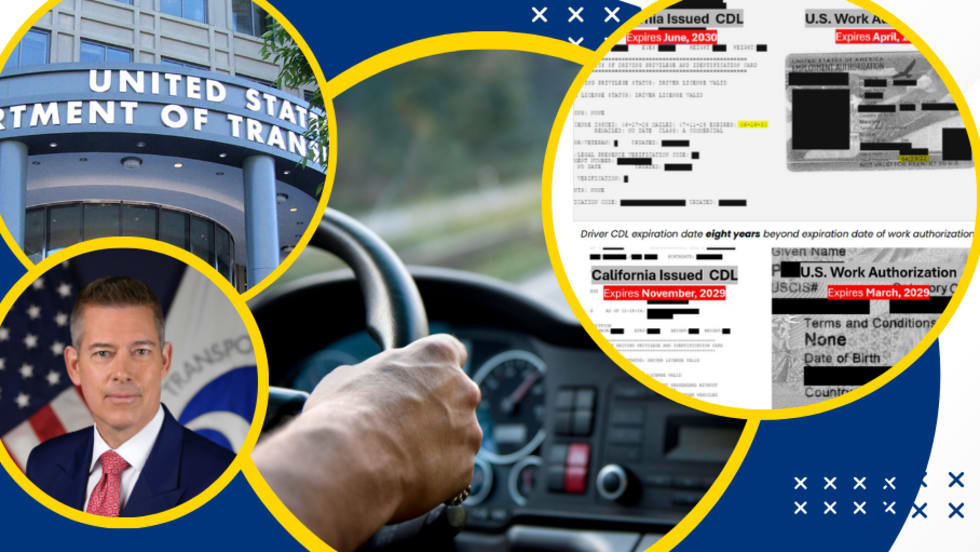
 Illustration showing a driver behind the wheel, DOT offices, and examples of problematic non domiciled CDL
Driversby Deborah LockridgeFebruary 12, 2026

FMCSA Locks in Non-Domiciled CDL Restrictions

After a legal pause last fall, FMCSA has finalized its rule limiting non-domiciled commercial driver's licenses. The agency says the change closes a safety gap, and its revised economic analysis suggests workforce effects will be more gradual than first thought.

Read More →
Ad Loading...
Samsara Coach driver coaching system.
Safety & Complianceby News/Media ReleaseFebruary 11, 2026

Samsara Taps Nascar Champ Jesse Love as its First Driver Coaching Avatar

A new AI-powered coaching platform from Samsara uses real-time voice agents and digital avatars to strengthen driver safety and scale fleet training.

Read More →