




Here Technologies Introduces Fleet-Focused AI-Powered Mapping
Here Technologies' AI-powered mapping systems are about much more than simply getting from Point A to Point B.

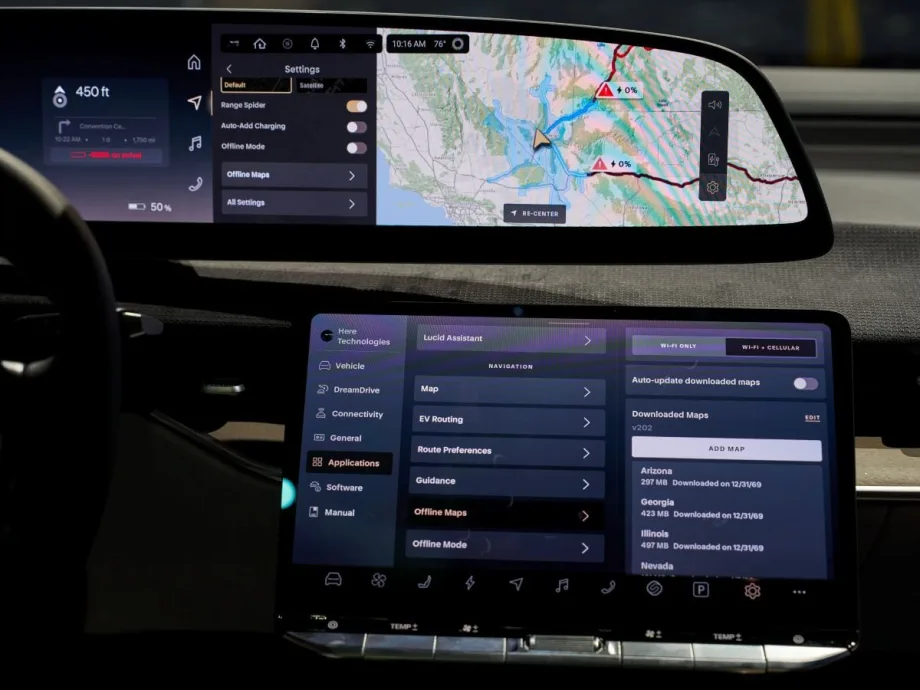
Here Technologies consolidates multiple map types—navigation, ADAS, automated driving—into a single unified map.
Photo: Here Technologies
Flash back just a few years ago, and digital maps were something truck drivers bought on a DVD and updated once every few years. Often, those maps were already out of date before the DVDs ever hit the store shelves.
At CES 2026, Remco Timmer, senior vice president of automotive solutions at Here Technologies, made the case that those days are long gone. He said that mapping has quietly become one of the most critical technologies underpinning modern trucking operations.
Here Technologies has been a behind-the-scenes mapping and navigation system provider in the automotive industry for years.
Now, according to Remco Timmer, senior vice president of automotive solutions at Here Technologies, the company is repositioning itself as a foundational platform for commercial vehicles, logistics, and fleet-scale optimization.
“The world changes faster than any static map ever could,” Timmer said during a wide-ranging discussion with transportation and automotive media. “Today, we live in what we call the AI Live Map.”
For trucking fleets, he added, that shift matters far beyond turn-by-turn navigation.
Maps today Timmer said, are about operational intelligence.
From Static Maps to a Living Model of the Road
At the core of Here’s strategy is a continuously updated, cloud-connected map that ingests sensor data from vehicles around the world — video, radar, lidar, and driver feedback — and reconciles it with its existing view of the road.
If the sensors detect something that doesn’t match the map—new construction, lane changes, road closures, hazards—AI systems flag the discrepancy, update the map, and stream the corrected data back to vehicles, typically within 24 hours.
“For trucking, freshness is critical,” Timmer said. “A detour, a height restriction, or a construction zone isn’t just an inconvenience—it can shut down a route.”
Just as important, that intelligence doesn’t flow in only one direction. Fleet drivers themselves can feed information back into the system, creating what Timmer described as “communal intelligence” across professional drivers.
If one truck encounters a hazard, weight restriction, or dangerous condition, that information can be shared with the rest of the fleet—and beyond.
One Map for Everything
One of Here’s less flashy but more consequential moves was consolidating multiple map types—navigation, ADAS, automated driving—into a single unified map.
In the past, Timmer said, it wasn’t uncommon for a vehicle’s navigation system and its driver-assist systems to operate from different map data, creating inconsistencies that undermine trust.
“You don’t want your navigation system to think the road looks one way and your assisted driving system to think it looks another,” he said. “There has to be one ground truth.”
For trucking OEMs and fleet operators, that consistency becomes even more important as vehicles gain more advanced driver-assist features and, eventually, automated capabilities.
Maps don’t replace sensors, Timmer emphasized—but they extend them.
Sensors can only see so far ahead. Maps provide context: curvature, grade, elevation, traffic patterns, construction zones, and operational design domains—where certain systems can and cannot be safely used.
That same map intelligence also governs where hands-free or assisted-driving features are allowed to activate, and where they must disengage, dynamically adjusting as road conditions change.
Routing at Fleet Scale, Not Vehicle Scale
If passenger-car navigation is about optimizing a single trip, trucking is about orchestrating thousands.
Here’s fleet routing capabilities are built to handle what Timmer described as “10,000-to-10,000 problems. In other words, tens of thousands of vehicles matched against hundreds of thousands of delivery points, each with its own unique constraints and requirements.

Remco Timmer, senior vice president of automotive solutions at Here Technologies, said AI-mapping is a vital technology for fleet operations today.
Photo: Steve Fecht
Those constraints include vehicle size and weight limits, hazardous material restrictions, driver qualifications, hours-of-service rules, delivery windows, congestion pricing, emissions goals, and fuel economy priorities.
“All the vehicles are different. All the drivers are different. All the jobs are different,” Timmer said. “And the environment is changing continuously.”
The system can optimize routes for speed, fuel efficiency, emissions reduction, or cost avoidance—such as steering trucks away from known damage-prone areas or congestion zones.
For fleets running mixed powertrains, including electric delivery vehicles, routing also incorporates battery state of charge, terrain, temperature, charging infrastructure, and depot charging availability.
“The theoretical range number on the dashboard doesn’t mean much,” Timmer said. “What matters is where you can actually go—and get back—based on the real world.”
Solving the ‘Last Meter’ Problem
While much of fleet routing focuses on highways and arterials, Timmer said some of the most expensive inefficiencies occur at the very end of the trip.
Here has been working with logistics customers to map not just the final address, but the final door.
Using GPS traces and driver feedback, the system learns the precise path from curb to loading dock or entrance, then shares that intelligence across the fleet. For new or rotating drivers, that guidance can eliminate missed turns, wrong-door deliveries, and wasted time circling facilities.
“It sounds small, but at scale, it’s huge,” Timmer said.
In some cases, those precise locations are treated as private map extensions—proprietary knowledge that gives fleets a competitive edge.
Asset Tracking Beyond the Truck
Here’s role in logistics extends beyond vehicles to the cargo itself.
One high-profile example is the company’s work tracking shipping containers, providing real-time location data even when connectivity is intermittent.
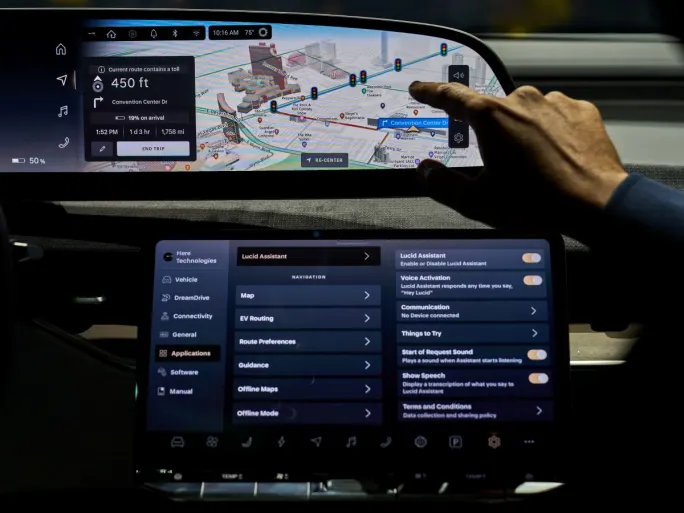
At the core of Here’s strategy is a continuously updated, cloud-connected map that ingests sensor data from vehicles around the world — video, radar, lidar, and driver feedback — and reconciles it with its existing view of the road.
Photo: Here Technologies
Another involves monitoring shipments of high-value medical equipment, where temperature, shock, and handling conditions are continuously assessed.
“We’re not building the trackers,” Timmer said. “We’re providing the location intelligence layer that makes the data usable.”
That visibility reduces guesswork, improves planning, and allows logistics operators to respond faster when something goes wrong.
Agents, Not Interfaces
A recurring theme in Timmer’s remarks was the growing role of AI agents—not just for drivers, but for fleet managers.
Instead of manually configuring complex routing parameters through dashboards, operators can increasingly interact with systems conversationally. The system can ask an agent to re-optimize a fleet based on changing conditions, driver availability, or customer priorities, for example.
“The interface is no longer just screens and buttons,” Timmer explained. “It’s a dialogue.”
For an industry facing persistent labor shortages in dispatch, planning, and operations roles, that shift could prove as important as any sensor or algorithm.
A Quiet Backbone of Trucking’s Digital Future
Here Technologies rarely commands headlines the way truck OEMs or autonomy startups do. But Timmer made it clear that as trucking becomes more connected, automated, and data-driven, mapping is no longer a background utility.
It’s infrastructure.
From route optimization and EV planning to driver-assist systems and asset tracking, the map has become a living model of the operating environment—shared across vehicles, fleets, and supply chains.
“In trucking, you’re never optimizing a single vehicle,” Timmer said. “You’re optimizing a system.”
And increasingly, he said that system starts with the map.
More Fleet Management

Nominations Open for HDT Emerging Leaders
Heavy Duty Trucking is looking for accomplished trucking fleet professionals under 40 who are making an impact and helping lead the industry forward.
Read More →
Why Private Fleets Are Taking More Freight
Private fleets are putting their own trucks on demanding customers and high-cost lanes as companies seek greater control over service, costs, and capacity.
Read More →
Color Match Smarter: Tools That Restore & Perform
For fleet managers and collision repair professionals keeping heavy-duty trucks on the road, getting the color right the first time isn't just about appearance — it's about efficiency, turnaround time, and bottom-line results. Discover how today's digital color tools are transforming the repair process from guesswork to precision.
Read More →


FMCSA Pauses Biennial-Update Enforcement Amid Motus Transition
Carriers whose updates were due on or after June 1 have more time, while FMCSA works to stabilize its new registration system and warns of phishing sites impersonating its new carrier registration system, Motus.
Read More →
2026 Blueprint for Countering Smarter Supply Chain Theft
Cargo theft is no longer just the cost of doing business. It's a multi-billion-dollar criminal enterprise exploiting vulnerabilities across your fleet, drivers, and supply chain.
Read More →
How Telematics Improves Visibility, Control, and Performance in Refrigerated Fleets
Explore how telematics help refrigerated fleets improve visibility, uptime, efficiency, compliance, and cargo protection across connected cold chain operations.
Read More →
What the U.S.-Canada Trade War Means for Trucking
Escalating U.S.-Canada tariffs could disrupt cross-border freight, reduce truck volumes, raise costs, and create new uncertainty for carriers on both sides of the border.
Read More →
What Are Trucking’s Top Concerns for 2026?
The American Transportation Research Institute wants to know what's worrying trucking fleet managers, drivers, and other stakeholders in its annual Industry Issues survey.
Read More →
American Trucking Associations Looks for a New Leader
ATA President and CEO Chris Spear abruptly left his job at the association on August 21, at a pivotal time for the trucking industry.
Read More →
Public Wi-Fi Cybersecurity Risks: How Truck Drivers and Fleets Can Protect Their Data
Public Wi-Fi can expose truck drivers and fleets to credential theft, malware, and other cyber threats. Here’s how to reduce the risk on the road.
Read More →