




Small Carrier Success Stories: Graig Morin and Brown Dog Trucking
In the November-December issue of Heavy Duty Trucking, we talked with three small but successful fleets to learn how they found a way to compete with the big carriers.

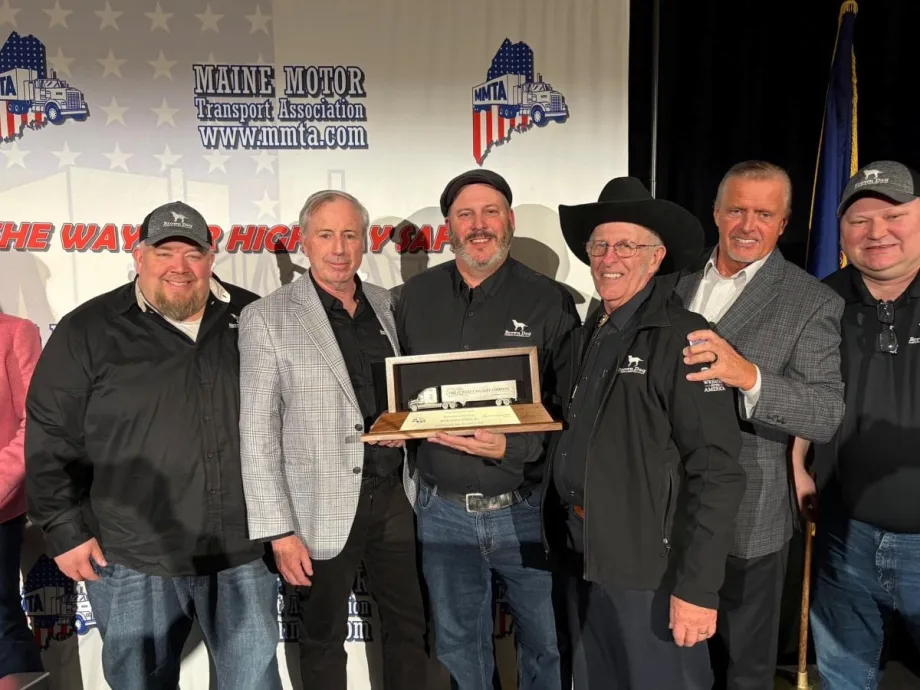
Graig Morin (center) says involvement with the Maine Motor Transport Association was vital for his fleet's initial success.
Photo: Brown Dog Trucking
Is there still a place for small carriers in the North American trucking industry? It’s a fair question to ask. Massive fleets with thousands of power units and even more trailers have come to dominate many aspects of trucking.
Partly this is a response to rising prices across the board. Acquisition and operating costs for fleets have been rising for years.
Mega-fleets have the financial resources to both buy new vehicles and operate them at scale. They also typically have the capital to better weather market downturns and unexpected expenses.
But for all those problems, trucking is one of the remaining business opportunities in North America that allows entrepreneurs to strike out on their own, establish a business, and grow it into a significant and profitable endeavor.
Can small fleets find niches in today’s trucking market? And will those niches allow them to start a business? Grow it? Hire people? Make a good living?
The answer, according to three small fleet owners Heavy Duty Trucking talked to for this story, is an emphatic “Yes.”
But, they caution, the road is not an easy one. It demands a high degree of customer service, attention to detail, and an ability to learn and adjust on the fly.
Education and Involvement
Today, Graig Morin is president and co-founder of Brown Dog Trucking based in Biddeford, Maine.
Trucking wasn’t in his DNA. He was initially interested in a career in law enforcement. But on a road trip to Arizona, he caught the trucking bug. He dropped out of college, went to driving school, and began driving big rigs in-state.
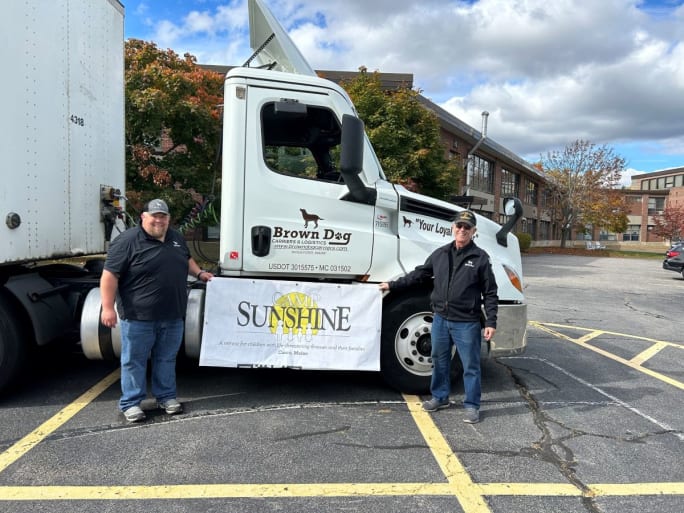
Morin is passionate about Brown Dog being involved in the local community.
Photo: Brown Dog Trucking
For 20 years, Morin drove for fleets in Maine. But he always knew he wanted to found and run his own trucking company.
“I just didn’t know how to do that, and what an effort like that would look like,” he says now.
So Morin began absorbing as much information as he could about the trucking industry and running a fleet. This meant reading industry magazines, and talking to fleet owners, other truckers, and anyone connected to the industry.
“I started going to trucking trade shows on my days off and on my own dime,” he says. “And slowly I learned how other people had made the move.”
By early 2017, Morin felt he’d learned as much as he possibly could without actually taking the plunge. It was time to go all-in on his own business. But he also recognized he was going to need help.
Watch the full interview on HDT Talks Trucking for more:
“I hired a consultant to help me bridge the gap between my own knowledge and things I didn’t yet know,” he says. “Things like dealing with banks. Getting my authority. Insurance. Things like that.”
Soon, he and his partner were in business. Brown Dog Trucking, with a grand total of two owners/operators and two trucks, was in business.
“We started off running the spot market,” Morin says. “We’d drive during the day and handle the business at night. We did whatever we had to do to keep the doors open and freight moving.”
Morin and his partner were well-known in and around Biddeford. Their hustle merely confirmed what local truckers and businesses already knew about them. Within just a couple of weeks, Brown Dog had its first formal customers.
“They came to us and told us they were going to give us a try,” he says. “And they’re still one of our customers today.”
Starting a Business is Just the Beginning
But Morin knew he still had a lot to learn about the trucking business.
“I wanted to build the kind of company that I would want to work for,” he says. “So we started out strong. We won a big contract. One minute you think you have the world by the horns. And the next minute, you realize that your safety scores are sliding because you’re not staying on top of your drivers.

Brown Dog Trucking is also proudly involved with honoring veterans through the Wreaths Across America program.
Photo: Brown Dog Trucking
"You suddenly realize that starting a business is just the beginning. Running the business is where things get real.”
Morin knew he and his partner needed to “steer the ship” a little better, he says. So he began to get involved with more trucking shows and trade organizations.
The biggest help right off the bat came from the Maine Motor Transport Association.
“They stepped up the minute I reached out to them and helped us cut through red tape, comply with various regulations, set up a good safety program.”
Brown Dog soon went from two trucks to seven. Today, the fleet numbers about 30 power units, with Morin and his partner contemplating further growth.
“The big fleets are going to grab business from other big businesses out there, because that’s what they do,” Morin says. “We win our customers over from local businesses with our merits. That’s where we found our little niche. And we’ve been able to expand on it.”
Morin and his partner “teetered” a bit on office staff, he admits.
"We wanted a lean operation,” he says. “But in reality, we were trying to do too much with too few resources. We’ve learned as we’ve grown. And I don’t drive as much as I used to, unless it’s a customer service situation where someone needs something done quickly. And that’s one thing about Brown Dog that will never change.”
More Fleet Management

Color Match Smarter: Tools That Restore & Perform
For fleet managers and collision repair professionals keeping heavy-duty trucks on the road, getting the color right the first time isn't just about appearance — it's about efficiency, turnaround time, and bottom-line results. Discover how today's digital color tools are transforming the repair process from guesswork to precision.
Read More →
FMCSA Pauses Biennial-Update Enforcement Amid Motus Transition
Carriers whose updates were due on or after June 1 have more time, while FMCSA works to stabilize its new registration system and warns of phishing sites impersonating its new carrier registration system, Motus.
Read More →
2026 Blueprint for Countering Smarter Supply Chain Theft
Cargo theft is no longer just the cost of doing business. It's a multi-billion-dollar criminal enterprise exploiting vulnerabilities across your fleet, drivers, and supply chain.
Read More →


How Telematics Improves Visibility, Control, and Performance in Refrigerated Fleets
Explore how telematics help refrigerated fleets improve visibility, uptime, efficiency, compliance, and cargo protection across connected cold chain operations.
Read More →
What the U.S.-Canada Trade War Means for Trucking
Escalating U.S.-Canada tariffs could disrupt cross-border freight, reduce truck volumes, raise costs, and create new uncertainty for carriers on both sides of the border.
Read More →
What Are Trucking’s Top Concerns for 2026?
The American Transportation Research Institute wants to know what's worrying trucking fleet managers, drivers, and other stakeholders in its annual Industry Issues survey.
Read More →
American Trucking Associations Looks for a New Leader
ATA President and CEO Chris Spear abruptly left his job at the association on August 21, at a pivotal time for the trucking industry.
Read More →
Public Wi-Fi Cybersecurity Risks: How Truck Drivers and Fleets Can Protect Their Data
Public Wi-Fi can expose truck drivers and fleets to credential theft, malware, and other cyber threats. Here’s how to reduce the risk on the road.
Read More →
For Nicky Cupp, Fleet Innovation Starts With Frustration
HDT Truck Fleet Innovator Nicky Cupp turns everyday pain points at Fraley & Schilling into opportunities for better technology and smarter processes.
Read More →
Adam Buttgenbach’s Approach to Electric Trucks: Start With Where They Fit
HDT Truck Fleet Innovator Adam Buttgenbach helped PepsiCo build one of North America’s largest EV fleets by focusing on where electric trucks make operational sense.
Read More →