





Note to Readers: This article originally was published September 26 and was updated on September 29, on October 7, and on October 20.
Trump Announces 25% Tariff on Medium-Duty and Heavy-Duty Trucks
More details have emerged on the new medium- and heavy-duty trucks and parts tariffs set to go into effect November 1.
October 20, 2025
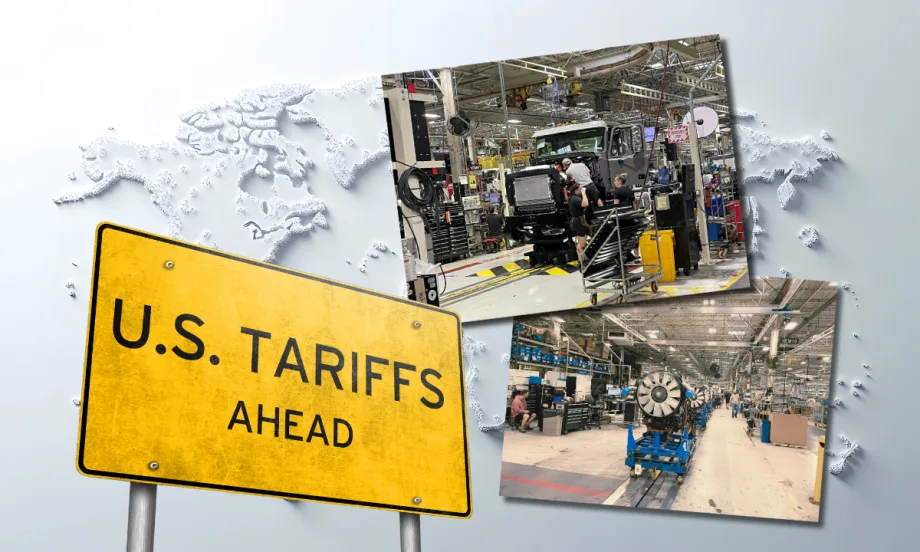
The new tariffs affect Class 3 to Class 8 trucks, ranging from large pick-up trucks to tractor-trailers.
Credit:
HDT Graphic/Jack Roberts
9 min to read
President Trump late on Sept. 25 announced that he will impose a 25% tariff on imported heavy trucks beginning October 1, a date he later postponed until November 1. On October 17, the White House released much-anticipated details in a proclamation about the new tariffs on medium- and heavy-duty trucks and parts.
According to a White House Fact Sheet, the proclamation imposes a 25% tariff on imports of medium- and heavy-duty trucks and truck parts; however, there are mitigating elements for trucks that are USMCA compliant.
The new tariffs affect Class 3 to Class 8 vehicles, such as large pick-up trucks, moving trucks, cargo trucks, dump trucks, and tractors for 18-wheelers.
For medium- and heavy-duty trucks that do not qualify for preferential tariff treatment under the United States-Mexico-Canada Agreement (USMCA), the tariff will apply to the full value of the vehicle.
For medium-duty and heavy-duty trucks that qualify for preferential tariff treatment under the USMCA, the tariff will only apply to the value of the non-U.S. content in the vehicle.
The tariff on medium- and heavy-duty truck parts will apply to key parts, including engines, transmissions, tires, and chassis.
USMCA-compliant medium- and heavy-duty truck parts will not be subject to tariffs — for now — “until the Secretary of Commerce, in consultation with U.S. Customs and Border Protection, establishes a process to apply tariffs to the non-U.S. content of the parts.”
In addition, a new 10% tariff will affect imports of buses, including school buses, transit buses, and motor coaches.
These tariffs will not be imposed on top of sectoral tariffs on steel, aluminum, copper, automobiles and automobile parts, or subject to reciprocal tariffs or the tariffs imposed on Canada, Mexico, Brazil, or India.
UAW members who build heavy trucks at Mack, Daimler, Navistar, Volvo, and more called the new tariffs "a major win" after a lobbying campaign by UAW members and leaders.
Harmonizing Car and Truck Offset Programs
To help incentivize domestic production, the new program offers an offset to a portion of tariffs for medium- and heavy-duty truck parts equal to 3.75% of the aggregate value of all trucks assembled in the United States from 2025 through 2030.
This percentage reflects the duty that would be owed when a 25% tariff is applied to 15% of the value of a U.S.-assembled medium- and heavy-duty truck, according to the White House.
This offset can be used to adjust any Section 232 medium- and heavy-duty truck part tariffs owed by a medium- and heavy-duty truck manufacturer.
An equivalent offset program will also be established for medium- and heavy-duty truck engine manufacturers based on the value of medium- and heavy-duty truck engines assembled in the United States.
Because medium- and heavy-duty truck and automobile industries share many common suppliers and structural similarities across their supply chains, the proclamation also adjusts the Section 232 automobile tariff program to harmonize that tariff program with the program established for the medium- and heavy-duty truck industry.
It extends the import adjustment offset program for automobile manufacturers through 2030. Automobile producers will be able to offset a portion of tariffs on automobile parts equal to 3.75% of the Manufacturer’s Suggested Retail Price of automobiles they assemble in the United States. This percentage reflects the duty that would be owed when a 25% tariff is applied to 15% of the value of a U.S.-assembled automobile.
Why Is the White House Imposing These New Tariffs on Medium-Duty and Heavy-Duty Trucks?
The Commerce Department said a Section 232 investigation found that imports of medium- and heavy-duty trucks, truck parts, and buses threaten to impair the national security of the United States because of the amount of offshoring and the industry’s dependence on foreign suppliers for many components and parts.
Tying the new tariffs to national security is the reasoning for President Trump’s issuing these tariffs, which according to law are supposed to be set by Congress.
“In a time of crisis, America would need adequate, reliable domestic manufacturing capacity for medium- and heavy-duty trucks, medium- and heavy-duty truck parts, and buses. Only factories here, on American soil, subject to American law, can provide that kind of reliable capacity,” according to the proclamation.
Previous Coverage on Trump's 25% Truck Tariffs
The news of the new tariffs first came via social media, announced by Trump in a post on Truth Social in September. “Large Truck Company Manufacturers, such as Peterbilt, Kenworth, Freightliner, Mack Trucks, and others, will be protected from the onslaught of outside interruptions," that social media post said.
“We need our Truckers to be financially healthy and strong, for many reasons, but above all else, for National Security purposes!”
On October 6, Trump posptoned the effective date, again on Truth Social: “Beginning November 1st, 2025, all Medium and Heavy Duty Trucks coming into the United States from other Countries will be Tariffed at the Rate of 25%."
At that time, the White House did not release any more details, which was evident in the comments Heavy Duty Trucking received from truck makers when it reached out for comment immediately after the tariffs were announced. Spokespersons told HDT the following via email:
Daimler Truck North America: "We are closely monitoring the situation, but it’s too early to provide a detailed comment."
International: "We await the details of the Executive Order relating to 232 tariffs."
Paccar (parent of Kenworth and Peterbilt): "We look forward to reviewing the details of the MD and HD Truck Section 232 tariff announcement made by the President as they become available."
Volvo Group (parent of Mack and Volvo): "We look forward to seeing more details on the plans and how they will be implemented."
Winners and Losers?
Paccar shares soared after the announcement, according to CNBC, which said the company manufactures more than 90% of its trucks domestically, while Daimler Truck and Traton (parent company of International Motors) shares fell, according to Reuters.
The Wall Street Journal reported that "the new tariff, set to be introduced on Wednesday, fixes an unintended consequence of other import duties introduced by the White House earlier this year: They rewarded manufacturers for making trucks in Mexico."
The previous tariff structure ended up incentivizing Mexican truck production, where truck makers benefited from cheaper labor and other manufacturing costs.
Analysts at Bernstein explained that trucks assembled in Mexico typically use U.S.-made powertrains, which were not subject to tariffs if they were compliant with the USMCA trade agreement.
This setup favored Daimler Truck (Freightliner and Western Star) and Traton (parent company of International), which assemble the majority of their heavy trucks in Mexico. Volvo (Volvo and Mack), on the other hand, currently builds all its heavy-duty trucks in the U.S., and Paccar (Kenworth and Peterbilt) builds nearly all its heavy-duty trucks in the U.S.
Do Heavy-Duty Truck and Parts Imports Threaten National Security?
This situation was brought up in some comments on a Trump Administration Department of Commerce investigation launched in April to determine if imports of medium-duty trucks, heavy-duty trucks, and their components threaten U.S. national security.
The investigation used Section 232 of the Trade Expansion Act of 1962, which allows the president to impose tariffs or other restrictions on imports deemed a national security risk. The investigation covered a wide range of trucks and parts, including engines, transmissions, and electrical components.
The comments on that investigation offer some insights into the question of tariffs and national security, as well as how such tariffs might affect the country's trucking industry and the truck makers and others involved in the heavy-duty truck industry.
Many of the comments explained how the heavy-duty truck market differs from passenger vehicles and light-duty trucks. They pointed to the effects tariffs in general are already having on the trucking industry, which is still struggling to come out of a record-long freight recession, and more tariffs could push trucking companies to delay replacement and run trucks longer, raising their maintenance costs.
They pointed out that the vast majority of the heavy-duty truck supply chain is in North America and that there is not a national security issue at stake here.
Truck Manufacturing, Tariffs, and the USMCA
Some truck makers in their comments wrote about how tariffs intersect with the United States-Mexico-Canada Agreement (USMCA).
"Manufacturers should not be penalized with tariffs on imports from Mexico and Canada after making significant investments and adjustments to conform to the USMCA requirements," International said in those comments.
"USMCA’s provisions to increase domestic content requirements and to tighten labor standards were designed to encourage reshoring and regional production, and since its adoption International invested more than $1 billion in the United States. By incentivizing critical goods sourced from North America the USMCA is more than just a trade agreement — it serves as a cornerstone of stable industrial policy, promoting economic resilience, strength, and national security."
Paccar, however, said in its comments on the investigation that it has invested more than $1 billion to build and upgrade its manufacturing plans and parts distribution centers which are almost entirely in the U.S.
"American-made heavy-duty trucks have been up to a $10,000 or more per truck cost disadvantage compared to trucks assembled in Mexico," Paccar said in its comment. "Mexican-built trucks that incorporate non-tariffed Chinese parts and foreign steel and aluminum can be imported into the U.S. tariff-free if they meet the U.S.-Mexico-Canada Agreement (USMCA) rules of origin for finished vehicles. By contrast, American manufacturers must pay the cumulative tariff on all non-USMCA-sourced components used to build trucks in America, even though our finished trucks exceed the USMCA regional value content threshold and other rules of origin.”
Volvo also wrote about the unintended consequences of tariffs put in place earlier this year: "Trucks assembled in the U.S. are now disadvantaged compared to trucks assembled in Mexico and Canada. Such truck production is only impacted by the current U.S. tariffs to the extent that their assemblers’ supply chains cross into the U.S. As such, their tariff exposure is far less compared to companies assembling their trucks in the U.S., as they can send trucks into the U.S. tariff-free because of the exception for USMCA-compliant products.”
U.S. Chamber of Commerce: Imported Trucks and Parts No Security Threat
The U.S. Chamber of Commerce in comments on the Commerce Department investigation pointed out the top import sources (Mexico, Canada, Japan, Germany, Finland) are U.S. allies and pose no national security threat. Most imports fall under the U.S.-Mexico-Canada Agreement (USMCA), which already incentivizes U.S.-based production.
“The medium- and heavy-duty truck manufacturing sector and the associated parts supply chains depend on an ecosystem of suppliers and distributors,” the Chamber said.
Mexico and Canada are the main sources for parts used in the manufacture of medium- and heavy-duty trucks, accounting for 53% of total U.S. imports in the sector last year, the Chamber said. And many such trucks built in Mexico have U.S. powertrains, which is a huge part of the overall vehicle cost.
“Low-volume, high complexity vehicles like medium and heavy-duty trucks and their parts are difficult to source. Industry experience indicates that complete localization of parts suppliers … is impractical and would result in the loss of economies of scale and competition within the industry, making parts more expensive.”
Truckload Carriers Association: Trucking Fleets Could be Hurt by New Truck Tariffs
The Truckload Carriers Association, in its comments, said there's already concern among its members about the supply chain disruption being caused by the administration’s tariffs, especially on Mexico and Canada.
“Some of our members are beginning to see early signs of recovery in their operations. However, any disruption to the supply chain, especially those that increase operational costs, threatens to undermine that progress entirely," TCA said.
"Carriers are already facing dramatic increases in key cost areas, most notably insurance premiums, which some have reported surges of 20–30%.
"If tariffs are imposed on truck parts or other essential components, the added financial burden will further diminish profitability."
More Equipment
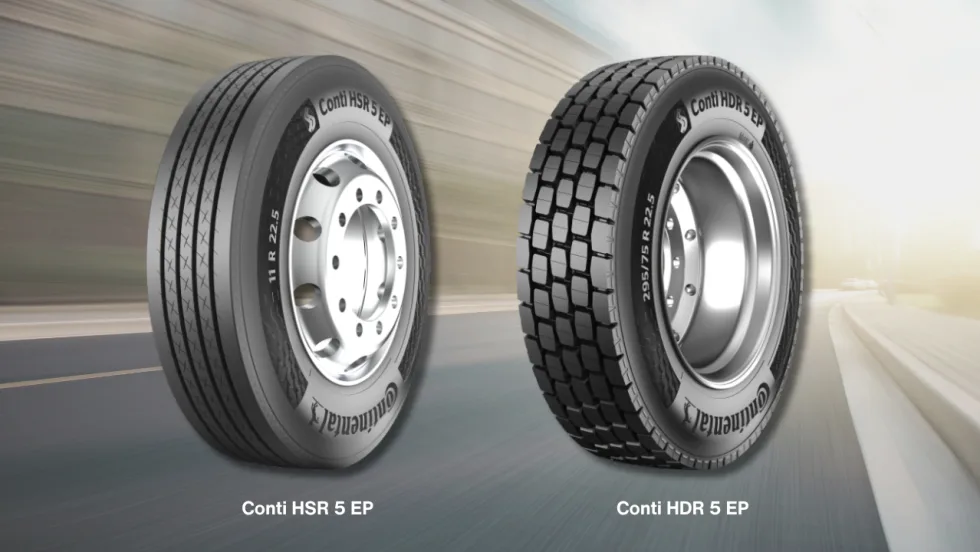
Continental Introduces New Regional Truck Tires
Continental says its new Generation 5 steer and drive tires for regional operations offer longer tread life, with estimated mileage gains of 22% and 19%, respectively.
Read More →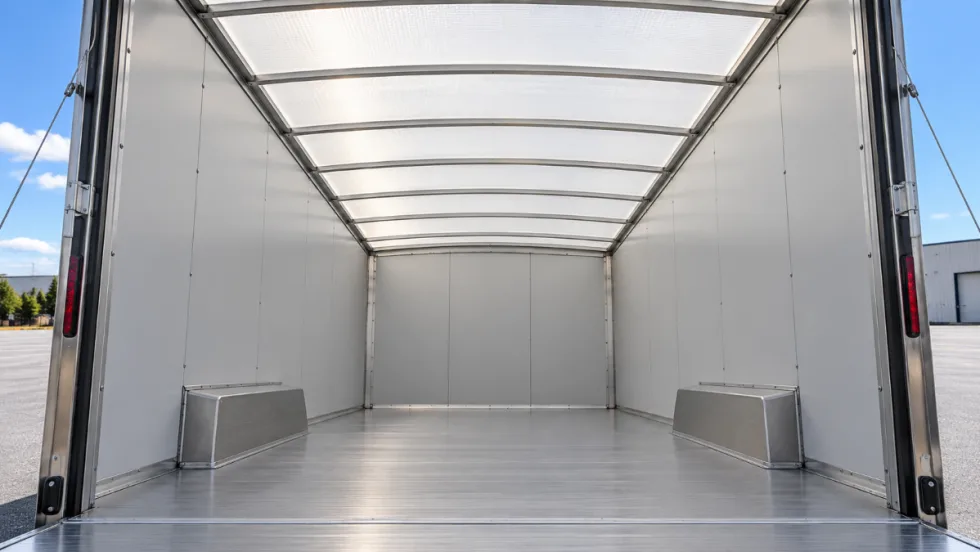
Tekmodo Introduces CargoBright Brand for Translucent Trailer Roofs
CargoBright is designed to diffuse daylight across the cargo area while performing as a working vehicle roof.
Read More →
Fleet Economics Shape Electric Truck Outlook
ACT Research expects costs, charging infrastructure, and technology improvements to drive zero-emission commercial vehicle adoption as federal regulations and incentives retreat.
Read More →
Kodiak Targets Dallas–Houston for Driverless Trucks
The company says its autonomous trucks are completing the I-45 run without a safety observer taking control. It plans to remove the observer by the end of 2026.
Read More →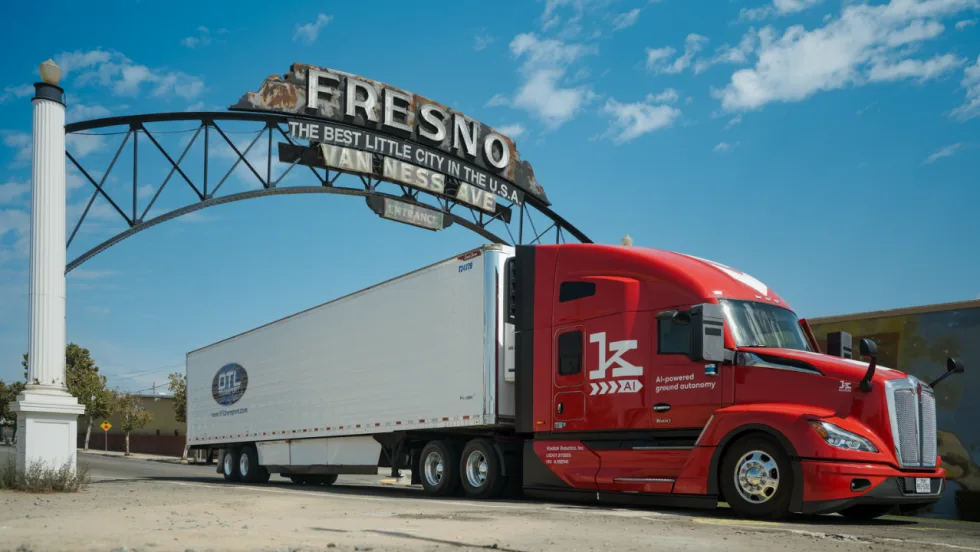
Kodiak Hauls Produce in California Autonomous Truck Pilot
Kodiak AI and DTL Transport have begun hauling produce between Fresno and Los Angeles under California’s new rules for testing heavy-duty autonomous trucks. A safety driver remains behind the wheel.
Read More →
Used-Truck Remarketing Math Is Changing
Used-truck value is no longer just a concern at trade-in. Decisions made throughout a truck’s first life can influence what it’s worth years later.
Read More →
How Volvo Updated Its D13 for EPA 2027 [Watch]
Volvo’s updated D13 promises lower emissions without sacrificing performance or fuel economy. Take a closer look at what changed inside the engine in this HDT Spotlight video.
Read More →
Michelin Tire Improves Efficiency and Durability for Regional Fleets
The Michelin X Multi Energy D2 is a regional haul drive tire engineered to help fleets improve fuel efficiency, durability and traction in demanding stop-and-go operations.
Read More →
ZF Expands Commercial Vehicle Push in North America
ZF is expanding its North American commercial-vehicle presence with new transmission applications, electrification, trailer technology and autonomous-driving systems.
Read More →
Tesla Wants a Self-Driving Semi. Are Cameras Enough?
Could Tesla’s camera-only autonomous driving technology work on an 80,000-pound Semi? In this commentary, HDT's Deborah Lockridge takes a look at Tesla, Cybercab, and how autonomous trucks see the road.
Read More →