




The Hidden Costs of 'Free' Smart Trailer Tech Installations [Commentary]
Free installation of smart trailer technologies may sound good on paper, but you could end up paying down the road.
![The Hidden Costs of 'Free' Smart Trailer Tech Installations [Commentary]](https://transportation-assets.bobitstudios.com/image/upload/f_auto,q_auto,dpr_auto,c_limit,w_920/guest-voices-1_1767986221757_k4rhaq.png)
Before signing on the dotted line, ask trailer telematics providers questions that protect your uptime and your bottom line.
HDT Graphic
In trucking, we all know one truth: Nothing is ever really free. Not tires, not fuel, and definitely not hardware installs.
When it comes to smart trailer technologies such as cargo cameras, door sensors, brake and tire monitoring, we’re seeing a trend toward a race-to-the-bottom strategy. As a provider of these smart trailer technologies, we’ve been a part of competitive bids where others have promised free hardware installation to land major fleet customers.
On paper, it may have sounded tempting, especially when budgets are tight and every dollar counts.
But ask anyone who’s been in this industry long enough: If someone’s giving something away, the fleet will pay the price down the road.
In the conversations we’re having with existing and prospective customers, we’re pretty bullish when it comes to kicking the tires a bit more and taking those extra steps.
Ultimately, when you’re entering into or expanding your partnership with a supplier or technology provider, you’re not looking for someone who’s cutting corners or hiding costs behind sales and marketing stunts.
In the long run, reliability, quality, performance and trust pay for themselves, and what started out as free almost always becomes one of your most expensive line items down the road.
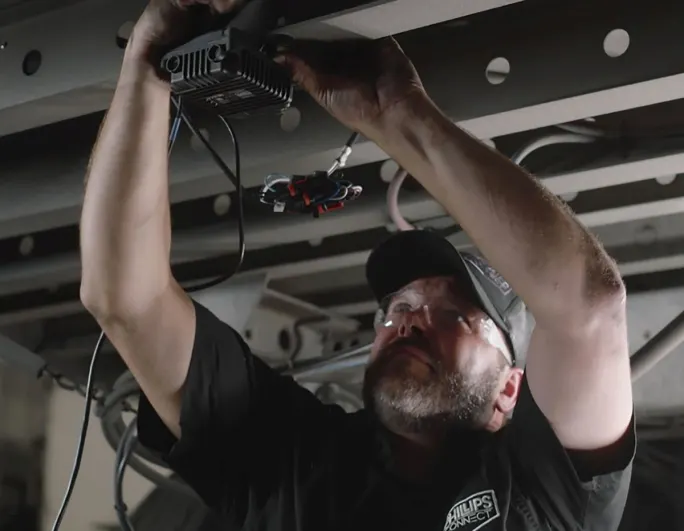
Ask your trailer telematics provider who will be doing the installation. Untrained or rushed installers often skip steps, misroute cables, or leave systems half-calibrated.
Photo: Phillips Connect
The Illusion of Free Smart Trailer Tech Installation
When a vendor offers a free hardware or lighting installations, ask yourself:
How are they making up for that lost revenue?
Are they using certified technicians?
Are they following OEM wiring standards?
What happens when something fails?
Here’s what we’ve seen, and what fleet managers are starting to learn the hard way:
Non-standard wiring, like splicing into harnesses, may get the install done more quickly and less expensively, but it can void your OEM warranties and create electrical gremlins that chase you for years.
Free labor isn't always skilled labor. Untrained or rushed installers often skip steps, misroute cables, or leave systems half-calibrated. This results in out-of-service trailers, expensive service calls, danger to your loads, drivers and the public at large, and oftentimes angry drivers stuck with equipment they can’t trust.
Shortcuts today equal delays tomorrow. Free installs often lead to longer downtimes later due to troubleshooting preventable issues, ultimately costing you in both time and operational efficiency.
The Old Adage is True: You Get What You Pay For
We advise our prospective customers to look beyond price, and spend the time to find partners that check every box when it comes to:
Certified professional installations
OEM-compliant wiring practices
Tested, integrated systems that work as promised the first time
Investing in a smart trailer solution means committing to a long-term relationship with a partner you can trust, and all the solutions, hardware and installations that come along with it, including cameras, sensors, tire pressure systems, brake diagnostics, cargo monitoring, and more.
That’s only valuable if the technology works, and it only works if it’s installed correctly.
Final Thought: Ask the Right Questions
Before signing with a smart trailer technology provider offering free installation, ask:
Who’s doing the work?
How are they wiring into my system?
Will this void my OEM warranties?
What’s the track record on system reliability post-install?
Because when it comes to smart trailers, you’re not just buying hardware. You’re buying uptime, data integrity, and peace of mind.
Most reputable technology providers charge for installation because they do it right, and when your trailers are rolling, your data’s flowing, and your drivers trust their equipment, that’s an investment that pays off every mile.
More Blog Posts

Fragmented AI: Why Trucking Must Take Security More Seriously
As AI becomes embedded throughout transportation operations, the result can be a tech environment that looks more advanced on paper, but isn't necessarily more efficient, secure, or manageable in practice.
Read More →
We've Been Thinking About Truck Uptime Backward
The truck repair operations that minimize downtime aren’t necessarily the ones with the fastest technicians. They’re the ones who have the part.
Read More →
The Real Cost of Trailer Tires: Why It's Not Just a Maintenance Problem Anymore
Tire wear isn't random. The trucking fleet with a tire program that knows which trailers, positions, and routes are punishing tires the hardest is the one that buys fewer of them.
Read More →
A New Argument for Electrification: Managing Fuel Volatility
As oil prices surge amid Middle East conflict and a blocked Strait of Hormuz, fleets are feeling the squeeze in real time. In this guest column, Geotab's Neil Cawse argues electrification is no longer just about sustainability or ROI — it’s about insulating operations from what he calls a "volatility tax."
Read More →
The Time is Now to Expand Longer Combination Vehicles [Opinion]
The reauthorization of the federal highway bill offers a rare chance to advance double 53-foot LCVs. Industry leaders shouldn’t miss it, says a longtime trailer industry professional in this Guest Voices blog post.
Read More →
Protecting Small Trucking Fleets from Scammers: Lessons from the Insurance Frontlines
Hijacked DOT numbers, fake invoices, and high-tech cargo theft are on the rise. A veteran trucking insurance broker shares how to spot trouble early — and why a trusted advisor may be your strongest defense.
Read More →
Tire Retreading Makes Sense for Trucking Fleets. H.R. 3401 Could Make It Even Smarter.
Retreaded tires offer trucking fleets cost savings, sustainability gains, and supply chain security. New legislation, H.R. 3401, could make retreads even more attractive and support U.S. jobs.
Read More →
Hydrogen Fuel Cell Trucks Are Ready for the Long Haul. Now Policymakers Must Act
Accelerating the growth of hydrogen-fuel-cell-truck adoption would help make zero-emission trucking is not only possible, but practical and profitable, argues the Center for Transportation and the Environment in this Guest Voices blog.
Read More →
A New Definition for Long-Haul Heavy-Duty Trucking
Understanding the various routes that make up long haul is important as we move through trucking’s Messy Middle — a time when fleets have a variety of powertrain solutions to choose from, writes NACFE's Mike Roeth.
Read More →
How Collaboration is Driving the Growth of Heavy-Duty EV Charging Infrastructure
To overcome the challenges of transitioning to electric medium- and heavy-duty vehicles, it will take local governments, public-private partnerships, utilities, investors, and other stakeholders working together, says the CEO of Greenlane in this guest article.
Read More →