




Anyline Commercial Tire Tread Scanner Uses AI
Anyline’s Commercial Tire Tread Scanner uses artificial intelligence with any camera-enabled smartphone or mobile device to measure truck tire information such as tread depth.

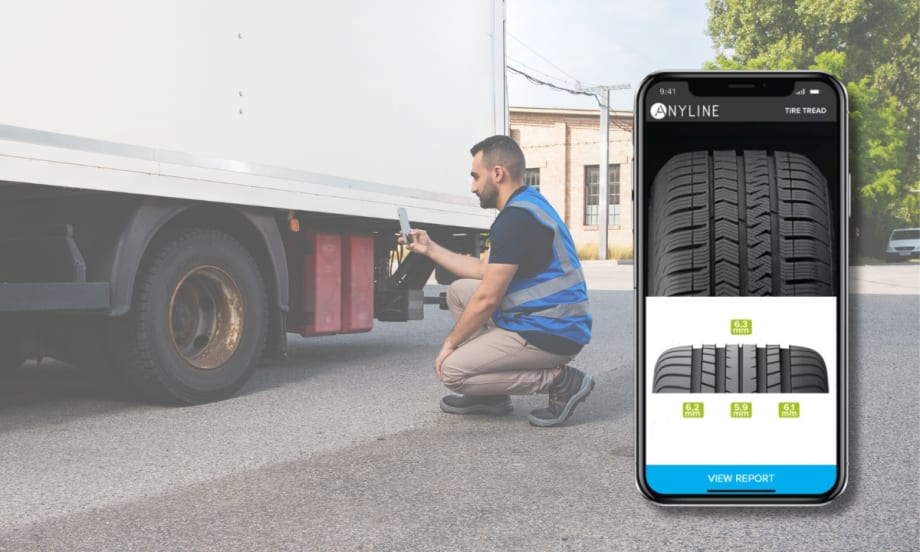
Anyline's mobile tire tread scanner technology uses artificial intelligence.
Image: HDT Graphic
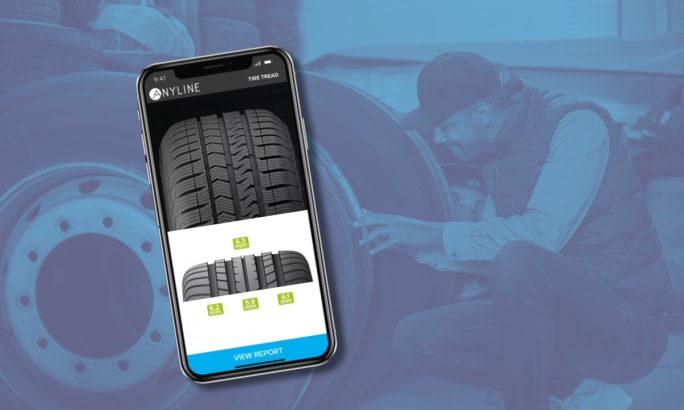
Anyline’s Commercial Tire Tread Scanner uses artificial intelligence with any camera-enabled smartphone or mobile device to measure tread depth simply by pointing the camera at the tire tread to be measured
Using computer vision and AI, it then creates a digital model of the tire.
Fleet operators, tire technicians and drivers can now quickly and easily scan tread depth and tire sidewall information, resulting in accurate and more consistent data.
Tire data is recorded digitally and shared across the organization as needed. As a result, fleet companies gain instant visibility into the tire health of each vehicle, allowing operators to connect tread health to individual VINs or license plates, which can also be recorded digitally by Anyline.
It allows fleet operators to improve tire performance and longevity, ensure driver safety and reduce vehicle inspection time, according to the company.
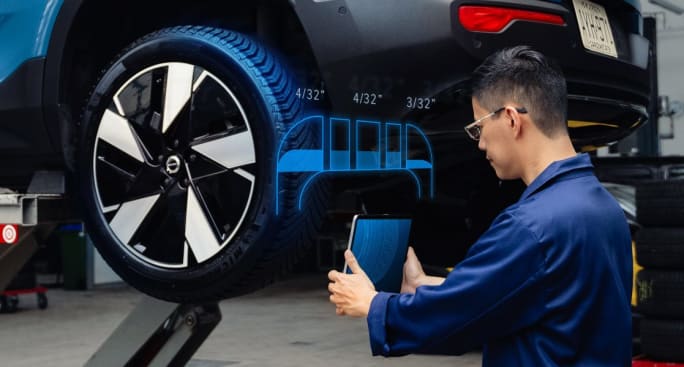
Anyline's digital technology works on passenger and commercial truck tires.
Photo: Anyline
The Benefits of Digital Tire Scanning
Manually recording tire information can be a time-consuming, tedious task. Commercial trucking operators must collect DOT, size and commercial serial numbers separately. A lack of accurate information makes tracking tire longevity, sustainability and maintaining tire health difficult.
“Tire tread scanning is the fastest and easiest way to monitor the health of a tire,” said Lukas Kinigadner, CEO and co-founder of Anyline.
“When fleet operators scan tire information accurately, they have better data on tire health, making it easier to pull a tire for replacement or retread at the optimal time.”
Anyline’s mobile scanning solutions can be used at each step of the tire inspection and service process.
They also offer commercial tire providers a wide range of modules that can be used alongside each other. These modules can be integrated as a Mobile SDK, Web SDK, or Cloud API for ease of use by end customers.
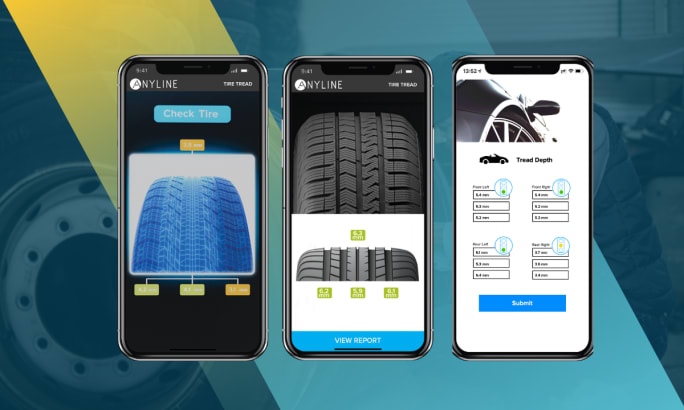
Tire tread depth and other tire data no longer has to be manually entered into computer systems for tracking and analysis.
Image: HDT Graphic
The Need to Adopt Digital and AI-Driven Maintenance Solutions
A 2024 survey commissioned by Anyline identified a pressing need to modernize fleet maintenance practices by adopting digital and AI-driven solutions. Among its findings:
Manual data entry dominates the industry. 66% of respondents still rely on handwritten paper logs when capturing vehicle information. In addition to being less timely and actionable, handwritten data capture is prone to human error and lacks accuracy.
Tire inspection frequency varies: While 70% of fleets in the survey said they conduct tire inspections at least weekly, 30% of respondents were uncertain about their inspection frequency or perform them only monthly or less often.
Tread inspection methods are less than accurate: 82% of respondents use handheld tire gauges, which only measure one individual point on a tire and are error-prone. And 48% rely on visual inspections, which are very subjective. More accurate tire tread measurement methods, such as drive-over gauges, laser readers, and tire tread depth scanning via mobile phones, are used less than 10% of the time.
Tread information isn’t being pulled into IT systems. Only 18% of respondents said they integrate tread information into IT systems. With 52% manually entering data into systems, the industry’s slow adoption of digital solutions hampers efficiency and accuracy in maintenance practices.
Sidewall information: Only 15% of respondents said they capture tire sidewall information digitally.
Inspections need modernizing: Although 74% of respondents said they adhere to performing required Driver Vehicle Inspection Reports (DVIR), 39% are still using paper checklists.
Who is Anyline?
Founded in Vienna in 2013, Anyline specializes in mobile data capture and data insights. Using artificial intelligence and machine learning, Anyline gives businesses the power to read, measure and interpret visual information with any mobile device.
Anyline is used by frontline workers at automotive and tire manufacturers and retailers to quickly and accurately scan tire sidewall, tread depth and vehicle data, including tire DOT codes, vehicle identification numbers (VINs), license plates and barcodes, using any standard mobile device or camera-enabled automotive diagnostic devices.
More Maintenance

Color Match Smarter: Tools That Restore & Perform
For fleet managers and collision repair professionals keeping heavy-duty trucks on the road, getting the color right the first time isn't just about appearance — it's about efficiency, turnaround time, and bottom-line results. Discover how today's digital color tools are transforming the repair process from guesswork to precision.
Read More →
Wrong Repair Prompts Recall of Freightliner, Western Star 4x2 Trucks
DTNA is recalling more than 2,400 trucks that received an incompatible software fix instead of the hardware repair required to address brake valve corrosion.
Read More →
Truck Drivers Need More Than Another Alert
Fleets have more visibility into truck health, safety events, and driver activity than ever. The next challenge is turning all that information into useful guidance for the person who has to decide what to do next.
Read More →
The Maintenance Checks Trucking Fleets Should Prioritize Before Fall Freight Picks Up
Making it through August isn’t the same as being ready for the next several months of operation. Find out what systems may have suffered from summer heat and need to be checked out before fall.
Read More →
What Three Fleets Are Doing Differently When Buying Truck Parts in 2026
With freight improving but costs still climbing, fleet maintenance executives explain how they're balancing price, quality, and supplier relationships.
Read More →
Paccar Recalls 2027 Trucks Built This Summer for Possible Electrical Problem
The nearly 6,000 Kenworth and Peterbilt trucks in the recall could potentially lose engine power, among other things.
Read More →
Will API PC-12 Oil Change Trucking Fleet Maintenance?
The new API PC-12 heavy-duty engine oil category reflects the changing demands of modern diesel engines. But fleets like Foodliner are looking to getting their own data before making decisions on adopting the new oils and questions such as extending oil drain intervals.
Read More →
Brake Safety Week to Focus on Drums and Rotors
Commercial vehicle inspectors are focusing on truck brakes during CVSA's Brake Safety Week, August 23-29.
Read More →Possible Battery-Cable Fires Prompt Recall of 15,000+ International MV and HV Trucks
On the recalled vehicles, manufacturing variations can cause the battery interconnect cable to contact the auxiliary stud and hold down the bracket.
Read More →
Rush, MCT Team Up to Grow Refrigeration Service Network
The joint venture will operate MCT's network of Carrier Transicold dealerships and mobile service locations, with the companies promising greater service capacity and uptime for refrigerated fleets.
Read More →