





Why the Engine Technology Forum wants Revised Renewable Fuel Standards
CARB Updates Low Carbon Fuel Standard
The 14-member California Air Resource Board has voted to approve significant updates to the state's Low Carbon Fuels Standard including investments in BEV charging and hydrogen infrastructure.
November 11, 2024
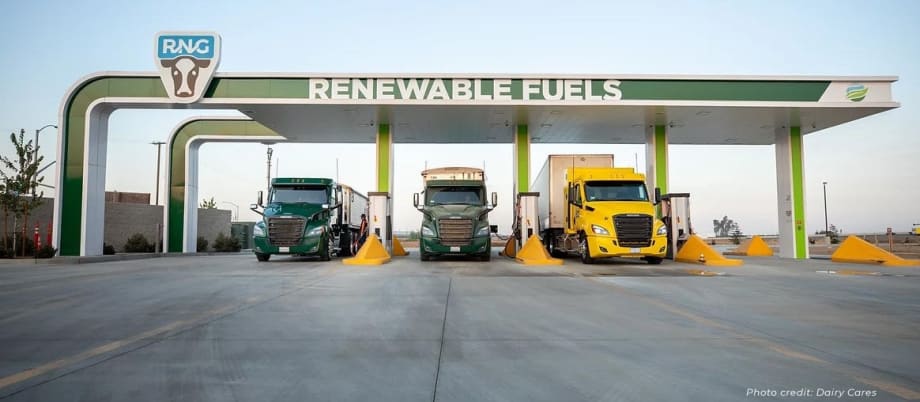
North America currently has 435 operational RNG facilities, plus another 455 sites either under construction or in planning stages, according to the RNG Coalition.
Photo: RNG Coalition
8 min to read
The California Air Resources Board has approved updates to the Low Carbon Fuel Standard (LCFS). These changes were approved on November 8, following hours of testimony from advocates and opponents to the proposed updates.
In a statement, CARB said that the LCFS changes will “channel global, national and local private sector investment towards increasing cleaner fuel and transportation options for consumers, while accelerating the deployment of zero-emission infrastructure, and keeping the state on track to meet legislatively mandated air quality and climate targets.”
According to Reuters, CARB’s 14-member board voted 12 to 2 to approve changes to the LCFS. Several members said that the changes were necessary following the election of Donald Trump on November 5. Trump has pledged to rescind CARB’s legislative power to set independent emissions rules for the state. And several CARB members said the latest round of changes were necessary to maintain California’s climate leadership position in the wake of the presidential election.
Opponents of the changes cited concerns that the changes will drive gasoline prices in California and other CARB states up, Reuters also reported.
A study cited by the board last year found that the changes approved last week could increase the price of gasoline by an average of 37 cents a gallon from 2024 to 2030.
However, CARB countered those concerns by saying that those models cannot accurately predict future fuel prices.
An Emphasis on Infrastructure
CARB said the LCFS updates adopted by the Board were developed after a rigorous, years-long public rulemaking process that incorporated feedback received from interested parties.
These updates include:
Providing billions of additional dollars to fund zero-emission vehicle charging and hydrogen fueling infrastructure, including new crediting opportunities for medium - and heavy-duty refueling infrastructure, to support implementation of California’s zero emission vehicle regulations.
Increasing incentives for infrastructure in low-income neighborhoods and remote locations and ensuring that historically underserved communities receive needed investment to reduce emissions and provide equitable access to a clean air future.
Phasing out avoided methane crediting associated with the use of biomethane used as a combustion fuel, but extending the use of biomethane for renewable hydrogen to align with goals outlined in the 2022 Scoping Plan – the state’s plan for reducing climate-warming emissions and reaching carbon neutrality.
The LCFS updates also include new guardrails to avoid land use changes resulting in potential loss of food production or deforestation.
The majority of biomass-based diesel and sustainable aviation fuel in the LCFS has historically come from waste feedstocks, such as used cooking oil, animal fat and inedible distiller’s corn oil.
To minimize potential land use issues, the program will require fuel producers track crop-based and forestry-based feedstocks to their point of origin. The LCFS will also require independent feedstock certification to ensure biomass-based diesel and sustainable aviation fuel feedstocks are not undermining natural carbon stocks. Palm-derived fuels are also explicitly prohibited from receiving credits.
LCFS Updates
The LCFS reduces air pollution and greenhouse gas emissions by setting a declining carbon intensity target for transportation fuels used in California; producers that don’t meet established benchmarks buy credits from those that do.
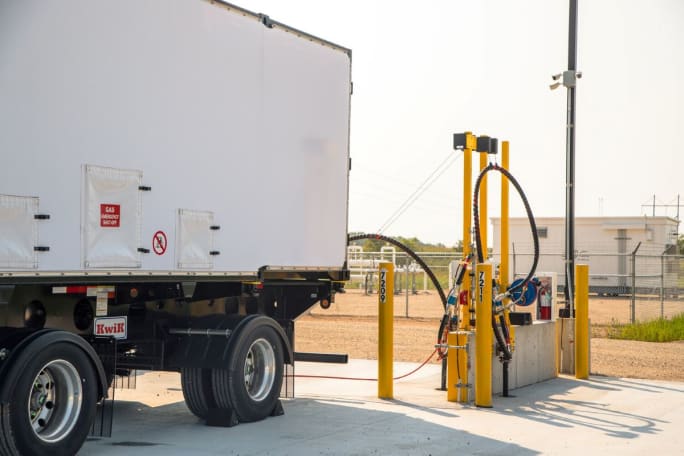
RNG is created by capturing methane from organic waste sites, like landfills, dairy farms and wastewater treatment facilities.
Photo: RNG Coalition
According to CARB, this system has generated $4 billion in annual private sector investment toward a cleaner transportation sector. These investments provide multiple economic benefits to Californian consumers, including:
Increasing consumer choices, which drives transportation fuel price competition
Growing new industries and attracting investments that support jobs and strengthen communities
Reducing dependence on petroleum and the oil industry, thereby protecting consumers from its associated supply and cost volatility
Making electric vehicles more affordable
Expanding access to electric vehicle charging and hydrogen refueling infrastructure
Reducing the health impacts and health care costs associated with air pollution from fossil fuels.
The updates set targets to reduce the carbon intensity of California’s transportation fuel pool by 30% by 2030 and by 90% by 2045.
The amendments also increase support for zero-emissions infrastructure, including for medium- and heavy-duty vehicles, and make more transit agencies eligible to generate credits.
RNG Coalition Applauds the Vote
In its response to the November 8 vote, the Coalition for Renewable Natural Gas (RNG Coalition) said supports the California Air Resources Board's (CARB) decision.
"Today’s vote marks a powerful step forward in California’s journey of climate leadership," Sam Wade, RNG Coalition's director of public policy, said. "With the Low Carbon Fuel Standard, the state has shown what’s possible in reducing greenhouse gas emissions by displacing over 60% of the state’s diesel supply with cleaner alternatives.
"CARB’s commitment today to increasing the ambition of this program also upholds support for renewable natural gas (RNG) projects that capture methane from organic waste sources," Wade said. "While there remain aspects of the program that could use improvement, today’s decision signals to our industry that California remains a committed partner in building a cleaner, healthier, and more secure energy future."
Wade said CARB's LCFS updates will increase overall program stringency while continuing to recognize the dual emissions reduction benefits of RNG projects, which displace fossil fuels while capturing methane from organic waste sites, like landfills, dairy farms and wastewater treatment facilities.
Due in part to support from the LCFS, California today boasts more dairy RNG projects than any other U.S. state, Wade added. He said this trend offers hope that the U.S. can tackle the environmentally pressing problems of transportation-linked pollution and agricultural methane emissions within coming decades.
According to data from the end of the third quarter of 2024, North America currently has 435 operational RNG facilities, plus another 455 sites either under construction or in planning stages. California alone has 133 operational facilities, with another 84 facilities coming.
According to the RNG Coalition said last week’s vote will allow investors to move forward with these plans with confidence that California's LCFS market will continue to reward their innovation.
Additionally, the RNG Coalition said it looks forward to continuing to work with CARB to make this program even stronger in years to come.
Striking a Balance
According to CARB, the LCFS has been very effective to date. It has reduced the carbon intensity of California’s fuel mix by almost 13% and displacing 70% of the diesel used in the state with cleaner alternatives, the organization said.
This has displaced 320 million metric tons CO2 of gasoline and diesel emissions since the Program’s inception. That’s an amount equivalent 85% of today’s annual statewide greenhouse gas emissions. The growth in the use of renewable fuel is powering needed emissions reductions in the transportation sector.
“The proposal approved today strikes a balance between reducing the environmental and health impacts of transportation fuel used in California and ensuring that low-carbon options are available as the state continues to work toward a zero-emissions future,” said CARB Chair Liane Randolph. “Today’s approval increases consumer options beyond petroleum, provides a roadmap for cleaner air, and leverages private sector investment and federal incentives to spur innovation to address climate change and pollution.”
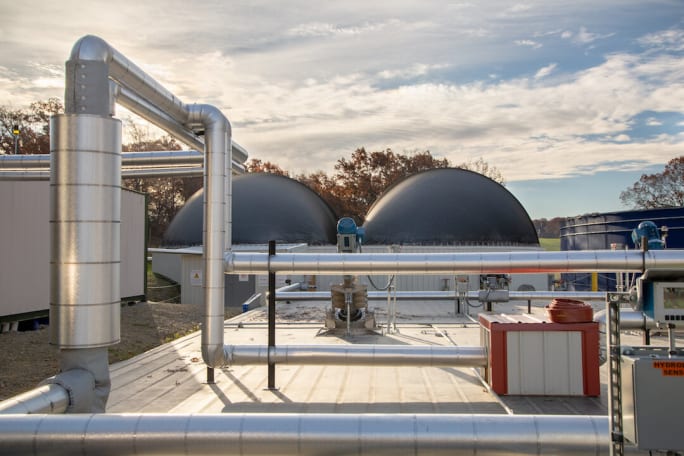
CARB’s updates top the Low Carbon Fuel Standard give support for renewable natural gas (RNG) projects that capture methane from organic waste sources.
Photo: RNG Coalition
The LCFS is designed to provide the most cost-effective path to support clean fuels and infrastructure. Affordability remains a key consideration for the Board, and it has directed staff to assess any impacts and potential mitigation from today’s adopted amendments on retail gasoline prices every six months and to submit an annual report beginning one year from the effective date of these amendments, and to collaborate with the California Energy Commission in that effort.
The program currently limits the pass-through costs companies can shift to consumers by capping the price of credits that high-carbon-intensity fuel producing entities are required to purchase for compliance and allowing banking of credits bought at lower prices.
Change for California
According to CARB, data from third party commodities markets experts shows the current LCFS pass through to California consumers is $0.10 per gallon of gasoline. This is consistent with the self-reported data by high-carbon-intensity fuel producers, which reflects an LCFS cost pass through to consumers of $0.08 to $0.10 per gallon of gasoline
CARB said the LCFS has supported Californians in the following ways:
Making electric vehicles more affordable: “The LCFS has also provided hundreds of millions of dollars of beneficial credits and incentives supporting the build-out of EV charging infrastructure and vehicle rebates which lower the upfront costs for drivers,” said a representative from MN8 Energy, which produces renewable energy, in a letter submitted to CARB.
Expanding access to charging infrastructure: As of October 10, 2024, there have been a total of 71 hydrogen stations and 749 fast EV charger sites approved under the Hydrogen Refueling Infrastructure (HRI) and (Fast Charging Infrastructure) FCI provisions of LCFS, respectively.
Reducing health care costs associated with pollution from dirty fuels: CARB estimates $5 billion in savings from avoided health outcomes between 2024 and 2046.
Increasing consumer choices, which drives price competition: “By using market-based policies that ensure the best ideas succeed, we can also maximize impact by marshaling private capital to invest in climate solutions. Fortunately, California already has an excellent example of this kind of approach in the Low Carbon Fuel Standard (LCFS).”
Reducing dependence on the oil industry, thereby protecting consumers from its associated supply and cost volatility: The LCFS has displaced more than 30 billion gallons of petroleum fuel.
Californians will benefit from these program updates in additional numerous ways, according to CARB, including:
As consumers increase their use of low carbon intensity fuels and more efficient vehicles, fuel costs per mile will be reduced by 42 percent - translating to savings of over $20 billion in fuel expenditures every year by 2045. For light-duty vehicles (cars, pickup trucks, sport utility vehicles, vans, and minivans) these fuel cost savings will be even more pronounced, cutting today’s costs to Californians by more than 50 percent.
The amount of LCFS proceeds invested in disadvantaged communities for clean fuel and transportation projects is estimated to be approximately $4.8 billion in the next decade.
Californians are expected to save almost $5 billion in health care costs by avoiding the impacts of air pollution.
The amendments will reduce greenhouse gas emissions by 558 million metric tons, NOx by more than 25,500 tons and PM 2.5 by more than 4,200 tons between 2025 and 2045.
More Fuel Smarts

How Volvo Updated Its D13 for EPA 2027 [Watch]
Volvo’s updated D13 promises lower emissions without sacrificing performance or fuel economy. Take a closer look at what changed inside the engine in this HDT Spotlight video.
Read More →
Diesel Price Spike Shortens Payback for Natural Gas Trucks, Report Says
Energy Vision estimates fleets could recover the higher purchase price of an RNG-fueled Class 8 tractor in 1.3 to 2.8 years under current fuel-price scenarios.
Read More →
Calstart Becomes Catalyst Mobility, Reflecting Broader Focus
Calstart is now Catalyst Mobility, reflecting the nonprofit’s growing national role in clean transportation, including zero-emission trucks, infrastructure and incentive programs.
Read More →

Record Diesel Prices Squeeze Trucking Fleets
Average U.S. diesel prices have climbed to nearly $6 a gallon, surpassing the 2022 record as tight refinery capacity and Middle East disruptions keep fuel costs elevated.
Read More →
Sponsored•September 9, 2026
How Fuel Delivery Shapes Engine Performance
Fuel delivery depends on more than what happens at the injector. For fleet, maintenance and technical professionals, looking at the full path from pump to injector can provide useful context for understanding engine performance.
Read More →
East Coast Port Launches $45M Electric Truck Push
The Port Authority of New York and New Jersey announced millions in incentives for zero-emission drayage trucks, yard tractors, and new charging hubs near the port.
Read More →
California Bill Could Shed Light on Electric Truck Prices
Why do battery-electric Class 8 trucks remain so expensive? A California bill headed to Gov. Gavin Newsom would give fleets and state agencies more visibility into what manufacturers charge.
Read More →
Detroit Opens Orders for EPA 2027 Engines
Detroit isn’t starting from scratch to meet EPA 2027 diesel emissions standards. Its Gen 6 DD13 and DD15 engines keep much of today’s platform while updating the fuel and aftertreatment systems.
Read More →
Zero-Emission Truck Corridor Planned for West Coast
California, Oregon, Washington, British Columbia and Baja California are coordinating plans for truck charging and hydrogen fueling from Canada to Mexico.
Read More →
A Closer Look at Kenworth’s Electric T880E Vocational Truck [Video]
Learn more about Kenworth's T880E battery-electric vocational truck at the Paccar Technical Center, including its range, applications, upfitting considerations, and PTO options, in this HDT Spotlight video.
Read More →