




New Phishing Scam Targets Motor Carriers
If you get an email that says it’s from The Federal Motor Carrier Safety Administration requesting that carriers complete forms attached to the email, the agency warns that it may be a phishing scam.

Take a close look at any emails that purport to come from FMCSA. They could be a scam.
Image: HDT Graphic
If you get an email that says it’s from The Federal Motor Carrier Safety Administration requesting that carriers complete forms attached to the email, the agency warns that it may be a phishing scam.
Phishing is the fraudulent practice of sending emails or other messages purporting to be from reputable companies in order to induce individuals to reveal personal information, such as passwords and credit card numbers.
In the scam emails, FMCSA says, those forms ask for a social security number and USDOT PIN. FMCSA does not require such information on official FMCSA forms. Carriers should NOT fill out forms attached to the fake email, and always refer to the official FMCSA forms for the latest and official documents.
In some cases, the phishing attempt also asks for a certificate of insurance and driver’s license to help protect the recipient against fraud. There is also a threat that if the recipient does not respond within a day, the individual will be fined, which is also not an FMCSA practice as part of the registration process.
How to Spot These Fake Emails
The fake email originates from one of the following email addresses:
safety@fmcsa.gov
filing@fmcsa.gov
dotfilings@fmcsa.gov
audit@fmcsa.gov
None of these are legitimate email addresses and are NOT used or owned by FMCSA.
If the recipient replies to the email, their message goes to @fmcsa-safety-fmcsa.com, which is also NOT a domain owned or used by FMCSA.
Not only is some of this information Personal Identifiable information, but this information would also allow the unauthorized party to gain access to the recipient’s FMCSA account.
The fake email containing the phishing link appears very convincing that the correspondence is from FMCSA, according to the agency. Screenshots of the fake email can be found on FMCSA’s website.
Communications from FMCSA relating to information requests of this type would either request individuals to log into their portal account at FMCSA Login (dot.gov), or the email would come directly from an FMCSA dedicated mailbox. While these emails typically end in “.gov”, FMCSA encourages stakeholders and customers to verify any email or communication they feel to be suspicious with the appropriate agency.
Earlier this year, the FMCSA warned motor carriers of a different email phishing scam involving a fake DOT safety audit.
Here’s What Individuals Can Do to Avoid Phishing
Do not click any suspicious links. Hover over them to see the real email address or URL of that link. Click only on links you deem trustworthy
Visit the Cybersecurity & Infrastructure Security Agency for more guidance on online deceiving tactics.
The Federal Trade Commission recommends following certain procedures for email verification.
File a complaint with the Federal Bureau of Investigations (FBI) by using their IC3 site
Reach out to the FMCSA Contact Center or call (1-800-832-5660) if you are the target of these practices.
More Safety & Compliance
Short Takes: How K&B is Using AI
Fleets need to "get on board the train" with AI, says Lance Evans of K&B Transportation in this HDT Talks Trucking Short Takes episode.
Read More →
Short Takes: Inside K&B’s Truck Safety Tech
Listen to learn how K&B Transportation uses cellphone-blocking technology, speed management systems, weather geofencing, bridge avoidance tools, and more to improve driver safety.
Read More →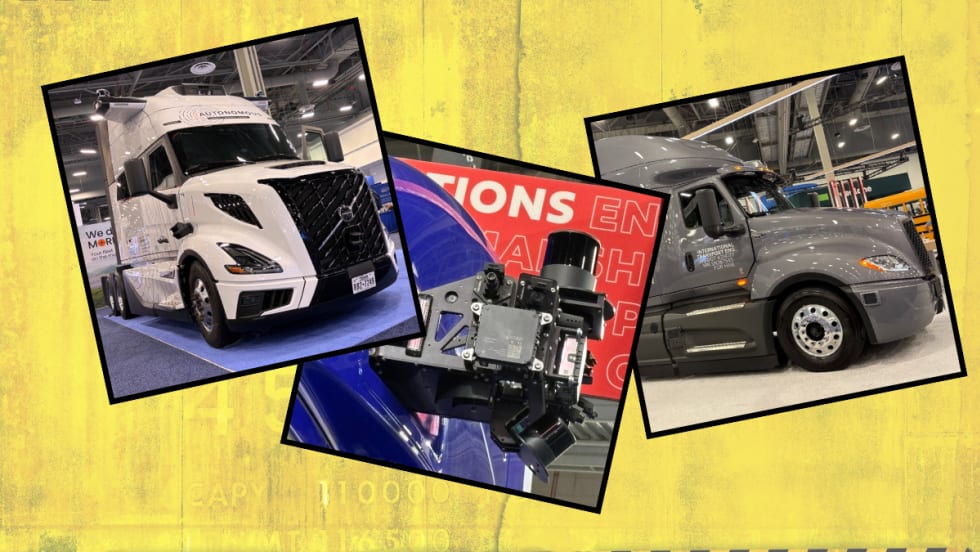
The Biggest Gap in Driverless Trucking Isn’t Tech. It’s Safety Validation
Nauto’s Stefan Heck says autonomous trucks are advancing quickly but proving they’re safe enough for large-scale deployment may be the industry’s hardest challenge.
Read More →
Truck Crash Rates Are Down. So Why Do Insurance Costs Keep Rising?
ATRI’s latest research points to litigation, social inflation, and soaring claims costs as key drivers behind record-high liability premiums for trucking fleets. But there are things motor carriers can do.
Read More →
FMCSA Removes More Than a Dozen ELDs from Registered List
The FMCSA continues its efforts to fight electronic logging devices that don't meet federal requirements, removing more than a dozen from the registered ELD list in May.
Read More →
How the Supreme Court Broker Liability Ruling Could Reshape Trucking’s Safety Landscape
The Supreme Court’s May 11 broker-liability ruling may not radically rewrite transportation law overnight. But industry experts say it will intensify pressure on brokers, carriers, and shippers to prove they are prioritizing safety.
Read More →
Recall of Fontaine Fusion Flatbeds Warns Owners Not to Use the Trailers
Some Fontaine Fusion flatbed trailer manufactured between February 2025, and March 2026 could have mainbeams weakened by hydrogen embrittlement because of a problem in the galvanizing process.
Read More →
Deadline Extended for HDT Truck Fleet Innovators Nominations
Heavy Duty Trucking has extended the deadline for nominations for its Truck Fleet Innovators awards. The deadline has been extended to May 22.
Read More →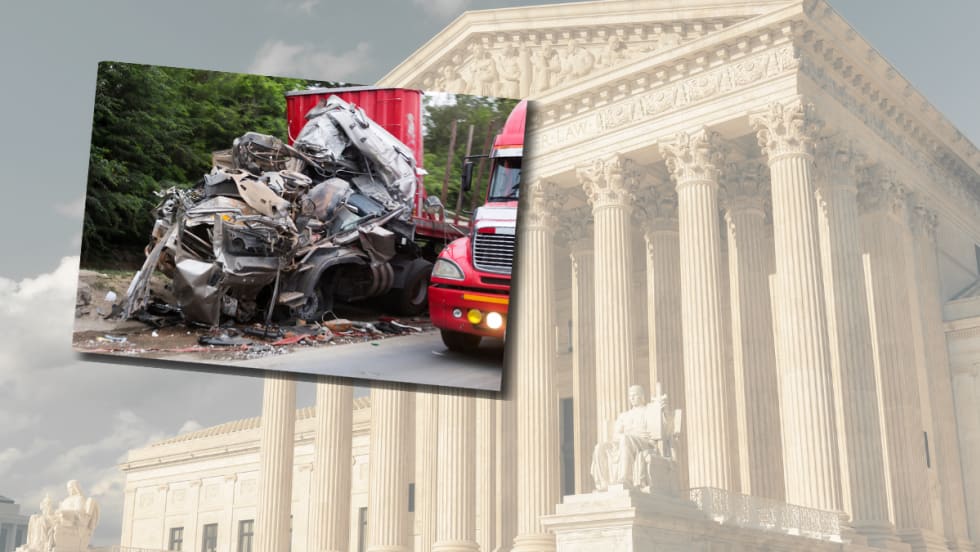
Supreme Court Ruling Puts Freight Broker Vetting Practices in Spotlight
The unanimous SCOTUS ruling in the closely watched Montgomery v. Caribe case allows state negligence claims against freight brokers that hire unsafe motor carriers, raising new liability and vetting concerns among brokers.
Read More →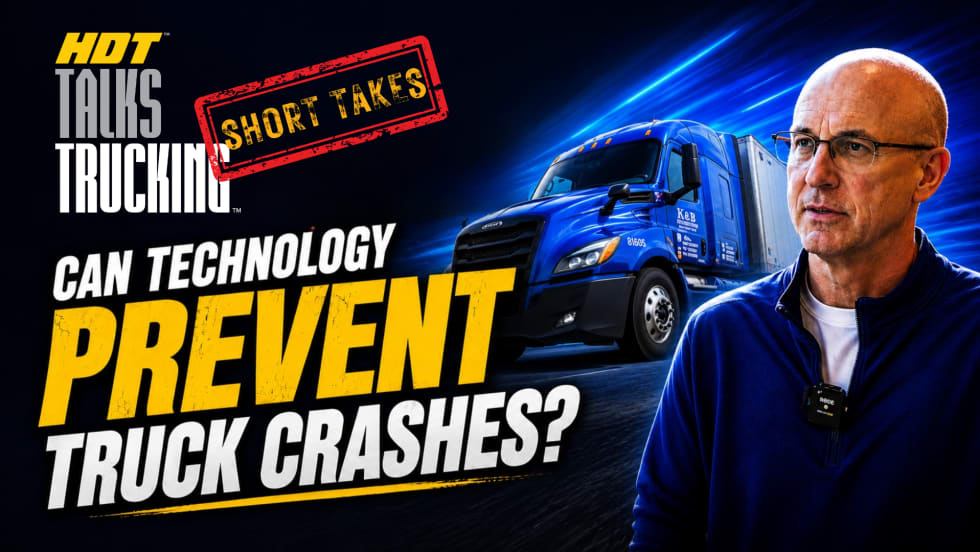
The Truck Safety Tech K&B Transportation Says Is Making a Difference [Watch]
Can technology help prevent truck crashes? In this HDT Talks Trucking Short Takes episode, K&B Transportation explains how it’s using cameras, speed management tools, cellphone-blocking technology, and other systems to improve safety and reduce risk across its fleet.
Read More →