




Volvo Announces CARB-2024 Omnibus Compliant Engine
Volvo Trucks North America has released a CARB 2024 Omnibus compliant heavy-duty diesel engine for fleets working or traveling to California.

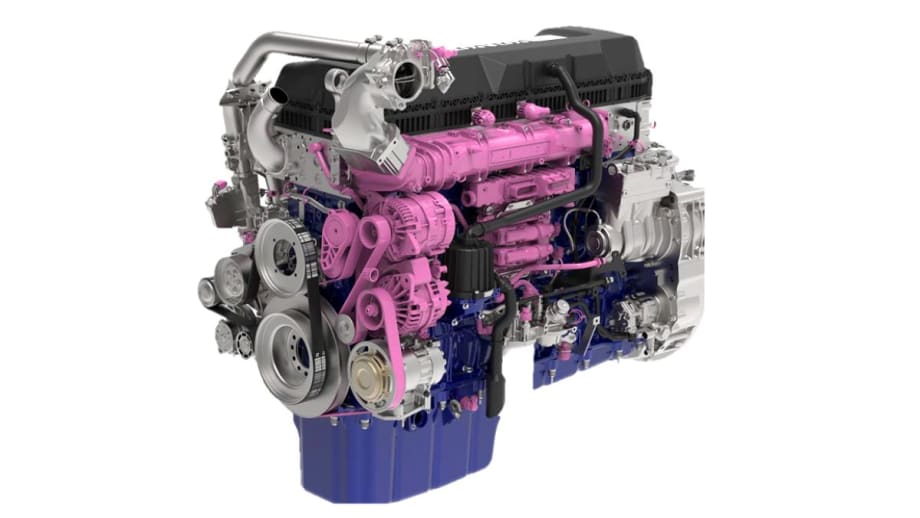
Volvo's CARB 24-compliant engine is available for order now in the VNR and current VNL models with a power rating of 455 HP and 1650 lb.ft. of torque.
Photo: Volvo Trucks North America
Volvo Trucks North America has announced the availability of an engine that meets the California Air Resources Board (CARB) 2024 Omnibus regulation. This CARB rule sets the requirements for low nitrogen oxide (NOx) and particulate matter (PM) emissions standards from diesel engines.
Advanced Emission Control System
The CARB Omnibus regulation mandates a 75% reduction in NOx emissions and a 50% reduction in particulate matter (PM) from heavy-duty on-road engines for engine model years 2024 through 2026 compared to existing U.S. Environmental Protection Agency (EPA) standards.
"To help our customers successfully navigate the complexities of the evolving regulatory landscape, Volvo has developed an engine that meets CARB’s new requirements. Volvo also offers information sessions to help our customers stay up-to-date and empower them to make informed decisions for their businesses,” said Johan Agebrand, director of product marketing, Volvo Trucks North America. “We continue to invest in new powertrain and vehicle technologies that support our sustainability agenda and our commitment to environmental stewardship. Volvo Trucks also continues to lead with the Class 8 Volvo VNR Electric truck and to invest heavily in the development of other zero and near-zero tailpipe emissions technologies.”
Volvo Trucks’ CARB 24-compliant engine features an advanced emission control system integrated with a fully serviceable linear exhaust aftertreatment system (EATS).
Each component, including the diesel oxidation catalyst (DOC), diesel particulate filter (DPF), aftertreatment heater, and selective catalytic reduction (SCR), is designed for individual servicing or replacement.
This approach minimizes waste and maximizes operational lifespan. Additionally, a 48-volt alternator has been incorporated onto the engine to supply power to a 48-volt battery that powers the heater during startup and low-load situations.
Emissions Alignment in 2027
The CARB 24-compliant engine is available for order now in the VNR and current VNL models with a power rating of 455 HP and 1650 lb.ft. of torque.
Fleet operators interested in learning more about the new engine or placing an order can visit their nearest Volvo Trucks dealership, whose staff have been educated on the engine’s performance and capabilities.
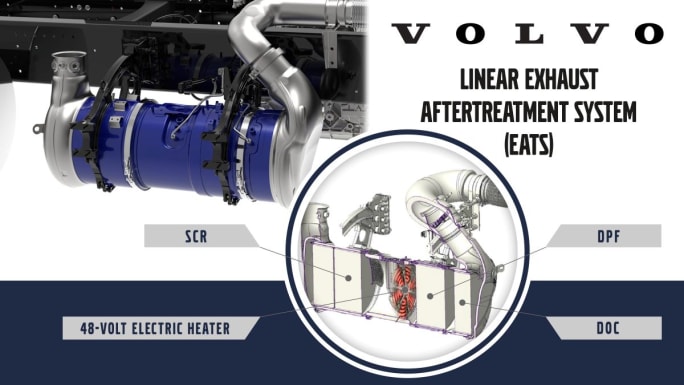
Volvo Trucks’ CARB 24-compliant engine features an advanced emission control system integrated with a fully serviceable linear exhaust aftertreatment system.
Image: Volvo Trucks North America
Customers located in California or that operate primarily in the state must have a completed CARB Certification Form before a vehicle order can be submitted.
As a result of the Clean Truck Partnership, an agreement completed last year between CARB and truck manufacturers, there will now be alignment in all 50 states with federal standards for NOx emissions beginning in 2027.
More Equipment

How Volvo Updated Its D13 for EPA 2027 [Watch]
Volvo’s updated D13 promises lower emissions without sacrificing performance or fuel economy. Take a closer look at what changed inside the engine in this HDT Spotlight video.
Read More →
Michelin Tire Improves Efficiency and Durability for Regional Fleets
The Michelin X Multi Energy D2 is a regional haul drive tire engineered to help fleets improve fuel efficiency, durability and traction in demanding stop-and-go operations.
Read More →
ZF Expands Commercial Vehicle Push in North America
ZF is expanding its North American commercial-vehicle presence with new transmission applications, electrification, trailer technology and autonomous-driving systems.
Read More →
Tesla Wants a Self-Driving Semi. Are Cameras Enough?
Could Tesla’s camera-only autonomous driving technology work on an 80,000-pound Semi? In this commentary, HDT's Deborah Lockridge takes a look at Tesla, Cybercab, and how autonomous trucks see the road.
Read More →
Kodiak: Driverless Long-Haul Truck Launch on Track for 2026
Kodiak AI says its driverless long-haul safety case is 93% complete and it remains on track to begin commercial operations by year-end 2026.
Read More →
What DOT’s Automated Vehicle Strategy Means for Trucking
The U.S. Department of Transportation issued a new automated-vehicle strategy that outlines plans for driverless-truck regulations, cross-state freight corridors, and federal safety standards.
Read More →
East Coast Port Launches $45M Electric Truck Push
The Port Authority of New York and New Jersey announced millions in incentives for zero-emission drayage trucks, yard tractors, and new charging hubs near the port.
Read More →
PlusAI Going Public to Fund Autonomous Truck Launch
A SPAC deal could provide PlusAI with up to $300 million as it works toward a 2027 commercial launch of factory-built autonomous trucks.
Read More →
NHTSA Moves to Rewrite Truck Fuel-Economy Rules
The National Highway Traffic Safety Administration says it lacks authority to regulate medium- and heavy-duty truck engines separately from complete vehicles, but the existing standards have not yet been eliminated.
Read More →
Detroit Opens Orders for EPA 2027 Engines
Detroit isn’t starting from scratch to meet EPA 2027 diesel emissions standards. Its Gen 6 DD13 and DD15 engines keep much of today’s platform while updating the fuel and aftertreatment systems.
Read More →