




New TMS Designed for Tanker Fleets
TrueLiquid is billed as an affordable, modern, cloud-based transportation management system designed specifically for tanker fleets.

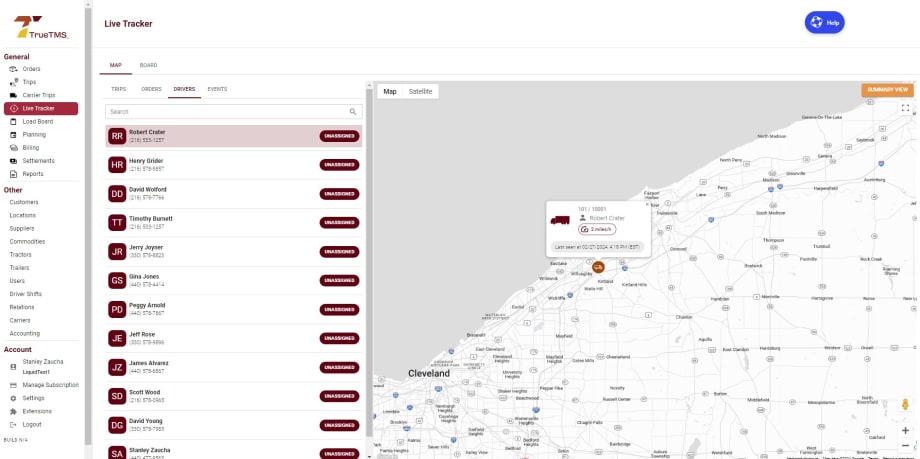
TrueLiquid TMS has a mobile driver app and pre-built integrations with ELD and telematics systems for real-time tracking of driver availability, equipment locations, and shipment status.
Photo: TrueTMS
TrueTMS has launched TrueLiquid, an affordable, modern, cloud-based transportation management system designed specifically for tanker fleets.
Developed by a team of experts and advised by experienced liquid carriers, TrueLiquid aims to fill a gap in the industry with a custom platform tailored to the unique needs of liquid haulers, helping them improve safety, efficiency, and profitability.
Liquid bulk transportation is a $52 billion global industry that spans fuels, chemicals, food-grade products, and more. TrueLiquid plans to introduce never-before-seen features for managing every step of shipping bulk liquids. The platform will equip tank haulers with tools for solving load planning challenges, tracking shipments, and preventing cargo cross-contamination.
“Our team recognized a significant void in the industry and set out to build a custom solution that solves the distinct challenges tanker fleets face,” said George Thellman, director of business development and strategic relationships at TrueTMS. “While TrueLiquid is still evolving, we're excited to begin rolling out this revolutionary platform and have big plans for its future.”

TrueLiquid TMS gives load planners and dispatchers a Gantt-style view of driver schedules to assist with scheduling appointments and maximizing productivity.
Photo: TrueTMS
Key Benefits of TrueLiquid TMS
According to TrueTMS, key benefits of the TrueLiquid TMS include:
Interactive trailer diagrams that assist with accurate load planning to meet order requirements for volume, commodity, and compartment requirements.
All-inclusive fleet management to operate tanker equipment alongside flatbed, van, reefer, and other assets on a single platform.
Integrations with ELD systems for real-time tracking of driver availability and shipment status.
A customer portal to automate order entry, track-and-trace, and other routine communications.
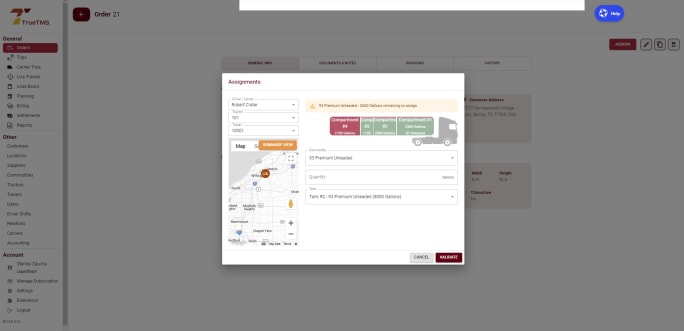
TrueLiquid TMS has interactive trailer diagrams that assist with accurate load planning to meet order requirements for volume, commodity, and compartment requirements.
Photo: TrueTMS
The new platform also expedites the flow of data and documents to track demurrage and accessorial charges and streamline other accounting and compliance tasks. Customers can view documents for each order, such as bills of lading and scale tickets, immediately online after drivers capture scanned documents with a TrueLiquid app.
With a cloud-based SaaS architecture, TrueLiquid ensures regular deliveries of new features and upgrades. TrueLiquid comes with 24/7 support and is affordably priced via a monthly subscription, according to th ecompany. As the platform continues to evolve, TrueTMS said it will work closely with industry experts to refine and expand its capabilities.
More Fleet Management

Color Match Smarter: Tools That Restore & Perform
For fleet managers and collision repair professionals keeping heavy-duty trucks on the road, getting the color right the first time isn't just about appearance — it's about efficiency, turnaround time, and bottom-line results. Discover how today's digital color tools are transforming the repair process from guesswork to precision.
Read More →
FMCSA Pauses Biennial-Update Enforcement Amid Motus Transition
Carriers whose updates were due on or after June 1 have more time, while FMCSA works to stabilize its new registration system and warns of phishing sites impersonating its new carrier registration system, Motus.
Read More →
2026 Blueprint for Countering Smarter Supply Chain Theft
Cargo theft is no longer just the cost of doing business. It's a multi-billion-dollar criminal enterprise exploiting vulnerabilities across your fleet, drivers, and supply chain.
Read More →


How Telematics Improves Visibility, Control, and Performance in Refrigerated Fleets
Explore how telematics help refrigerated fleets improve visibility, uptime, efficiency, compliance, and cargo protection across connected cold chain operations.
Read More →
What the U.S.-Canada Trade War Means for Trucking
Escalating U.S.-Canada tariffs could disrupt cross-border freight, reduce truck volumes, raise costs, and create new uncertainty for carriers on both sides of the border.
Read More →
What Are Trucking’s Top Concerns for 2026?
The American Transportation Research Institute wants to know what's worrying trucking fleet managers, drivers, and other stakeholders in its annual Industry Issues survey.
Read More →
American Trucking Associations Looks for a New Leader
ATA President and CEO Chris Spear abruptly left his job at the association on August 21, at a pivotal time for the trucking industry.
Read More →
Public Wi-Fi Cybersecurity Risks: How Truck Drivers and Fleets Can Protect Their Data
Public Wi-Fi can expose truck drivers and fleets to credential theft, malware, and other cyber threats. Here’s how to reduce the risk on the road.
Read More →
For Nicky Cupp, Fleet Innovation Starts With Frustration
HDT Truck Fleet Innovator Nicky Cupp turns everyday pain points at Fraley & Schilling into opportunities for better technology and smarter processes.
Read More →
Adam Buttgenbach’s Approach to Electric Trucks: Start With Where They Fit
HDT Truck Fleet Innovator Adam Buttgenbach helped PepsiCo build one of North America’s largest EV fleets by focusing on where electric trucks make operational sense.
Read More →