




Continental Adds Valve Cap Sensor for Tire Monitoring
Continental has added new tire pressure monitoring capabilities with the launch of a valve cap sensor that communicates with the company’s existing telematics platforms.

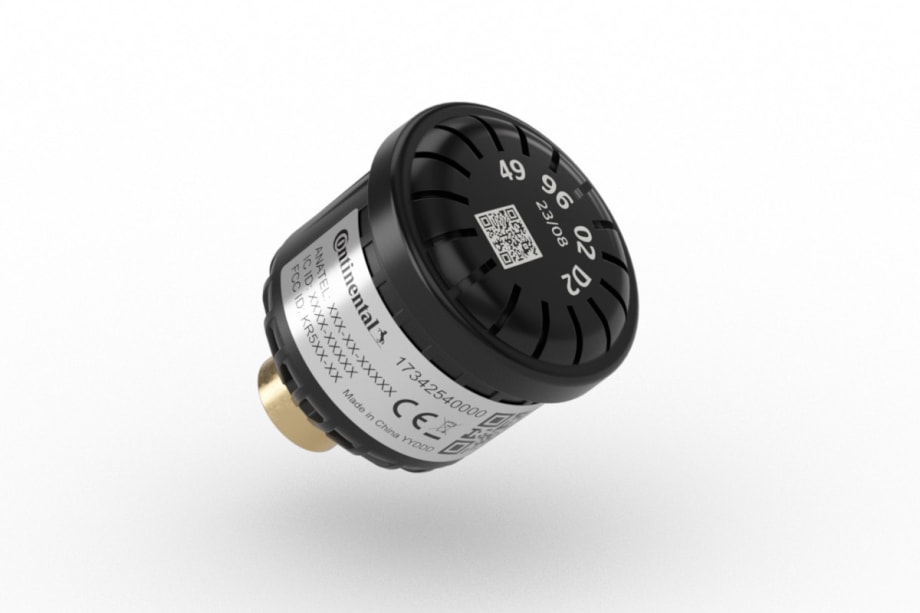
The valve cap sensor works with the ContiConnect platform and has a battery lifespan of 2.5 years.
Photo: Continental Tire
Tire and automotive technology supplier Continental has added a valve cap sensor to its lineup of Digital Tire Monitoring products and services.
This sensor works with all of Continental’s digital tire monitoring solutions products including:
ContiConnect Live Truck and Trailer
ContiConnect Yard
ContiPressureCheck
Continental said installation of the sensor requires minimal downtime on the vehicle as there is no requirement to dismount and remount tires. This makes it easy to upfit any commercial vehicle and fleet of any size in a short amount of time, the company explained.
The valve cap sensor was planned and rolled out by Continental to also offer an easy path towards an integration of what it calls a more robust tire-mounted sensor.
Benefits of Digital Tire Monitoring
One of the most effective ways commercial vehicle fleets can reduce costs is by monitoring their tires, said Continental, adding that tires can influence up to 53% of the fleet’s overall operating costs.
With Continental’s Digital Tire Monitoring System, a fleet can monitor the health of its tires through two different types of sensors that communicate with ContiConnect’s online platform via connected devices on the truck, trailer, yard reader, or the Continental On-Site phone app.
Valve Cap Sensors
The valve cap sensor is an external sensor that replaces the valve cap. This sensor is a quick and efficient way to upfit a large fleet with limited downtime. The sensor relays tire pressure readings for all Continental digital tire monitoring solutions.
The valve cap sensor has a low-battery indication on the ContiConnect platform and has a battery lifespan of 2.5 years.
Continental said the sensor was developed to provide fleets with a quick solution to begin monitoring their tire’s health. If a tire needs to be replaced on the road, the valve cap sensor also allows fleets to continue monitoring their new tires’ status before installing the tire-mounted sensor again when convenient.
Tire-Mounted Sensors

Tire-mounted sensors provide more data than the valve cap sensors
Photo: Continental Tire
The second type of sensor is a tire-mounted one. These sensors are mounted directly onto the inside of the tire and provide more data than the valve cap sensors. Tire-mounted sensors can relay tire pressure and compensated tire pressure, temperature, and individual tire mileage.
Tire-mounted sensors have a 4-year lifespan and a battery indicator on the ContiConnect platform that can relay to a fleet when the battery is low.
Related: Here’s How Continental Tests Tires at its Uvalde Proving Grounds
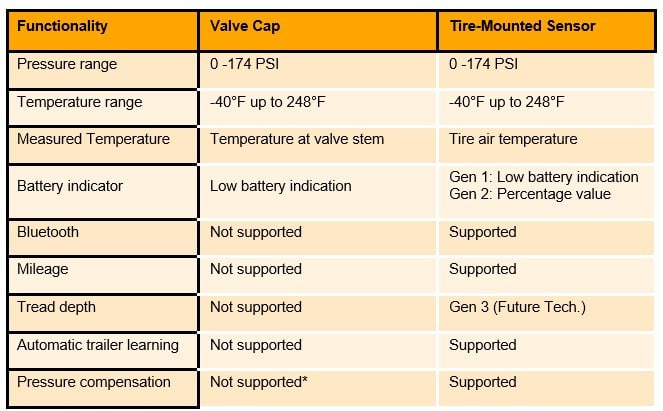
This chart, provided by Continental, compares the capabilities of the two different tire sensors.
Source: Continental Tire
More Equipment

How Volvo Updated Its D13 for EPA 2027 [Watch]
Volvo’s updated D13 promises lower emissions without sacrificing performance or fuel economy. Take a closer look at what changed inside the engine in this HDT Spotlight video.
Read More →
Michelin Tire Improves Efficiency and Durability for Regional Fleets
The Michelin X Multi Energy D2 is a regional haul drive tire engineered to help fleets improve fuel efficiency, durability and traction in demanding stop-and-go operations.
Read More →
ZF Expands Commercial Vehicle Push in North America
ZF is expanding its North American commercial-vehicle presence with new transmission applications, electrification, trailer technology and autonomous-driving systems.
Read More →
Tesla Wants a Self-Driving Semi. Are Cameras Enough?
Could Tesla’s camera-only autonomous driving technology work on an 80,000-pound Semi? In this commentary, HDT's Deborah Lockridge takes a look at Tesla, Cybercab, and how autonomous trucks see the road.
Read More →
Kodiak: Driverless Long-Haul Truck Launch on Track for 2026
Kodiak AI says its driverless long-haul safety case is 93% complete and it remains on track to begin commercial operations by year-end 2026.
Read More →
What DOT’s Automated Vehicle Strategy Means for Trucking
The U.S. Department of Transportation issued a new automated-vehicle strategy that outlines plans for driverless-truck regulations, cross-state freight corridors, and federal safety standards.
Read More →
East Coast Port Launches $45M Electric Truck Push
The Port Authority of New York and New Jersey announced millions in incentives for zero-emission drayage trucks, yard tractors, and new charging hubs near the port.
Read More →
PlusAI Going Public to Fund Autonomous Truck Launch
A SPAC deal could provide PlusAI with up to $300 million as it works toward a 2027 commercial launch of factory-built autonomous trucks.
Read More →
NHTSA Moves to Rewrite Truck Fuel-Economy Rules
The National Highway Traffic Safety Administration says it lacks authority to regulate medium- and heavy-duty truck engines separately from complete vehicles, but the existing standards have not yet been eliminated.
Read More →
Detroit Opens Orders for EPA 2027 Engines
Detroit isn’t starting from scratch to meet EPA 2027 diesel emissions standards. Its Gen 6 DD13 and DD15 engines keep much of today’s platform while updating the fuel and aftertreatment systems.
Read More →