





Schneider, CPKC to Offer 'Truck-Competitive' Intermodal from Mexico
What Does the Canadian Pacific-KC Southern Rail Merger Mean for Trucking?
Canadian Pacific and Kansas City Southern have combined to create a railway connecting Canada, the U.S., and Mexico. How much competition will that mean for trucking?
April 14, 2023

CPKC said the new rail capabilities will divert 64,000 long-haul truck shipments to rail annually.
Photo: CPKCR
4 min to read
Canadian Pacific and Kansas City Southern have combined to create Canadian Pacific Kansas City, creating the first single-line railway connecting Canada, the U.S., and Mexico. How much competition will that mean for trucking?
CPKC President and CEO Keith Creel said the move will “bring new competition into the North American rail industry at a time when our supply chains have never needed it more… [and] take trucks off public roads.”
In fact, the company said diverting 64,000 long-haul truck shipments to rail annually with new CPKC intermodal services will save 300,000 tons of GHG emissions in the next five years, as well as lowering highway maintenance costs. The new company anticipated it will reduce total truck vehicle miles traveled by almost 2 billion miles over the next two decades.
Avery Vise, vice president of transportation for freight intelligence firm FTR, expressed some skepticism about those truck numbers.
“The Surface Transportation Board touted the removal of 64,000 truckloads from the road each year and resulting benefits for the environment, highway safety, and congestion,” Vise said.
Todd Tranausky, FTR’s vice president of rail and intermodal, noted that the long seven-year oversight period of the merger will be keeping a close eye on whether the rail company can live up to its environmental promises.
'All Things Being Equal,' But...
Vise said that “all things being equal, there certainly will be some diversion — but things often are not equal. “
He pointed out that the rail industry has struggled with service levels in recent years, although it has improved considerably this year.
“Market dynamics are another major factor. Due to service and transit times, intermodal tends to be less competitive when trucking capacity and rates are favorable for shippers as they are now. That means that the merger probably will not have as much effect now as it will the next time we see an upturn in trucking.”
However, Vise said, one area where we could see more competition in the near term is in temperature-controlled intermodal shipments, which is one of the areas of focus for Canadian Pacific and Kansas City Southern. In fact, Tranausky pointed out that the first service they will offer is cross-border perishable transport.
“Even if we see a significant diversion of truck traffic to intermodal, a net decrease in truck transportation is not a given,” Vise said. “Arguably, a more efficient transportation network between the U.S. and Mexico bolsters ongoing moves toward nearshoring. If that proves to be the case, the resulting gain in overall commerce between the two countries could mean more transportation for both rail and trucking.”
In U.S. trade with Mexico, trucking is the dominant mode carrying 35% of freight weight in 2020, the most recent government figures. Substantial foreign direct investment in Mexico in 2022, particularly from the nearshoring of U.S. companies, will likely mean an increase in cross-border trade flows, with trucking continuing its modal dominance, the Transportation Statistics Annual Report explains.
This will likely mean a shifting of freight flows from U.S. coastal ports to the U.S.-Mexico border.
Laredo, Texas, and Detroit, Michigan, were the third and eighth largest U.S. gateways in terms of freight value in 2020, with trucks representing 22% and 36% of total freight trade in Canada and Mexico, respectively.
About the CP-KCS Deal
CP completed its $31 billion acquisition of KCS in late 2021, which was approved by federal regulators on March 15.
With its global headquarters in Calgary, Alberta, Canada, CPKC is the only railway connecting North America, according to the announcement, and has port access on coasts around the continent.
While remaining the smallest of six U.S. Class 1 railroads by revenue, the new combined company has a much larger and more competitive network, operating approximately 20,000 miles of rail, and employing close to 20,000 people. Full integration of CP and KCS is expected to take place over the next three years, unlocking the benefits of the combination.
CPKC plans capital investments in new infrastructure of more than $275 million over the next three years to improve rail safety and the capacity of the core north-south CPKC main line between the U.S. Upper Midwest and Louisiana.
CPKC will also support the expansion of Amtrak and other passenger services on the CPKC network.
More Fleet Management
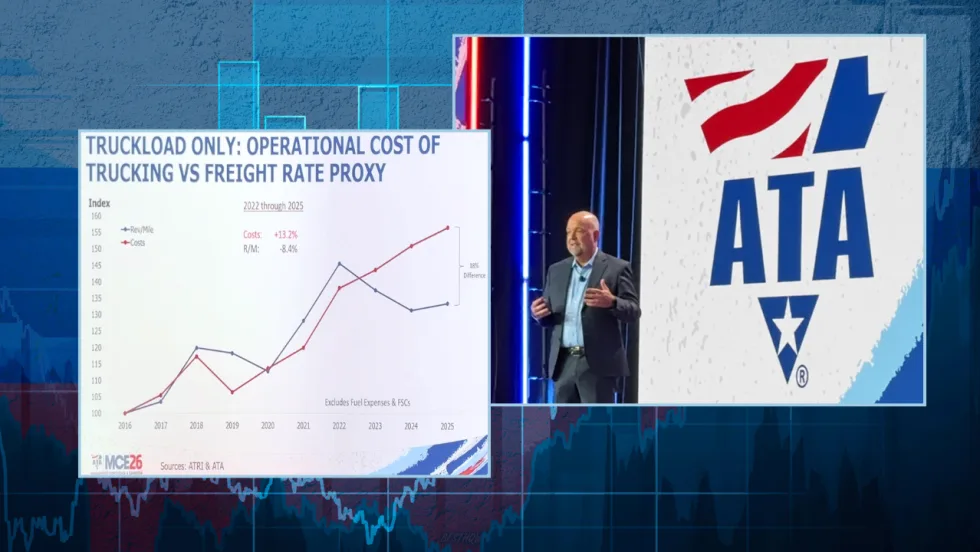
Why This Trucking Recovery Is Different
Freight demand remains sluggish, but rising costs and tougher enforcement have taken enough capacity out of the market to change the outlook for motor carriers.
Read More →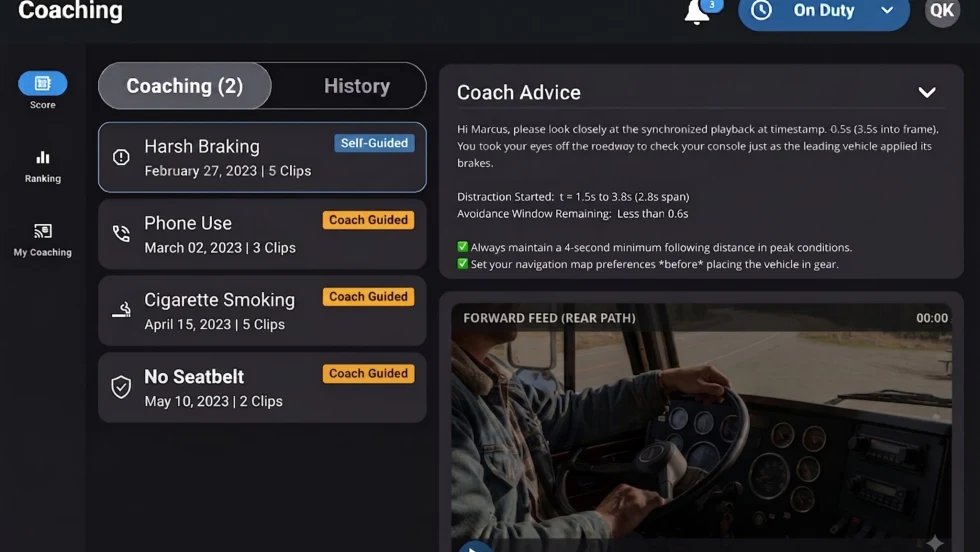
Platform Science Adds Dispatch and Safety Tools
Four additions to PS Fleet help fleets monitor loads, manage driver coaching, share truck locations and adjust video system settings.
Read More →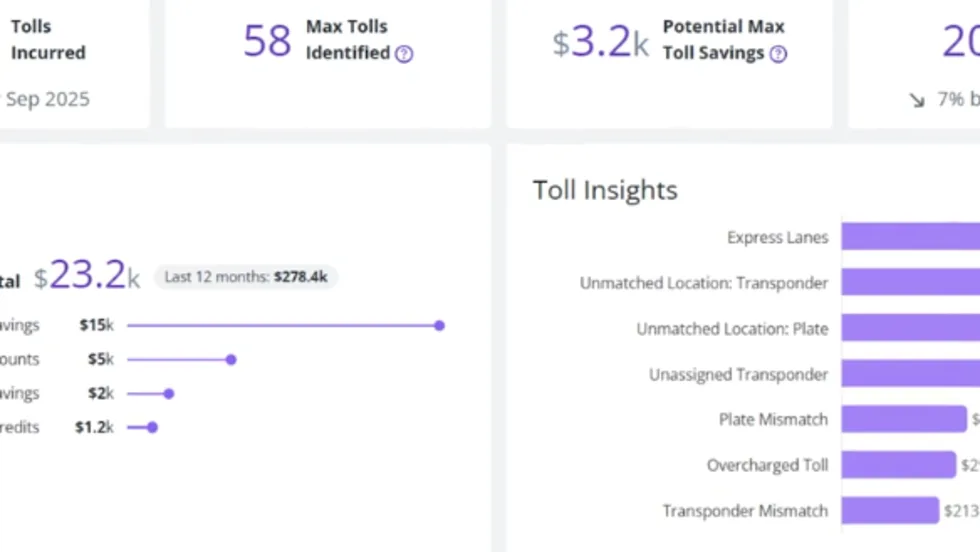
PrePass Intelligence Mines Fleet Bypass, Toll and Safety Data
PrePass Intelligence helps fleets measure bypass savings, flag potential toll overcharges, and spot suspicious transactions by combining data from separate systems.
Read More →
Motive Adds AI Agents for Fleet Operations
New tools automate follow-up on fleet data, from maintenance work orders to driver alerts, with two-way voice conversations planned for later this year.
Read More →
Can You Beat Our Trucking Trivia Challenge?
Test your truck knowledge with 19 trivia questions from Heavy Duty Trucking Exchange. Can you keep up with the fleet pros?
Read More →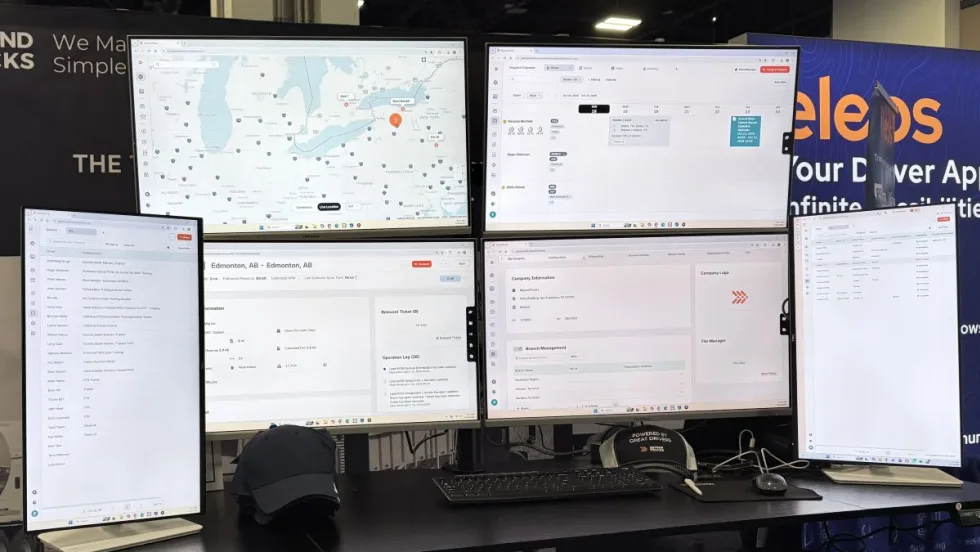
BeyondTrucks Adds Rules Checks to Dispatch
New Compatibility Engine checks driver qualifications, equipment requirements and fleet policies before loads are dispatched.
Read More →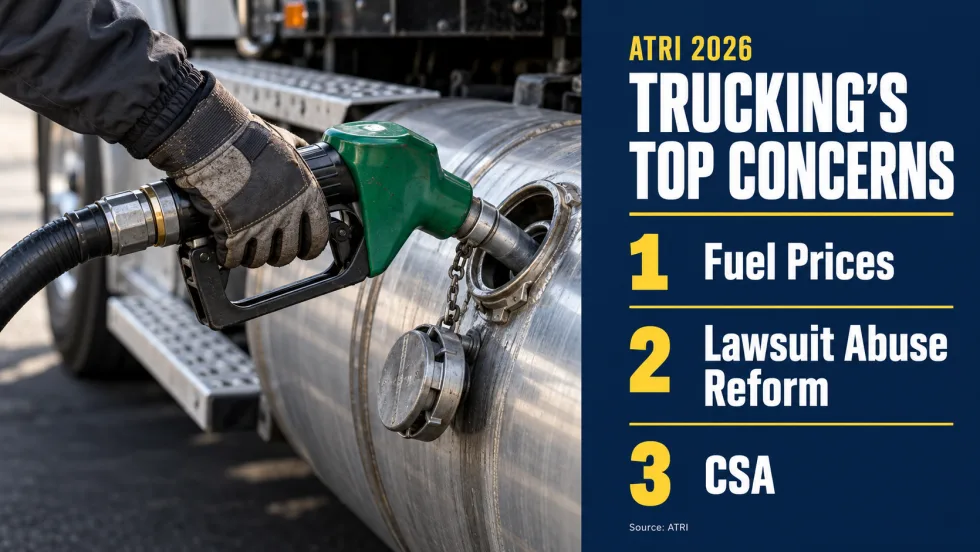
Diesel Prices Hijack Trucking’s Worry List
ATRI’s annual survey finds cautious optimism about freight, but diesel costs, litigation, and insurance continue to squeeze fleets. Drivers have different priorities on several issues.
Read More →
Nomination Deadline Extended for HDT Emerging Leaders
Just a few more days to nominate accomplished trucking fleet professionals under 40 who are making an impact and helping lead the industry forward for the HDT Emerging Leaders award. Deadline extended to October 20!
Read More →
What Will ATA’s New Leader Bring to Trucking's Table?
Incoming President and CEO Mark Colson’s record in Alabama offers clues about his priorities and approach following Chris Spear’s abrupt departure as the head of the American Trucking Associations.
Read More →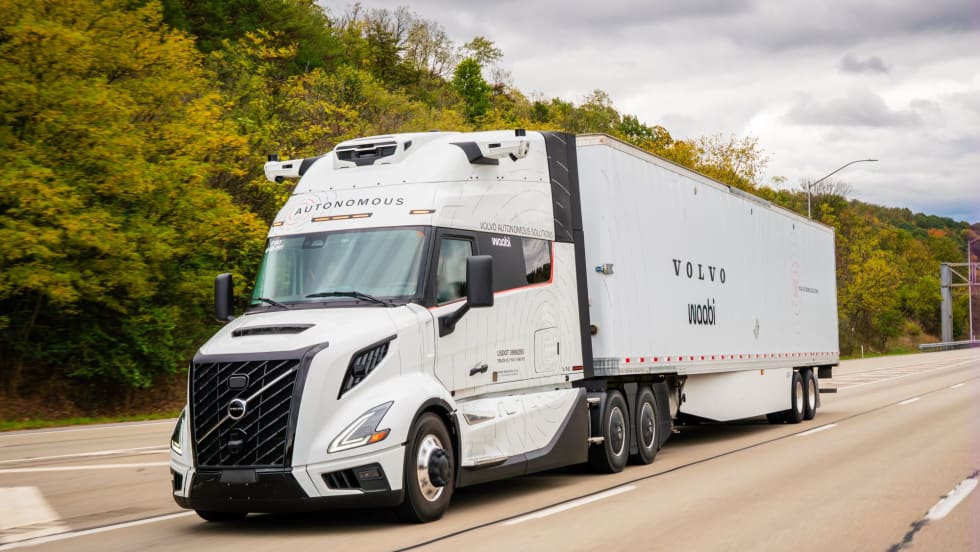
Volvo, Waabi Start Commercial Autonomous Operations in Texas
Volvo VNL Autonomous trucks, powered by the Waabi Driver, are hauling freight directly to third-party facilities for a customer in Texas.
Read More →