




WattEV to Build Electric-Truck Charging Stations at Port of Long Beach
A new truck-charging station at the Port of Long Beach represents the southern anchor of WattEV's Electric Highway, serving heavy transport corridors in Southern California as well as northbound freight through the San Joaquin Valley.
May 11, 2022

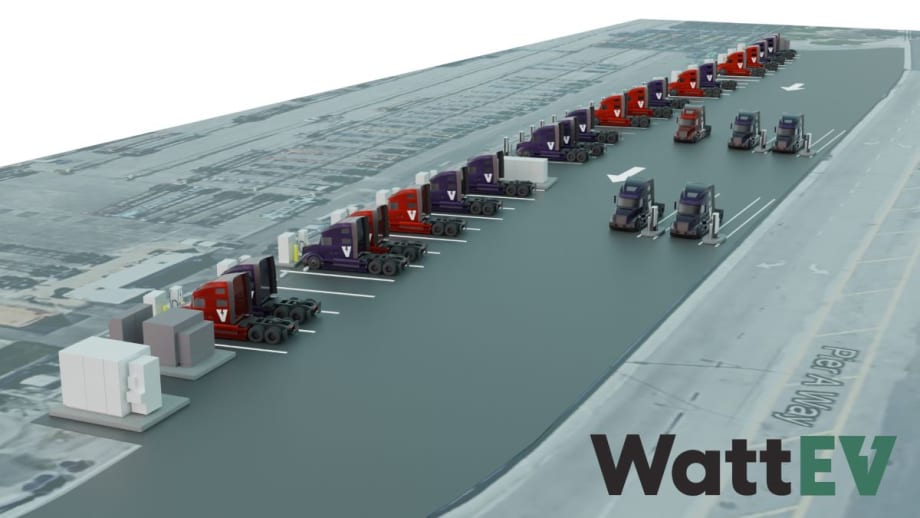
WattEV has set a goal of putting 12,000 electric heavy-duty trucks on the road with a supporting infrastructure by 2030. To that end, WattEV is actively building additional electric truck charging stations in Bakersfield, Gardena, San Bernardino, and Sacramento.
Rendering: WattEV
2 min to read
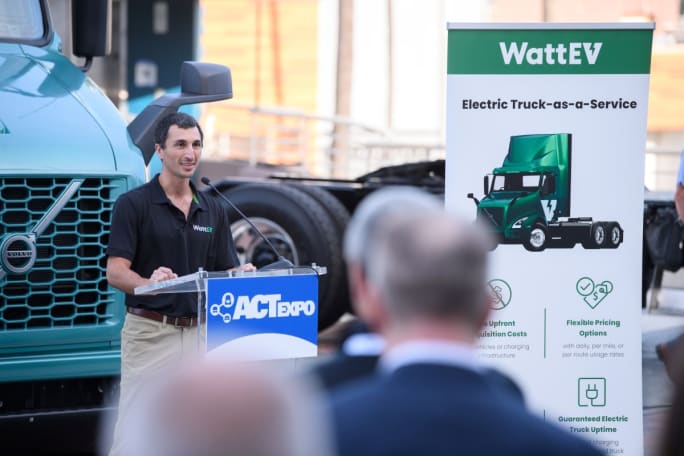
Photo: GNA/ACT Expo
WattEV and the Port of Long Beach announced plans to build a charging plaza for heavy-duty electric trucks inside the port complex.
“This project is an exciting opportunity in WattEV’s near-term plans to build an electric-truck charging ‘highway’ from the Port of Long Beach to Sacramento by the end of 2023,” said Salim Youssefzadeh, chief executive officer of WattEV in a news release. The news was announced during the annual Advanced Clean Transportation (ACT) Expo at the Long Beach Convention Center.
WattEV’s POLB e-truck charging plaza will feature 26 charging bays using Combined Charging System (CCS) connectors to provide power at up to 360 kilowatts. The CCS system is the current charging standard for heavy-duty e-trucks, while faster charging systems are under development. Eight more e-truck bays are planned at the POLB charging plaza, featuring the faster Megawatt Charging System (MCS), rated for charging at up to 1.2 megawatts.
The charging facility will serve WattEV’s fleet of electric trucks, which it operates as a truck-as-a-service model, as well other carriers committed to electrifying trucking operations to and from the combined ports of Long Beach and Los Angeles. Combined, the two ports receive some 40% of the nation’s imported goods. They have 20,000 trucks in their registries using internal-combustion engines, more than 25% of which are older than 10 years. Both ports have been setting clean air goals for nearly two decades.
“WattEV’s electric charging facility at the Port of Long Beach would be a major step towards encouraging transporters to transition to zero-emission trucking,” added Youssefzadeh. “This charging station represents the southern anchor of our ‘Electric Highway,’ serving heavy transport corridors in Southern California as well as northbound freight through the San Joaquin Valley. Sacramento is the northern anchor for our infrastructure development. We’re planning two more e-truck charging plazas between there and Long Beach."
"WattEV’s charging plaza – located on Pier A Way in one of the port’s main area of operations – would serve as visible testimony to the Port of Long Beach’s commitment to electric mobility and clean air," said Port of Long Beach Executive Director Mario Cordero. “Our Clean Air Action Plan calls for bold, aggressive measures to reduce port emissions and their impact on neighboring communities without sacrificing economic efficiency and jobs. Our quest is not about ‘reducing’ emissions, but about ‘eliminating’ emissions. Projects such as this are an important part of the Port of Long Beach achieving its clean-air goals and honors our commitment to be a good neighbor and environmental steward.”
More Fleet Management

Sponsored•September 16, 2026
Color Match Smarter: Tools That Restore & Perform
For fleet managers and collision repair professionals keeping heavy-duty trucks on the road, getting the color right the first time isn't just about appearance — it's about efficiency, turnaround time, and bottom-line results. Discover how today's digital color tools are transforming the repair process from guesswork to precision.
Read More →
FMCSA Pauses Biennial-Update Enforcement Amid Motus Transition
Carriers whose updates were due on or after June 1 have more time, while FMCSA works to stabilize its new registration system and warns of phishing sites impersonating its new carrier registration system, Motus.
Read More →
Sponsored•September 14, 2026
2026 Blueprint for Countering Smarter Supply Chain Theft
Cargo theft is no longer just the cost of doing business. It's a multi-billion-dollar criminal enterprise exploiting vulnerabilities across your fleet, drivers, and supply chain.
Read More →


Sponsored•September 1, 2026
How Telematics Improves Visibility, Control, and Performance in Refrigerated Fleets
Explore how telematics help refrigerated fleets improve visibility, uptime, efficiency, compliance, and cargo protection across connected cold chain operations.
Read More →
What the U.S.-Canada Trade War Means for Trucking
Escalating U.S.-Canada tariffs could disrupt cross-border freight, reduce truck volumes, raise costs, and create new uncertainty for carriers on both sides of the border.
Read More →
What Are Trucking’s Top Concerns for 2026?
The American Transportation Research Institute wants to know what's worrying trucking fleet managers, drivers, and other stakeholders in its annual Industry Issues survey.
Read More →
American Trucking Associations Looks for a New Leader
ATA President and CEO Chris Spear abruptly left his job at the association on August 21, at a pivotal time for the trucking industry.
Read More →
Public Wi-Fi Cybersecurity Risks: How Truck Drivers and Fleets Can Protect Their Data
Public Wi-Fi can expose truck drivers and fleets to credential theft, malware, and other cyber threats. Here’s how to reduce the risk on the road.
Read More →
For Nicky Cupp, Fleet Innovation Starts With Frustration
HDT Truck Fleet Innovator Nicky Cupp turns everyday pain points at Fraley & Schilling into opportunities for better technology and smarter processes.
Read More →
Adam Buttgenbach’s Approach to Electric Trucks: Start With Where They Fit
HDT Truck Fleet Innovator Adam Buttgenbach helped PepsiCo build one of North America’s largest EV fleets by focusing on where electric trucks make operational sense.
Read More →