





ACT: Third of Class 4-8 Vehicles to be Battery-Electric in 10 Years
Trova to Offer Electric-Powertrain Conversions for Heavy Trucks
One company says it has a heavy-duty truck electrification solution that allows truck owners to replace their existing diesel powertrains with electric.
June 7, 2021
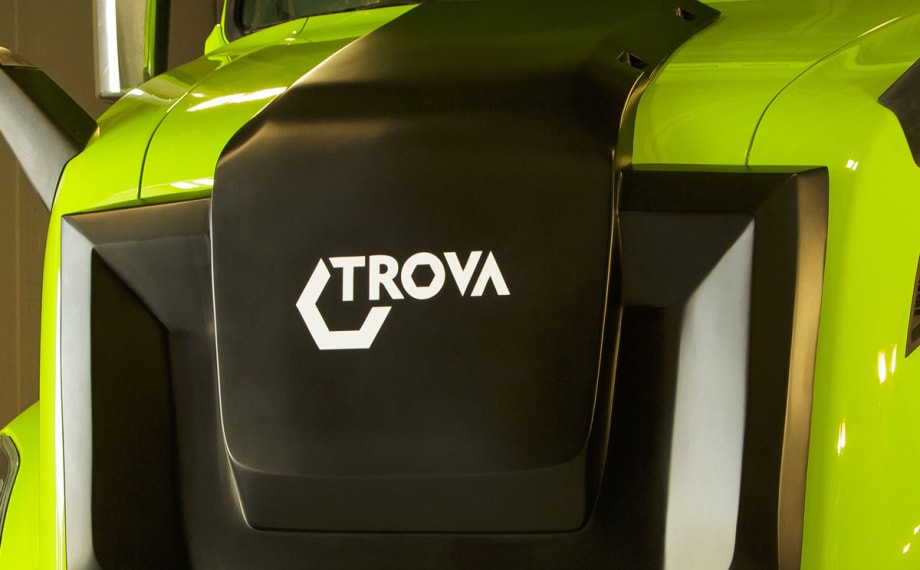
Trova plans to use a reverse-glider-kit approach to electrification of heavy-duty trucks.
Photo: Trova
2 min to read
One company says it has a heavy-duty truck electrification solution that allows truck owners to replace their existing diesel powertrains with electric.
Trova Commercial Vehicles said it is developing a unique diesel-to-electric driveline-conversion program for existing Class 7 and 8 diesel trucks, using what is essentially the reverse of a glider kit approach.
“Over the past year, we’ve developed our rolling chassis as a ‘skateboard’ solution for converting existing heavy-duty trucks to electric power at a much lower cost than buying a new EV,” says Patrick Collignon, TrovaCV founder and CEO. “Our D2E package combines the latest electric driveline technology with a completely new chassis thoughtfully designed from the ground up specifically for EV components. Also, our conversion process is being engineered to deliver rapid volume production, rather than the slow build of a typical mom-and-pop converter.”
Each conversion will ride on TrovaCV’s new proprietary rolling chassis, which is purpose-built to accommodate battery-electric driveline components. It allows the truck’s battery packs to be packaged within the chassis rails. Central mounting increases battery-pack durability compared to side-rail mounting, helps improve vehicle stability, and increases the safety of the batteries and vehicle in major side-impact crashes, according to the company.
TrovaCV D2E conversions will be “industrialized” in a factory-type setting to ensure quality production and short lead times. Prior to the arrival of the original truck, the new rolling chassis will be equipped with a new electric driveline. Once the truck is cleaned and all liquids have been drained, then the bumper, hood, and cab will be removed and prepped for reassembly. Next, the original axles, fifth wheel, and brake system from the existing truck will be transferred onto the new chassis. Then the cab, hood, and bumper will be reassembled.
TrovaCV is developing a prototype vehicle and engineering processes for the conversion program, with rollout planned in late 2022.
The environmental benefits of the TrovaCV D2E Program extend to putting the recovered components, such as the diesel engine, transmission, and cooling module, into a reman process to extend their life cycles. In addition, the old chassis will be reconditioned and reused if possible; otherwise it will be recycled.
“It is simply not possible to reach lofty zero emission targets without transforming existing diesel trucks in one way or another,” explains Collignon, the former chief operating officer for Volvo Trucks North and South America who founded Trova.
The start-up has attracted former Volvo/Mack executives. Denny Slagle, who retired as executive vice president of Volvo Group and president of Mack Trucks in 2018, is senior advisor. Susan Alt, who retired as Volvo Group senior vice president of public affairs in 2019, recently joined the Trova advisory board.
More Fuel Smarts

How Volvo Updated Its D13 for EPA 2027 [Watch]
Volvo’s updated D13 promises lower emissions without sacrificing performance or fuel economy. Take a closer look at what changed inside the engine in this HDT Spotlight video.
Read More →
Diesel Price Spike Shortens Payback for Natural Gas Trucks, Report Says
Energy Vision estimates fleets could recover the higher purchase price of an RNG-fueled Class 8 tractor in 1.3 to 2.8 years under current fuel-price scenarios.
Read More →
Calstart Becomes Catalyst Mobility, Reflecting Broader Focus
Calstart is now Catalyst Mobility, reflecting the nonprofit’s growing national role in clean transportation, including zero-emission trucks, infrastructure and incentive programs.
Read More →

Record Diesel Prices Squeeze Trucking Fleets
Average U.S. diesel prices have climbed to nearly $6 a gallon, surpassing the 2022 record as tight refinery capacity and Middle East disruptions keep fuel costs elevated.
Read More →
Sponsored•September 9, 2026
How Fuel Delivery Shapes Engine Performance
Fuel delivery depends on more than what happens at the injector. For fleet, maintenance and technical professionals, looking at the full path from pump to injector can provide useful context for understanding engine performance.
Read More →
East Coast Port Launches $45M Electric Truck Push
The Port Authority of New York and New Jersey announced millions in incentives for zero-emission drayage trucks, yard tractors, and new charging hubs near the port.
Read More →
California Bill Could Shed Light on Electric Truck Prices
Why do battery-electric Class 8 trucks remain so expensive? A California bill headed to Gov. Gavin Newsom would give fleets and state agencies more visibility into what manufacturers charge.
Read More →
Detroit Opens Orders for EPA 2027 Engines
Detroit isn’t starting from scratch to meet EPA 2027 diesel emissions standards. Its Gen 6 DD13 and DD15 engines keep much of today’s platform while updating the fuel and aftertreatment systems.
Read More →
Zero-Emission Truck Corridor Planned for West Coast
California, Oregon, Washington, British Columbia and Baja California are coordinating plans for truck charging and hydrogen fueling from Canada to Mexico.
Read More →
A Closer Look at Kenworth’s Electric T880E Vocational Truck [Video]
Learn more about Kenworth's T880E battery-electric vocational truck at the Paccar Technical Center, including its range, applications, upfitting considerations, and PTO options, in this HDT Spotlight video.
Read More →