





You also may like: Allison Brings Real-World Testing into the Lab
Allison Transmission Launches Electric Truck Axles
Allison Transmission has launched eGen Power, its new series of fully integrated zero-emission electric axles, starting with the 100D for heavy-duty trucks.
October 6, 2020
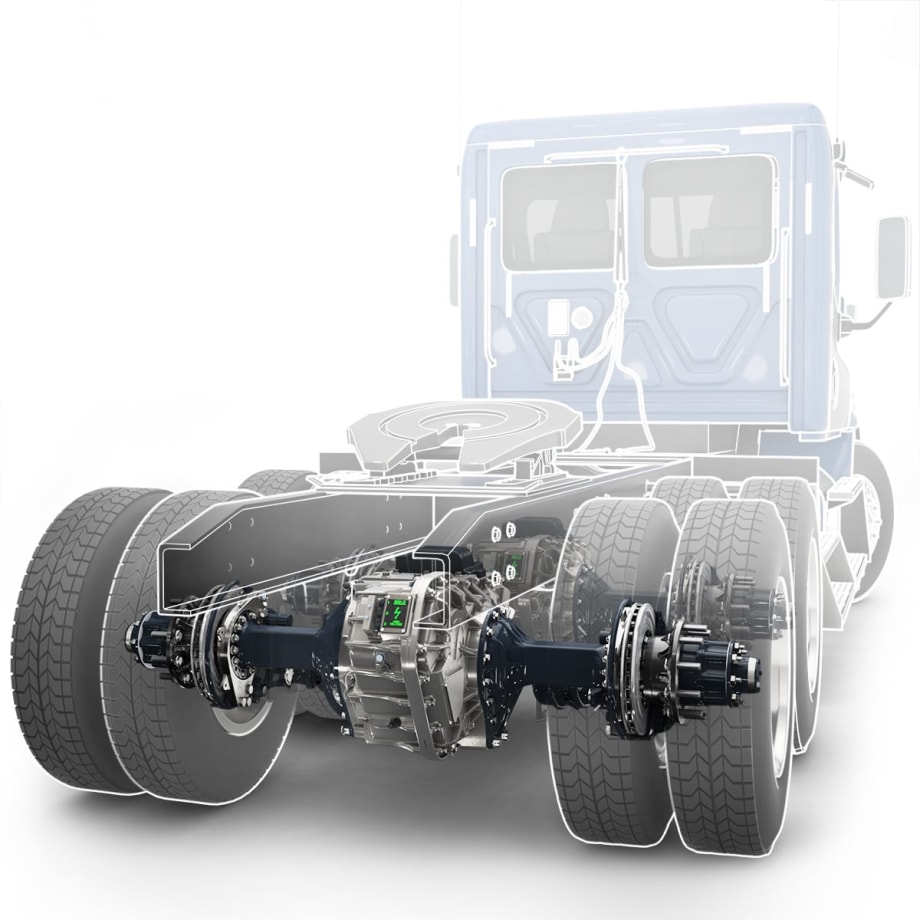
Allison Transmission has launched eGen Power electric axles.
Photo: Allison Transmission
4 min to read
Allison Transmission has launched eGen Power, its new series of fully integrated zero emission electric axles, starting with the 100D for heavy-duty trucks.
The first in the eGen Power series, the eGen Power 100D, is capable of a 23,000-pound GAWR. It was featured in a Hino XL7 Class 7 truck with Hexagon Purus' full electric drive system, showcased this week during Hino’s Project Z zero-emission vehicle development announcement.
The 100 stands for 10 tons (or actually 10,400 kilograms), and D for dual motor, explained Alex Schey, Allison’s chief commercialization officer for its electric products, in an interview with HDT. “That gives us incredible power, 400 kilowatts continuous and 500 peak, which is probably far more than an engine you’d find in a typical truck of that class.”
The 100D is just the first axle in a series that also will include e-axles designed for medium-duty applications and various axle ratings, Schey said.
The eGen Power product family will be the second product offering under the recently announced Allison eGen portfolio of fully electric and electric hybrid propulsion solutions. (The first in the eGen portfolio was the eGen Flex, providing bus fleets with full electric engine-off propulsion and accessory power operation capability.)
More About eGen Power Electric Axles
Speaking as an engineer and the founder of Vantage Power, which Allison bought last year, Schey said it’s a challenge in the real world to balance performance, as in being able to accelerate quickly, but at the same time be able to achieve good top speeds for highway driving. “We’re pretty happy with what we’ve accomplished, ensuring we have high efficiency throughout. In trucking efficiency has always been key, but now it has the added impact of the amount of batteries the truck has to carry, or conversely the more miles you can do per charge and the less downtime.”
There are two areas where the eGen Power electric axles provide more efficiency than some other options, he explained.
In conventional powertrains, he explained efficiency is lost at the point where the driveshaft goes into the rear axle at a right angle – up to 5% in some cases. “Some providers have replaced the engine and transmission block with an electric motor, so they still have the shaft at a right angle. Rather than having the motor – or motors in this case – at right angles, we actually have them parallel to the axles, so more efficiency.”
The second area is in the use of permanent-magnet motors, which are generally more efficient than induction motors. “There are a number of ways of constructing a motor,” Schey said. “Some are more efficient; others are less efficient but have other advantages. We feel we found a good blend of performance and efficiency, with low cost as well. That permanent magnet solution can offer up to 10% greater efficiency in some cases than other alternatives.”
Adding to the efficiency is the way the axle operates, with a two-speed transmission built into the system to help ensure the motors are always operating in the most efficient zone. “Obviously using Allison’s experience in the transmission space to develop optimum shift patterns,” he added, to get the best acceleration and gradeability without sacrificing the ability to cruise at highway speeds.
Another important feature for both truck OEMs and the end user, Schey said, is the way the eGen Power axle is packaged on the truck.
“The packaging of an electric vehicle powertrain has a big impact on the end user in two main reasons,” he explained. One is weight – the heavier it is, the less payload can be carried. The other is the packaging “envelope.”
“If you have a big battery pack that eats into the space you otherwise would have [for cargo[, that’s less desirable. One of the benefits is how much we have shrunk this down to where it really does fit between the wheels.”
This improves efficiency, driveability, and cargo capacity for the end users, he said, “but also packaging flexibility, and that allows vehicle designers to package the batteries in new and innovative ways, and we expect has a positive effect on the end user as well.”
What’s next
EGen Power electric axles will be manufactured in Allison’s recently completed 110,000-square-foot electric axle development and manufacturing facility in Auburn Hills, Michigan.
Schey said Allison is evaluating the technology with other OEM partners around the world, but Hino is the first partnership that’s been made public. “I expect that this kind of technology is in demand by all the major OEMs,” he said. “They’re trying to figure out the right technology and architecture for their vehicles, and it’s unlikely to be one size fits all.”
“Hino Trucks and Allison Transmission have a long-standing partnership, as evidenced by our industry leading five-year powertrain warranty and Allison’s standard position in all Hino conventional trucks”, said Glenn Ellis, Hino senior vice president of customer experience, in an announcement. “As we embark on our ZEV development program, Project Z, we are hopeful to incorporate Allison’s eGen Power e-axle into our future product offering.”
More Fuel Smarts
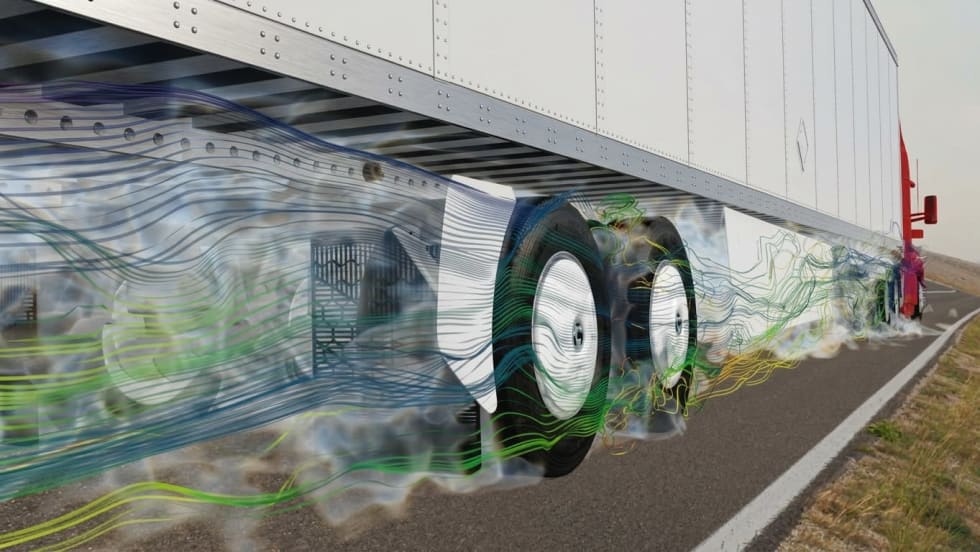
FlowBelow Redesigns Trailer AeroSlider to Cut Fuel Use
The lighter trailer aerodynamic system installs in less than 45 minutes, according to the company, with potential payback in under a year depending on fuel prices and trailer mileage.
Read More →
Why Diesel Price Relief Efforts May Fall Short
Diesel prices have eased from September’s record high, but doubts about additional Russian supply and limits on dyed-diesel tax relief mean trucking fleets still face expensive fuel. And prices could go higher.
Read More →
Why Small Fuel Savings Matter in Trucking
Can better fuel economy help pay for driver raises? In this podcast, GP Transco explains how small efficiency gains create room to reinvest in its people.
Read More →
How GP Transco Cuts Trucking Fuel Costs, a Tenth of a Gallon at a Time
What’s another tenth of a mile per gallon worth? GP Transco shares how equipment upgrades and driver coaching turn small gains into meaningful fuel savings.
Read More →
Electric Yard Tractors Move Beyond Pilots
Operating-cost savings have overtaken sustainability goals as the leading reason surveyed fleets are adopting battery-electric terminal tractors, according to new NACFE research.
Read More →
Geotab Links Fleet Card to Vehicle Data
The new card combines fuel discounts with telematics-based purchase controls. Geotab’s analysis also points to potential savings from choosing lower-priced fuel stops.
Read More →
Fleet Economics Shape Electric Truck Outlook
ACT Research expects costs, charging infrastructure, and technology improvements to drive zero-emission commercial vehicle adoption as federal regulations and incentives retreat.
Read More →
Wex Adds Cardless Fuel Payments for Over-the-Road Customers
A new fuel card feature for Wex customers offers convenience and security.
Read More →
New California Law Could Shed Light on Electric Truck Prices
Why do battery-electric Class 8 trucks remain so expensive? A California bill signed by Gov. Gavin Newsom would give fleets and state agencies more visibility into what manufacturers charge.
Read More →
How Volvo Updated Its D13 for EPA 2027 [Watch]
Volvo’s updated D13 promises lower emissions without sacrificing performance or fuel economy. Take a closer look at what changed inside the engine in this HDT Spotlight video.
Read More →