


 MENU
MENU SEARCHMENUSEARCH
Loading data...
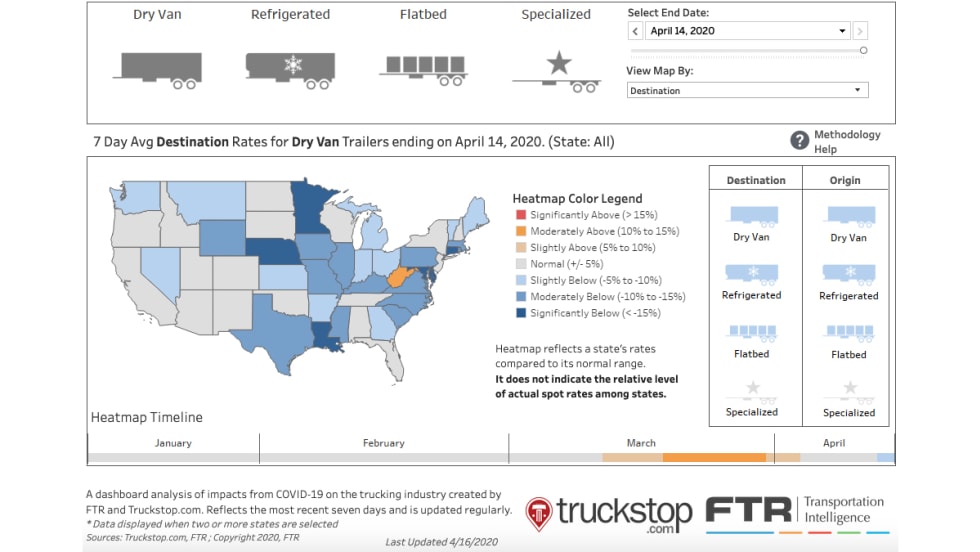
FTR’s COVID-19 Impact Heatmap has been updated to show truck load data in the spot market, providing state-level impacts on truck load volumes for four equipment types: dry van, refrigerated, flatbed, and specialized.
Read More →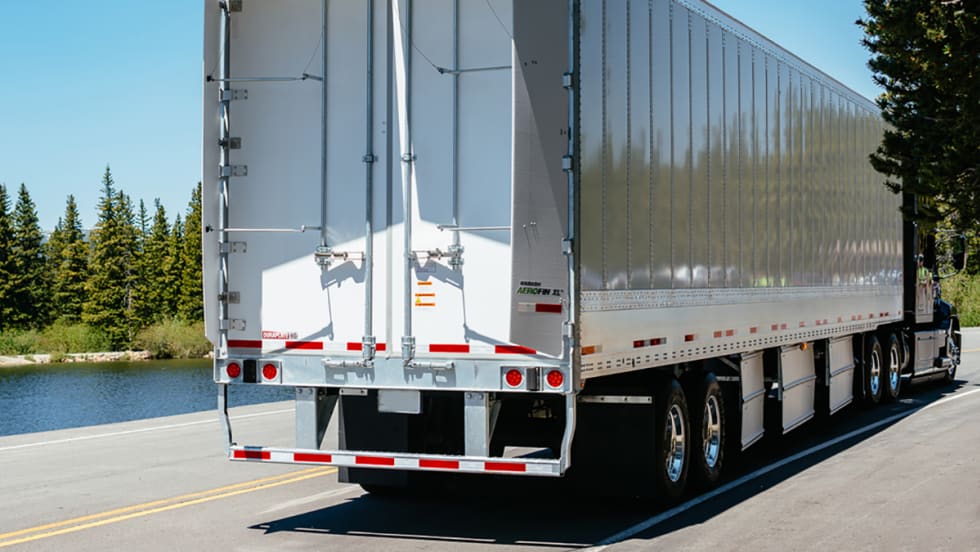
According to a recent report from FTR, preliminary trailer orders for March are still being impacted by the COVID-19 pandemic, falling 54% from February to 6,500 units for the month.
Read More →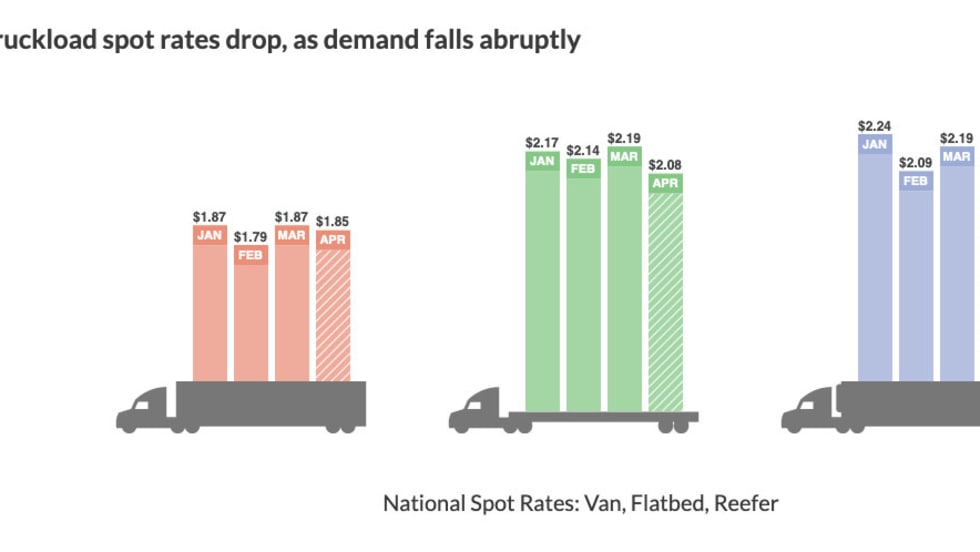
The pressure to restock grocery stores and distribution centers stripped by COVID-19 buying has quickly given way to a slump for truck freight. As March segued into April, the spot market took a tumble, according to figures from DAT Solutions and Truckstop.com.
Read More →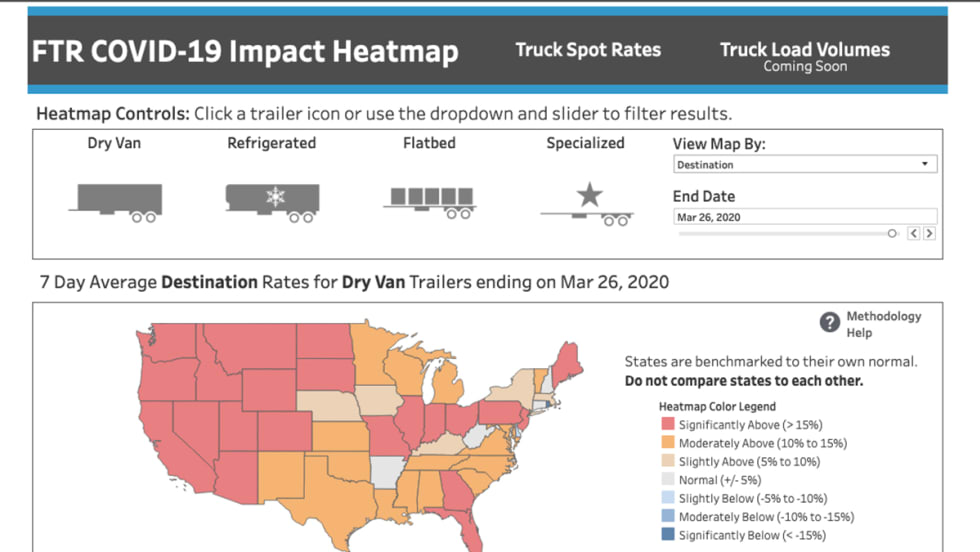
FTR has released the COVID-19 Impact Heatmap, which assesses the state-level rate impacts by four trucking equipment types – dry van, refrigerated, flatbed, and specialized – using Truckstop.com spot market data.
Read More →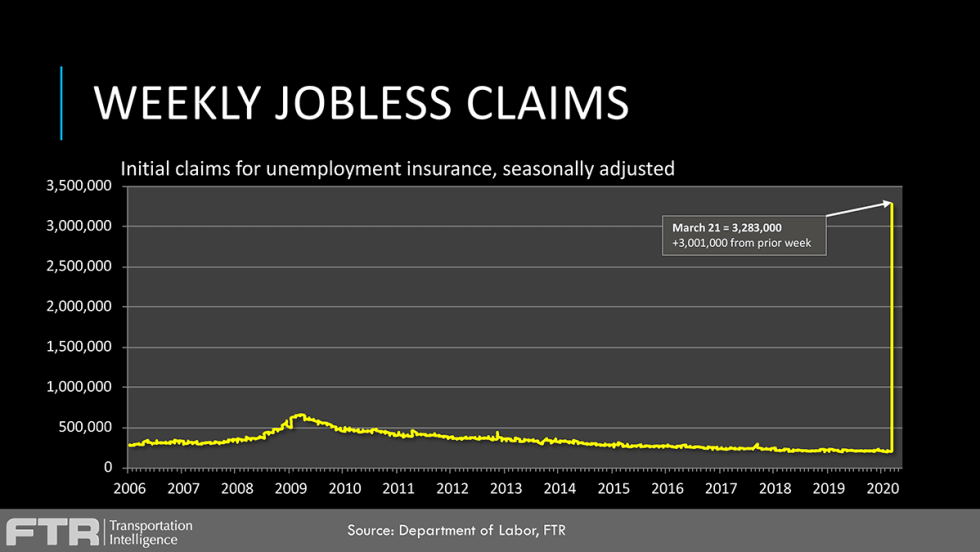
The U.S. economy was rocked today by shocking numbers of 3.3 million people filing unemployment claims for the first time, but the worst is still to come for trucking.
Read More →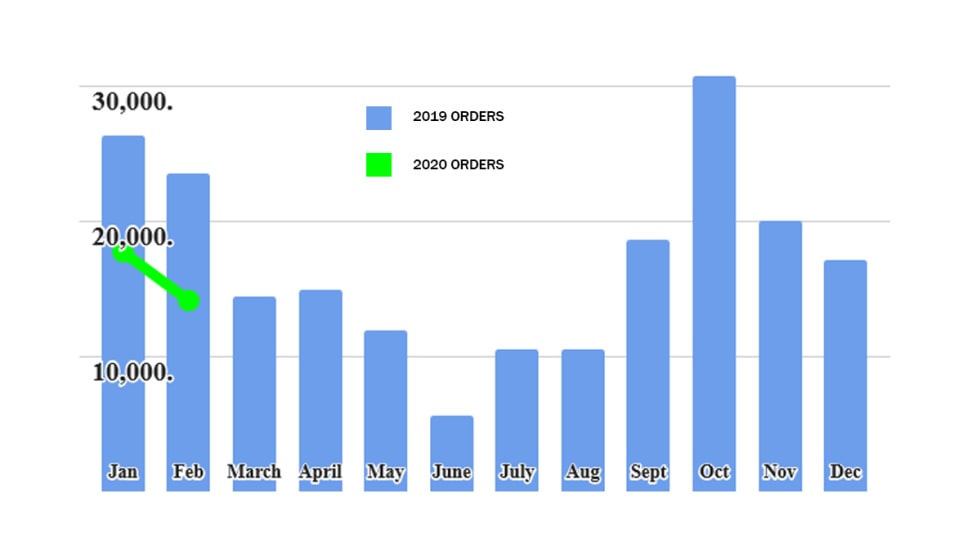
Preliminary reports from both ACT Research and FTR show that North American Class 8 orders for February fell 18-20% from January. Both reported a total drop of 14,100 units.
Read More →
FTR said its Trucking Conditions Index in December was the highest since January 2019 and the first positive reading since 0.28 in July.
Read More →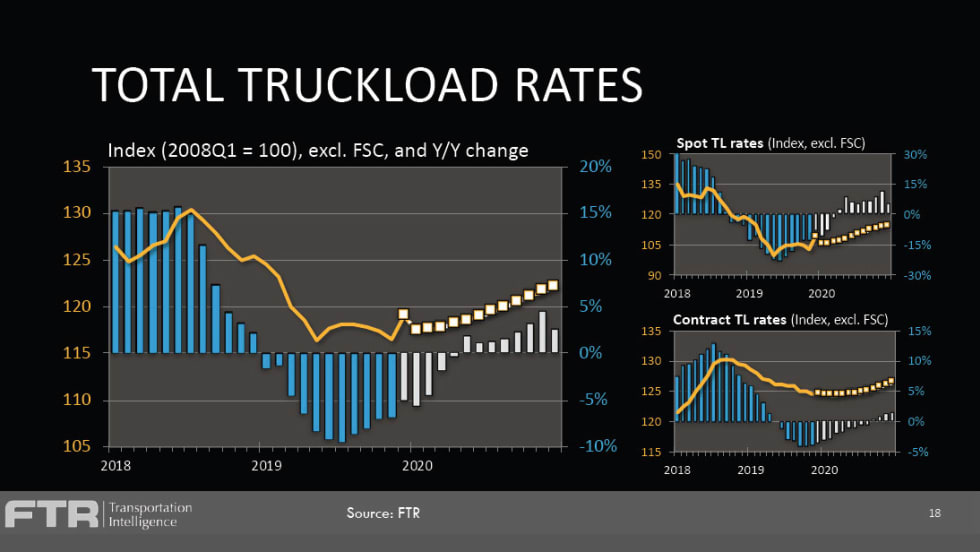
Barring the unexpected, trucking can generally expect flat to moderate growth in demand and rates in 2020, with most of the growth in the second half of the year.
Read More →
North American Class 8 orders for January are down month over month but up year over year, according to both FTR and ACT Research. Following a consistent trend over the last four months of averages of 19,000 trucks, January totals dropped to 17,700 units. ACT reports show a similar drop in medium-duty.
Read More →
Weaker spot rates are mainly to blame for a dip in the latest FTR Trucking Conditions Index, which tracks the industry via freight volumes, freight rates, fleet capacity, fuel price, and financing
Read More →