




ZF on New CVS Division, Intelligent ABS Production
Learn how ZF has integrated its acquisition of Wabco into the new Commercial Vehicle Solutions division and what that combination offers fleets.

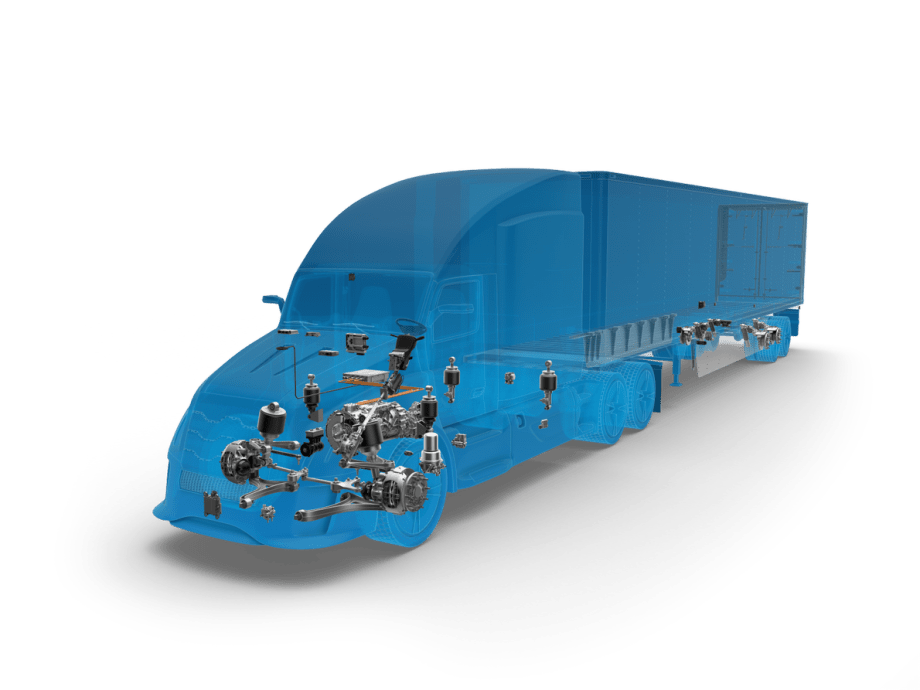
ZF’s new commercial vehicle division, Commercial Vehicle Solutions, started as planned at the beginning of the year, combining ZF’s former Commercial Vehicle Technology and Commercial Vehicle Control Systems (formerly Wabco) divisions.
Photo: ZF
ZF started 2022 with a new restructured division — Commercial Vehicle Solutions.
Having successfully integrated its Wabco acquisition as its Commercial Vehicle Control Systems division, ZF recently took the next logical next step of combining it with its existing Commercial Vehicle Technology division.
“The global launch of ZF’s Commercial Vehicle Solutions division powerfully combines all of ZF’s commercial vehicle technology expertise and capabilities within one division and successfully concludes the integration of Wabco,” explained Julien Plenchette, senior vice president, Americas, CVS Division, ZF Group, in a news release.
“With the new CVS division, ZF is now positioning itself as the world's largest component and system supplier for the commercial vehicle industry,” said Wilhelm Rehm, head of the Commercial Vehicle Solutions division.
“The combination of ZF and Wabco has brought a new dimension of innovation and capability for commercial vehicle systems technology, and now we can offer full systems integration capability, which many OEMs seek in the diverse technology options now available,” Rehm told Truck & Bus Builder in an interview.
CVS is technologically very well positioned, Rehm said, to face the challenges and opportunities in the industry. “The key market challenges are in the areas of sustainability, electrification, digitalization, as well as safety and security. And, of course, autonomous and automated driving functions are right at the top of our agenda.”
As part of CVS, the Wabco brand name will continue to be used across key products and solutions, notably serving the aftermarket.
ZF to make intelligent ABS in America
ZF has invested significantly in its first brake production line at its manufacturing facility in Charleston, South Carolina, which will allow it to produce its antilock braking system and electronic braking systems in the U.S. instead of importing them from European plants.
ZF’s new intelligent ABS for trailers, named ‘iABS’, was first announced under the Wabco name in late 2019. In addition to optimizing trailer control during emergency braking by preventing the trailer’s wheels from locking and slipping, iABS combines with additional sensors to become the “brain’ of the trailer, Wabco officials said at the time.
According to Christiaan Verschueren, vice president of trailer systems with ZF’s Commercial Vehicle Control Systems division, the change-over from the previous generation ABS (TCS II) to iABS was achieved in close collaboration with ZF’s U.S.-based customers, according to an interview with Truck & Bus Builder.
“This included providing them with training and consultancy support to ensure the smooth systems implementation across each trailer builder’s production processes.”
The first two variants of the Intelligent Braking Platform, iABS Standard and iABS Premium, were launched at the turn of the year in the North American market. ZF is promoting its intelligent ABS together with its advanced telematics solutions to fleets in North America.
“IABS, and of course, iEBS, allows ZF to offer and fit trailer telematics systems such as Trailer Cast, which is the North America market name for TrailerPulse,” Verschueren explained. “We see this as a real game-changer, because we are able to effectively offer our full suite of intelligent solutions through a single box with just one connection.”
More than 12,000 U.S. trailers have so far been equipped with iABS.
This story was produced in partnership with UK-based Truck & Bus Builder. For a free trial subscription to T&BB, go to www.truckandbusbuilder.com/trial-request.asp
More Equipment

How Volvo Updated Its D13 for EPA 2027 [Watch]
Volvo’s updated D13 promises lower emissions without sacrificing performance or fuel economy. Take a closer look at what changed inside the engine in this HDT Spotlight video.
Read More →
Michelin Tire Improves Efficiency and Durability for Regional Fleets
The Michelin X Multi Energy D2 is a regional haul drive tire engineered to help fleets improve fuel efficiency, durability and traction in demanding stop-and-go operations.
Read More →
ZF Expands Commercial Vehicle Push in North America
ZF is expanding its North American commercial-vehicle presence with new transmission applications, electrification, trailer technology and autonomous-driving systems.
Read More →
Tesla Wants a Self-Driving Semi. Are Cameras Enough?
Could Tesla’s camera-only autonomous driving technology work on an 80,000-pound Semi? In this commentary, HDT's Deborah Lockridge takes a look at Tesla, Cybercab, and how autonomous trucks see the road.
Read More →
Kodiak: Driverless Long-Haul Truck Launch on Track for 2026
Kodiak AI says its driverless long-haul safety case is 93% complete and it remains on track to begin commercial operations by year-end 2026.
Read More →
What DOT’s Automated Vehicle Strategy Means for Trucking
The U.S. Department of Transportation issued a new automated-vehicle strategy that outlines plans for driverless-truck regulations, cross-state freight corridors, and federal safety standards.
Read More →
East Coast Port Launches $45M Electric Truck Push
The Port Authority of New York and New Jersey announced millions in incentives for zero-emission drayage trucks, yard tractors, and new charging hubs near the port.
Read More →
PlusAI Going Public to Fund Autonomous Truck Launch
A SPAC deal could provide PlusAI with up to $300 million as it works toward a 2027 commercial launch of factory-built autonomous trucks.
Read More →
NHTSA Moves to Rewrite Truck Fuel-Economy Rules
The National Highway Traffic Safety Administration says it lacks authority to regulate medium- and heavy-duty truck engines separately from complete vehicles, but the existing standards have not yet been eliminated.
Read More →
Detroit Opens Orders for EPA 2027 Engines
Detroit isn’t starting from scratch to meet EPA 2027 diesel emissions standards. Its Gen 6 DD13 and DD15 engines keep much of today’s platform while updating the fuel and aftertreatment systems.
Read More →