





Related – Q&A: ZF on How Advanced Technologies Can Improve Trucking Efficiency and Safety
ZF Develops Dual Lens Camera for ADAS, Autonomous Systems
Beginning next year, ZF will use a two-lens camera system to improve the performance and functionality of various advanced driver safety features. A second lens enables redundancy for Level2+ autonomous functions and offers wide-angle field of view for pedestrian detection.
June 13, 2019
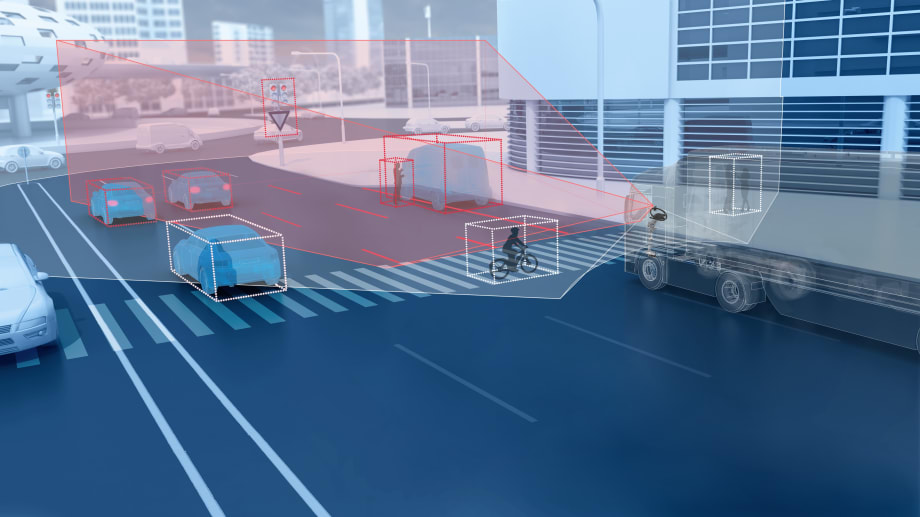
ZF says its new Dual-cam system is an important part of Level 2 autonomous features used in advanced driver assistance systems.
Image courtesy ZF
2 min to read
Beginning next year, ZF will use a two-lens camera system to improve the performance and functionality of various advanced driver safety features. The Dual-cam two-lens camera is specifically designed for the commercial truck market and will be combined with Mobileye’s advanced EyeQ4 processor. ZF made the announcement June 12 at a media event at the Transportation Research Center in East Liberty, Ohio.
Part of ZF’s S-Cam4 family of automotive-grade cameras, the Dual-cam is designed to help meet varying global regulatory requirements. ZF says it will deliver advanced functions such as traffic sign recognition, lane-keeping assist and centering, and object and pedestrian detection enabling automatic emergency braking (AEB).
"A second lens is necessary help ensure some of these advanced functions work effectively on commercial vehicle," explained Dan Williams, head of ADAS and autonomy for ZF commercial truck applications. “For example, for pedestrian AEB, in some instances a standard mono-camera with a 52-degree field of view can limit the system's ability to detect pedestrians or other vulnerable road users soon enough to actuate the brakes and help avoid or mitigate accidents for larger trucks in complex environments."
Dual-cam simultaneously delivers medium- and wide-angle object detection, with image resolution of 1280 x 960 pixels. ZF said the Dual-cam can resolve lane markings and objects as far away as 350 feet (120 meters), and pedestrians up to 180 feet away (60 meters).
The second lens also offers redundancy for Level-2+ autonomous functions – if one lens becomes blinded or non-functional, the second lens helps ensure the camera can still operate due to multiple optical paths, Williams explained.
ZF’s camera technologies feature best-in-class optical performance and an enhanced fusion envelope, said the company. When combined with a full suite of the company’s advanced driver assistance system (ADAS) technologies such as forward-looking and corner radar, automated functions such as lane change assist and traffic jam assist are enabled. These functions can form the basis for technologies such as truck platooning.
ZF said it will launch an advanced ADAS system in association with a major Japanese vehicle manufacturer in 2020. The launch represents ZF’s first application for its Image Processing Module, where camera images will be processed in a separate unit from the camera housing.
More Equipment

How Volvo Updated Its D13 for EPA 2027 [Watch]
Volvo’s updated D13 promises lower emissions without sacrificing performance or fuel economy. Take a closer look at what changed inside the engine in this HDT Spotlight video.
Read More →
Michelin Tire Improves Efficiency and Durability for Regional Fleets
The Michelin X Multi Energy D2 is a regional haul drive tire engineered to help fleets improve fuel efficiency, durability and traction in demanding stop-and-go operations.
Read More →
ZF Expands Commercial Vehicle Push in North America
ZF is expanding its North American commercial-vehicle presence with new transmission applications, electrification, trailer technology and autonomous-driving systems.
Read More →
Tesla Wants a Self-Driving Semi. Are Cameras Enough?
Could Tesla’s camera-only autonomous driving technology work on an 80,000-pound Semi? In this commentary, HDT's Deborah Lockridge takes a look at Tesla, Cybercab, and how autonomous trucks see the road.
Read More →
Kodiak: Driverless Long-Haul Truck Launch on Track for 2026
Kodiak AI says its driverless long-haul safety case is 93% complete and it remains on track to begin commercial operations by year-end 2026.
Read More →
What DOT’s Automated Vehicle Strategy Means for Trucking
The U.S. Department of Transportation issued a new automated-vehicle strategy that outlines plans for driverless-truck regulations, cross-state freight corridors, and federal safety standards.
Read More →
East Coast Port Launches $45M Electric Truck Push
The Port Authority of New York and New Jersey announced millions in incentives for zero-emission drayage trucks, yard tractors, and new charging hubs near the port.
Read More →
PlusAI Going Public to Fund Autonomous Truck Launch
A SPAC deal could provide PlusAI with up to $300 million as it works toward a 2027 commercial launch of factory-built autonomous trucks.
Read More →
NHTSA Moves to Rewrite Truck Fuel-Economy Rules
The National Highway Traffic Safety Administration says it lacks authority to regulate medium- and heavy-duty truck engines separately from complete vehicles, but the existing standards have not yet been eliminated.
Read More →
Detroit Opens Orders for EPA 2027 Engines
Detroit isn’t starting from scratch to meet EPA 2027 diesel emissions standards. Its Gen 6 DD13 and DD15 engines keep much of today’s platform while updating the fuel and aftertreatment systems.
Read More →