




ZF Announces EV and Autonomous Partnerships, Initiatives
At CES in Las Vegas, ZF announced a new, comprehensive control platform for electric vehicle powertrain management and a new partnership with Vietnamese automotive developer VinFast.

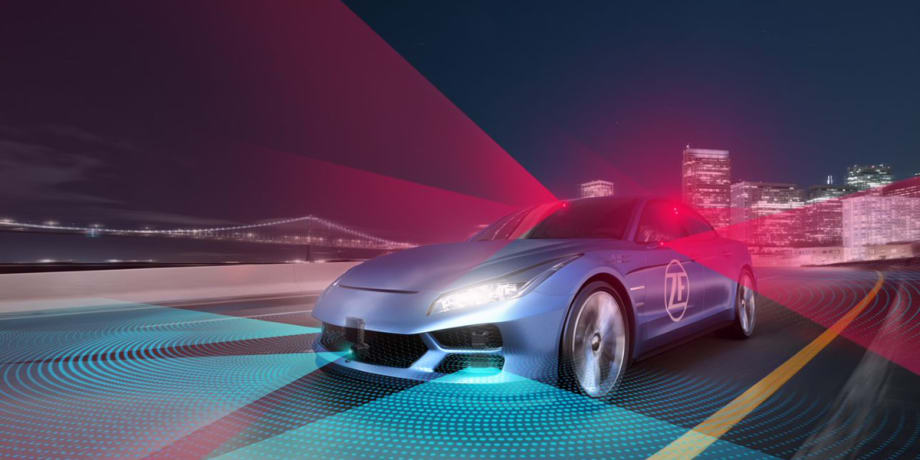
ZF officials said the company's new partnership with VinFast will develop scalable autonomous vehicle controls beginning with Level 2 and working collaboratively toward Level 4 systems.
Illustration: ZF
German automotive supplier ZF is rapidly consolidating its recent acquisitions and technological developments on the electric vehicle and autonomous control system fronts with new technologies and global strategic partnerships, the company announced at CES during a virtual press conference.
ZF has developed a scalable and modular e-motor inverter architecture that allows OEMs maximum flexibility for vehicle platforms with power capacities ranging from 400 volts to 800 volts, according to ZF President of the Americas and Member of the Board of Management Martin Fischer. Fischer said this scalability range will be important in helping OEMs bridging the transition from silicon to silicon carbide semiconductors, while also setting the stage for compatibility with semiconductor trends.
Now combined with ZF’s advanced inverter design, next generation power semiconductors and intelligent software algorithms, the development increases efficiency, peak power and shortesn development cycles for electric vehicles, Fischer added.
Efficiency and peak power of an inverter is not only defined by the properties of the power semiconductors, it is also significantly defined by software, Fischer explained. Inverter technology and control software alignment is critical and can be achieved by several feedback loops, in which the inverter hardware provides the software a flow of information (electric current, temperature, DC-link voltage, etc.) which is used to optimize pulse patterns and switching strategies in real time to improve efficiency and peak power. For silicon carbide based systems, ZF has found a solution optimizing the link between the power semiconductor boundary conditions and control software in order to gain the full potential from the semiconductor configuration.
“The inverter is the brain of electric drivetrains,” Fischer noted. “It manages the flow of energy from battery to e-motor and vice versa. Inverters have become more efficient and more complex with every development step. The next evolution is the combination of the inverter design, next generation power semiconductors and highly intelligent software algorithms. Combined with our new, advanced, electric vehicle software, we will soon be able to define the future with an operating system that will deliver new levels of functionality for electric vehicles. As with the human body, you can train muscles and the brain to react more efficiently than normally, for example in sports or playing music. This is also what an inverter does - it flexes the e-drive in the most proficient and fastest way. “
The control board within an inverter is the home of the inverter software – where the vehicles power demand is translated into the different digital control signals for the driver board that drives the power semiconductors according to the control signals. It is one of the key components of an inverter, because the gate-drive technology is responsible for safety features, performance, efficiency and total range of the electric vehicle that can be squeezed out of the power semiconductors, Fischer added.
ZF and VinFast to Collaborate on Advanced Autonomous Control Systems
ZF also announced a global, strategic partnership with Vietnamese autonomous technology developer Vinfast. The collaboration will bring advanced automated driving and parking functions at Level 2, with a collaboration for Level 3 and Level 4 systems taking shape over the next several years, Fischer said.
ZF will supply advanced sensors, high-performance computing platforms and associated software to the partnership. VinFast, which Fischer called the fast-growing flagship Vietnamese electric vehicle manufacturer, will launch platforms with higher level automated functions in the near future utilizing ZF’s expertise in hardware, software and system integration.
ZF will also be the key systems partner supplying multiple cameras, radars and LiDAR sensors and the intelligent fusion of the sensors to be networked within an advanced ZF central control unit. This collaboration will enable VinFast and ZF to deliver Level 2 autonomous systems initially, while working develop higher level functions such as Traffic Jam Pilot, Highway Driving Chauffeur and Automated Valet Parking, Fischer noted.
“Our companies are an outstanding match as our goals for mobility are perfectly aligned,” said VinFast Global CEO Le Thi Thu Thuy. “The future is both electric and automated as we seek to help protect our environment while providing transportation that enhances safety, convenience and efficiency. We will work together to achieve this vision for VinFast customers as we expand our sales around the world.”
Fischer said ZF looks forward to working with VinFast to bring higher levels of autonomy to their light passenger vehicles.
"Elevating the capabilities of all forms of mobility is our goal," he said. "The design and development of higher-level AD systems will assist drivers all over the world in enjoying enhanced degrees of safety, convenience and intelligence. This is our vision when we talk about The Next Generation of Mobility and one proof point of how we are making this a reality, now.”
More Fuel Smarts

Record Diesel Prices Squeeze Trucking Fleets
Average U.S. diesel prices have climbed to nearly $6 a gallon, surpassing the 2022 record as tight refinery capacity and Middle East disruptions keep fuel costs elevated.
Read More →
How Fuel Delivery Shapes Engine Performance
Fuel delivery depends on more than what happens at the injector. For fleet, maintenance and technical professionals, looking at the full path from pump to injector can provide useful context for understanding engine performance.
Read More →
East Coast Port Launches $45M Electric Truck Push
The Port Authority of New York and New Jersey announced millions in incentives for zero-emission drayage trucks, yard tractors, and new charging hubs near the port.
Read More →

California Bill Could Shed Light on Electric Truck Prices
Why do battery-electric Class 8 trucks remain so expensive? A California bill headed to Gov. Gavin Newsom would give fleets and state agencies more visibility into what manufacturers charge.
Read More →
Detroit Opens Orders for EPA 2027 Engines
Detroit isn’t starting from scratch to meet EPA 2027 diesel emissions standards. Its Gen 6 DD13 and DD15 engines keep much of today’s platform while updating the fuel and aftertreatment systems.
Read More →
Zero-Emission Truck Corridor Planned for West Coast
California, Oregon, Washington, British Columbia and Baja California are coordinating plans for truck charging and hydrogen fueling from Canada to Mexico.
Read More →
A Closer Look at Kenworth’s Electric T880E Vocational Truck [Video]
Learn more about Kenworth's T880E battery-electric vocational truck at the Paccar Technical Center, including its range, applications, upfitting considerations, and PTO options, in this HDT Spotlight video.
Read More →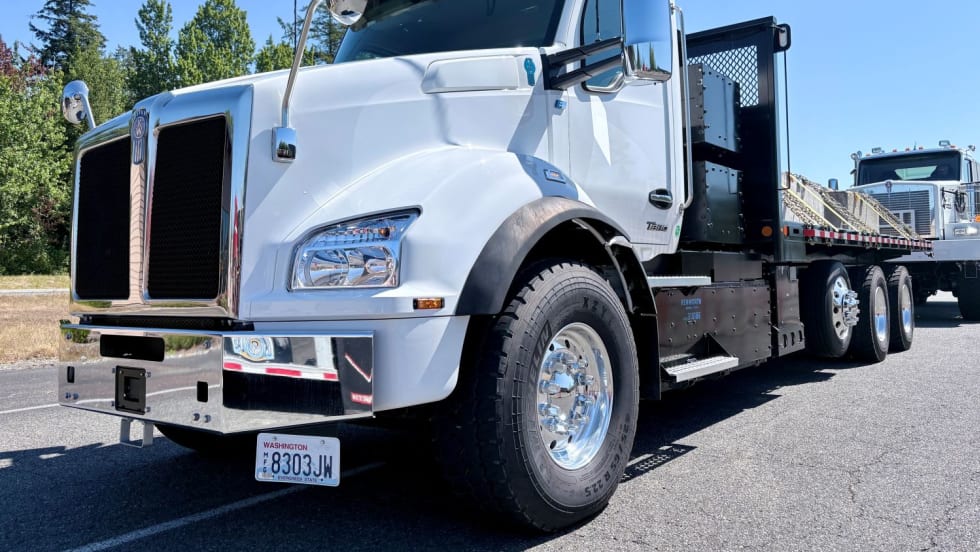
Kenworth T880E Brings EV Power to Vocational Trucks
A closer look at the Kenworth T880E’s range, charging, powertrain and upfit options — and where fleets are showing the most interest.
Read More →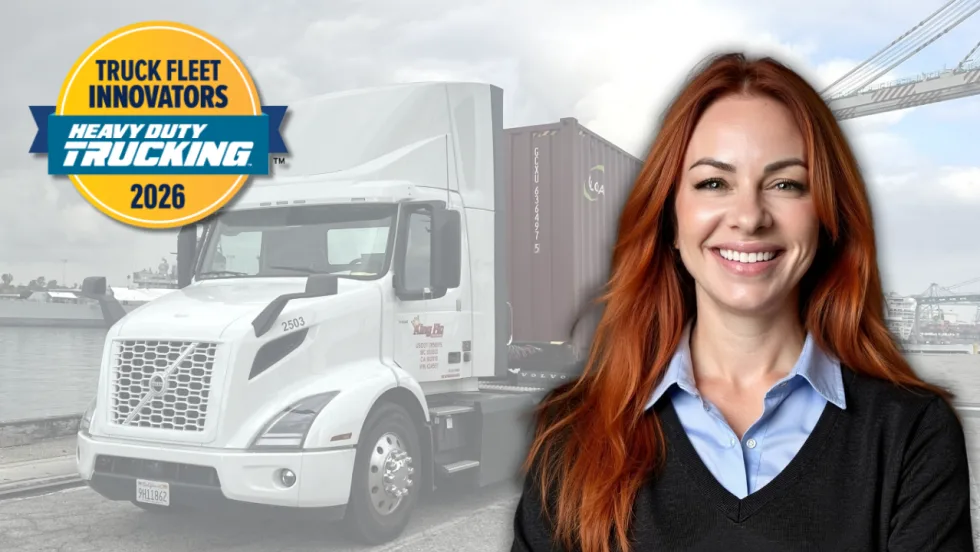
Jennie Abarca Is Proving Electric Trucks Can Do the Job
HDT Truck Fleet Innovator Jennie Abarca is building confidence in fleet electrification one load at a time while openly sharing the challenges she encounters along the way as a small-fleet owner.
Read More →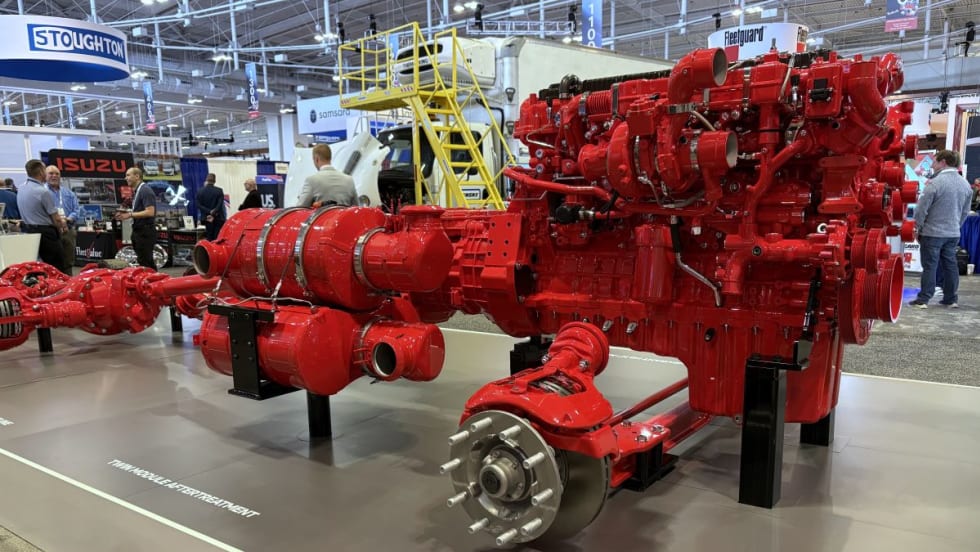
Cummins Adjusts 2027 Engine Rollout After EPA Proposal
The engine maker will gradually introduce its new Model Year 2027 diesel engines while continuing to offer current models during the transition, citing the EPA's proposed emissions rule changes.
Read More →