




What FMCSA Is Working On for 2023
Here is a look at the five most compelling regulatory activities in trucking.

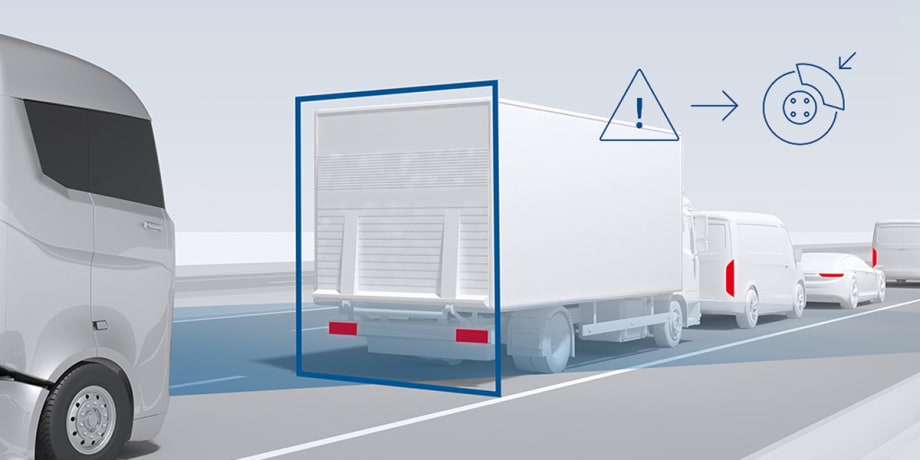
A notice proposes to amend certain Federal Motor Carrier Safety Regulations to ensure the safe introduction of automated driving systems on commercial motor vehicles.
Rendering: Bosch
Recent postings to the Federal Register suggest the roadmap to regulatory action the Federal Motor Carrier and Safety Administration is following as 2023 approaches.
Here is a look at the five most compelling regulatory activities, based on stage of proposed rulemaking, scope, and date of action, within in the agency’s most recent Significant Rulemaking Report, issued for September 2022. Also included below is an update on FMCSA’s intention to issue a revised Medical Examiners Handbook and related guidance.
As for the significant rulemakings, here they are in descending order of relative importance:
Notice of Proposed Rulemaking (NPRM) on Safe Integration of ADS
This notice proposes to amend certain Federal Motor Carrier Safety Regulations (FMCSRs) to ensure the safe introduction of automated driving systems (ADS) equipped commercial motor vehicles onto the nation's roadways.
The proposed changes to CMV operations, inspection, repair, and maintenance regulations “prioritize safety and security, promote innovation, foster a consistent regulatory approach to ADS-equipped CMVs, and recognize the difference between human operators and ADS,” stated the agency. The proposed publication date is January 18, 2023.
NPRM on Automatic Emergency Braking
This notice concerns the joint rulemaking on automatic emergency braking (AEB) by the National Highway Traffic Safety Administration and FMCSA. It will seek comment on a proposal to require and/or standardize equipment performance for AEB systems on heavy trucks (2127-AM36).
FMCSA said the rulemaking is expected “to propose performance standards and motor carrier maintenance requirements for AEB systems on heavy trucks and accompanying test procedures for measuring the performance of the AEB systems in NHTSA compliance testing.” The proposed publication date is January 30, 2023.
Advanced NPRM on Safety Fitness Procedures
This advanced notice (aka a “pre-rule”) will seek information on how the agency “might use data and resources more effectively to identify unfit motor carriers and to remove them from the nation's roadways.” FMCSA said it will request public comment about the use of available safety data, including inspection data, in determining a carrier’s fitness to operate.
The agency will also seek public input on possible changes to its current three-tier safety fitness rating structure. That will also entail reviewing the FMCSRs used in its safety fitness rating methodology. The proposed publication date is January 30, 2023.
NPRM on Broker and Freight Forwarder Financial Responsibility
This notice will follow up on the ANPRM (“pre-rule) issued by the agency seeking comment on this issue in September 2018. In this NPRM, FMCSA said it will propose changes to the broker/freight forwarder financial responsibility requirements as required by the MAP-21 highway bill. The proposed publication date is January 25, 2023.
Supplemental NPRM on Truck Speed Limiters
This supplemental notice is a bit further off, with a summertime publication goal. It asks whether added regulations are needed for truck OEMs on speed limiters. The agency stated it “intends to proceed with a motor carrier-based speed limiter rulemaking by preparing a supplemental notice of proposed rulemaking to follow up on the National Highway Traffic Safety Administration's (NHTSA) and FMCSA's jointly issued September 7, 2016, notice of proposed rulemaking (NPRM).”
Per FMCSA, this new rulemaking will look at whether additional regulatory actions should be taken on vehicle manufacturer requirements. Specifically, this SNPRM will look at whether motor carriers operating commercial motor vehicles with a GVWR of 26,001 pounds or more that are equipped with an electronic engine control unit capable of governing the maximum speed be required to limit the truck to a speed “to be determined by the rulemaking and to maintain that ECU setting for the service life of the vehicle.” The proposed publication date is June 30, 2023.
Revised Medical Examiners Handbook Draft
FMCSA has also released a draft revision of the Medical Examiner's Handbook (MEH) for Medical Examiners (MEs) of truck drivers, which includes updates to the Medical Advisory Criteria published in the Code of Federal Regulations (CFR), as a “proposed regulatory guidance.”
First posted on the agency’s website in 2008, the MEH provided guidance to MEs on the physical qualification standards in the Federal Motor Carrier Safety Regulations (FMCSRs) and the conduct of the physical qualification examination. FMCSA has also issued guidance for MEs in the form of Medical Advisory Criteria, now published at 49 CFR part 391, Appendix A.
In 2015, FMCSA withdrew the MEH because some of the information was “obsolete or was prescriptive in nature.” At the time, MEs and training organizations were informed that the MEH was no longer in use and that they should not consider the MEH as agency guidance.
The FMCSRs, in 49 CFR 391.41 through 391.49, provide the basic driver physical qualification standards for interstate CMV operators. Currently, MEs make physical qualification determinations on a case-by-case basis and may consider guidance to assist with making those determinations.
The updated MEH and related Medical Advisory Criteria provide information about regulatory requirements and guidance for MEs to consider when making physical qualification determinations along with established best medical practices.
Per a provision of the FAST Act highway bill, this regulatory guidance will be posted in the guidance portal on FMCSA's website. Then the agency “would review it no later than 5 years after it is published. It would consider at that time whether the guidance should be withdrawn, reissued for another period [of] up to 5 years, or incorporated into the regulations.”
More Fleet Management

Why Private Fleets Are Taking More Freight
Private fleets are putting their own trucks on demanding customers and high-cost lanes as companies seek greater control over service, costs, and capacity.
Read More →
Color Match Smarter: Tools That Restore & Perform
For fleet managers and collision repair professionals keeping heavy-duty trucks on the road, getting the color right the first time isn't just about appearance — it's about efficiency, turnaround time, and bottom-line results. Discover how today's digital color tools are transforming the repair process from guesswork to precision.
Read More →
FMCSA Pauses Biennial-Update Enforcement Amid Motus Transition
Carriers whose updates were due on or after June 1 have more time, while FMCSA works to stabilize its new registration system and warns of phishing sites impersonating its new carrier registration system, Motus.
Read More →


2026 Blueprint for Countering Smarter Supply Chain Theft
Cargo theft is no longer just the cost of doing business. It's a multi-billion-dollar criminal enterprise exploiting vulnerabilities across your fleet, drivers, and supply chain.
Read More →
How Telematics Improves Visibility, Control, and Performance in Refrigerated Fleets
Explore how telematics help refrigerated fleets improve visibility, uptime, efficiency, compliance, and cargo protection across connected cold chain operations.
Read More →
What the U.S.-Canada Trade War Means for Trucking
Escalating U.S.-Canada tariffs could disrupt cross-border freight, reduce truck volumes, raise costs, and create new uncertainty for carriers on both sides of the border.
Read More →
What Are Trucking’s Top Concerns for 2026?
The American Transportation Research Institute wants to know what's worrying trucking fleet managers, drivers, and other stakeholders in its annual Industry Issues survey.
Read More →
American Trucking Associations Looks for a New Leader
ATA President and CEO Chris Spear abruptly left his job at the association on August 21, at a pivotal time for the trucking industry.
Read More →
Public Wi-Fi Cybersecurity Risks: How Truck Drivers and Fleets Can Protect Their Data
Public Wi-Fi can expose truck drivers and fleets to credential theft, malware, and other cyber threats. Here’s how to reduce the risk on the road.
Read More →
For Nicky Cupp, Fleet Innovation Starts With Frustration
HDT Truck Fleet Innovator Nicky Cupp turns everyday pain points at Fraley & Schilling into opportunities for better technology and smarter processes.
Read More →