




Volvo Restructuring Truck Manufacturing in Europe
The Volvo Group will restructure its truck-manufacturing activities in Europe over the next two years, improving efficiency and cutting its workforce, as it implements part of a new group-wide efficiency program.
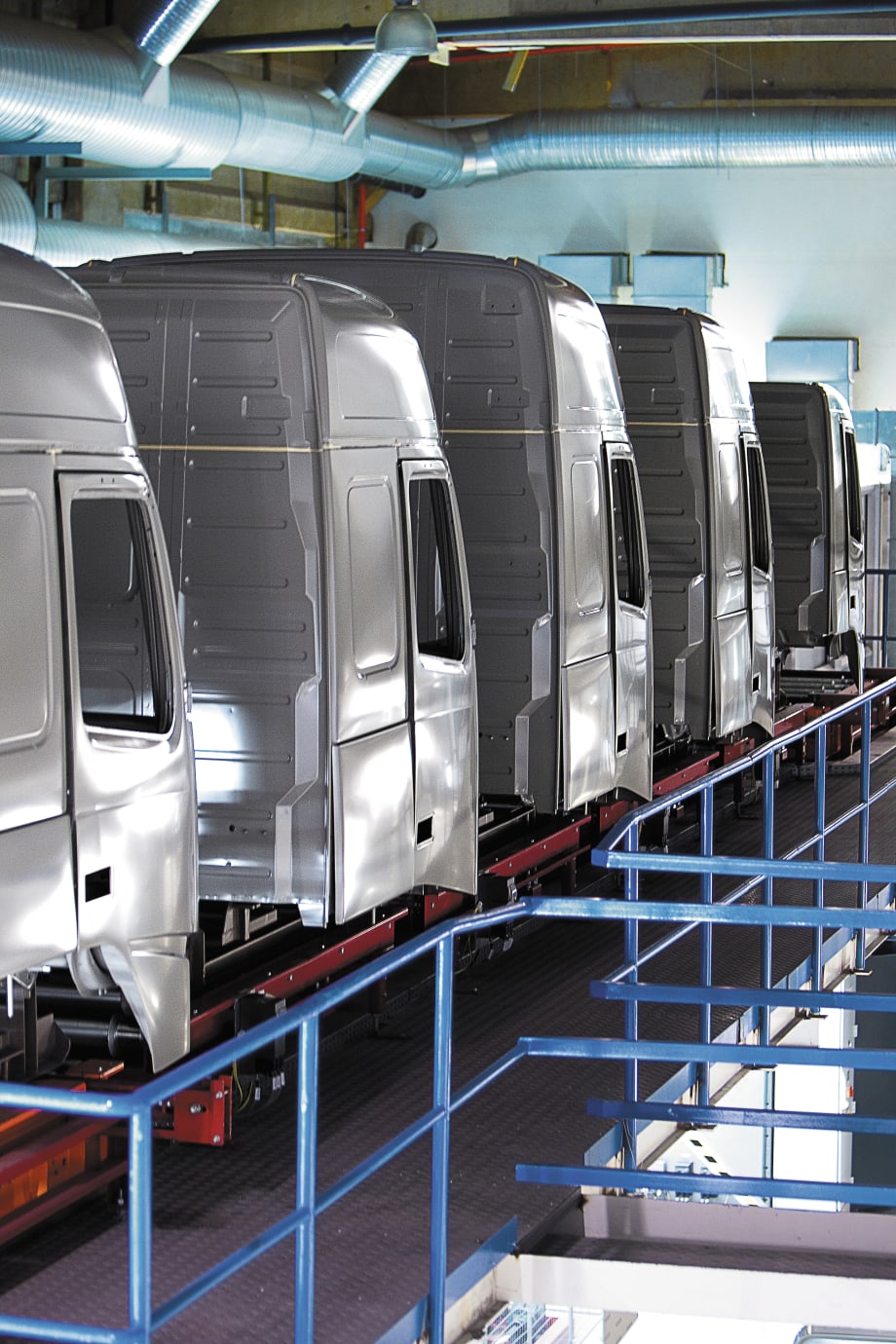
The plant in Umea will be further specialized in its main core business, including the painting of cabs.
The plant in Umea will be further specialized in its main core business, including the painting of cabs.
The Volvo Group will restructure its truck-manufacturing activities in Europe over the next two years, improving efficiency and cutting its workforce.
The plan is to relocate cab trim operations in Sweden from Umea to Gothenburg, to concentrate the assembly of heavy-duty trucks in Gothenburg to one line, and to concentrate the assembly of medium-duty trucks to Blainville, France.
"Today's European industrial structure for truck manufacturing is partly the result of acquisitions, and we now intend to use the various plants in an optimal way", says Olof Persson, Volvo's President and CEO. "This will generate more efficient truck manufacturing operations, which will improve our potential to compete successfully in global markets."
Each plant will be more specialized and optimized for its respective area, improving efficiency and cutting the manufacturing cost per truck. Cutting manufacturing costs is one of the objectives in the company's new truck strategy for 2013 to 2015.
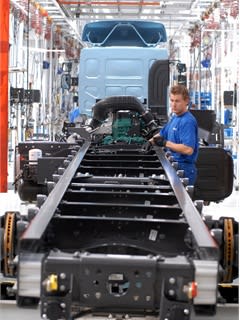
The assembly of medium-duty trucks will be concentrated in the plant in Blainville, France, as one assembly line is relocated from Ghent, Belgium (shown) to Blainville.
More details about the changes:
Cab trim operations will be relocated from Umea to Gothenburg, and the plant in Umea will be further specialized in its main core business -- sheet-metal pressing, welding and painting of cabs.
The assembly of heavy-duty trucks in Gothenburg will be concentrated to one line from the two lines of today. The change will free up space for better and more efficient manufacturing and logistics. The manufacturing capacity for heavy-duty trucks will be balanced with the plant in Ghent, Belgium, allowing the capacity of that plant to be better utilized.
The assembly of medium-duty trucks will be concentrated to the plant in Blainville, as one assembly line is relocated from Ghent to Blainville. The relocation will contribute to improved logistics in Ghent while making medium-duty truck manufacturing more efficient. In Blainville, there is already a manufacturing line for medium-duty trucks, complete with cab manufacturing and cab trim operations for both Volvo and Renault Trucks. This change means that cabs manufactured in Blainville will no longer have to be transported to Ghent.
The directional decision includes staff cutbacks, as well as operational changes and will be subject to trade union consultations. The changes are intended to be made gradually over a period of two years and the number of affected employees depends on several factors, including future manufacturing volumes and the results of the coming trade union discussions. About 900 employees are currently working in the areas of the manufacturing operations that will be relocated.
The optimization of the European industrial structure for truck manufacturing is part of the previously communicated Group-wide efficiency program.
Related Stories:
2011: Volvo Reorganizes Truck Operations
2011: Volvo exec sees truck maker well positioned to help fleets with major issues
2012: Volvo Drops UD, Plans to Cut R&D as Part of Strategic Trucks Changes
2012: Blog -- What do trucks and a yacht have in common?
2012: New Volvo Trucks Chief Plans to Take on Vocational Market
More Equipment

How Volvo Updated Its D13 for EPA 2027 [Watch]
Volvo’s updated D13 promises lower emissions without sacrificing performance or fuel economy. Take a closer look at what changed inside the engine in this HDT Spotlight video.
Read More →
Michelin Tire Improves Efficiency and Durability for Regional Fleets
The Michelin X Multi Energy D2 is a regional haul drive tire engineered to help fleets improve fuel efficiency, durability and traction in demanding stop-and-go operations.
Read More →
ZF Expands Commercial Vehicle Push in North America
ZF is expanding its North American commercial-vehicle presence with new transmission applications, electrification, trailer technology and autonomous-driving systems.
Read More →
Tesla Wants a Self-Driving Semi. Are Cameras Enough?
Could Tesla’s camera-only autonomous driving technology work on an 80,000-pound Semi? In this commentary, HDT's Deborah Lockridge takes a look at Tesla, Cybercab, and how autonomous trucks see the road.
Read More →
Kodiak: Driverless Long-Haul Truck Launch on Track for 2026
Kodiak AI says its driverless long-haul safety case is 93% complete and it remains on track to begin commercial operations by year-end 2026.
Read More →
What DOT’s Automated Vehicle Strategy Means for Trucking
The U.S. Department of Transportation issued a new automated-vehicle strategy that outlines plans for driverless-truck regulations, cross-state freight corridors, and federal safety standards.
Read More →
East Coast Port Launches $45M Electric Truck Push
The Port Authority of New York and New Jersey announced millions in incentives for zero-emission drayage trucks, yard tractors, and new charging hubs near the port.
Read More →
PlusAI Going Public to Fund Autonomous Truck Launch
A SPAC deal could provide PlusAI with up to $300 million as it works toward a 2027 commercial launch of factory-built autonomous trucks.
Read More →
NHTSA Moves to Rewrite Truck Fuel-Economy Rules
The National Highway Traffic Safety Administration says it lacks authority to regulate medium- and heavy-duty truck engines separately from complete vehicles, but the existing standards have not yet been eliminated.
Read More →
Detroit Opens Orders for EPA 2027 Engines
Detroit isn’t starting from scratch to meet EPA 2027 diesel emissions standards. Its Gen 6 DD13 and DD15 engines keep much of today’s platform while updating the fuel and aftertreatment systems.
Read More →