




Volvo Launches D13 Variable Geometry Turbo Diesel Engine
The new Volvo D13 VGT engine will be standard in the all-new Volvo VNR and available as an option in VNL day cab models.

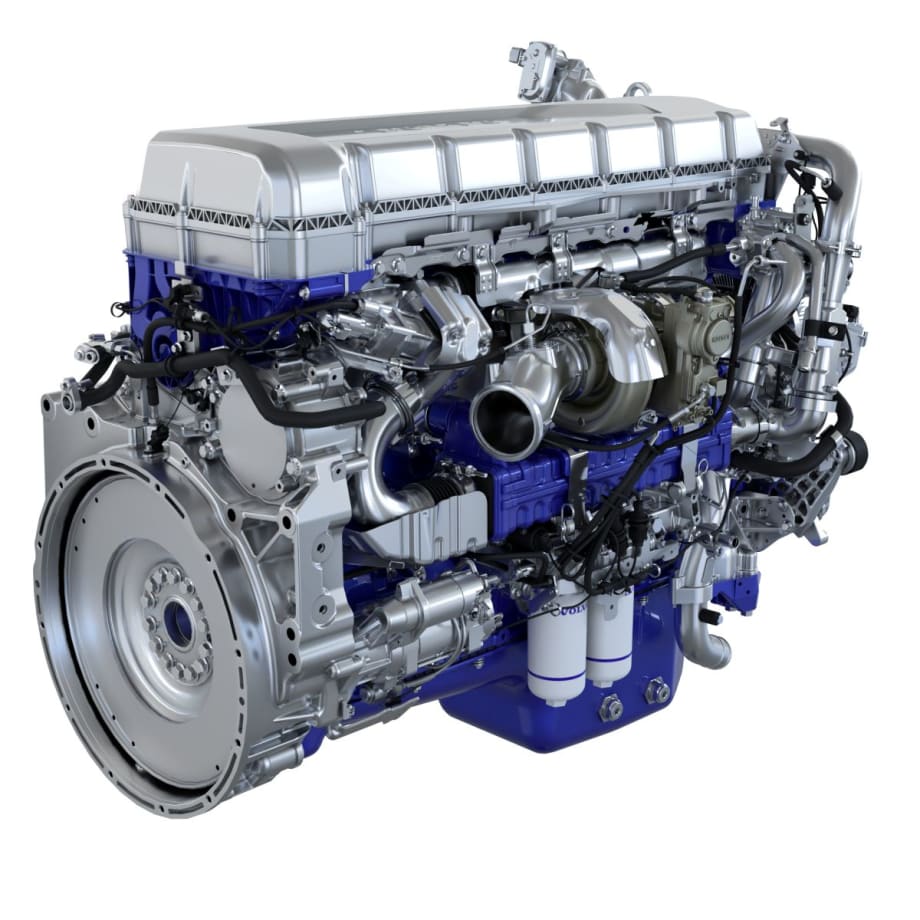
The new Volvo D13 VGT engine will be standard in the all-new Volvo VNR.
Photo: Volvo Trucks North America
The launch of its new VNR truck was the talk of the TMC Annual Meeting in Nashville March 10-13. But Volvo Trucks North America also took the opportunity to take the wraps off a brand-new diesel engine for the truck, as well.
The new Volvo D13 VGT engine will be standard in the all-new Volvo VNR. It will also be available as an option in VNL day cab models.
Volvo launched its all-new VNL Class 8 model last year
Game-Changing Improvements
According to Peter Voorhoeve, president, Volvo Trucks North America, the new D13 VGT engine builds on the game changing improvements launched with the all-new D13 Turbo Compound engine, which is standard on the all-new Volvo VNL.
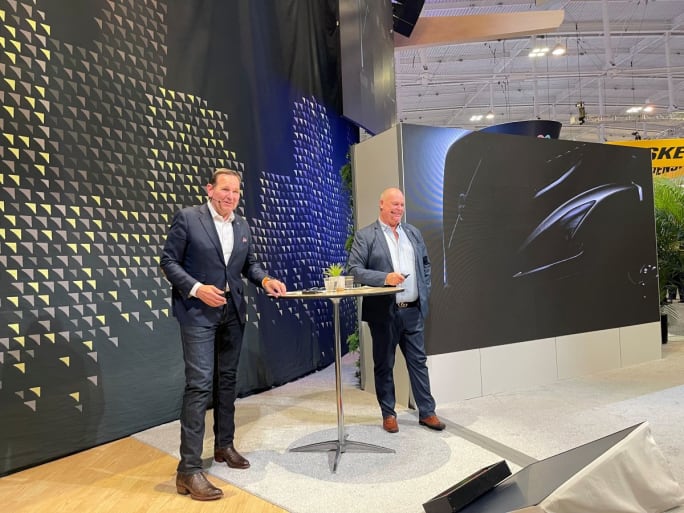
Peter Voorhoeve, president, and Magnus Koeck, vice president, strategy, marketing and brand management, Volvo Trucks North America, launch the new D13 VGT engine at TMC's Annual Meeting on March 10.
Photo: Jack Roberts
Focusing on fuel efficiency and durability, Volvo Trucks has made key enhancements to the D13 VGT engine including:
Advanced Piston Design: The improved seven-wave piston optimizes air and fuel mixture control, resulting in more efficient combustion. The piston height has been decreased and paired with a longer connecting rod to minimize cylinder sidewall pressure, reducing friction and enhancing overall performance. In addition to improving the combustion process, the seven-wave design allows for a greater dispersion of heat across the top of the piston head, lowering the overall temperature and reducing NOx output.
Enhanced Fuel Injector: Smaller needle control valves in the fuel injectors provide precise and rapid control over the fuel flow rate, leading to improved fuel atomization, better combustion efficiency, and enhanced engine performance.
Variable Displacement Oil Pump: This innovative pump dynamically adapts to the engine's oil pressure demands, minimizing parasitic losses, reducing wear and tear, and improving efficiency.
The new Volvo D13 VGT engine also utilizes the 24-volt electrical system, first introduced by Volvo in North America with the all-new Volvo VNL. The 24-volt electrical architecture paves the way to use lighter components and can prolong the life of those components due to the lower amperage of the system.
"As we continue to innovate and improve our powertrain offerings, the launch of the Volvo D13 VGT engine marks another significant step forward in our commitment to fuel efficiency and sustainability," Voorhoeve added. "Fuel costs remain the second highest expense for fleets in North America and our powertrain improvements represent an up to 3 percent fuel efficiency improvement over our previous generation engine. The D13 VGT engine is built to deliver the performance and reliability our customers expect, while also contributing to a cleaner, more efficient future."
The Volvo D13 VGT engine is now available for order in the all-new Volvo VNR and the all-new Volvo VNL models.
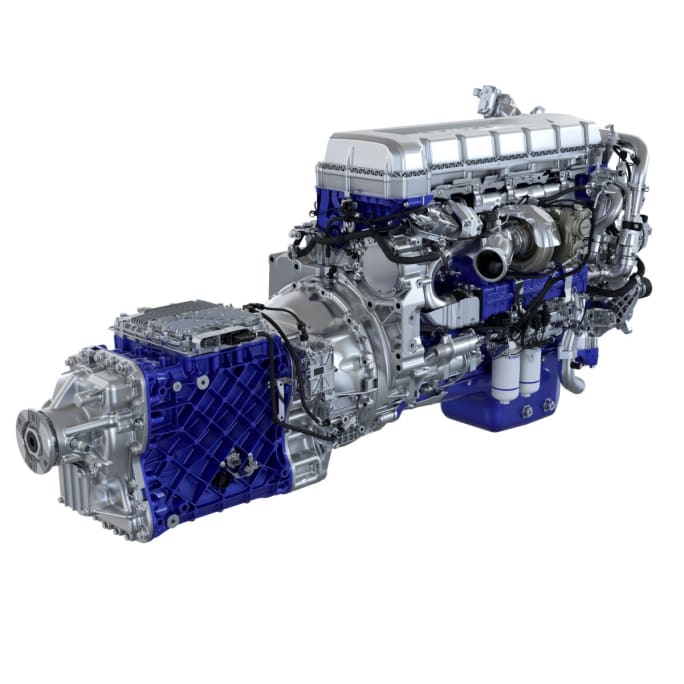
The Volvo D13 Variable Geometry Turbo diesel engine is part of the fully integrated Volvo VNR powertrain.
Photo: Volvo Trucks North America
Customers can choose from engine options offering 405, 425, 435, and 455 HP, with torque ratings ranging from 1450 to 1850 lb. ft.
Customers purchasing the all-new VNR when orders begin will also have the option to select the D13 Turbo Compound engine which Volvo said is well suited for fleets using the VNR in a highway application.
Fleet operators can learn more and place orders by visiting their nearest Volvo Trucks dealership, where the sales staff have been fully trained on the engine’s capabilities.
More Fuel Smarts

How Volvo Updated Its D13 for EPA 2027 [Watch]
Volvo’s updated D13 promises lower emissions without sacrificing performance or fuel economy. Take a closer look at what changed inside the engine in this HDT Spotlight video.
Read More →
Diesel Price Spike Shortens Payback for Natural Gas Trucks, Report Says
Energy Vision estimates fleets could recover the higher purchase price of an RNG-fueled Class 8 tractor in 1.3 to 2.8 years under current fuel-price scenarios.
Read More →
Calstart Becomes Catalyst Mobility, Reflecting Broader Focus
Calstart is now Catalyst Mobility, reflecting the nonprofit’s growing national role in clean transportation, including zero-emission trucks, infrastructure and incentive programs.
Read More →

Record Diesel Prices Squeeze Trucking Fleets
Average U.S. diesel prices have climbed to nearly $6 a gallon, surpassing the 2022 record as tight refinery capacity and Middle East disruptions keep fuel costs elevated.
Read More →
How Fuel Delivery Shapes Engine Performance
Fuel delivery depends on more than what happens at the injector. For fleet, maintenance and technical professionals, looking at the full path from pump to injector can provide useful context for understanding engine performance.
Read More →
East Coast Port Launches $45M Electric Truck Push
The Port Authority of New York and New Jersey announced millions in incentives for zero-emission drayage trucks, yard tractors, and new charging hubs near the port.
Read More →
California Bill Could Shed Light on Electric Truck Prices
Why do battery-electric Class 8 trucks remain so expensive? A California bill headed to Gov. Gavin Newsom would give fleets and state agencies more visibility into what manufacturers charge.
Read More →
Detroit Opens Orders for EPA 2027 Engines
Detroit isn’t starting from scratch to meet EPA 2027 diesel emissions standards. Its Gen 6 DD13 and DD15 engines keep much of today’s platform while updating the fuel and aftertreatment systems.
Read More →
Zero-Emission Truck Corridor Planned for West Coast
California, Oregon, Washington, British Columbia and Baja California are coordinating plans for truck charging and hydrogen fueling from Canada to Mexico.
Read More →
A Closer Look at Kenworth’s Electric T880E Vocational Truck [Video]
Learn more about Kenworth's T880E battery-electric vocational truck at the Paccar Technical Center, including its range, applications, upfitting considerations, and PTO options, in this HDT Spotlight video.
Read More →